
St John the Baptist announcing the Coming of the Messiah — History & Facts
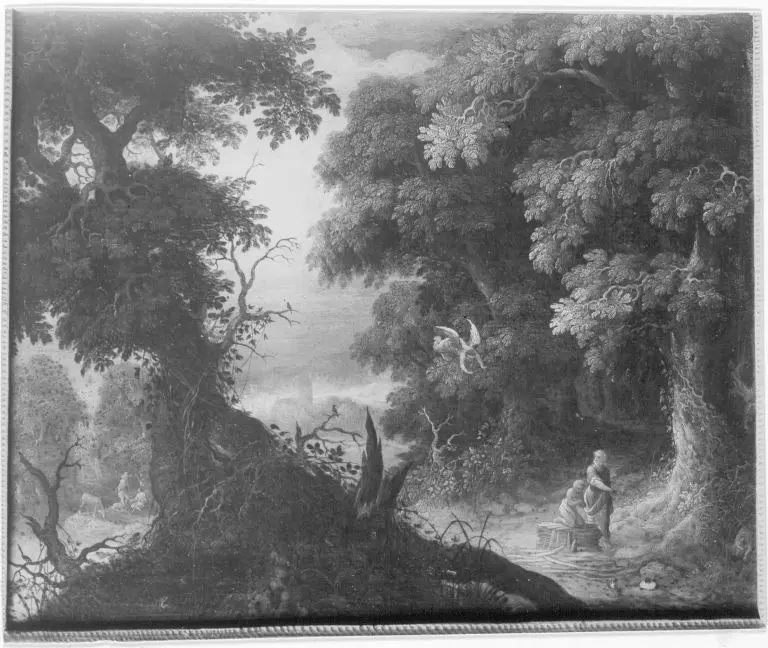
A hush falls over the forest clearing, where a lone figure stands at the edge of a winding path, arm outstretched in urgent proclamation. The eye is first drawn to the dense canopy above, sunlight filtering through leaves in golden patches, before following the sweep of the path down to the gathered crowd. Here, the drama unfolds almost in miniature: a cluster of listeners, some kneeling, some standing, all caught in the gravity of the speaker’s words.
The landscape dominates, dwarfing the human figures and lending their assembly a sense of secrecy and anticipation, as if the trees themselves are witnesses to a message meant to echo far beyond this moment. Painted between 1600 and 1626, St John the Baptist announcing the Coming of the Messiah by Abraham Govaerts belongs to a world where landscape painting was coming into its own, particularly in the Low Countries. Patrons of the early seventeenth century often sought such works for private devotion or as meditative images, where biblical events played out not in distant deserts but in familiar, lush woodlands. Govaerts, known for his woodland scenes, places the sacred story within a northern forest, merging spiritual narrative with the everyday beauty of his homeland.
History has kept few traces of this specific painting’s journey, but its presence in a modern collection invites us to linger on the interplay of light, foliage, and the quiet urgency of a prophet’s call—an invitation to look again and find new meaning in the shadows and clearings.
More Artworks by Abraham Govaerts

Forest landscape
Abraham Govaerts
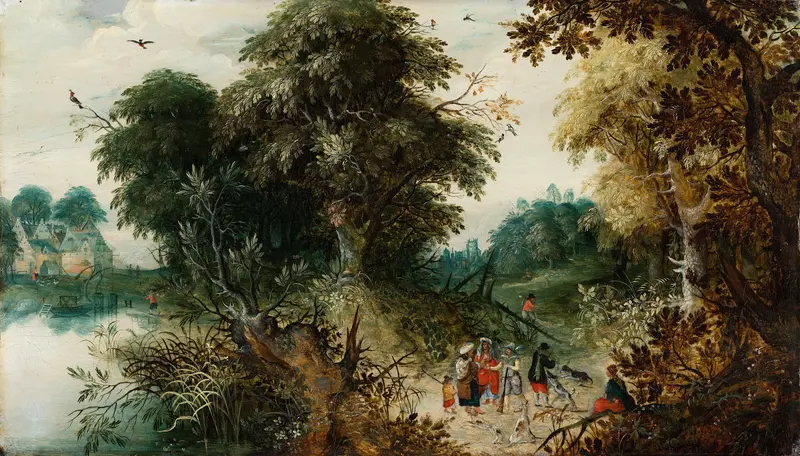
Forest View with Travellers
Abraham Govaerts
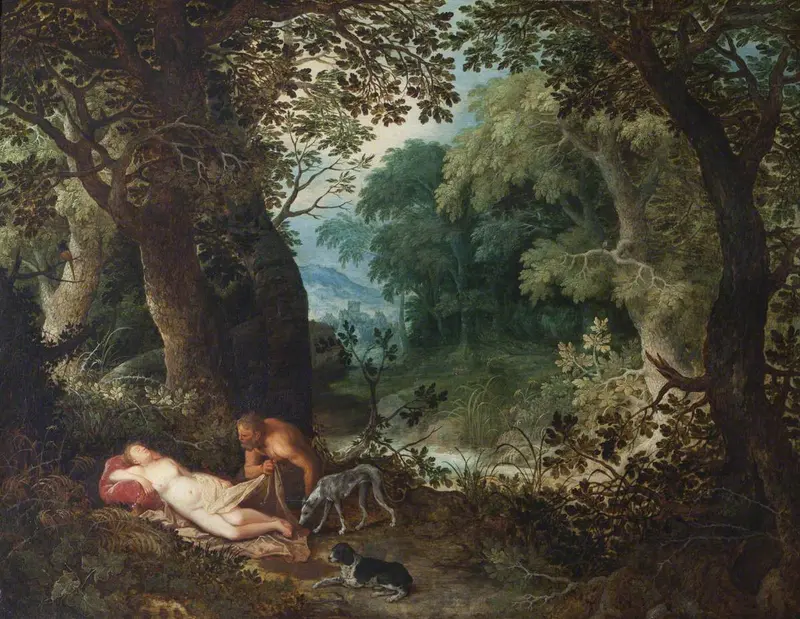
A Nymph and a Satyr
Abraham Govaerts
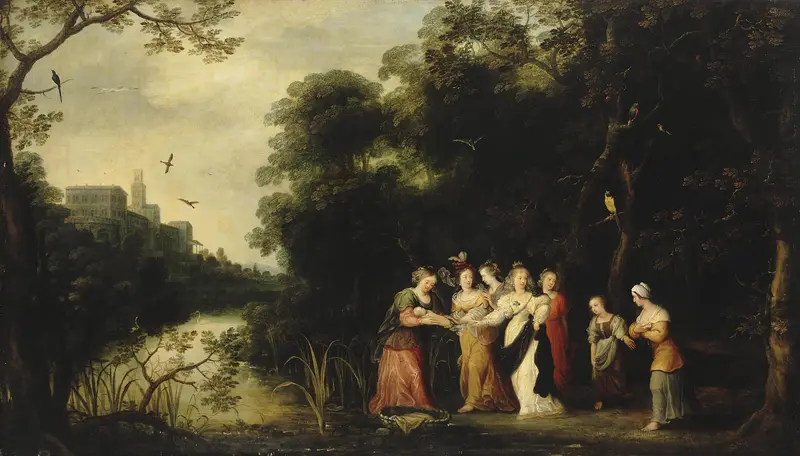
Finding of Moses
Abraham Govaerts
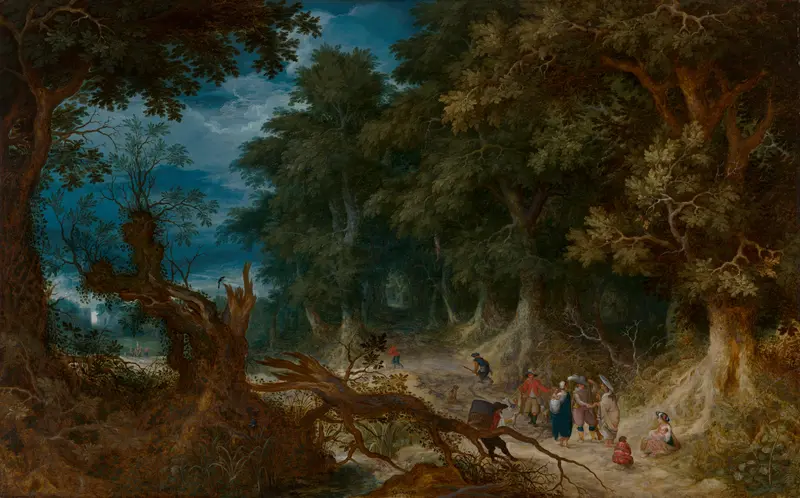
Wooded Landscape with Gipsy Women
Abraham Govaerts
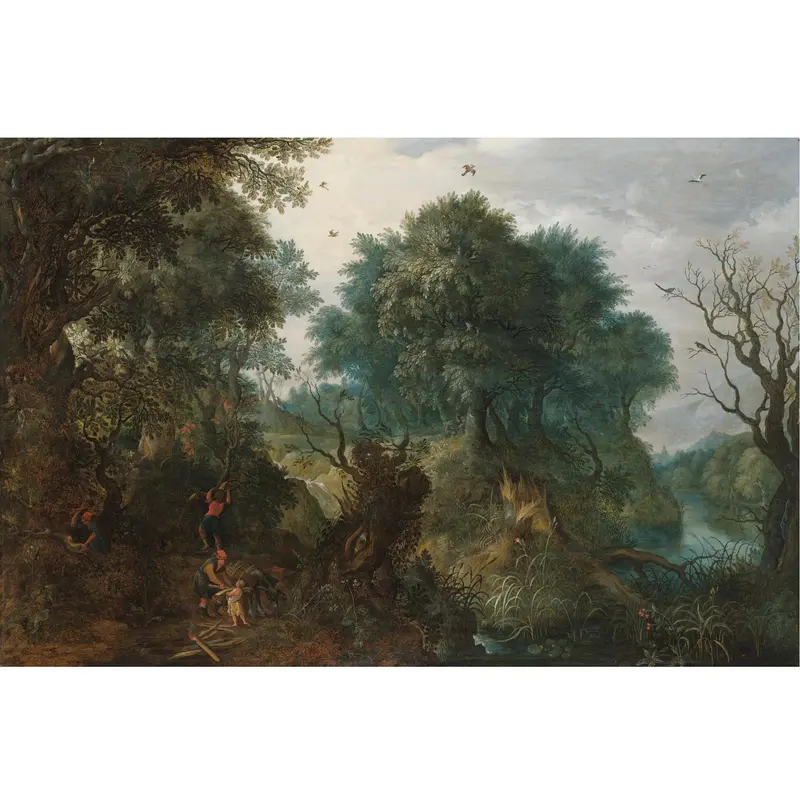
A Wooded Landscape with Woodcutters near a River
Abraham Govaerts
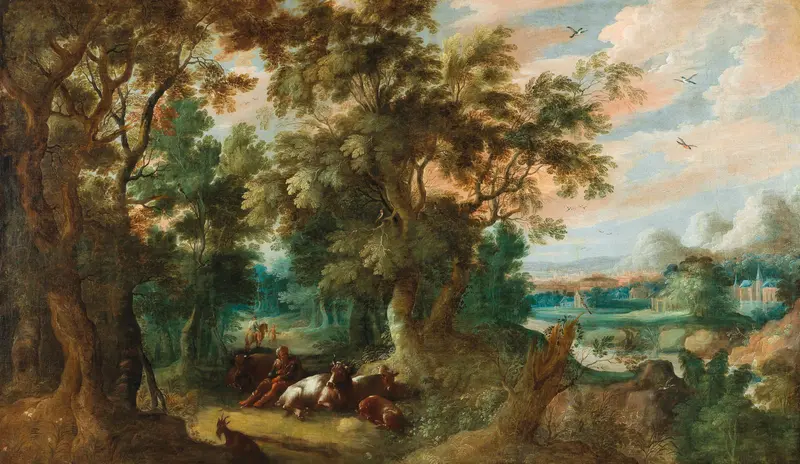
Wooded landscape with shepherds and their flock
Abraham Govaerts
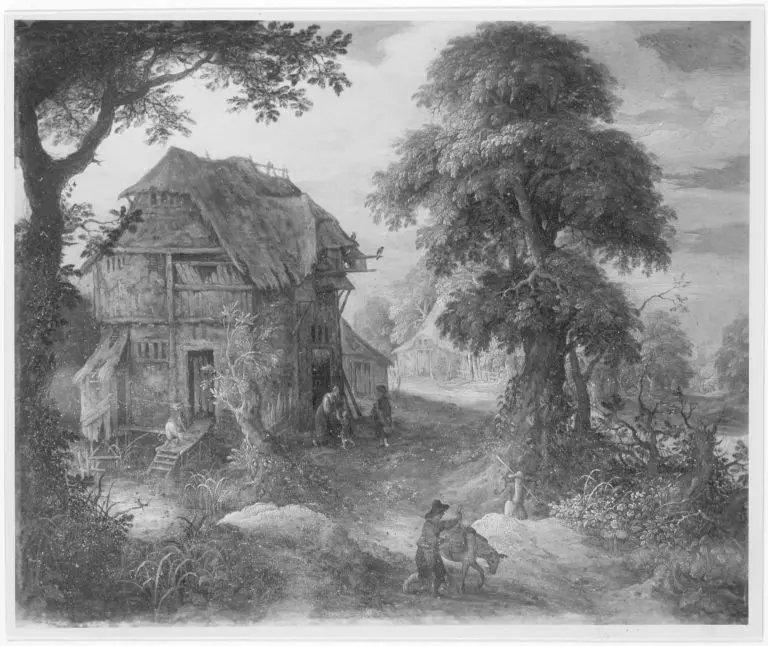
Dorf unter Bäumen
Abraham Govaerts
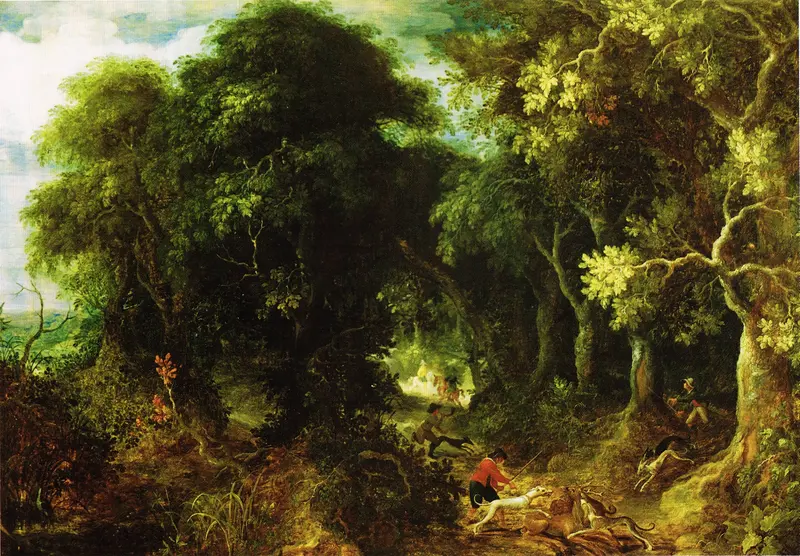
The Eternal Forest / Deer hunting
Abraham Govaerts
Wooded landscape with the sacrifice of Isaac (Genesis 22)
Abraham Govaerts





