
Still Life in a Grotto with Flowers, Fish and a Bird's Nest — History & Facts
A shaft of light slices through the shadowy grotto, catching on the glassy eyes of three fish and the fragile blue of a cornflower, as if nature herself has paused for breath. Every surface in Still Life in a Grotto with Flowers, Fish and a Bird's Nest is alive with detail: the velvet petals of poppies and peonies, the glinting scales, the delicate nest cradling its eggs. The painter, Abraham Mignon, leads your gaze from the luminous bouquet to the quiet drama of the bird’s nest, then down to the fish, their bodies arranged with the care of a stage tableau.
The composition is a puzzle of textures and symbols—life, death, and the promise of renewal—each rendered with a clarity that invites you to linger. This kind of painting, born in the Dutch Republic around 1670, was more than a display of technical skill; it was a meditation on abundance and fragility. Collectors of the era, newly wealthy from trade and eager to show their learning, prized such intricate still lifes for their ability to capture the fleeting beauty of the world. The grotto setting, with its half-seen ruins and tangled branches, hints at the passage of time, while the array of natural treasures—flowers out of season, fish freshly caught, a nest untouched—suggests both the reach of human curiosity and the limits of possession.
Abraham Mignon was celebrated for weaving together these elements, and though history has left few traces of this specific painting beyond its date and its presence in the Web Gallery of Art, its quiet complexity still draws the eye, urging us to search out every hidden insect and glimmer of light.
More Artworks by Abraham Mignon

Still Life with Flowers and a Watch
Abraham Mignon
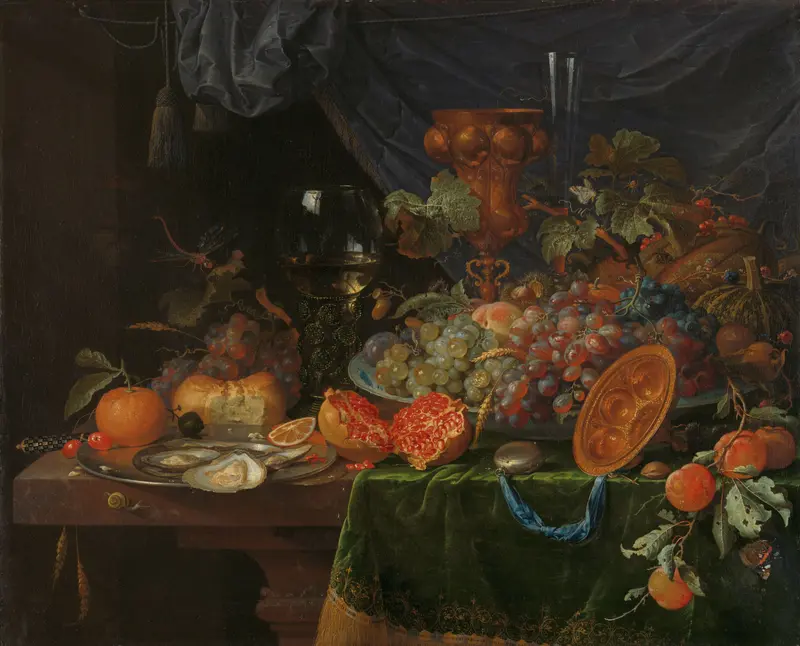
Still Life with Fruit and Oysters
Abraham Mignon
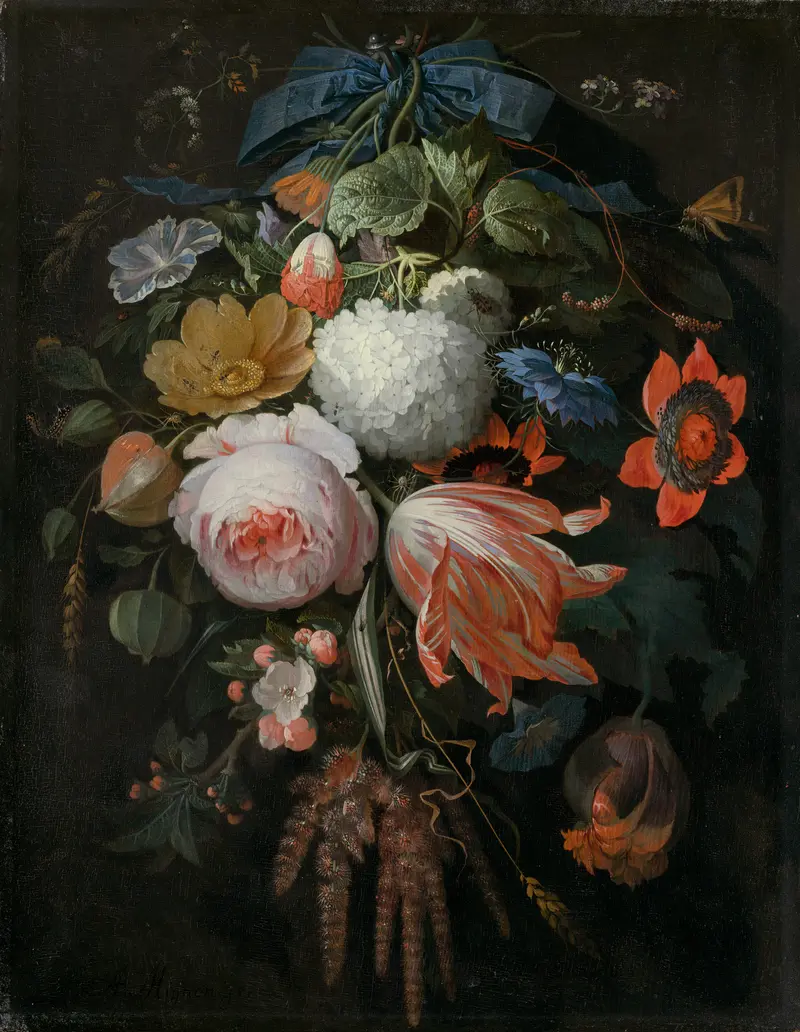
A Hanging Bouquet of Flowers
Abraham Mignon
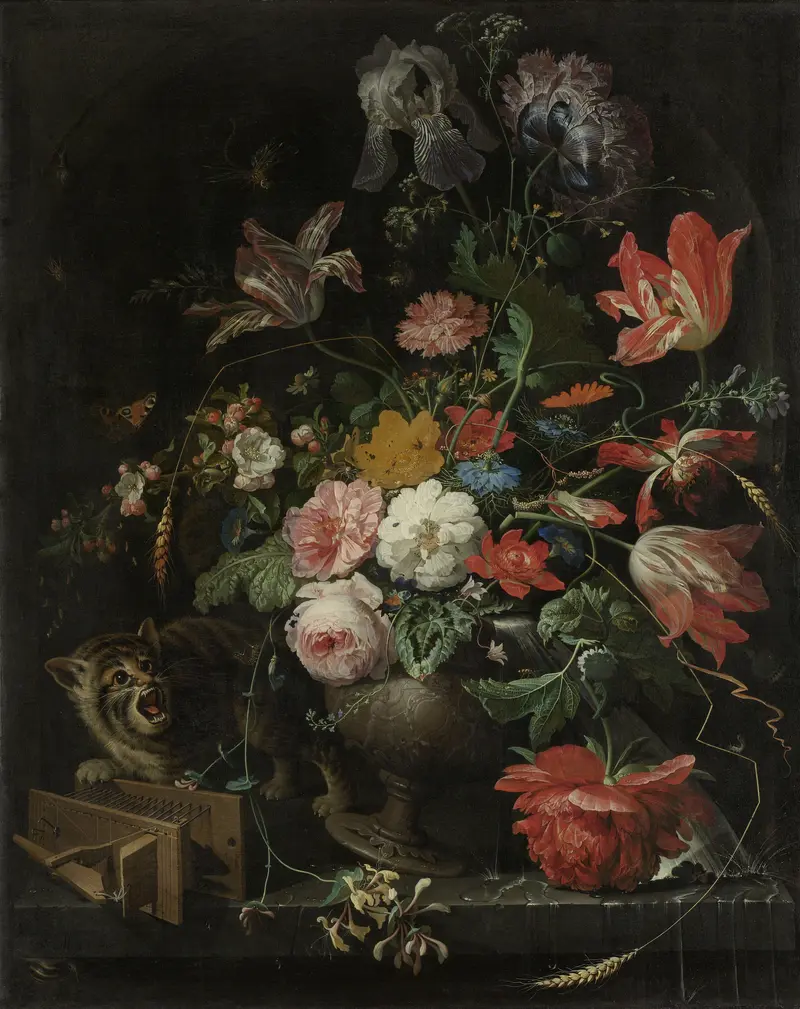
Bouquet with cat and mousetrap
Abraham Mignon
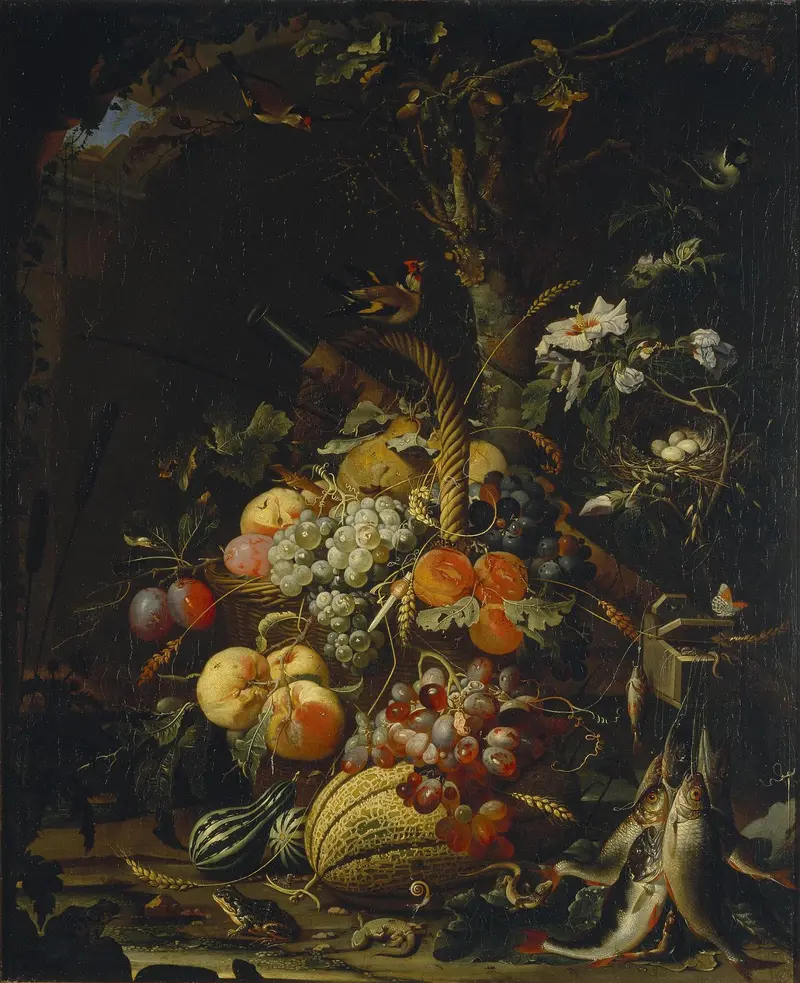
Forest floor still life with fruit, fish and a bird's nest
Abraham Mignon
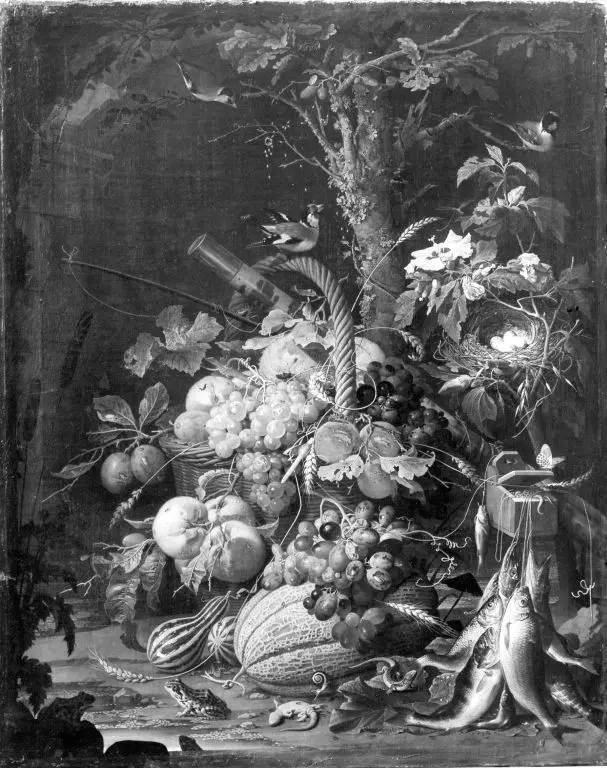
Still life with fruit, fish and a bird's nest
Abraham Mignon
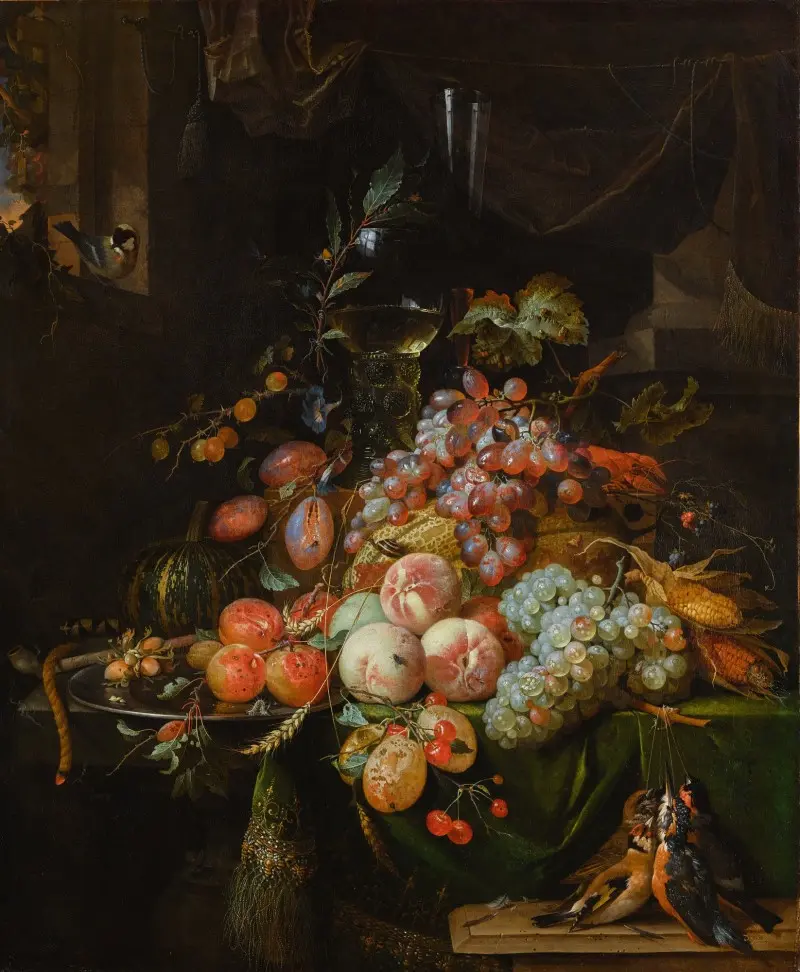
Still Life with Plums, Peaches, Apricots, Grapes and a Melon
Abraham Mignon
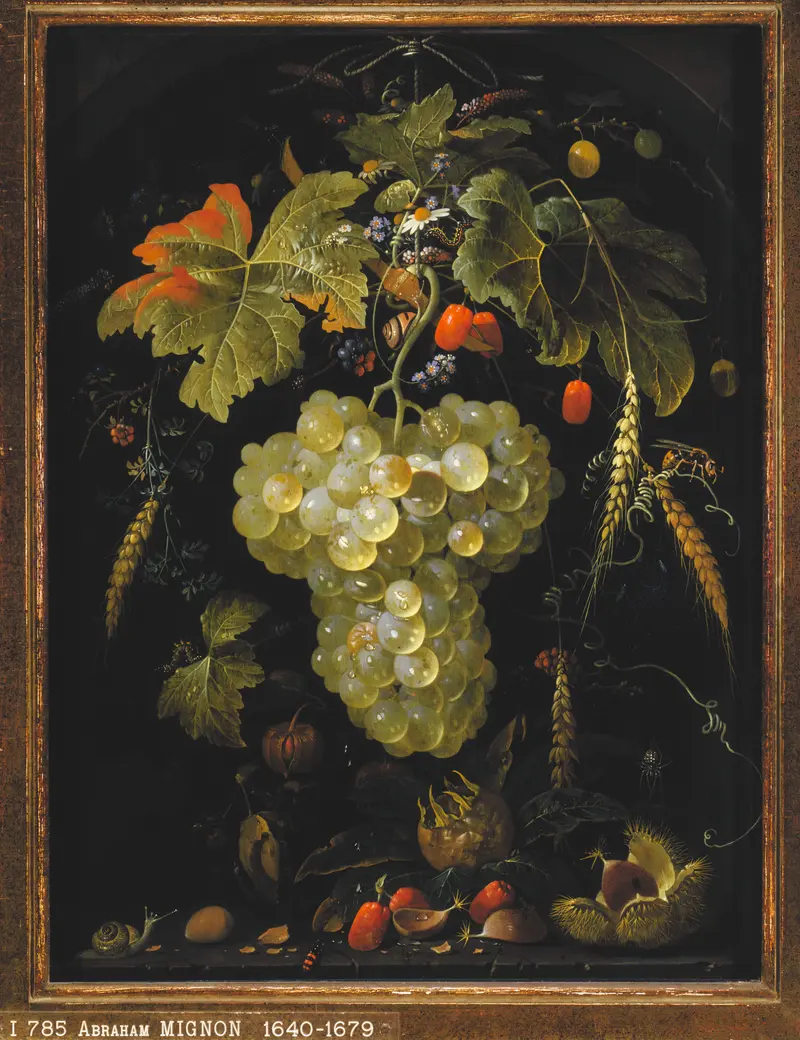
Festoon of fruit suspended from a rope, in a niche
Abraham Mignon
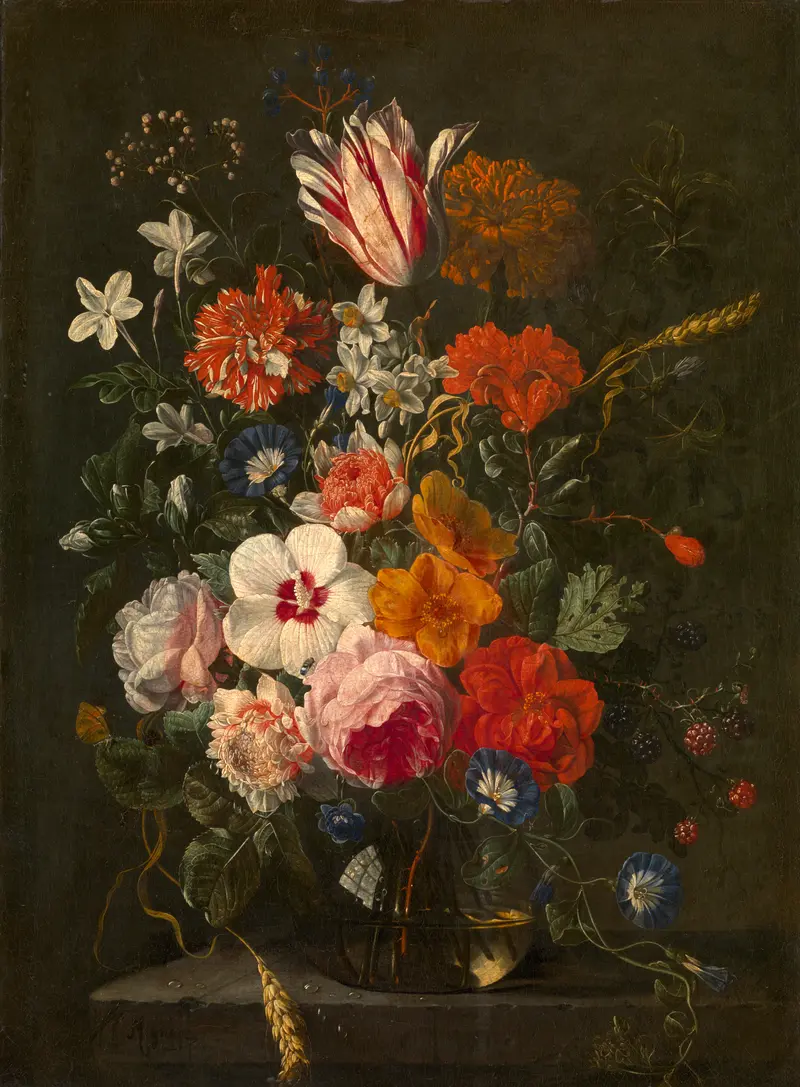
Flowers and a branch of berries in a glass vase on a stone ledge
Abraham Mignon
Flowers and fruit on a plinth
Abraham Mignon





