
Still life of fruit and a chalice in a niche — History & Facts
A single, extravagant chalice rises from the shadows, its golden surface catching the faintest glimmer of light, while a riot of fruit and delicacies tumbles around it. The eye is drawn first to the cup’s ornate stem, which anchors the composition like a scepter, before wandering to the glistening grapes, the curling orange peel, and the half-shucked oysters that spill their briny secrets onto the stone ledge. Every detail is rendered with a jeweler’s care: the cool gleam of metal, the translucence of grape skins, the velvet bloom on plums.
The darkness of the niche frames these treasures, turning the scene into a kind of stage—one where abundance teeters on the edge of excess, and the first hint of decay is never far behind. Painted in 1665, this still life belongs to the world of the Dutch Golden Age, when artists like Abraham Mignon transformed everyday objects into meditations on luxury, mortality, and the senses. Such works were prized by wealthy merchants and collectors, who saw in them both a celebration of prosperity and a warning about its fleeting nature. The elaborate arrangement, the costly imported fruits, and the precious metalwork all speak to a society shaped by global trade and new wealth.
Yet, as in so many still lifes of the period, the peeled lemon and opened oysters are reminders that pleasure is short-lived, and beauty is always on the verge of slipping away. Let your gaze linger on the details—each one is a clue to the ambitions and anxieties of a vanished age.
More Artworks by Abraham Mignon

Still Life with Flowers and a Watch
Abraham Mignon
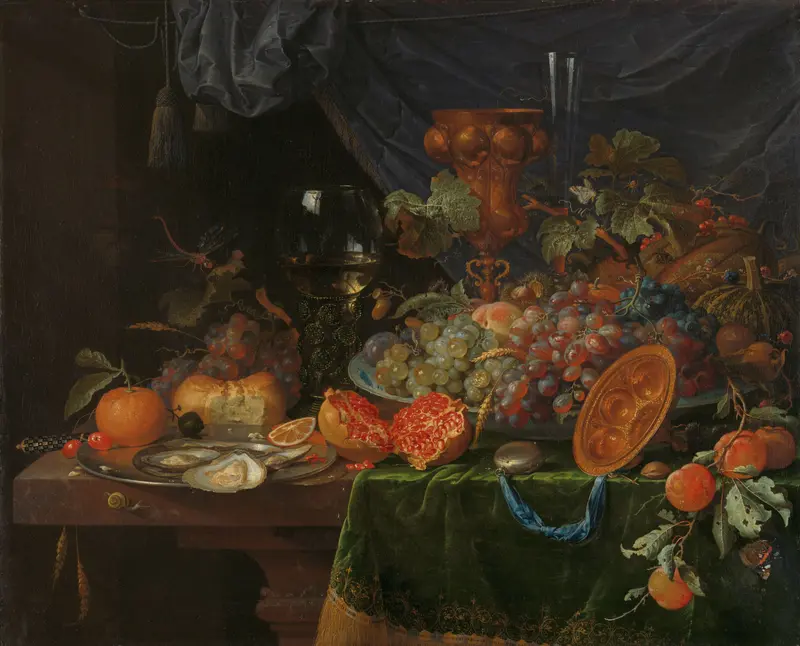
Still Life with Fruit and Oysters
Abraham Mignon
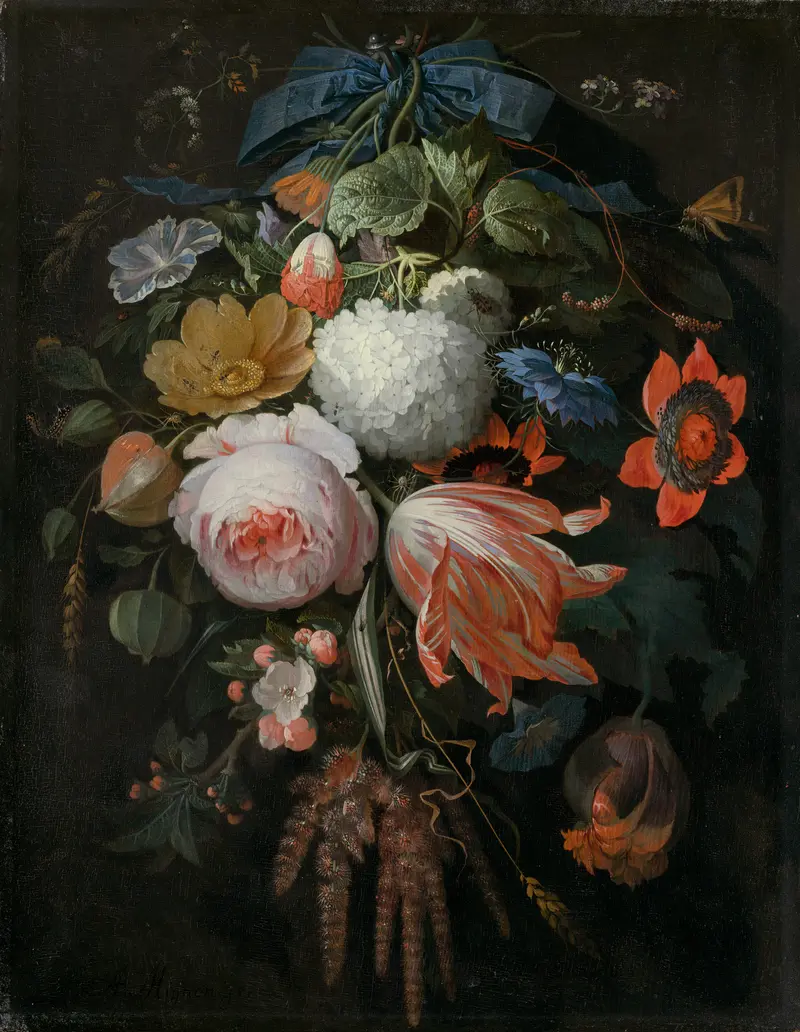
A Hanging Bouquet of Flowers
Abraham Mignon
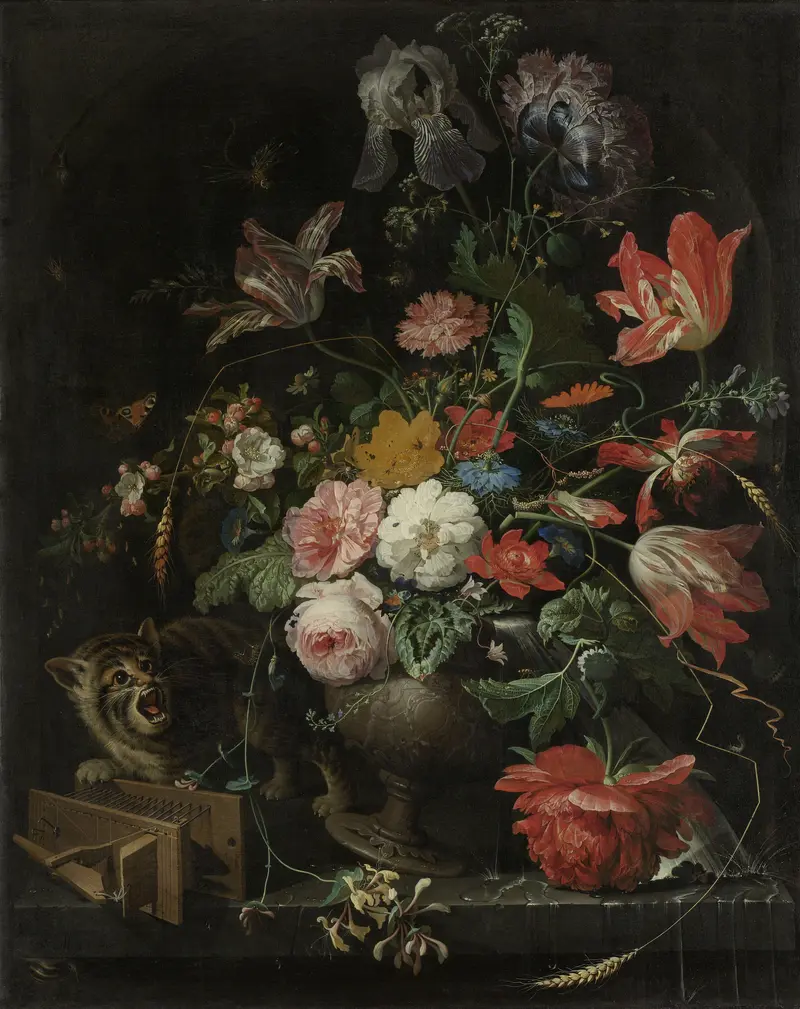
Bouquet with cat and mousetrap
Abraham Mignon
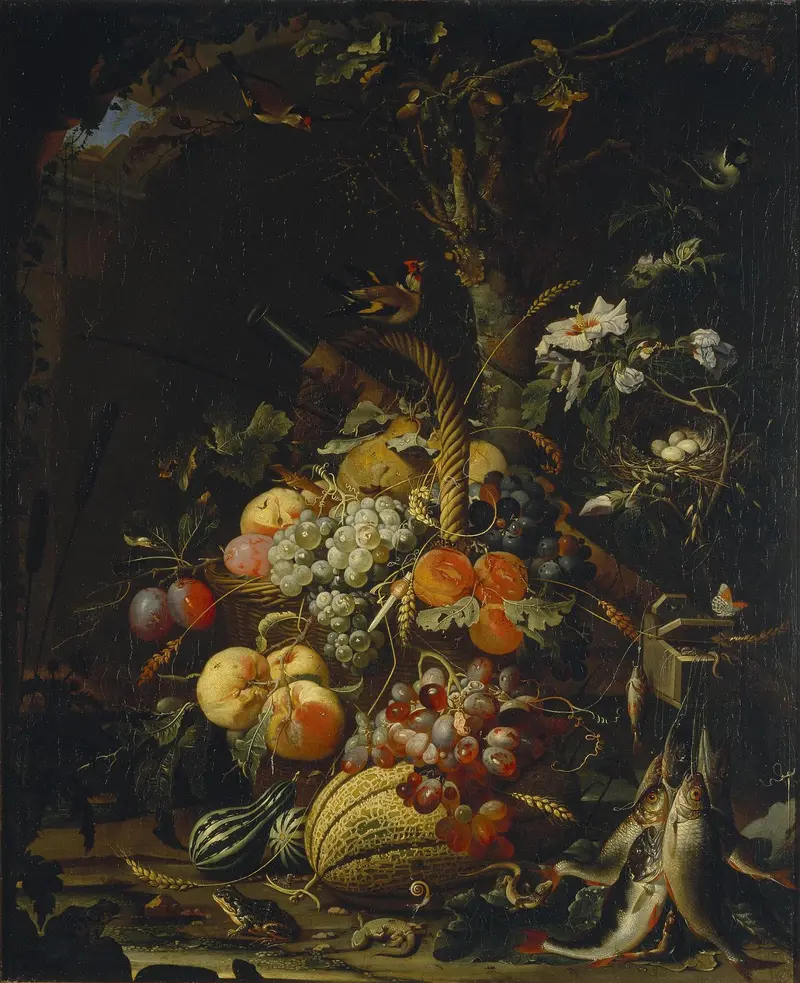
Forest floor still life with fruit, fish and a bird's nest
Abraham Mignon
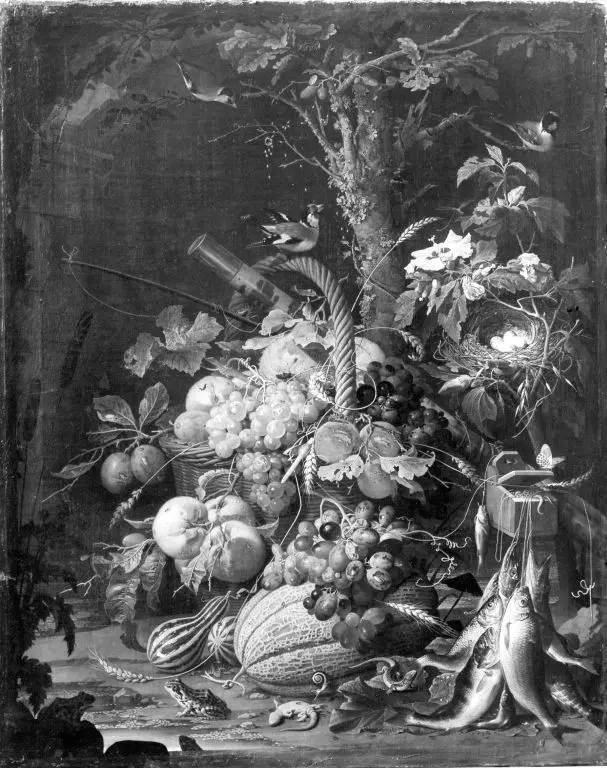
Still life with fruit, fish and a bird's nest
Abraham Mignon
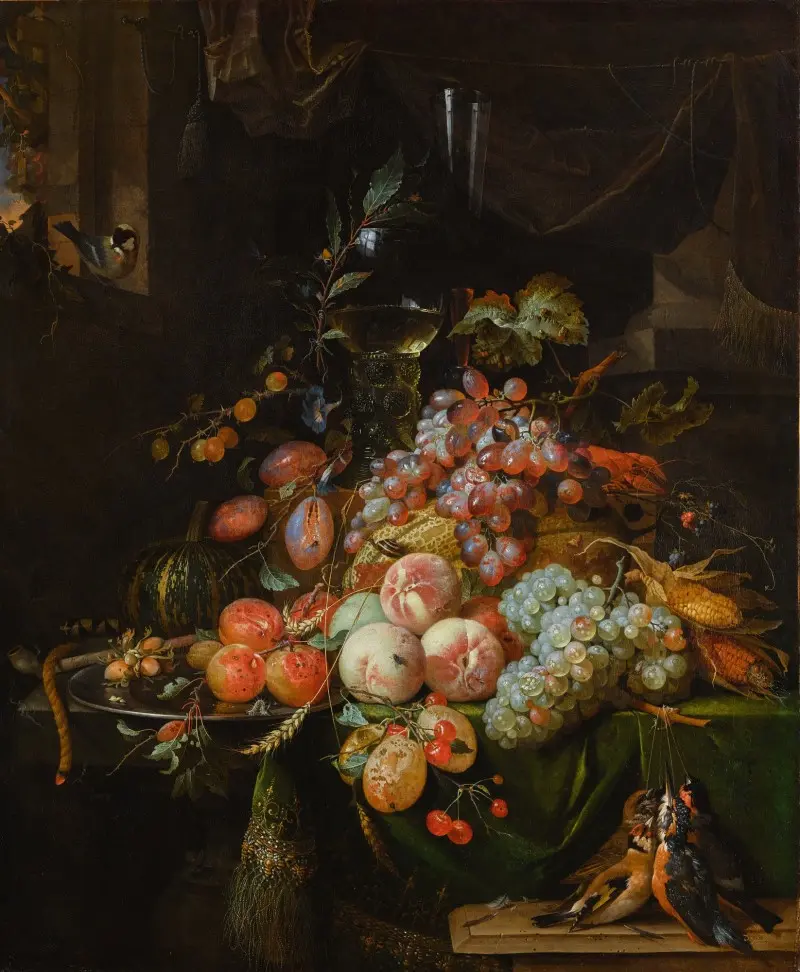
Still Life with Plums, Peaches, Apricots, Grapes and a Melon
Abraham Mignon
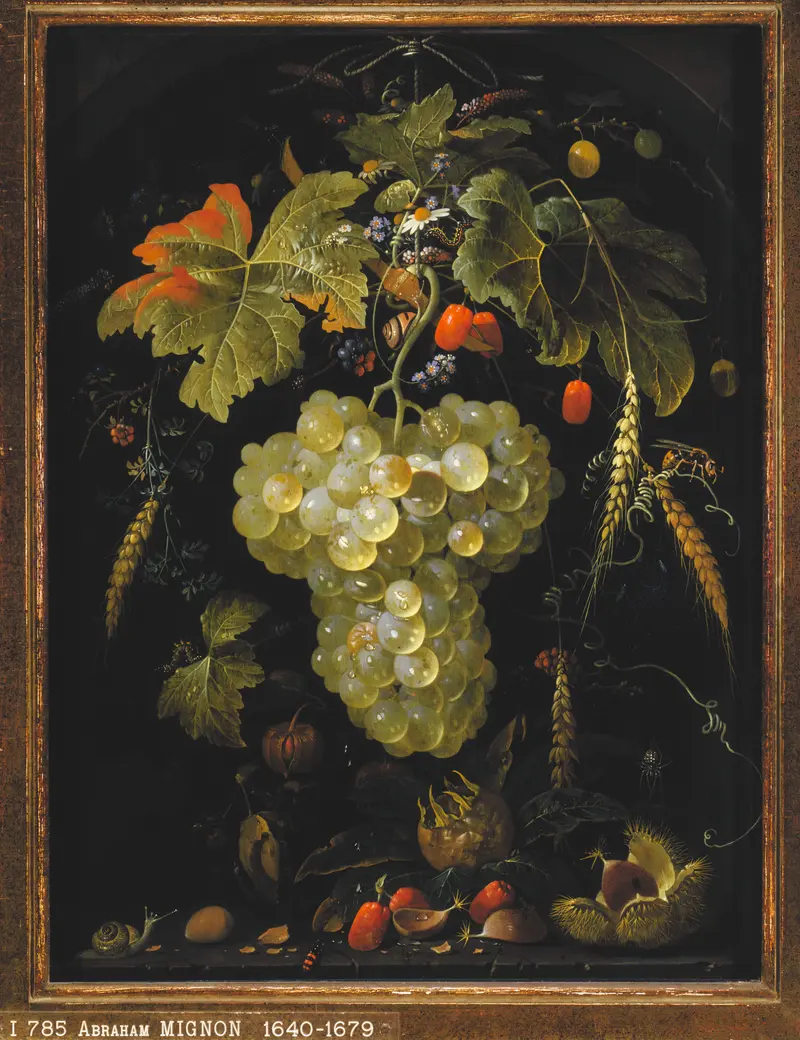
Festoon of fruit suspended from a rope, in a niche
Abraham Mignon
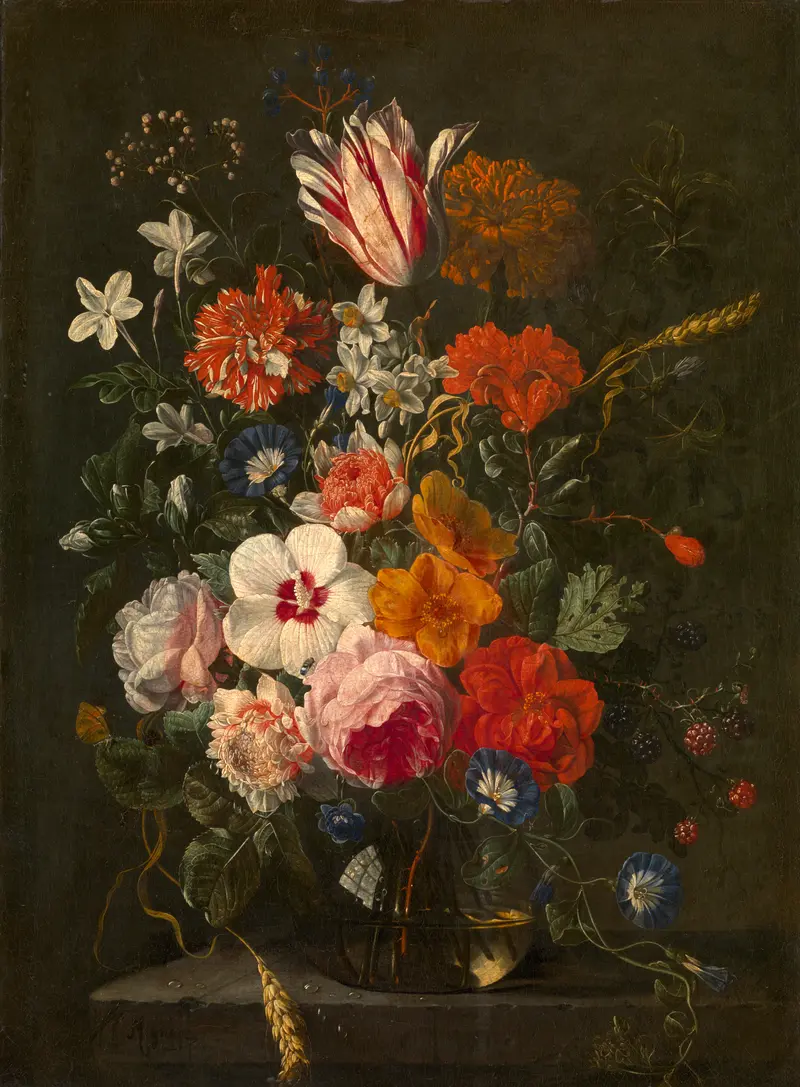
Flowers and a branch of berries in a glass vase on a stone ledge
Abraham Mignon
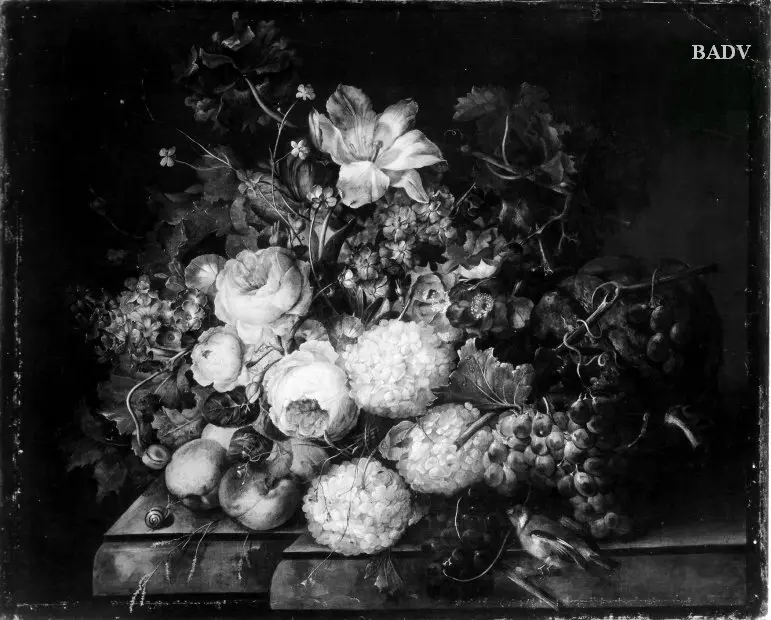
Flowers and fruit on a plinth
Abraham Mignon





