
Still life of wild flowers at the foot of an oak tree, in front of a grotto — History & Facts
What first catches the eye in Still life of wild flowers at the foot of an oak tree, in front of a grotto is not just the riot of petals and leaves, but the sense that the entire undergrowth is alive and alert. The flowers—poppies, daisies, and cornflowers—lean and twist as if caught in a brief moment of sunlight breaking through the oak’s shadow. Look closer, and the painting reveals a hidden world: a frog poised at the bottom edge, insects clinging to stems, a lizard curling through the foliage, and birds half-shrouded in the gloom.
The artist’s attention to the play of light draws the viewer’s gaze from the luminous reds and whites of the flowers to the dark, mysterious grotto behind, where the oak’s trunk anchors the scene and the world of plants and creatures merges with shadow. Painted between 1670 and 1679, this work belongs to the tradition of Dutch and German still life painting, where artists like Abraham Mignon found endless fascination in the details of nature. Such paintings were prized by collectors for their celebration of both beauty and abundance, and for the quiet reminders they offered about the fleetingness of life—flowers wilt, insects scurry, and the forest floor teems with stories that last only a moment. The careful rendering of each stem and creature speaks to the era’s growing interest in natural science, as well as the painter’s own virtuosity.
Today, the painting’s home in the collection of the Réunion des Musées Nationaux-Grand Palais invites us to linger, letting our eyes wander through its miniature wilderness and discover new details with every viewing.
More Artworks by Abraham Mignon

Still Life with Flowers and a Watch
Abraham Mignon
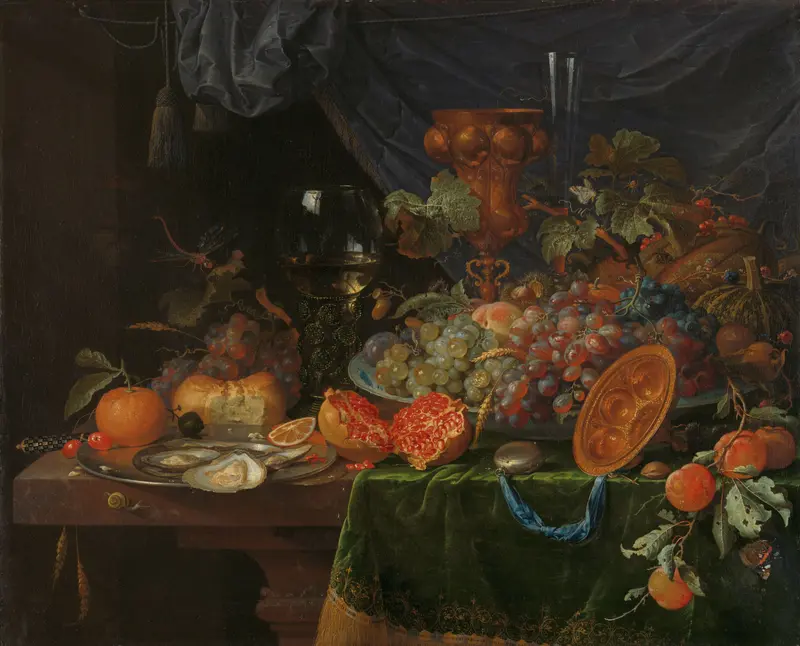
Still Life with Fruit and Oysters
Abraham Mignon
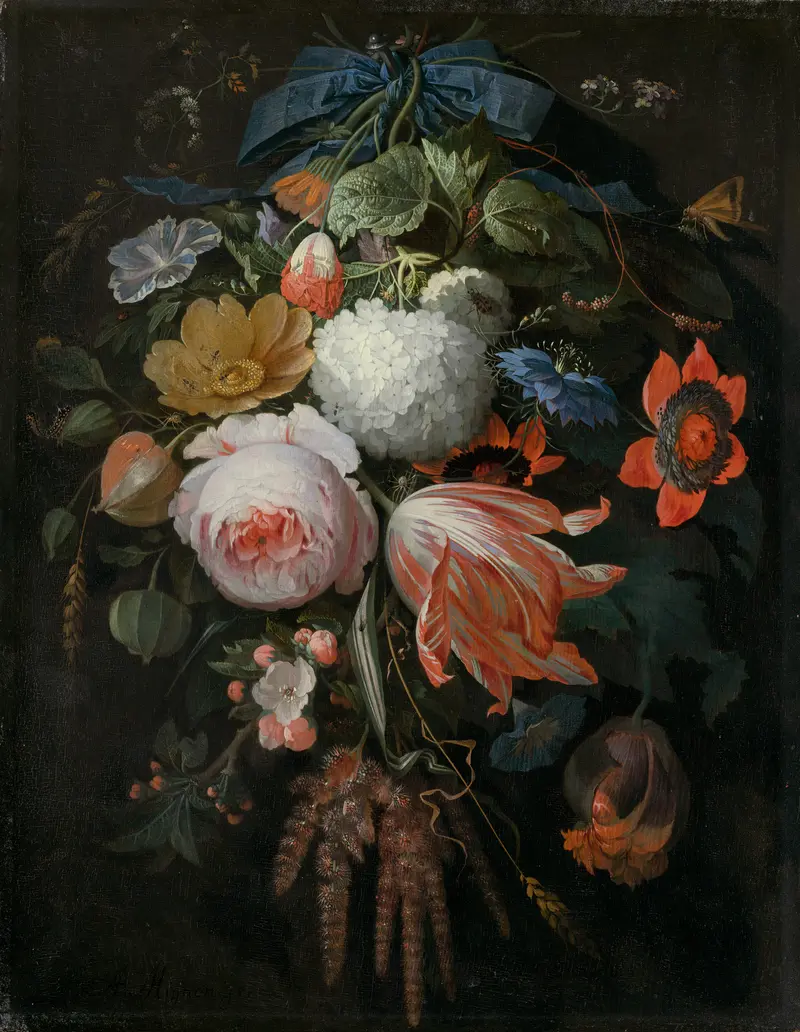
A Hanging Bouquet of Flowers
Abraham Mignon
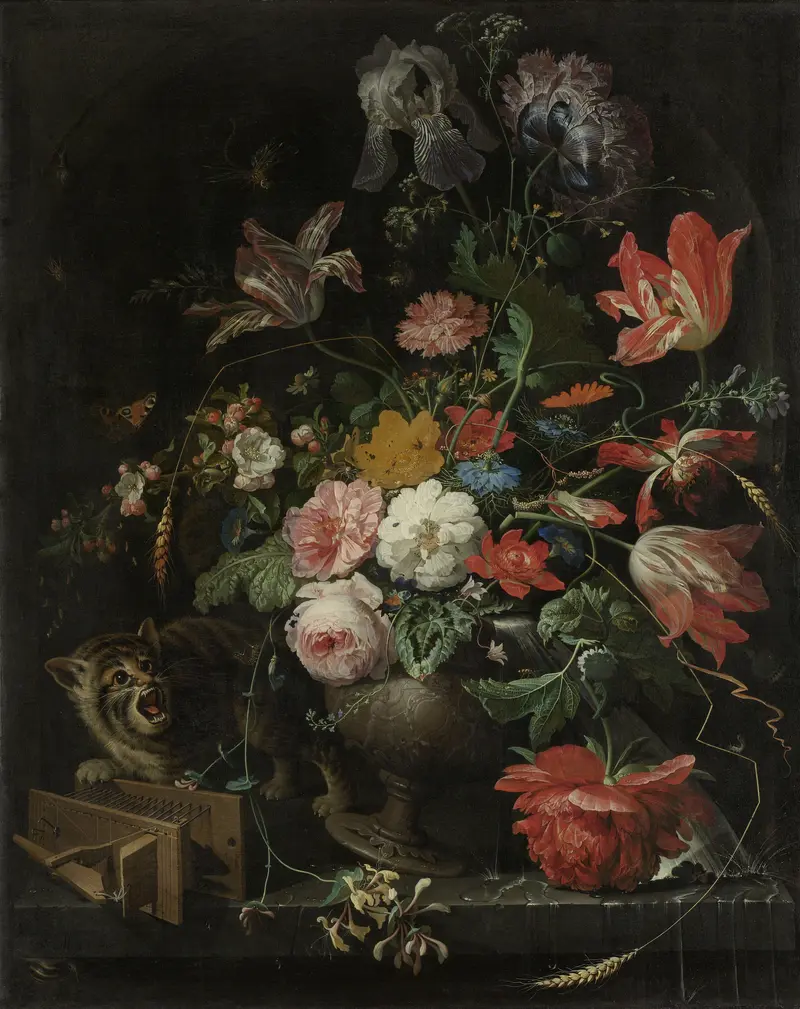
Bouquet with cat and mousetrap
Abraham Mignon
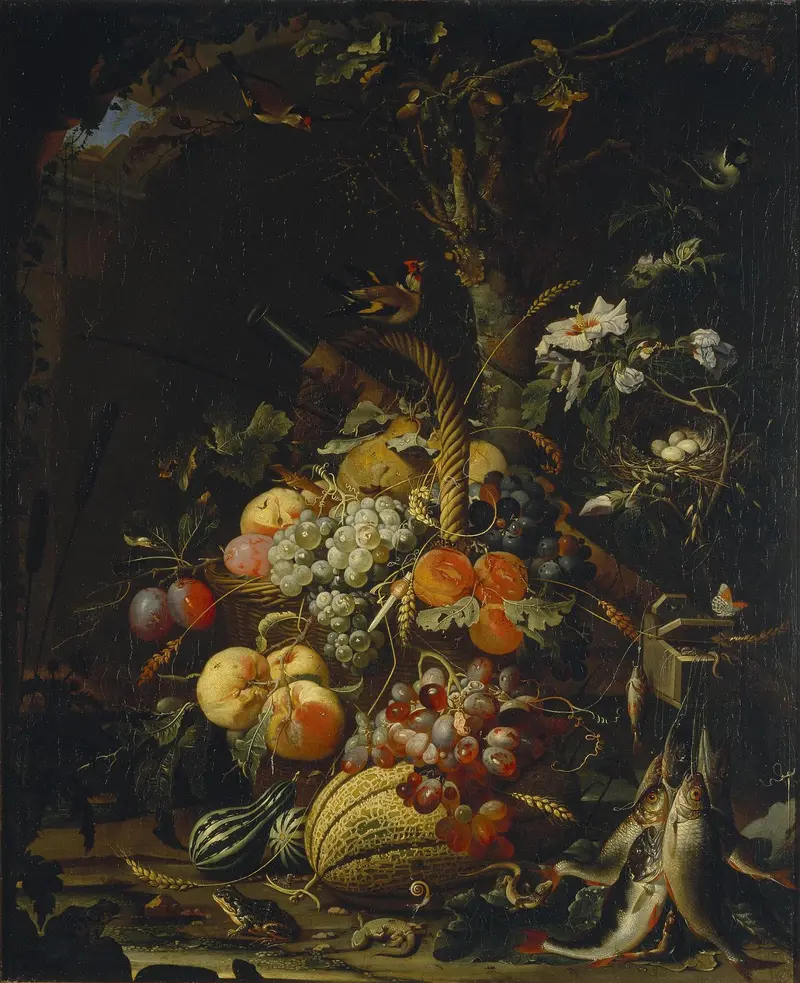
Forest floor still life with fruit, fish and a bird's nest
Abraham Mignon
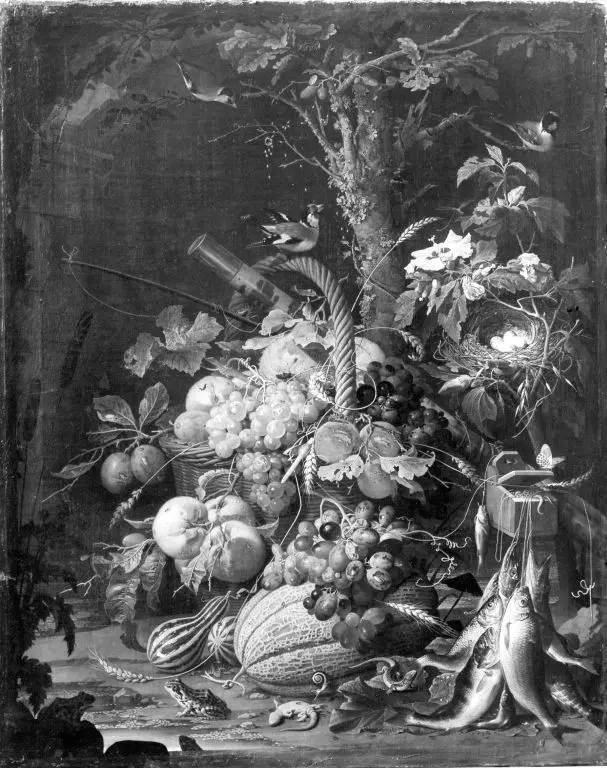
Still life with fruit, fish and a bird's nest
Abraham Mignon
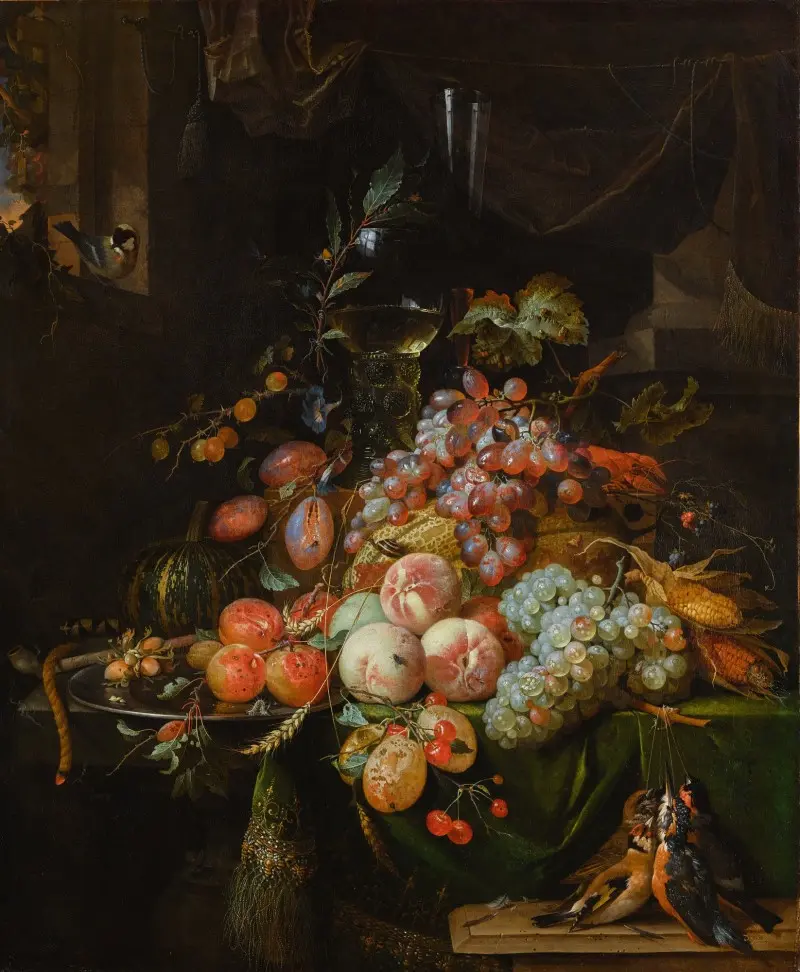
Still Life with Plums, Peaches, Apricots, Grapes and a Melon
Abraham Mignon
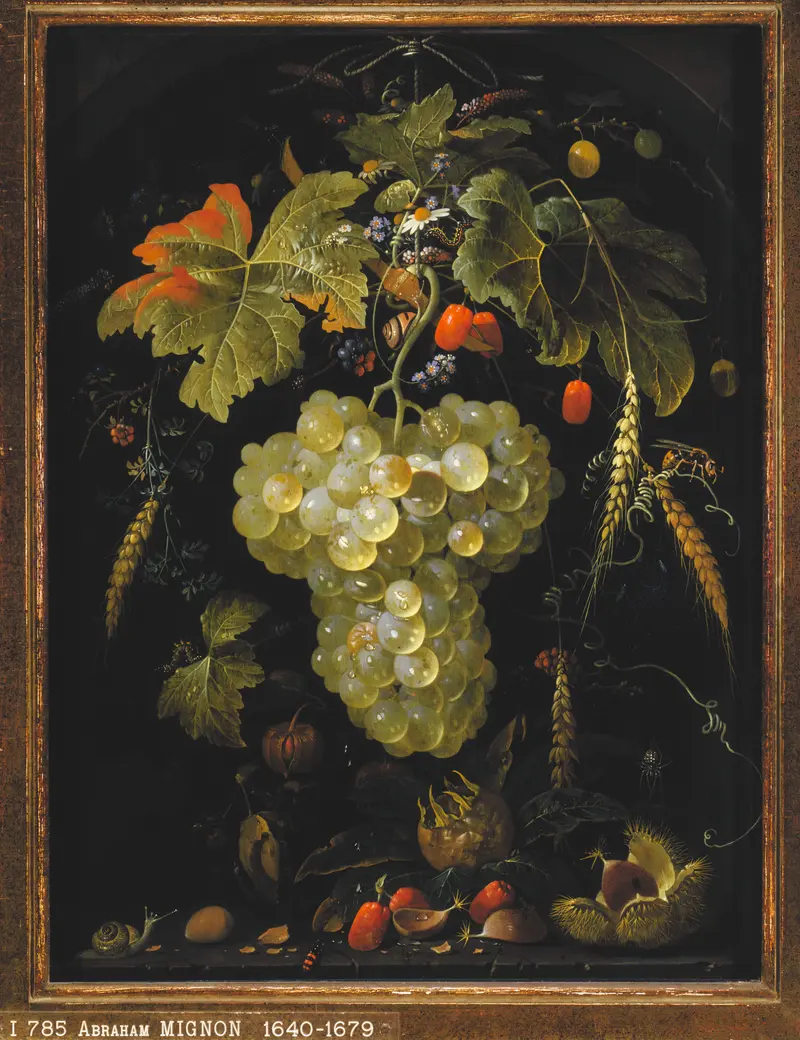
Festoon of fruit suspended from a rope, in a niche
Abraham Mignon
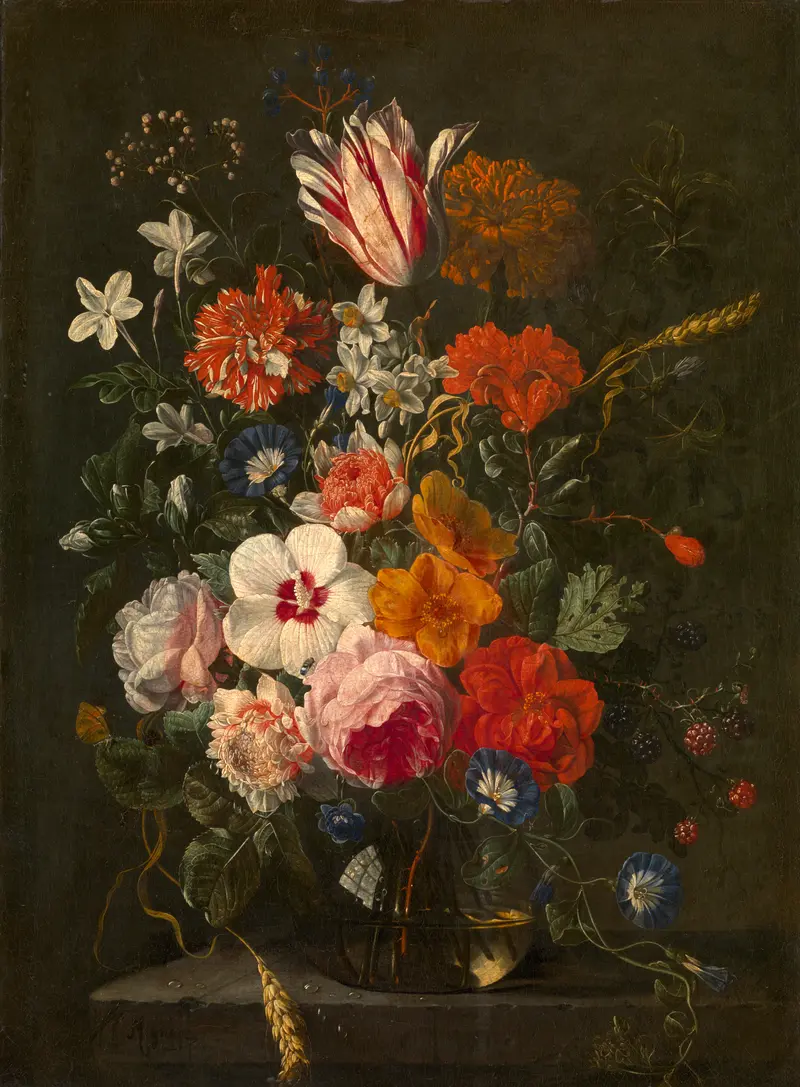
Flowers and a branch of berries in a glass vase on a stone ledge
Abraham Mignon
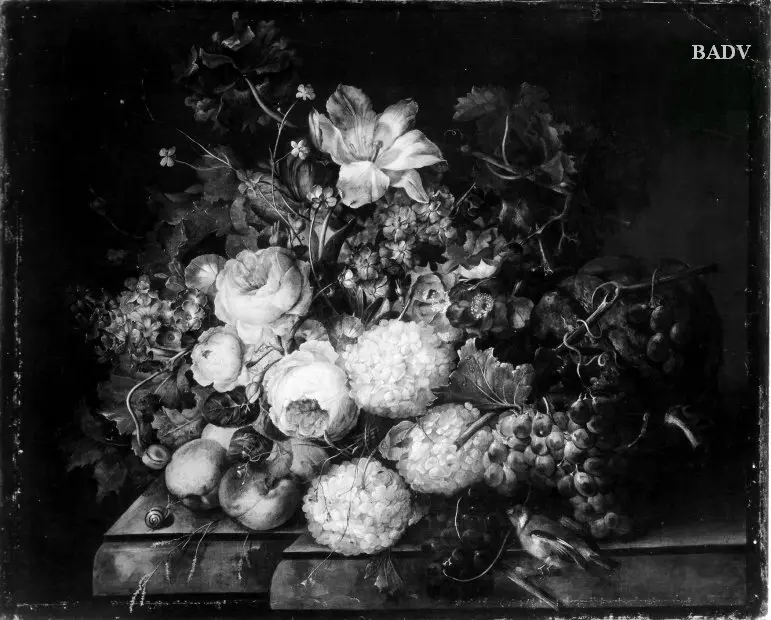
Flowers and fruit on a plinth
Abraham Mignon





