
Still-life with a basket of fruits, pumpkin, melon, peaches at an oak — History & Facts
A basket brimming with grapes, peaches, and melons sits at the heart of the painting, but it is the play of light and shadow that truly commands attention. The eye is drawn first to the glistening clusters of grapes, each orb rendered with the precision of a jeweler, their translucent skins catching a gentle, almost theatrical light. Around them, the rougher textures of melon rind and curling leaves create a contrast that makes the fruit seem even more lush and tempting.
The artist, Abraham Mignon, arranges his bounty not as a mere heap, but as a careful composition: the basket leans, spilling its contents in a controlled tumble, while the oak tree in the background anchors the scene in a shadowy woodland. Each detail, from the curling tendrils to the scattered kernels of corn, invites the viewer to linger and look closer, searching for the hidden insects or the subtle signs of ripeness and decay. Painted around 1679, this work belongs to the golden age of Dutch and German still life, when artists like Mignon elevated the genre to new heights of illusion and symbolism. Such paintings were prized by wealthy collectors who delighted in their technical virtuosity and the quiet moral lessons they often contained: the fleeting pleasures of fruit, the inevitability of time, the beauty found in nature’s abundance.
Still-life with a basket of fruits, pumpkin, melon, peaches at an oak now resides in the Museum Kunstpalast, a reminder of a world where the everyday could be transformed into something extraordinary by the painter’s hand. Look again, and notice how every stem and shadow has been placed to reward patient looking—an invitation from the seventeenth century that still holds power today.
More Artworks by Abraham Mignon

Still Life with Flowers and a Watch
Abraham Mignon
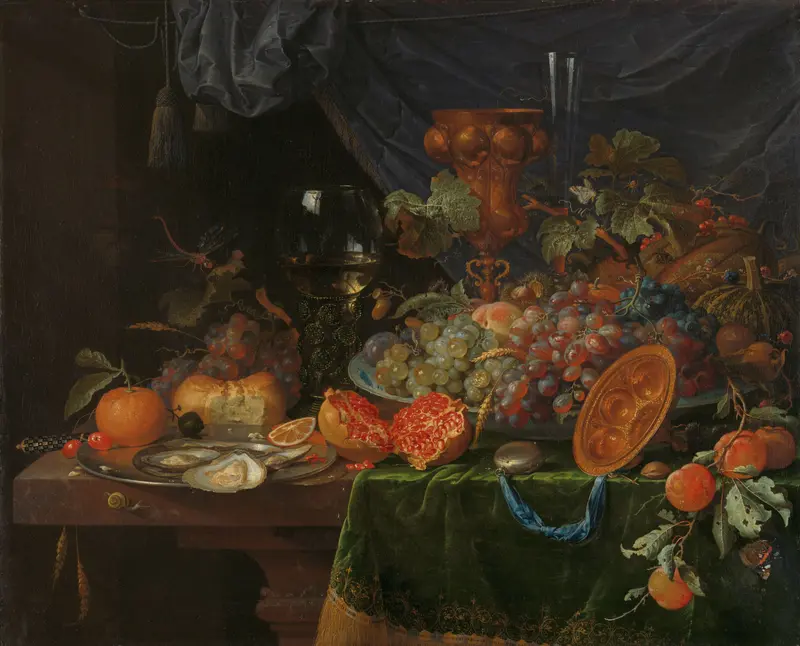
Still Life with Fruit and Oysters
Abraham Mignon
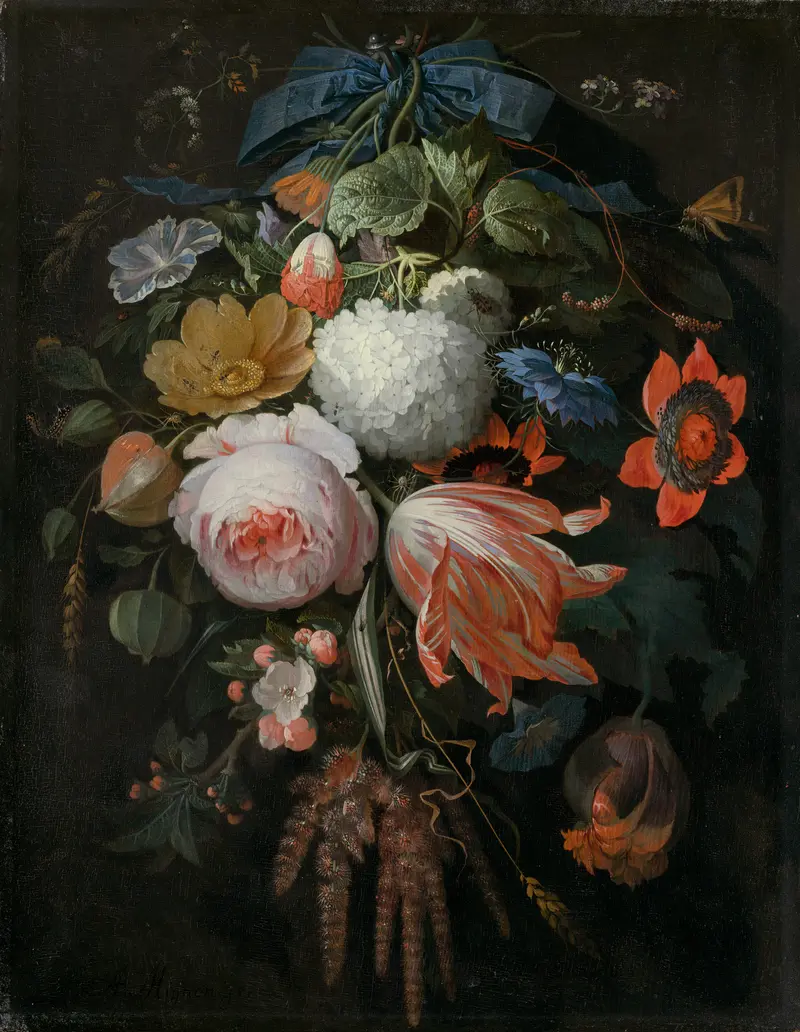
A Hanging Bouquet of Flowers
Abraham Mignon
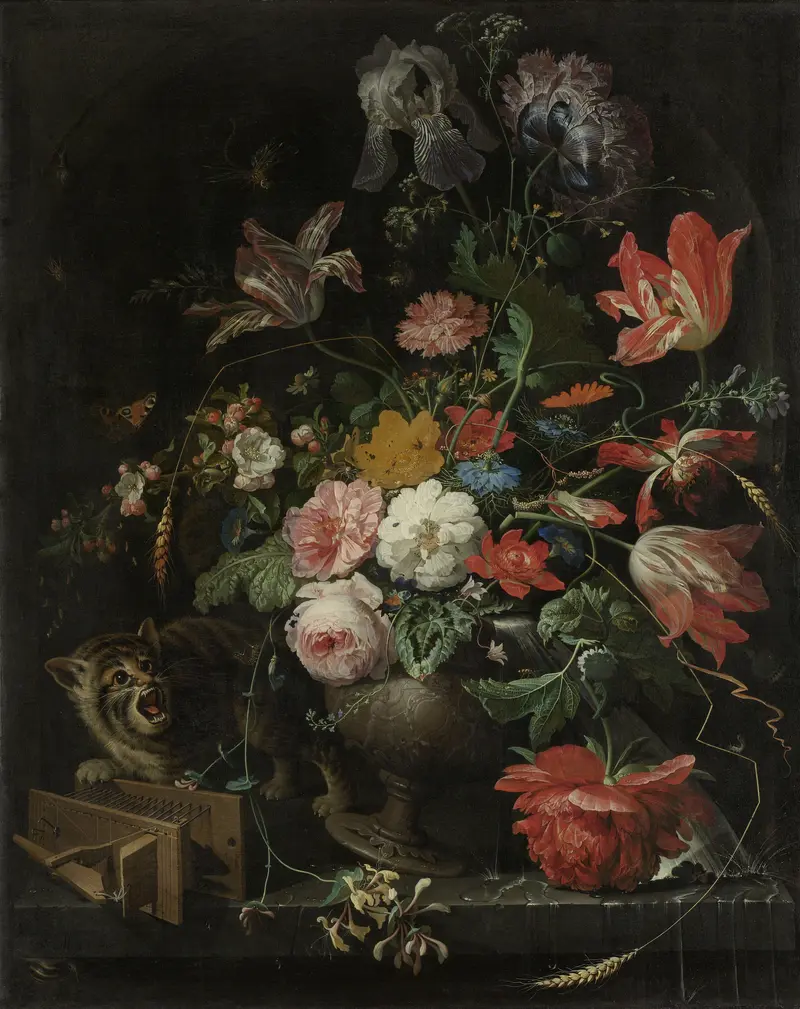
Bouquet with cat and mousetrap
Abraham Mignon
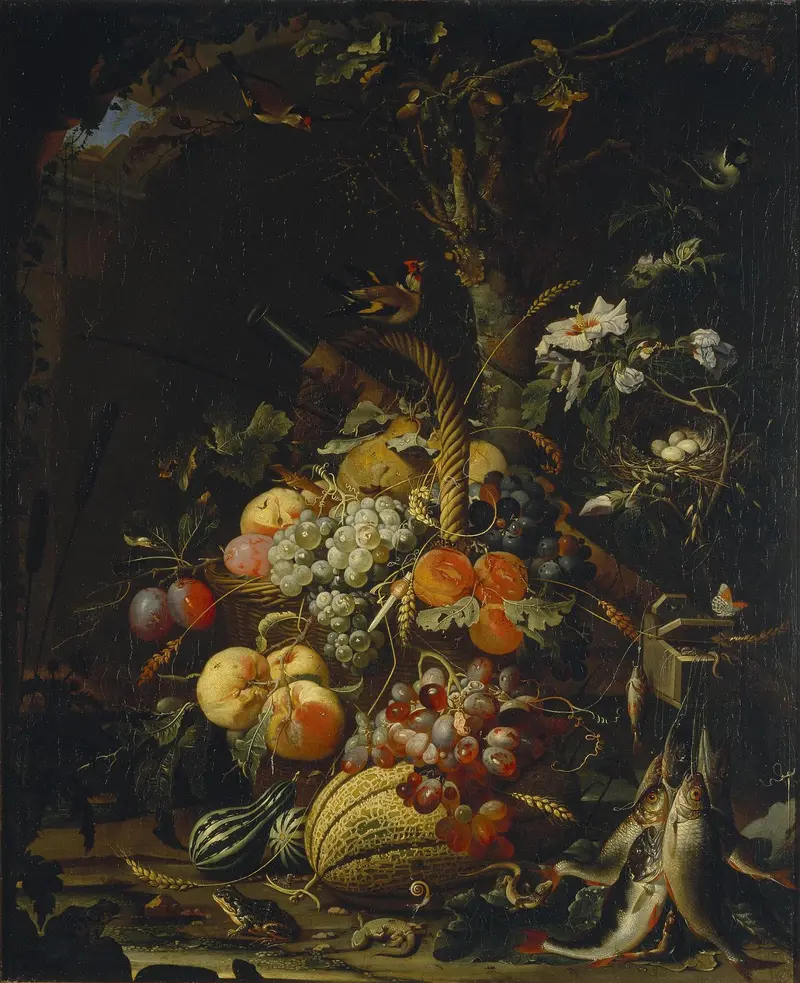
Forest floor still life with fruit, fish and a bird's nest
Abraham Mignon
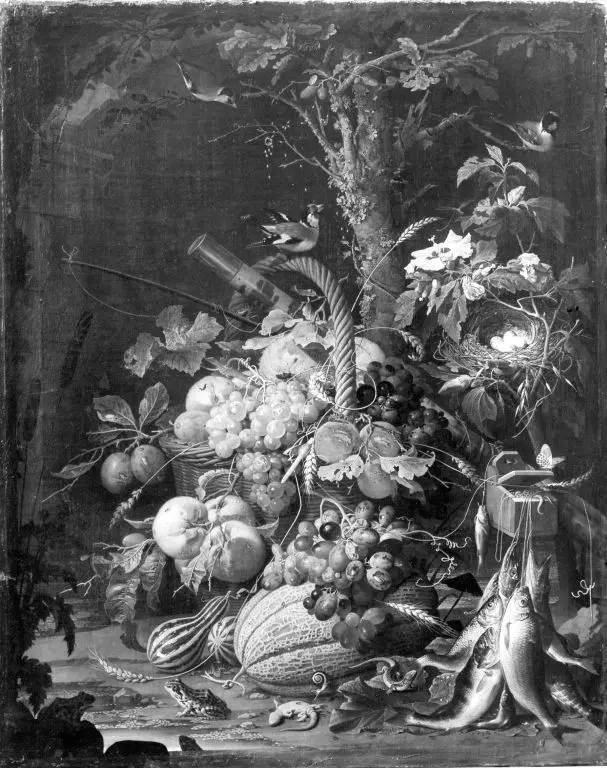
Still life with fruit, fish and a bird's nest
Abraham Mignon
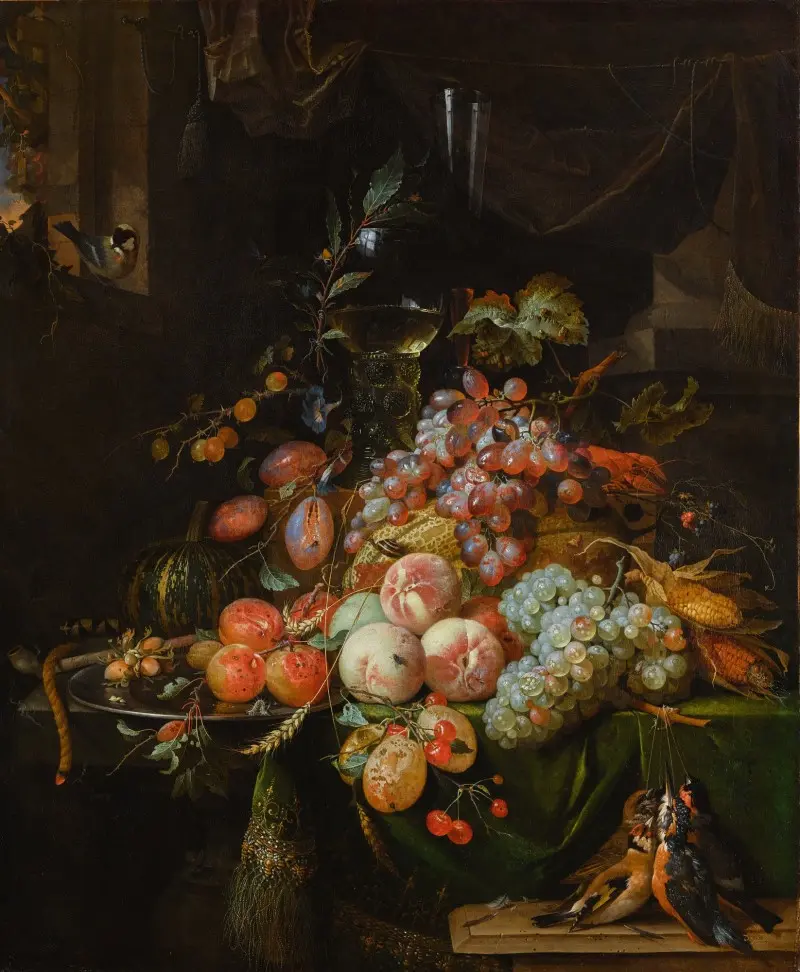
Still Life with Plums, Peaches, Apricots, Grapes and a Melon
Abraham Mignon
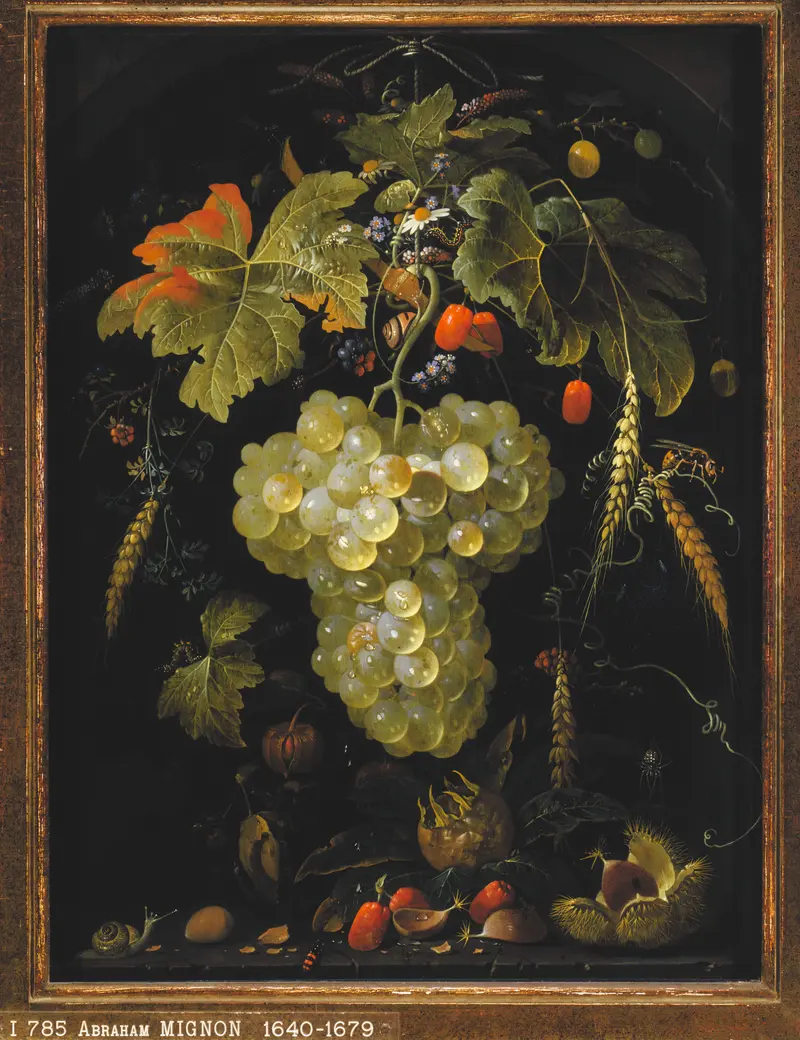
Festoon of fruit suspended from a rope, in a niche
Abraham Mignon
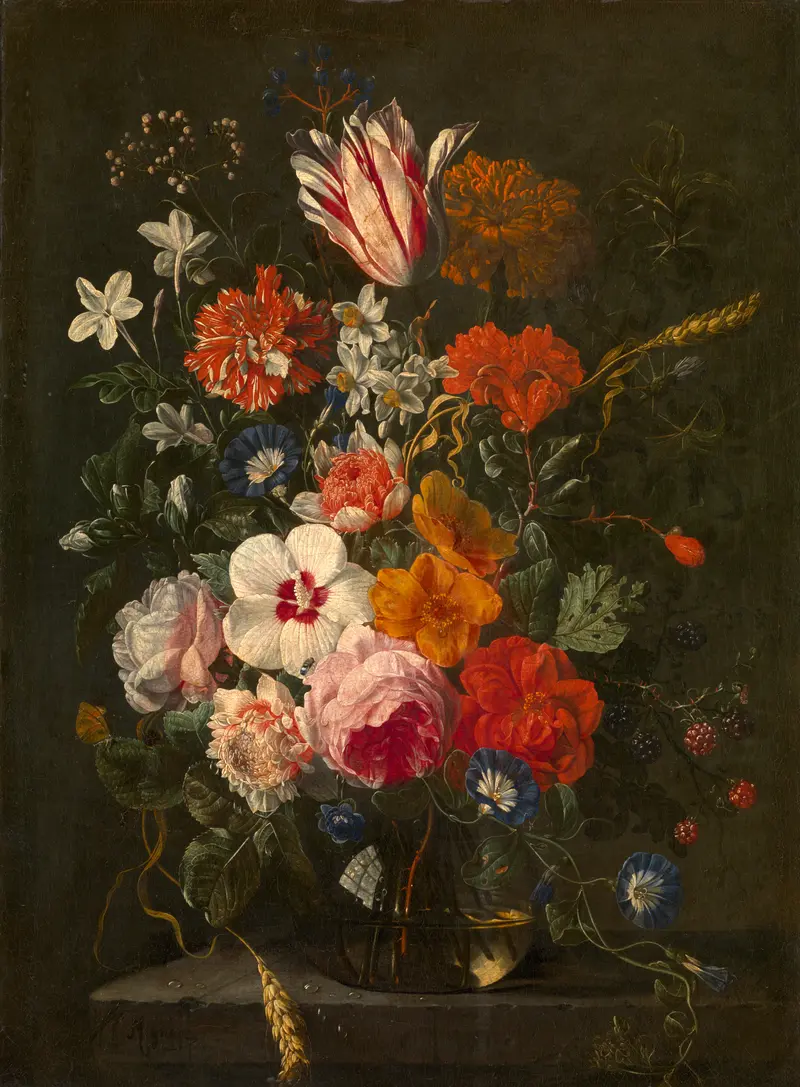
Flowers and a branch of berries in a glass vase on a stone ledge
Abraham Mignon
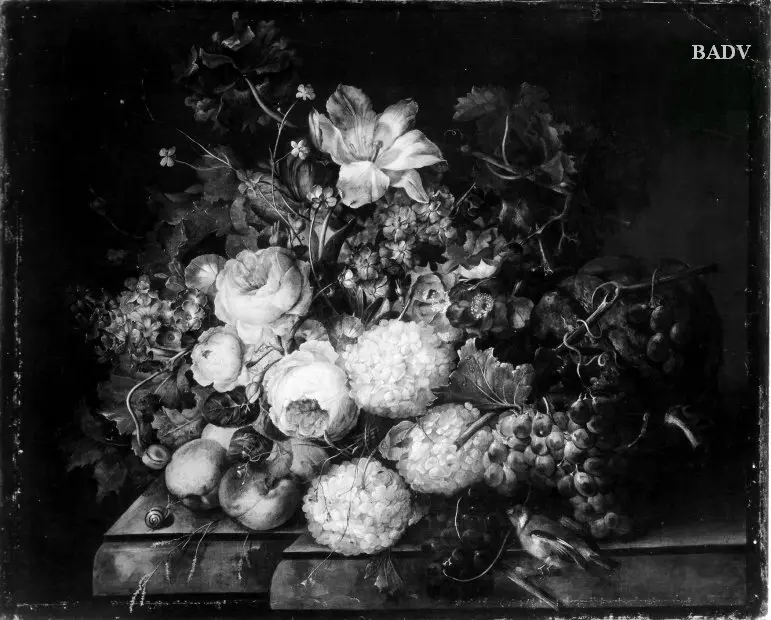
Flowers and fruit on a plinth
Abraham Mignon





