
Still Life with a Goblet of Wine, Fruit and Oysters — History & Facts
A single goblet of wine rises above a feast of oysters, fruit, and bread, its glass catching the light and reflecting the world beyond the frame. The eye is drawn first to the glistening oysters, their flesh rendered with such precision that they seem to glimmer with saltwater freshness. Drops of juice cling to the lemon peel, and the sharp, glossy seeds of a split pomegranate spill across the table, hinting at the fleeting pleasures of taste and abundance.
Every object is carefully placed: the bread is broken, not whole, and the silver knife rests casually, as if recently used. The blue and white porcelain bowl, with its delicate pattern, brings a note of luxury, while the wild sprigs and berries weave through the scene, blurring the line between cultivated and wild, feast and foraged. Painted in 1670, this work by Abraham Mignon stands firmly in the tradition of Dutch and Flemish still life, a genre that flourished in the seventeenth century. Such paintings were prized by collectors who delighted in their technical bravura and the coded messages they carried—reminders of wealth, the senses, and the passage of time.
The lavish spread here is more than a display of painterly skill; it is a meditation on the pleasures and brevity of life, a theme echoed in the meticulous rendering of perishable foods and the subtle play of light and shadow. Today, the painting resides in the collection of the National Gallery in Prague, where it continues to invite viewers to linger over every detail, savoring the richness that only close looking can reveal.
More Artworks by Abraham Mignon

Still Life with Flowers and a Watch
Abraham Mignon
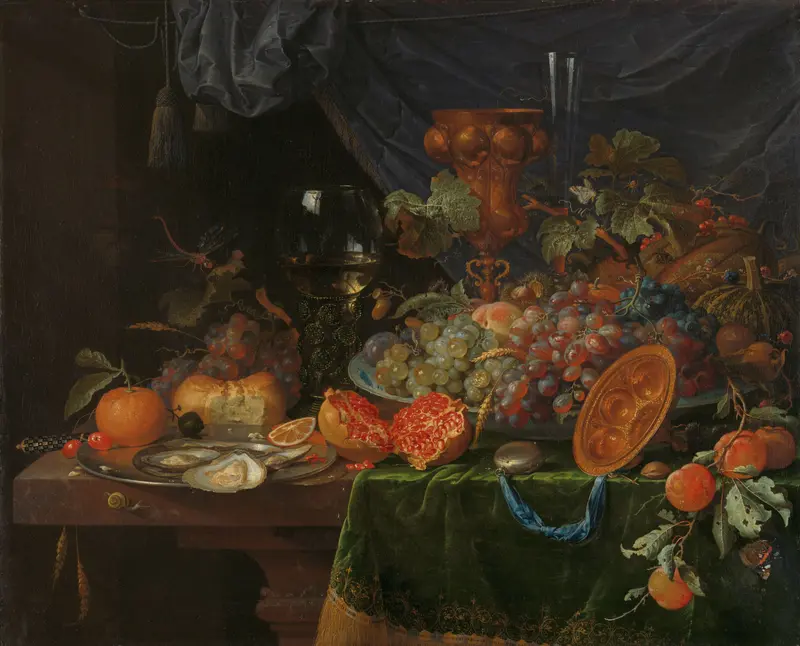
Still Life with Fruit and Oysters
Abraham Mignon
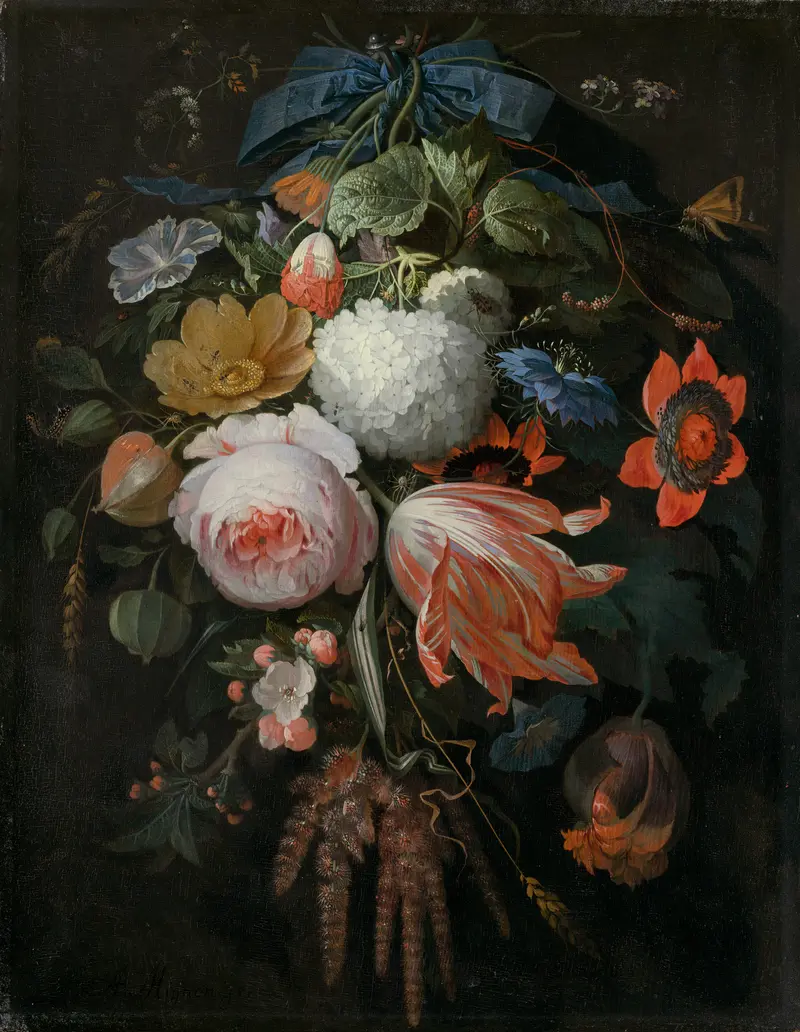
A Hanging Bouquet of Flowers
Abraham Mignon
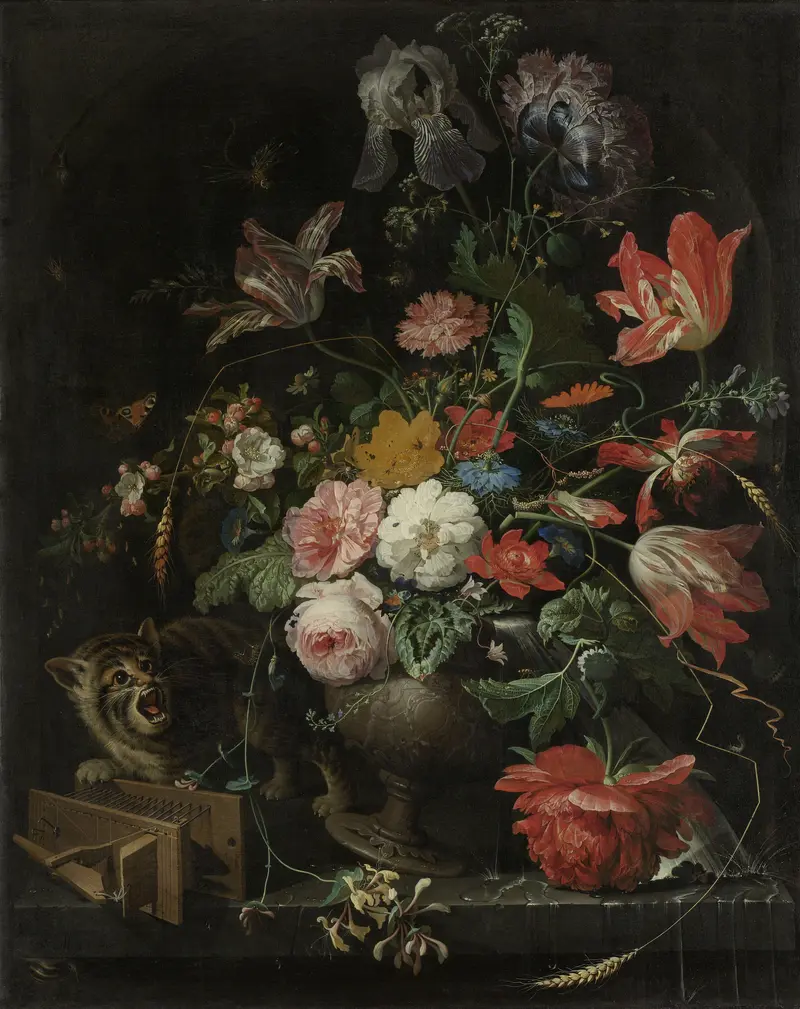
Bouquet with cat and mousetrap
Abraham Mignon
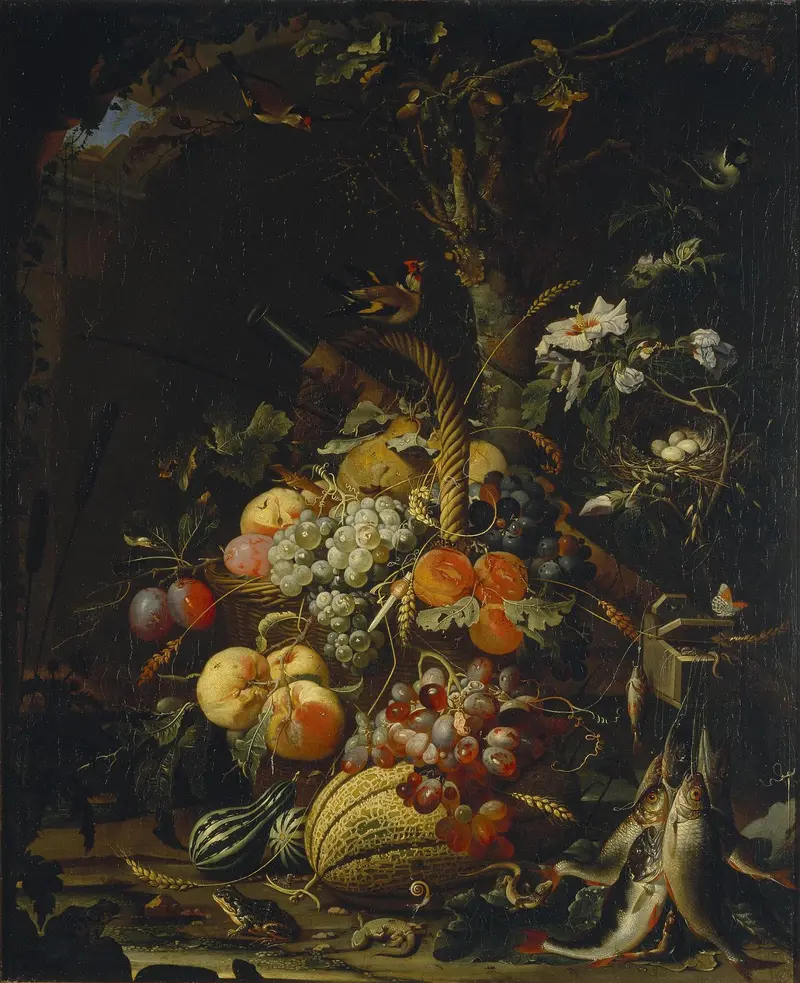
Forest floor still life with fruit, fish and a bird's nest
Abraham Mignon
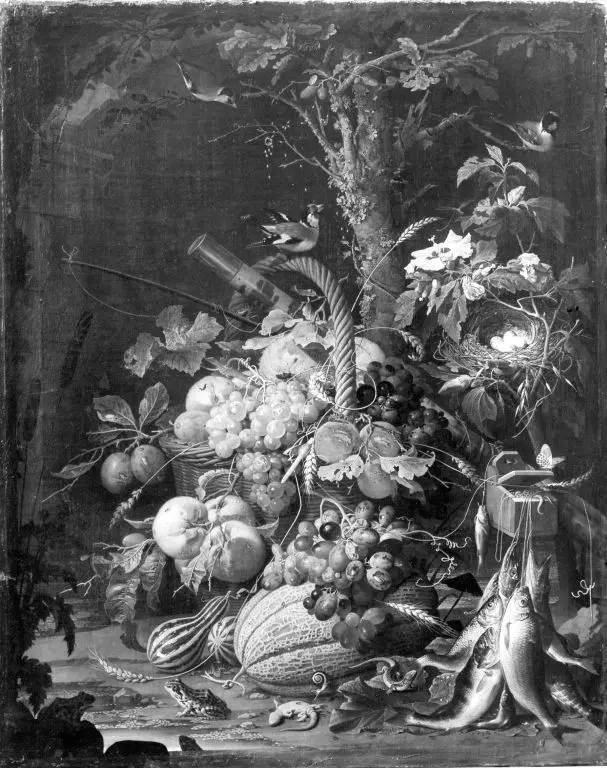
Still life with fruit, fish and a bird's nest
Abraham Mignon
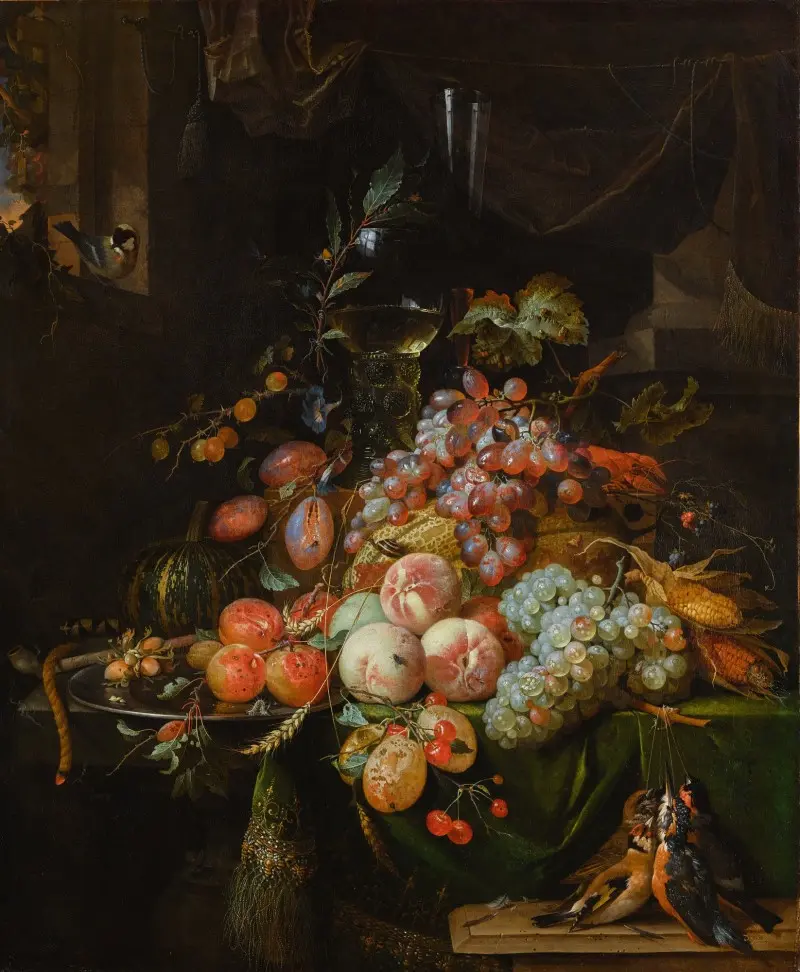
Still Life with Plums, Peaches, Apricots, Grapes and a Melon
Abraham Mignon
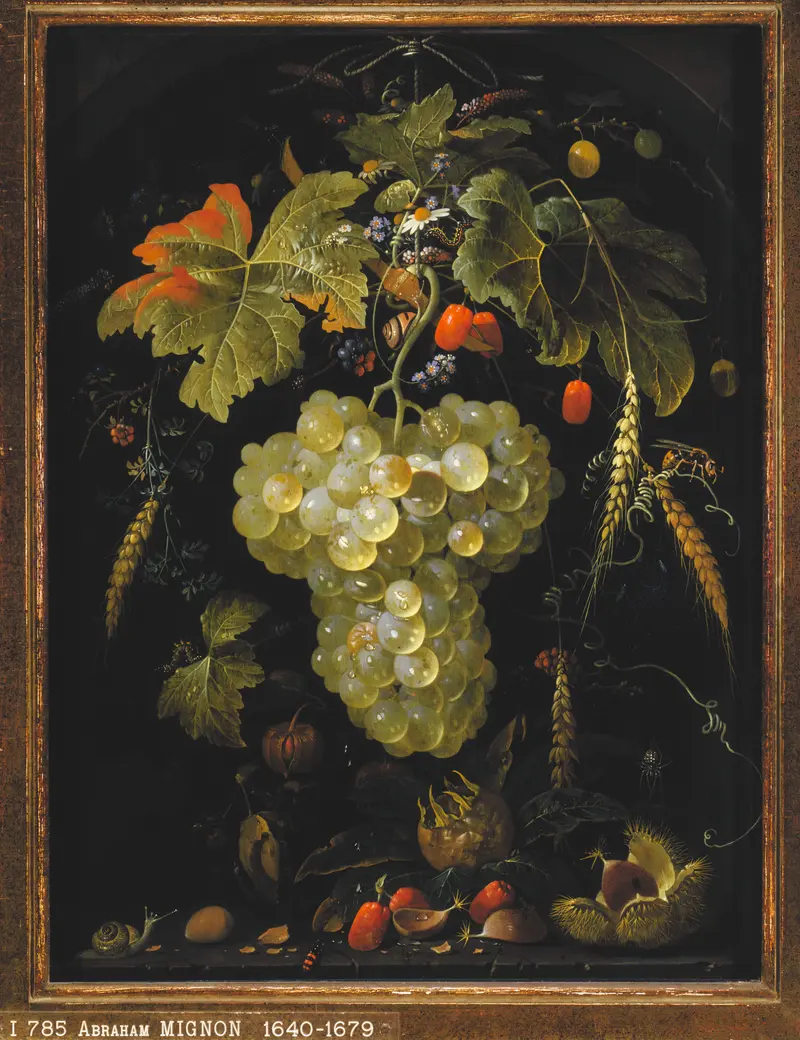
Festoon of fruit suspended from a rope, in a niche
Abraham Mignon
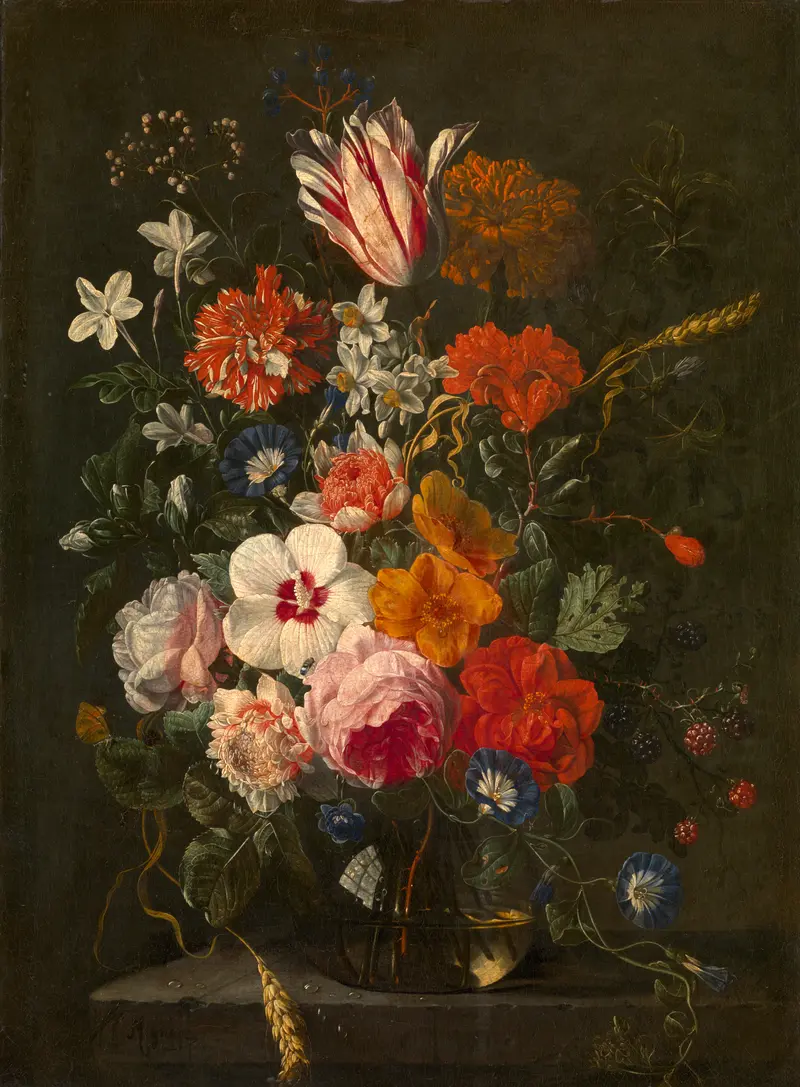
Flowers and a branch of berries in a glass vase on a stone ledge
Abraham Mignon
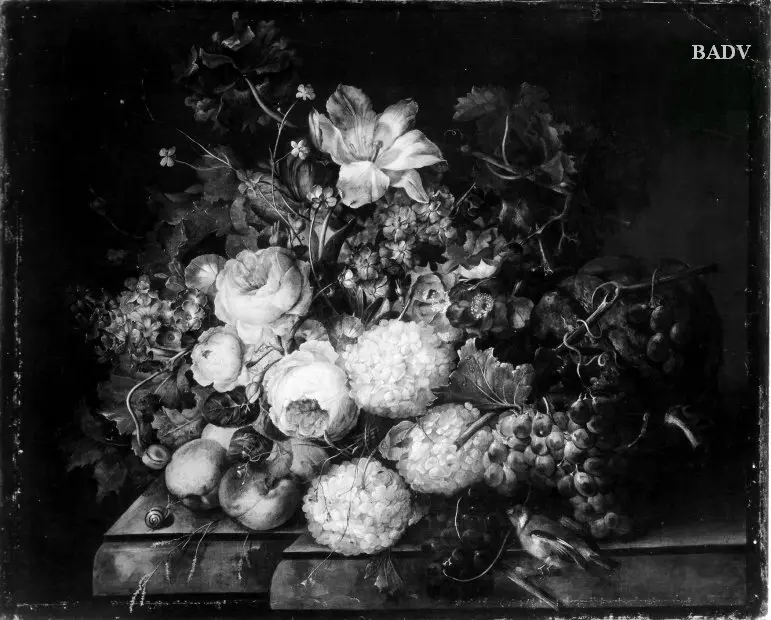
Flowers and fruit on a plinth
Abraham Mignon





