
Still-Life with a Silver Ewer — History & Facts
What first catches the eye in Still-Life with a Silver Ewer is the way light seems to pour itself over each object, lingering on the cool gleam of the ewer and the velvet folds of the crimson cloth. The painter, Abraham van Beyeren, guides us through a banquet that never quite begins: a half-peeled orange, a split peach, and an oyster poised on a silver tray speak of pleasures interrupted or anticipated. The ewer’s reflective surface doubles the world around it, drawing the viewer into the scene and making the act of looking itself part of the spectacle.
Every detail is calculated—the chain of a pocket watch drapes over the table’s edge, hinting at time’s passage, while the glass goblet, barely visible against the shadow, suggests both abundance and fragility. The palette is rich but never garish, holding the eye in a kind of hushed suspense. Painted in 1655, this work belongs to the Dutch Golden Age, when still-life paintings like this one were prized by wealthy merchants eager to display both their taste and their prosperity. Such images were more than decoration; they were meditations on luxury, temporality, and the fleeting nature of pleasure.
The objects—fruit, silver, porcelain—were often imported, signaling the reach of Dutch trade and the cosmopolitan aspirations of their owners. While little is recorded about the specific journey of this painting, its presence today in the Toledo Museum of Art links it to a long tradition of collecting and admiration. Look again at the reflection in the ewer and the glint of the oyster’s flesh: in these details, the world of seventeenth-century Holland is alive, inviting us to linger a moment longer.
More Artworks by Abraham van Beyeren

Still Life
Abraham van Beyeren
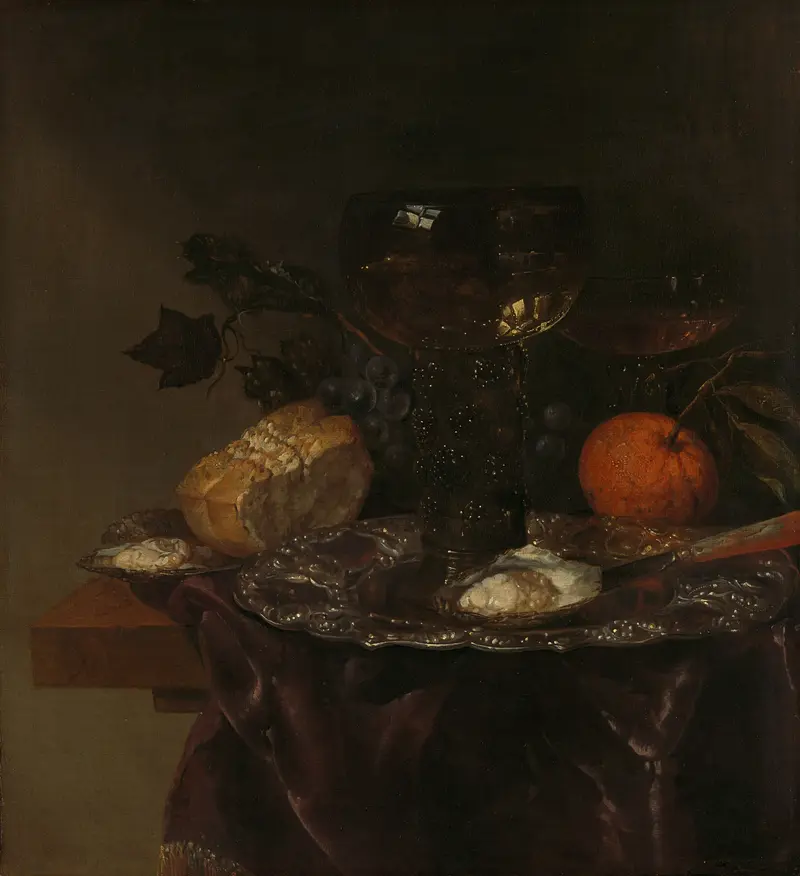
Still Life
Abraham van Beyeren
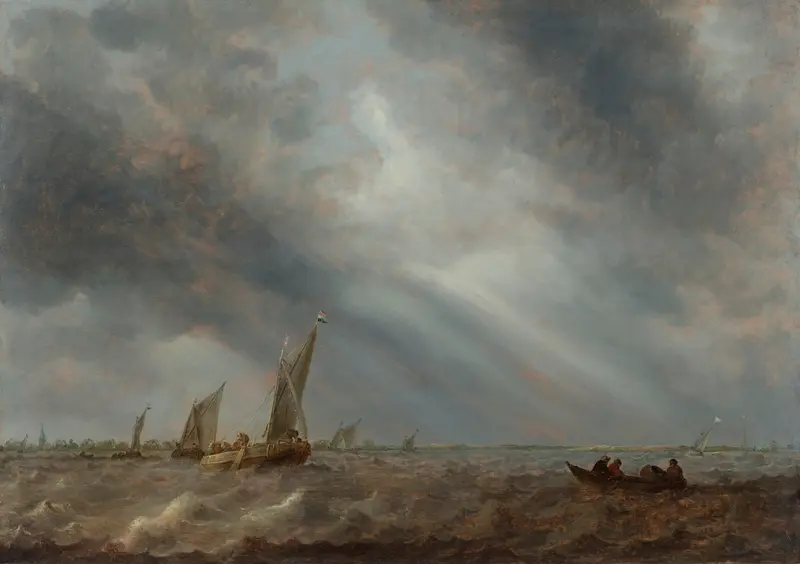
Various sailing vessels and a rowing boat with fishermen on choppy waters under a stormy sky
Abraham van Beyeren
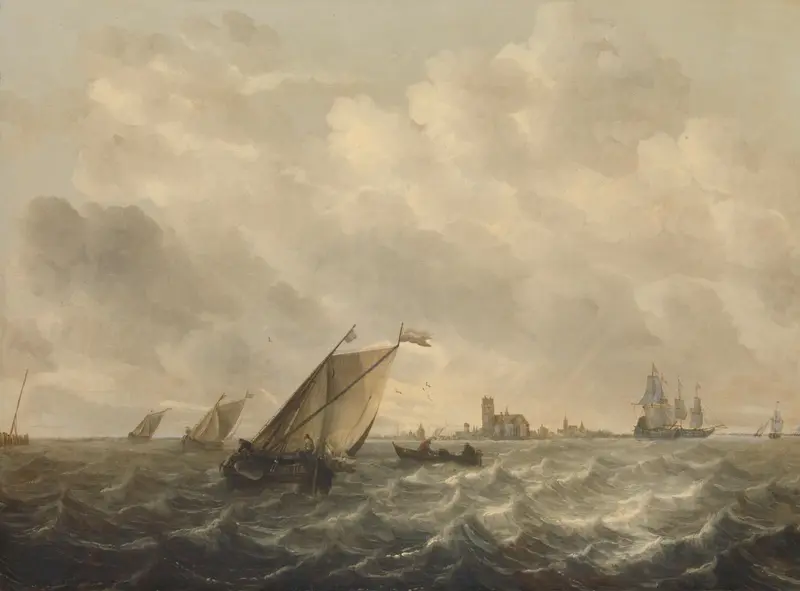
River View
Abraham van Beyeren
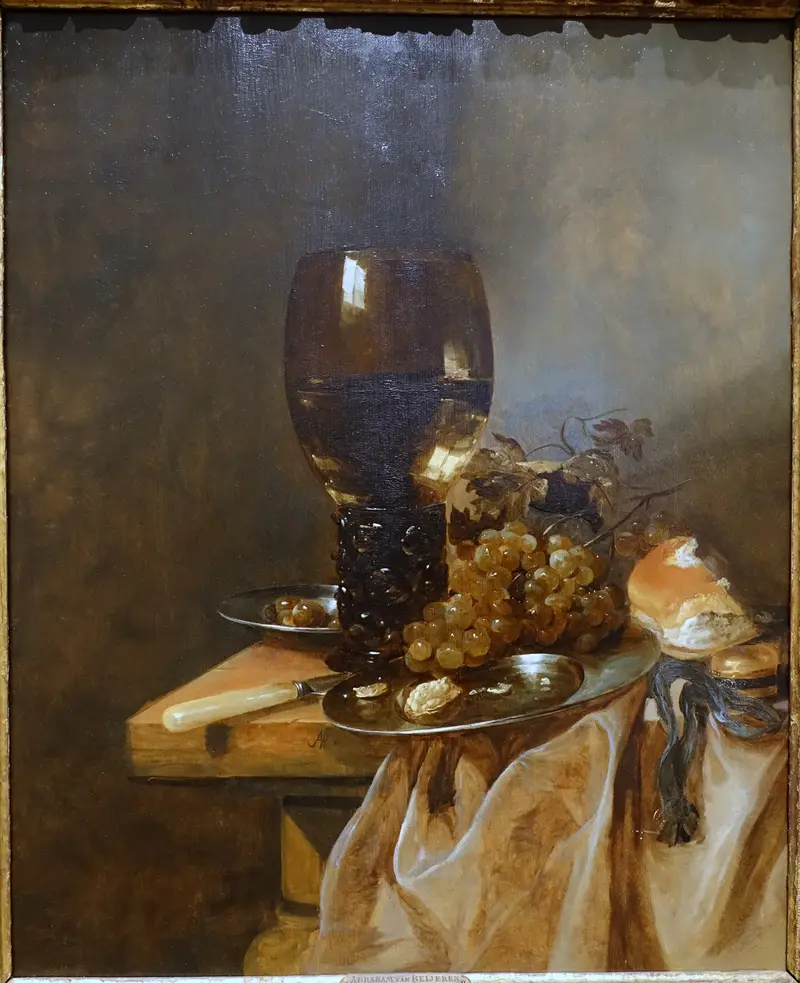
A Roemer with Grapes, a Pewter Plate and a Roll
Abraham van Beyeren
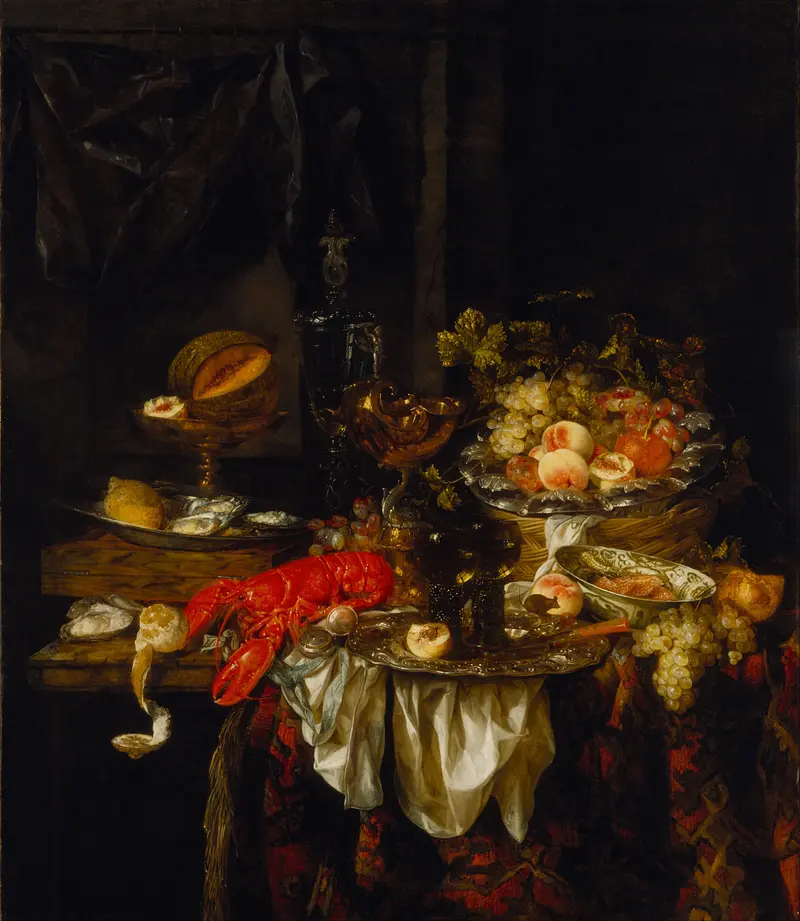
Banquet Still Life
Abraham van Beyeren
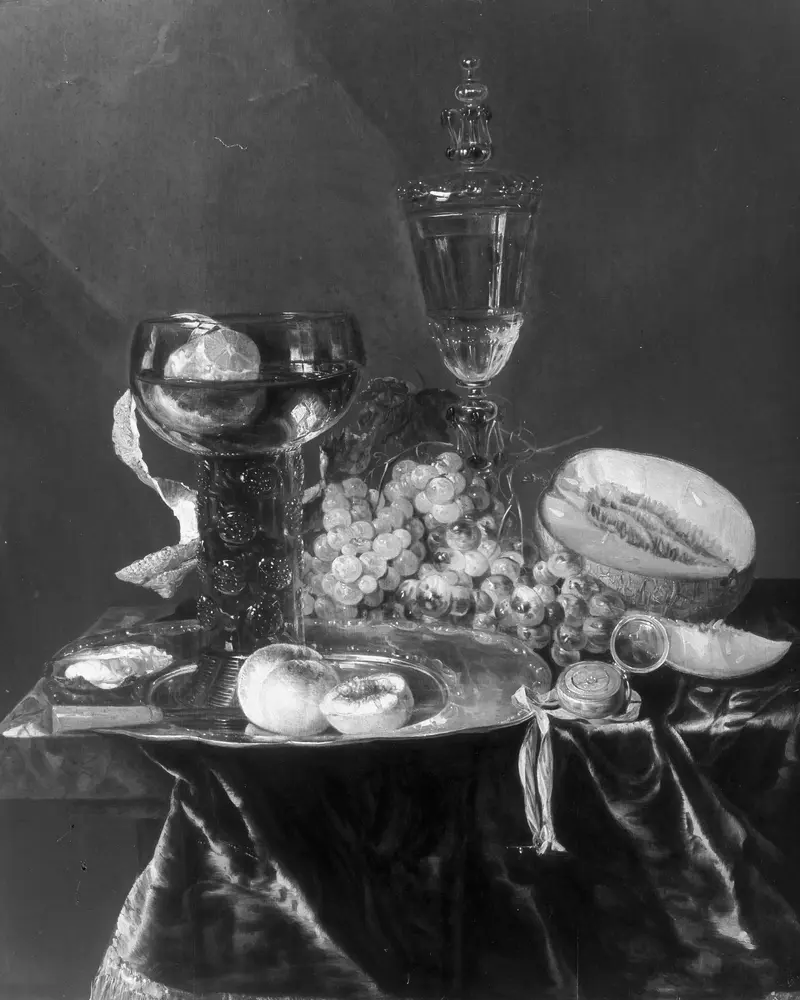
Still life with a glass lid goblet
Abraham van Beyeren
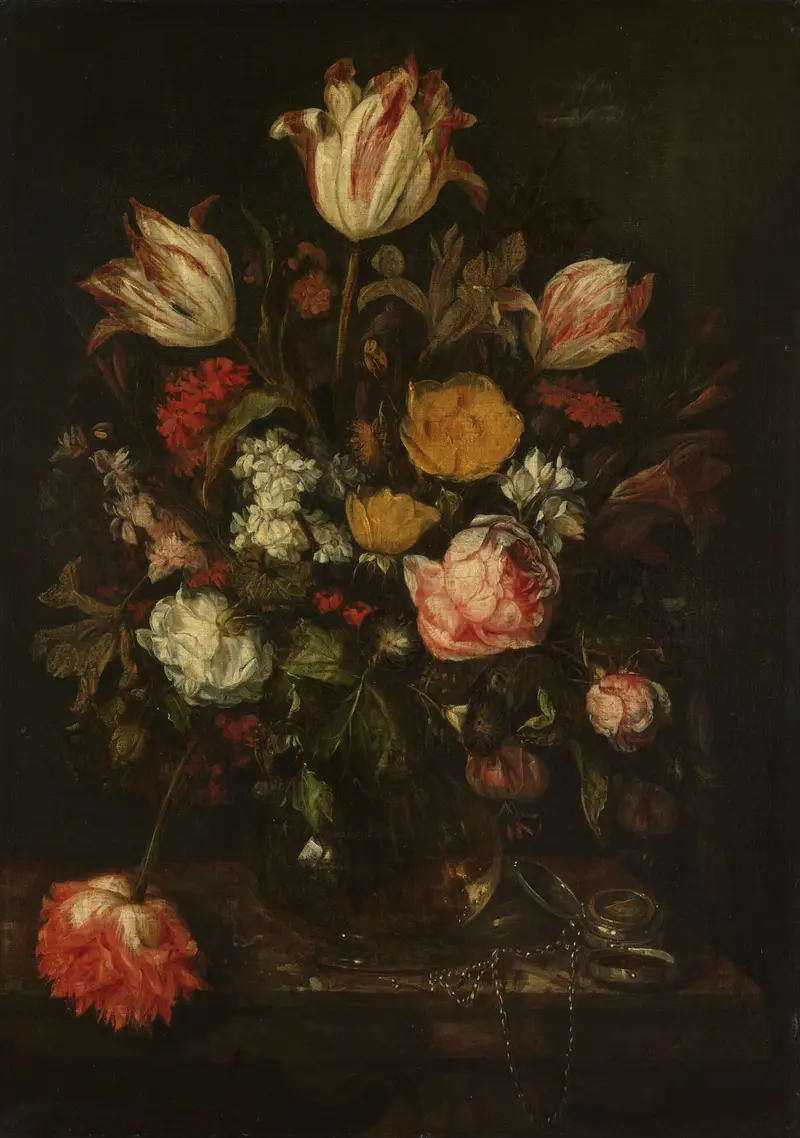
Still life with flowers
Abraham van Beyeren
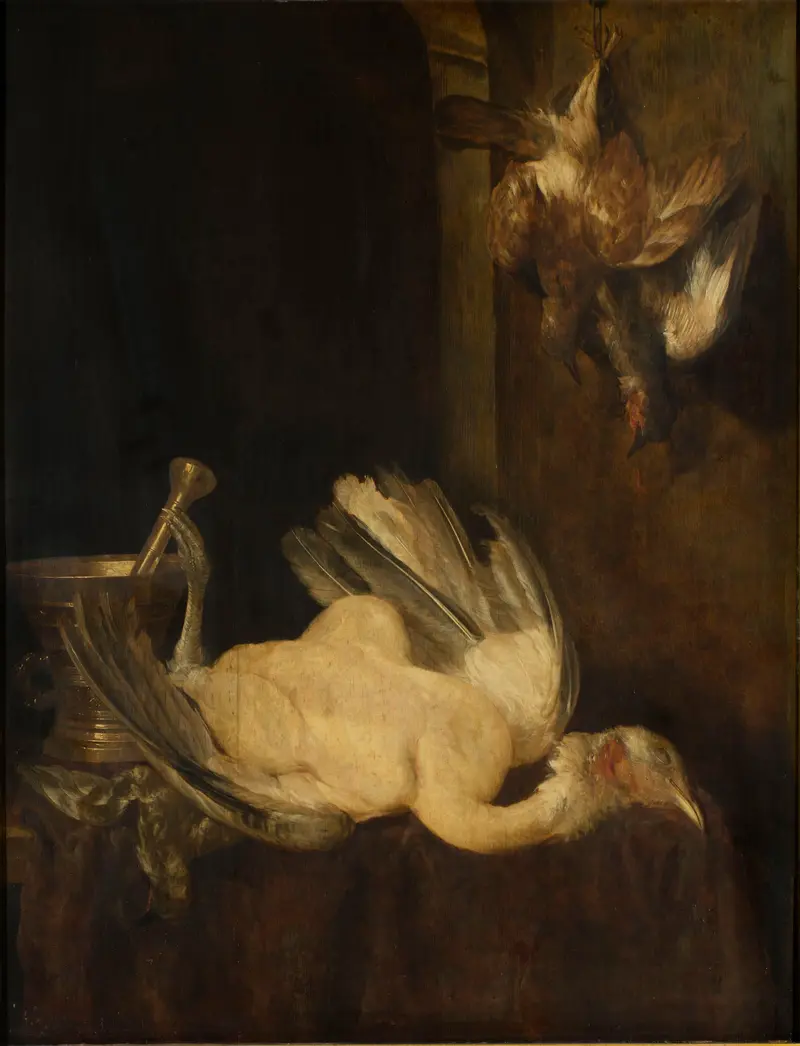
Still life with dead birds
Abraham van Beyeren
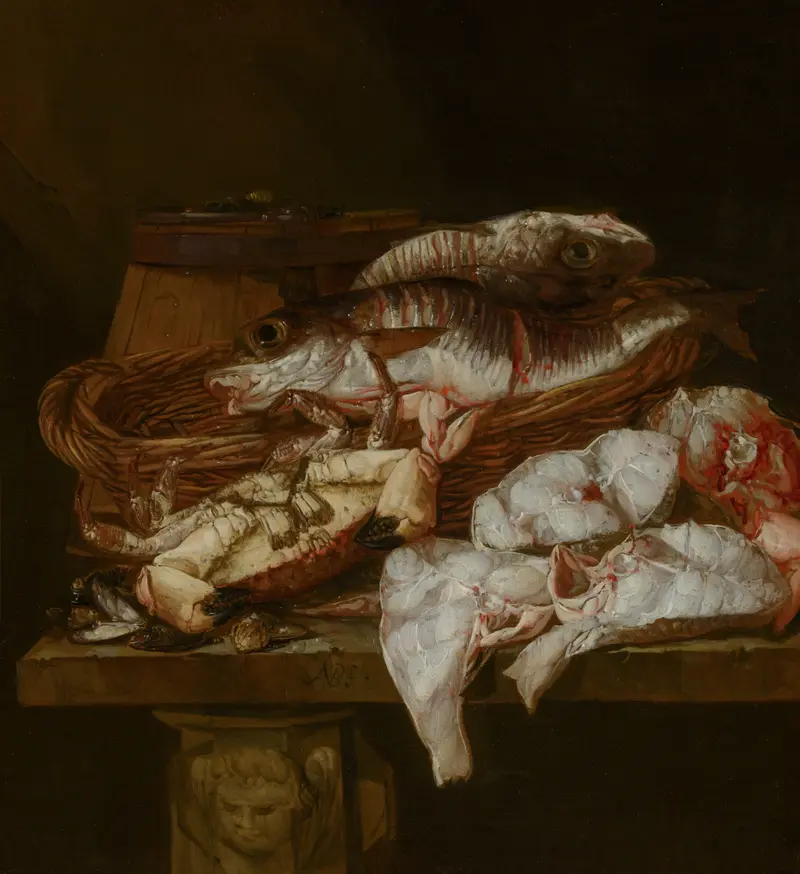
Still Life with Seafood
Abraham van Beyeren





