
Still life with a silver jug. — History & Facts
A silver jug gleams at the edge of shadow, its reflective surface catching the flicker of light that dances across peeled lemon rind, a half-open pocket watch, and the glistening seeds of a pomegranate. This is a table paused in the midst of indulgence, where every object seems to wait for a hand to return and finish the feast. The painter, Abraham van Beyeren, guides the viewer’s gaze from the cool, intricate metalwork to the fragile glass, then to the lush fruit and the richly patterned cloth that spills over the table’s edge.
The careful placement of a broken roll and the peeled citrus suggests both abundance and the fleeting nature of pleasure—reminders that even the finest things are meant to be consumed. Painted in the 1660s, this still life belongs to a world where such images spoke of wealth, taste, and the global reach of Dutch trade. Collectors of the Dutch Golden Age commissioned these paintings to display their prosperity and refinement, filling their homes with reminders of luxury and the passage of time. The ornate silver, the imported porcelain, and the exotic fruit all hint at a society newly connected to distant lands, while the watch and the half-eaten bread quietly echo the era’s fascination with mortality and the vanitas tradition.
Though history has kept few traces of this particular canvas beyond its date and current collection, its surface invites us to linger—searching for meaning in every reflection and crumb.
More Artworks by Abraham van Beyeren

Still Life
Abraham van Beyeren
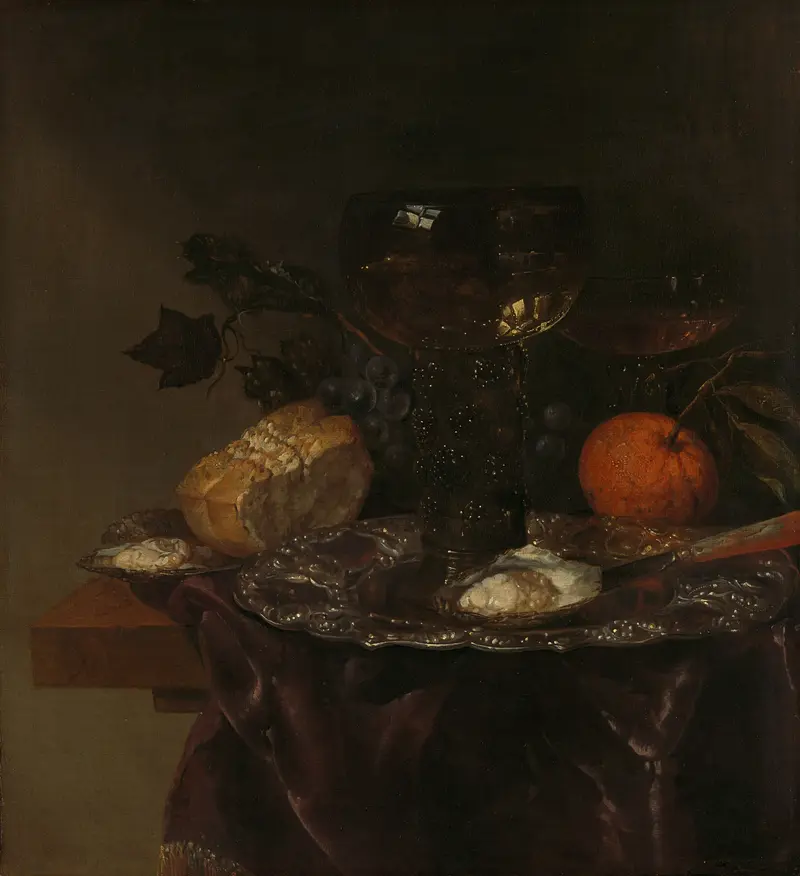
Still Life
Abraham van Beyeren
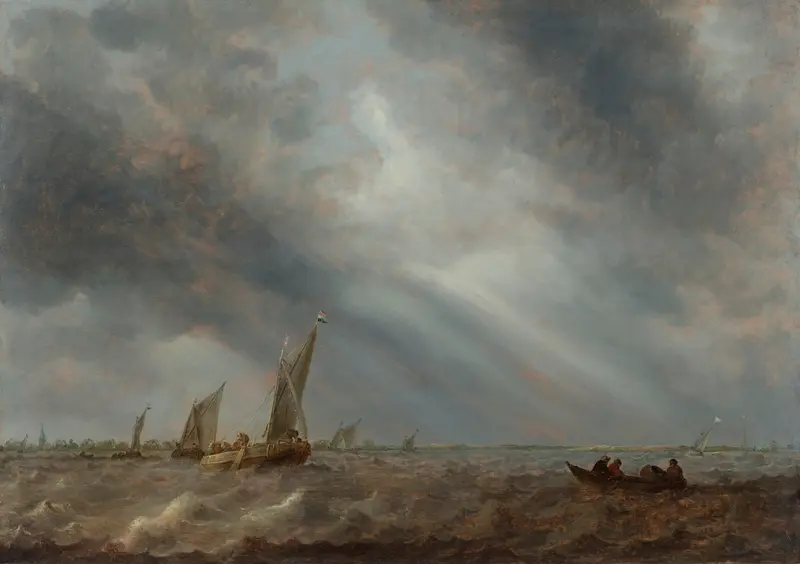
Various sailing vessels and a rowing boat with fishermen on choppy waters under a stormy sky
Abraham van Beyeren
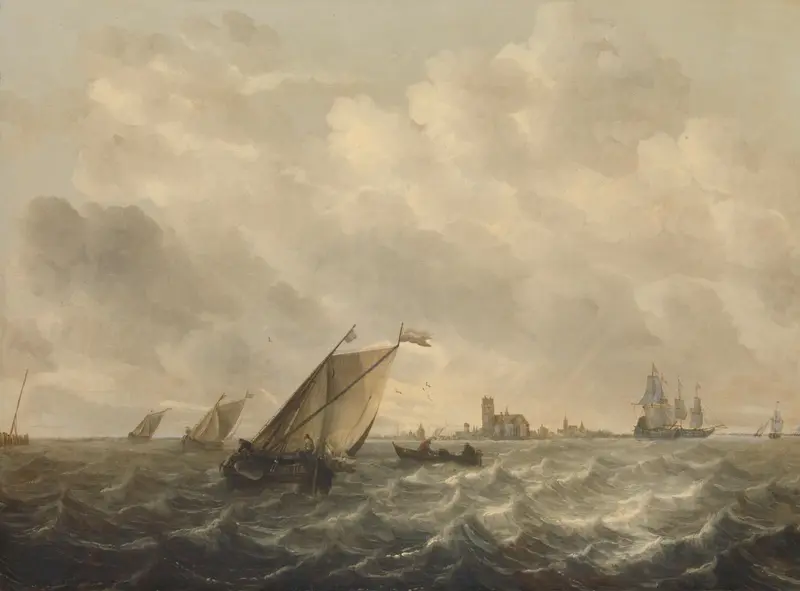
River View
Abraham van Beyeren
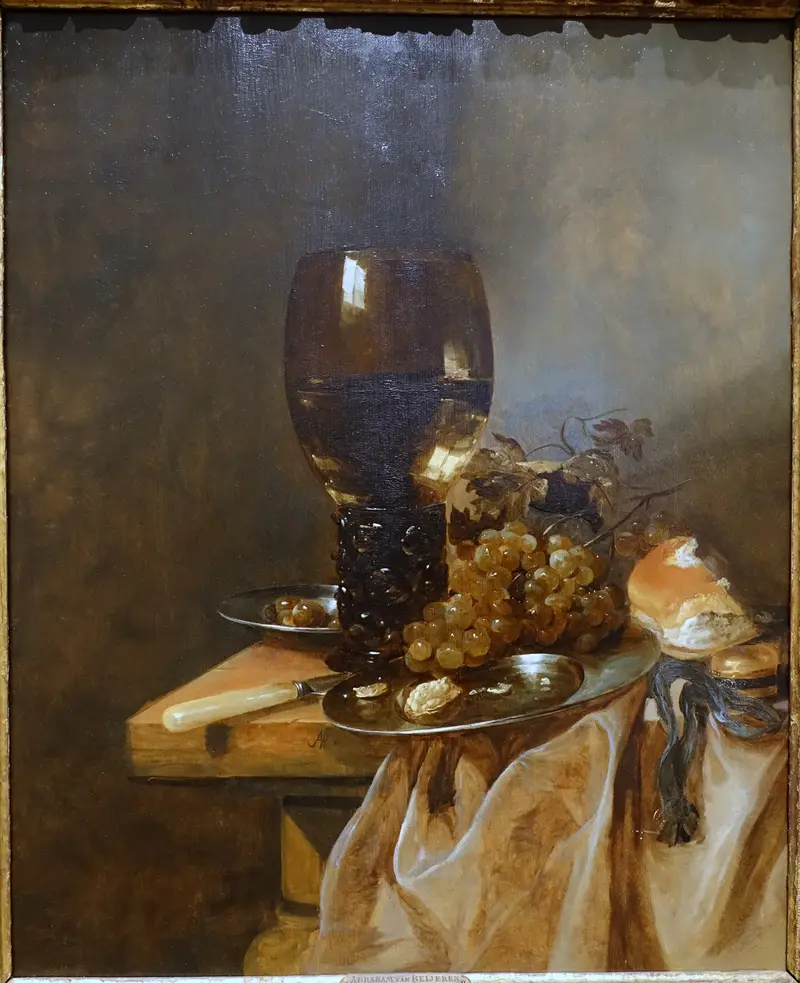
A Roemer with Grapes, a Pewter Plate and a Roll
Abraham van Beyeren
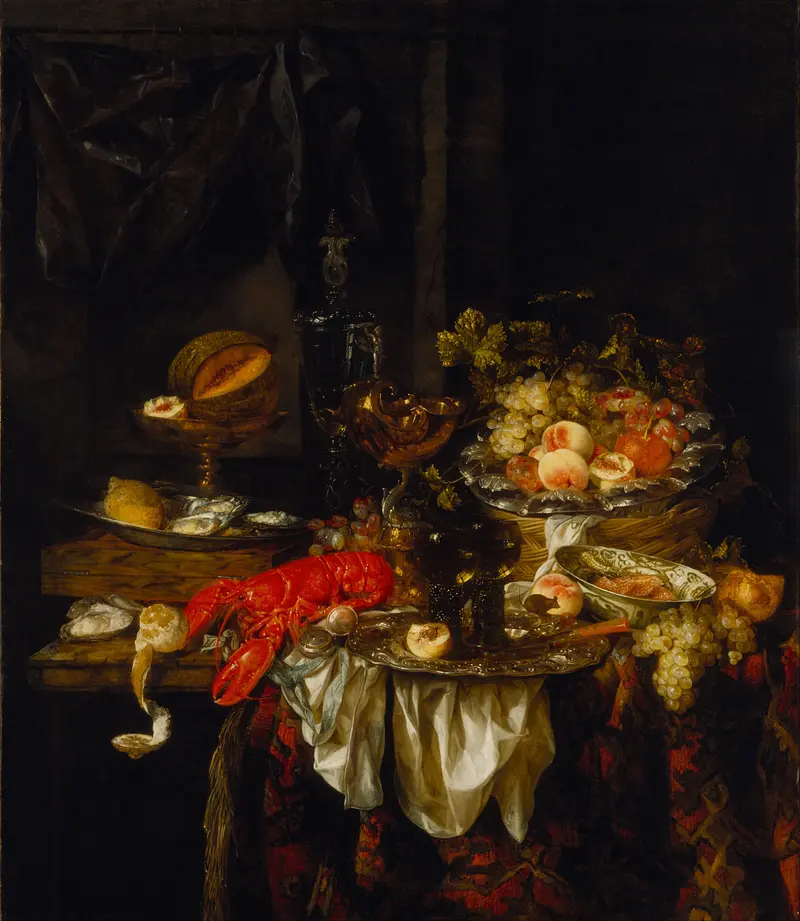
Banquet Still Life
Abraham van Beyeren
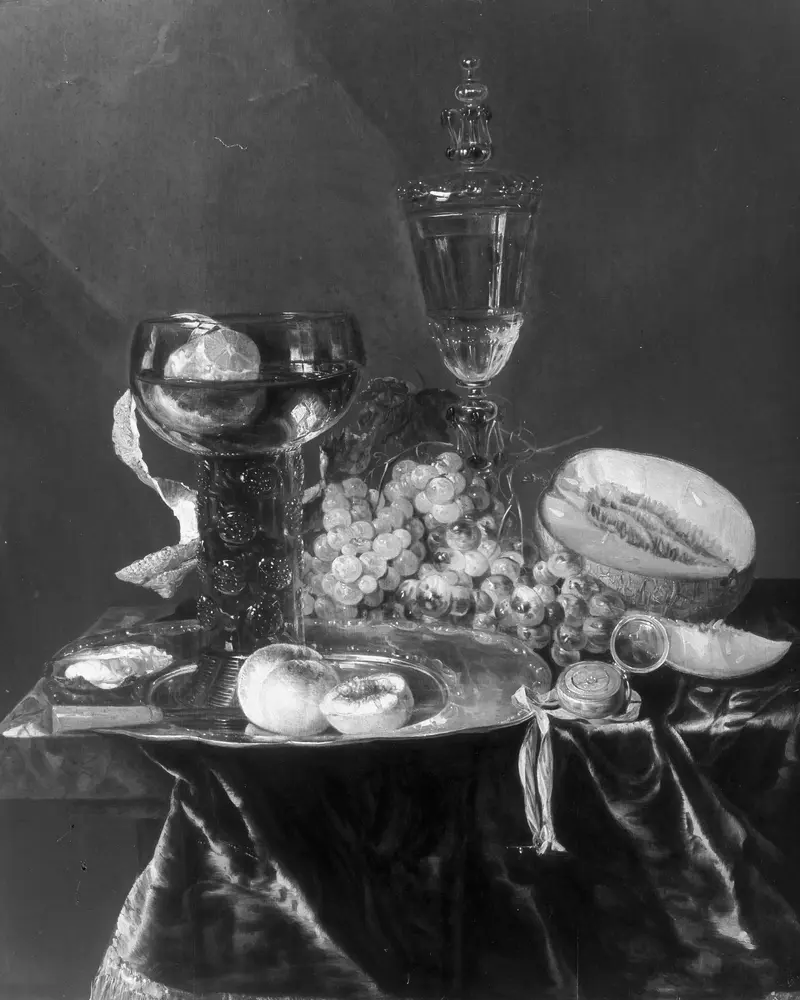
Still life with a glass lid goblet
Abraham van Beyeren
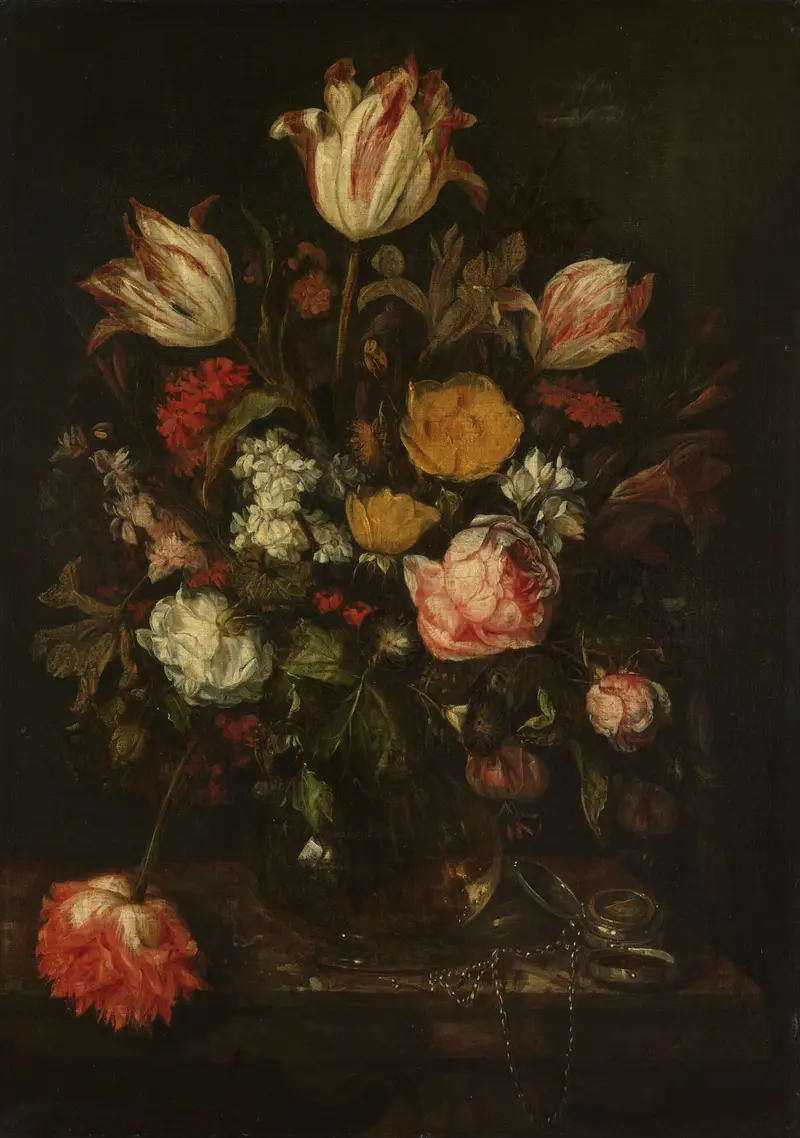
Still life with flowers
Abraham van Beyeren
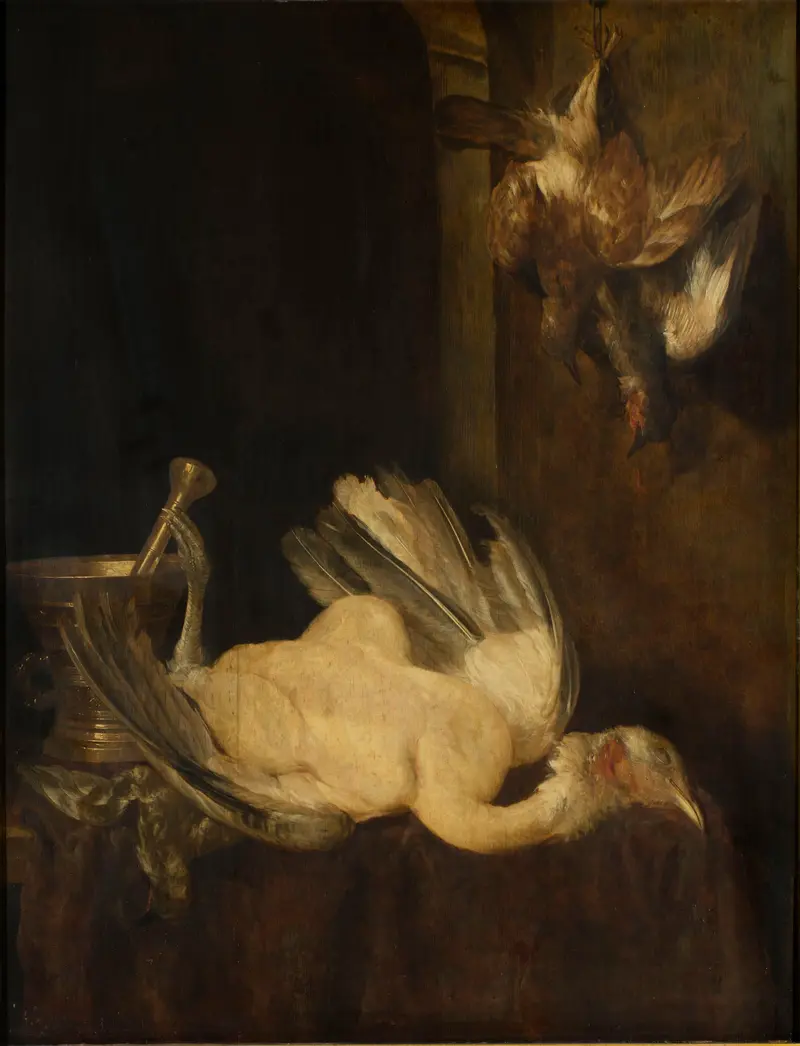
Still life with dead birds
Abraham van Beyeren
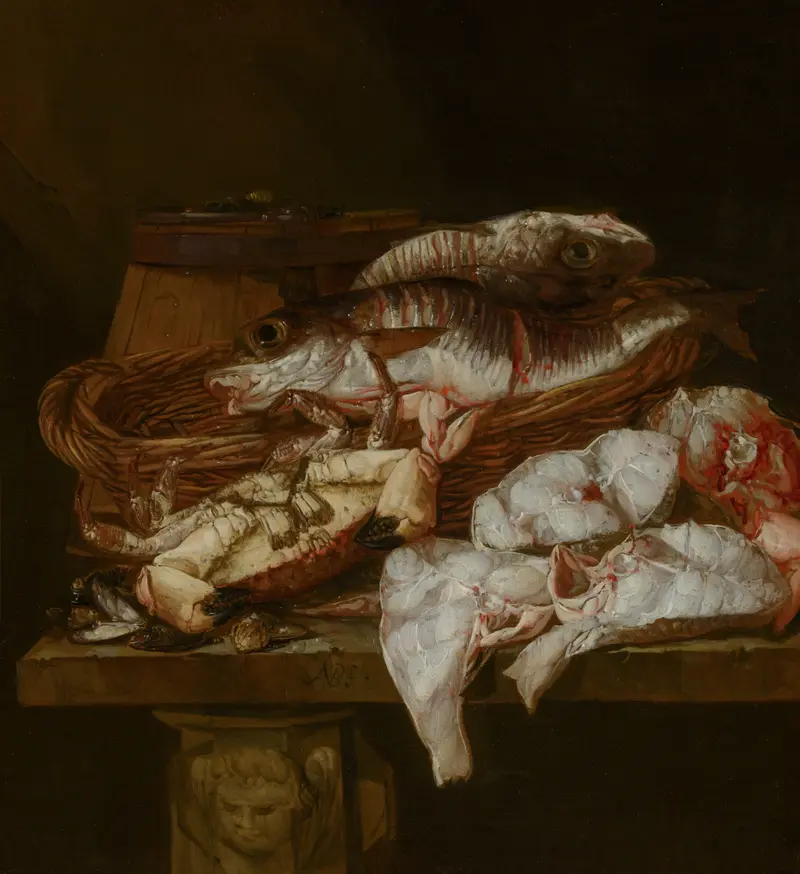
Still Life with Seafood
Abraham van Beyeren





