
Still life with berkemeyer — History & Facts
What first arrests the eye in Still life with berkemeyer is the play of light across a table that seems caught between abundance and disorder. The golden liquid in the ornate berkemeyer glass rises above the rest, its stem carved with fantastical detail, while the gleam of metal and the cool flesh of fruit draw the viewer’s gaze in slow circles. A silver goblet lies toppled, grapes spill towards the edge, and a lemon peel curls extravagantly, as if time has just paused after a sumptuous meal.
The painter’s touch lingers on the textures: the glistening fish, the fragile porcelain, the bread’s crust, and the crisp linen, each rendered with a care that invites close inspection. Works like this, painted in 1650 by Abraham van Beyeren, belong to the Dutch Golden Age’s tradition of pronkstilleven, or “ostentatious still lifes.” In a world newly wealthy from trade and exploration, such paintings were prized by prosperous merchants eager to display their refinement and worldly goods. The berkemeyer itself—a glass favored in the Netherlands—signals both local pride and the pleasures of the table. Little is recorded about the specific journey of this painting, but its survival into the present, as documented by its appearance in a modern collection, is a testament to the enduring fascination with the rituals and rewards of daily life.
The longer you look, the more the surface yields: a meditation on taste, time, and the fleeting nature of plenty.
More Artworks by Abraham van Beyeren

Still Life
Abraham van Beyeren
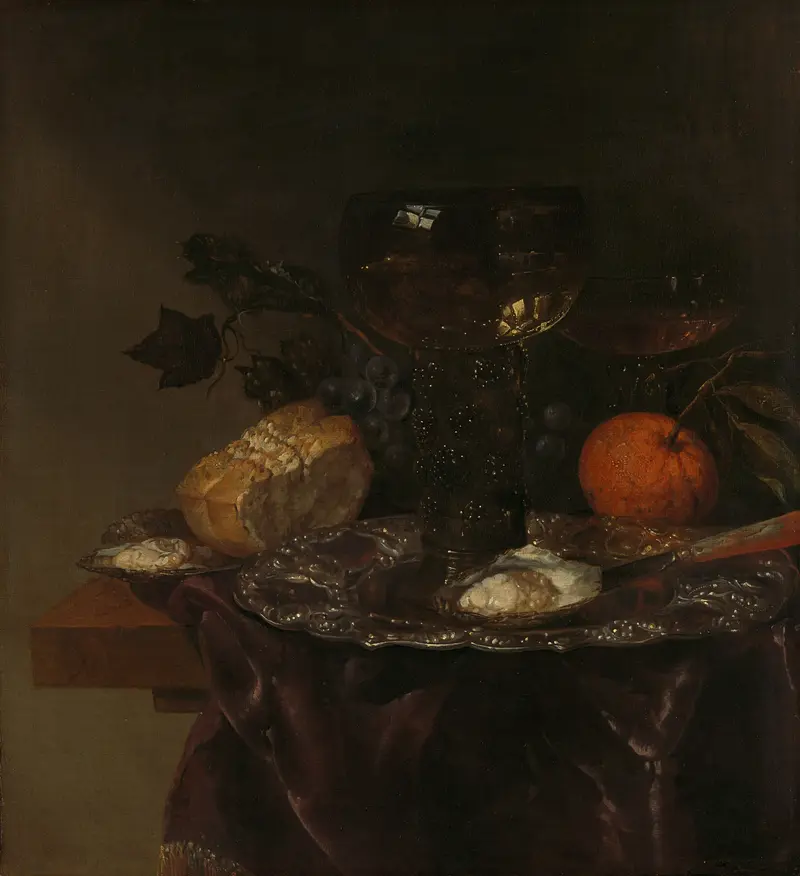
Still Life
Abraham van Beyeren
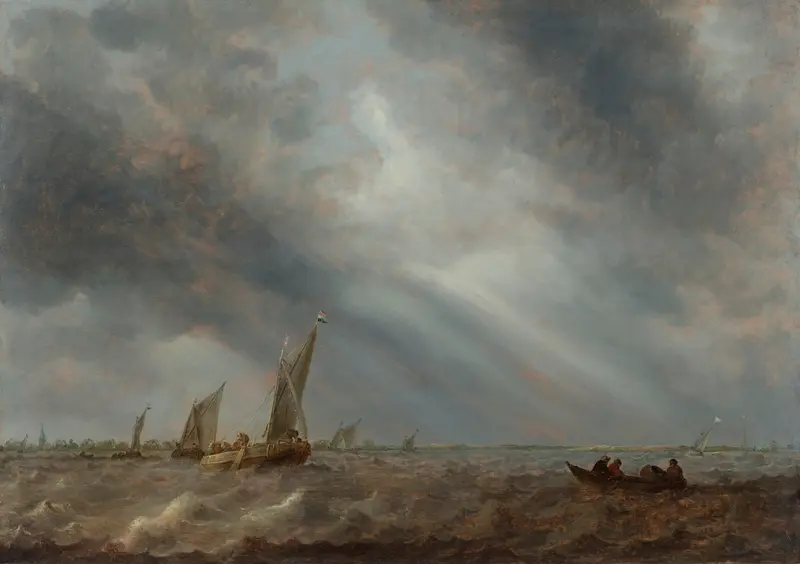
Various sailing vessels and a rowing boat with fishermen on choppy waters under a stormy sky
Abraham van Beyeren
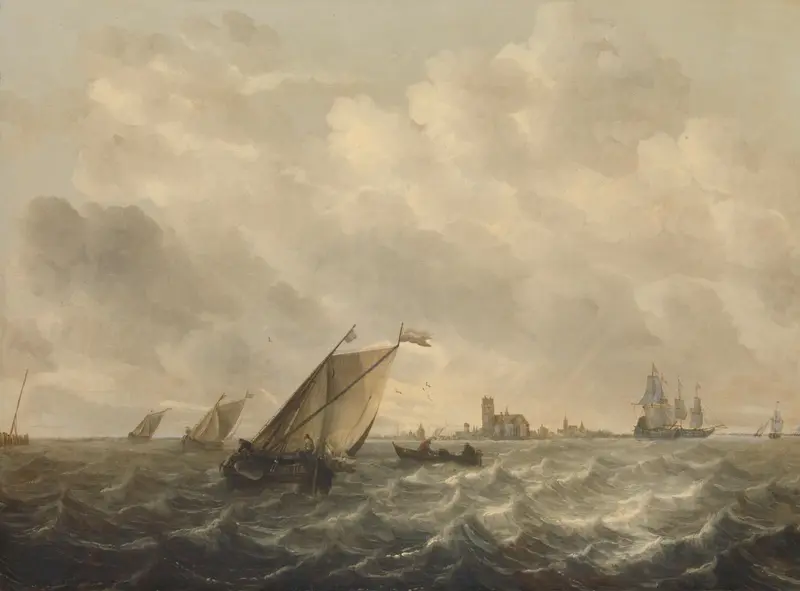
River View
Abraham van Beyeren
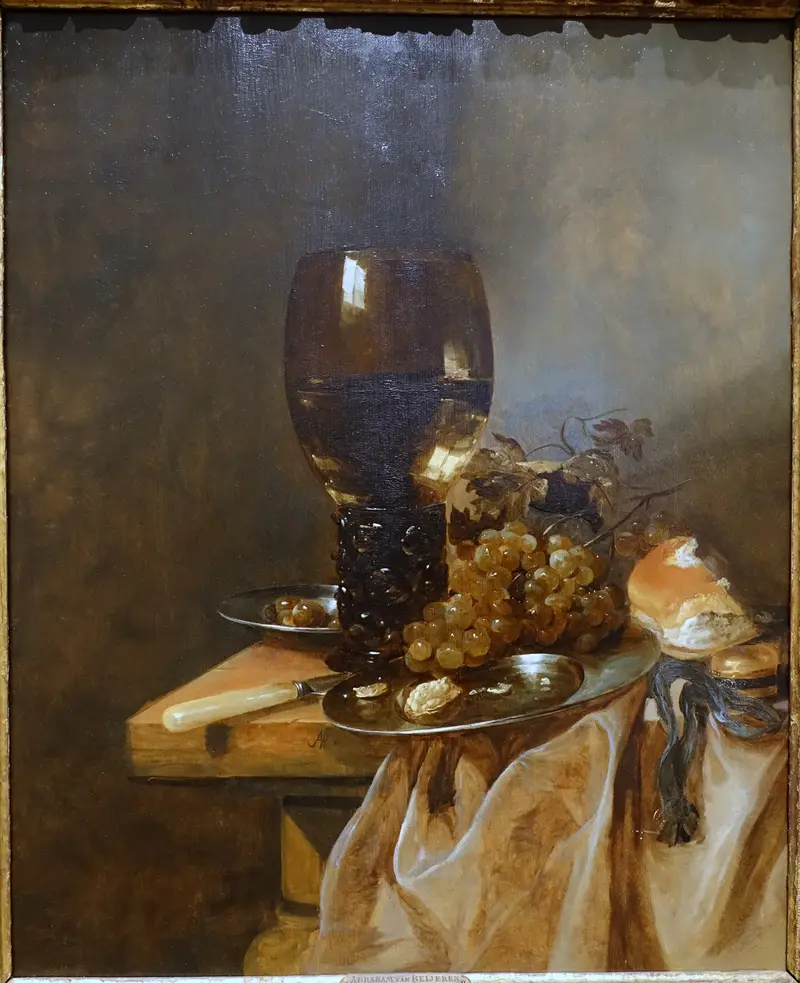
A Roemer with Grapes, a Pewter Plate and a Roll
Abraham van Beyeren
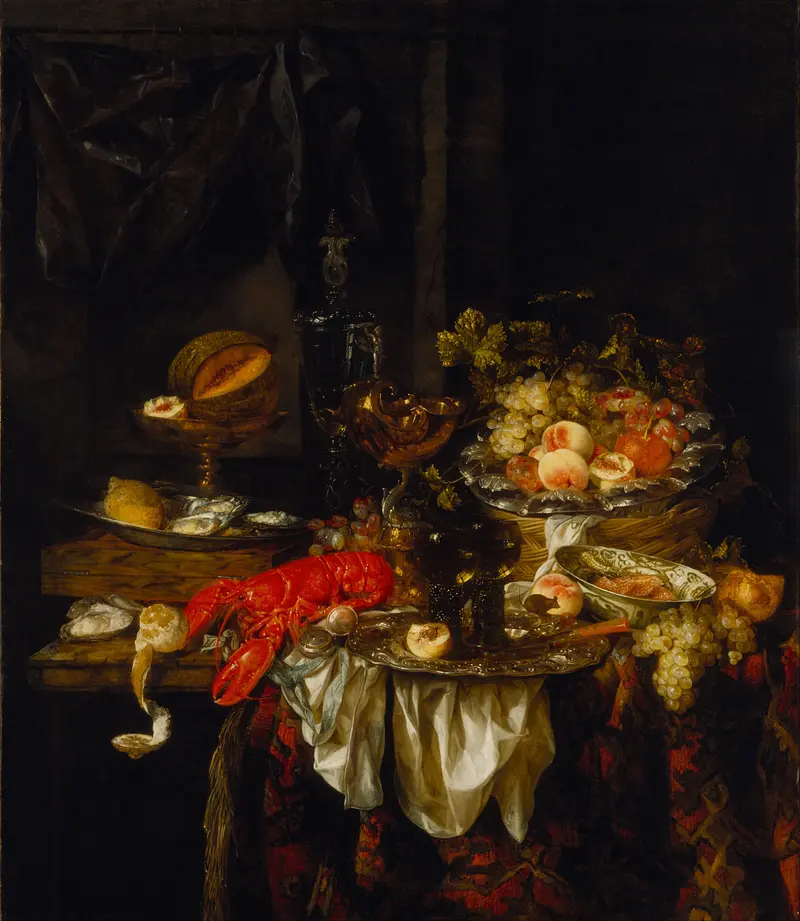
Banquet Still Life
Abraham van Beyeren
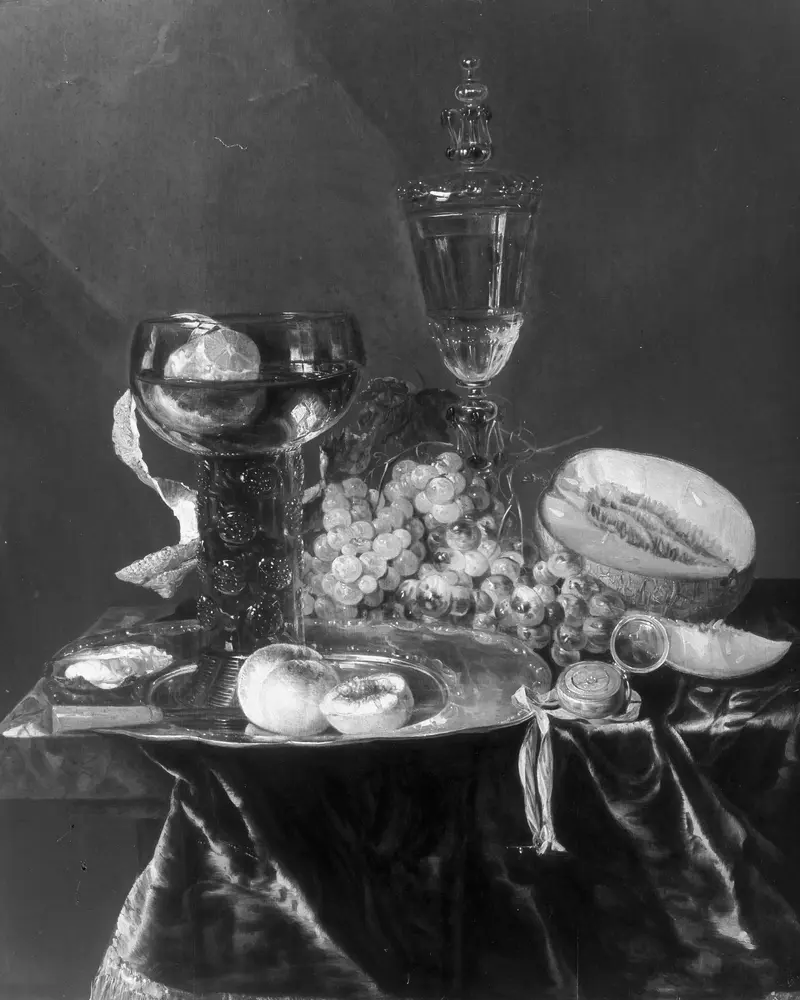
Still life with a glass lid goblet
Abraham van Beyeren
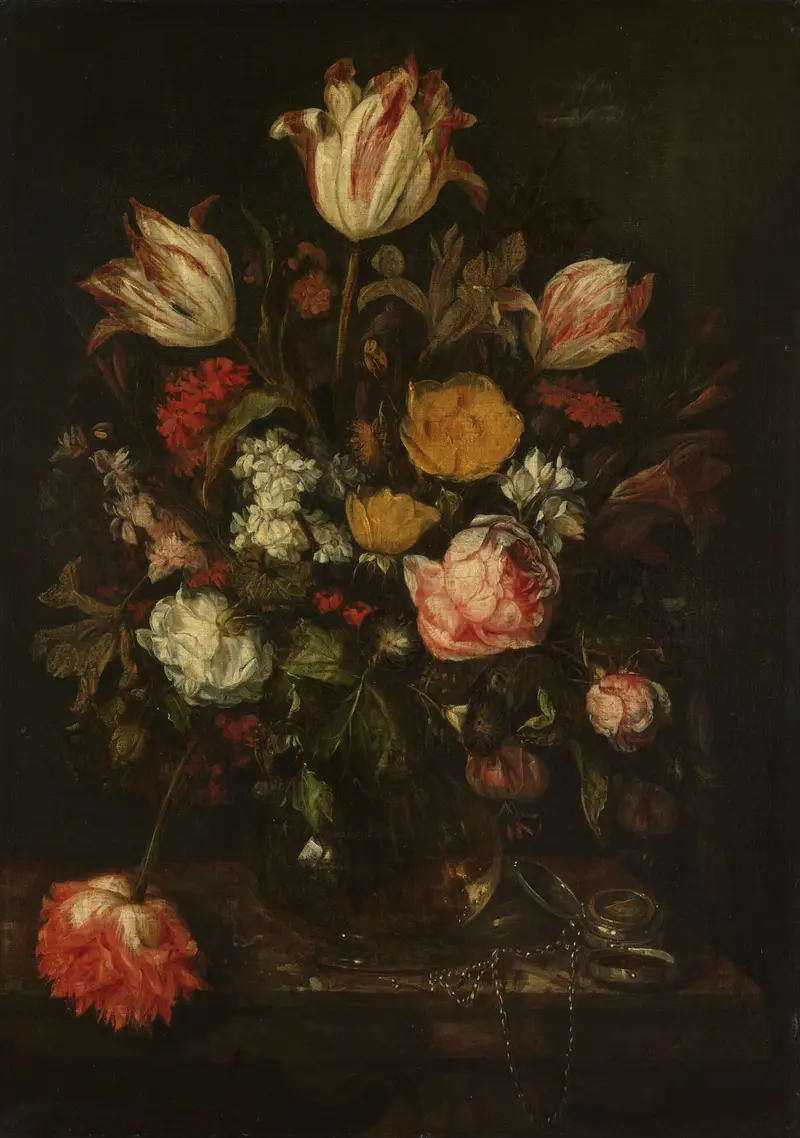
Still life with flowers
Abraham van Beyeren
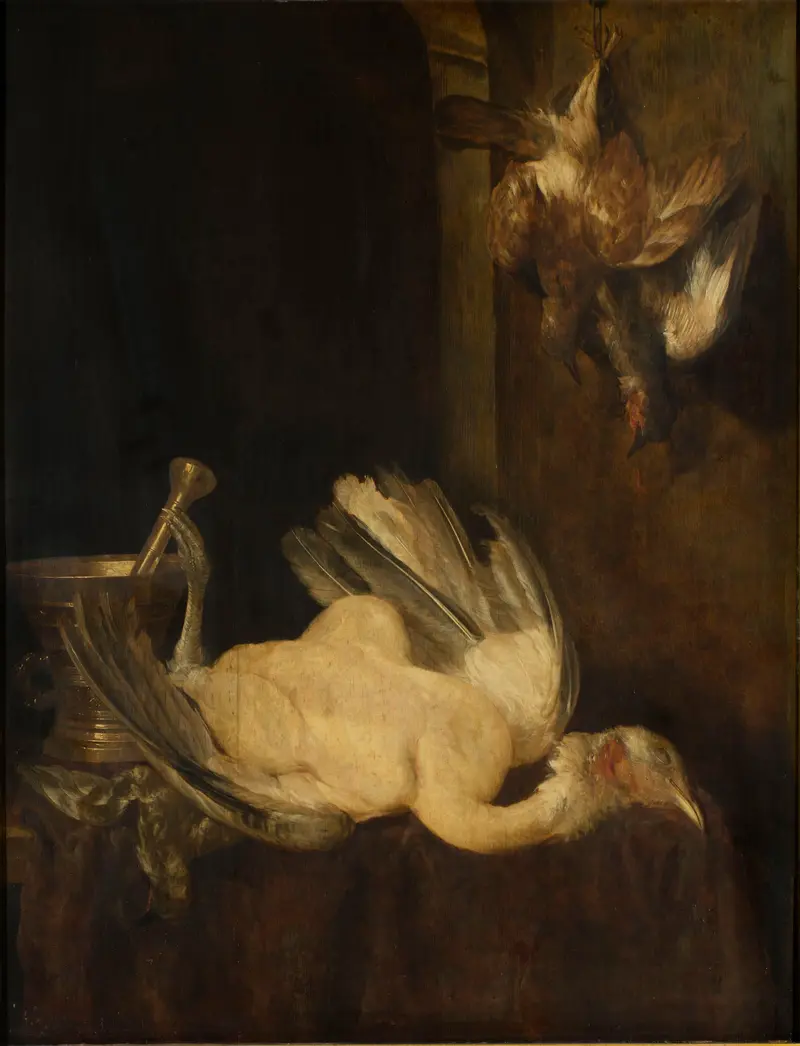
Still life with dead birds
Abraham van Beyeren
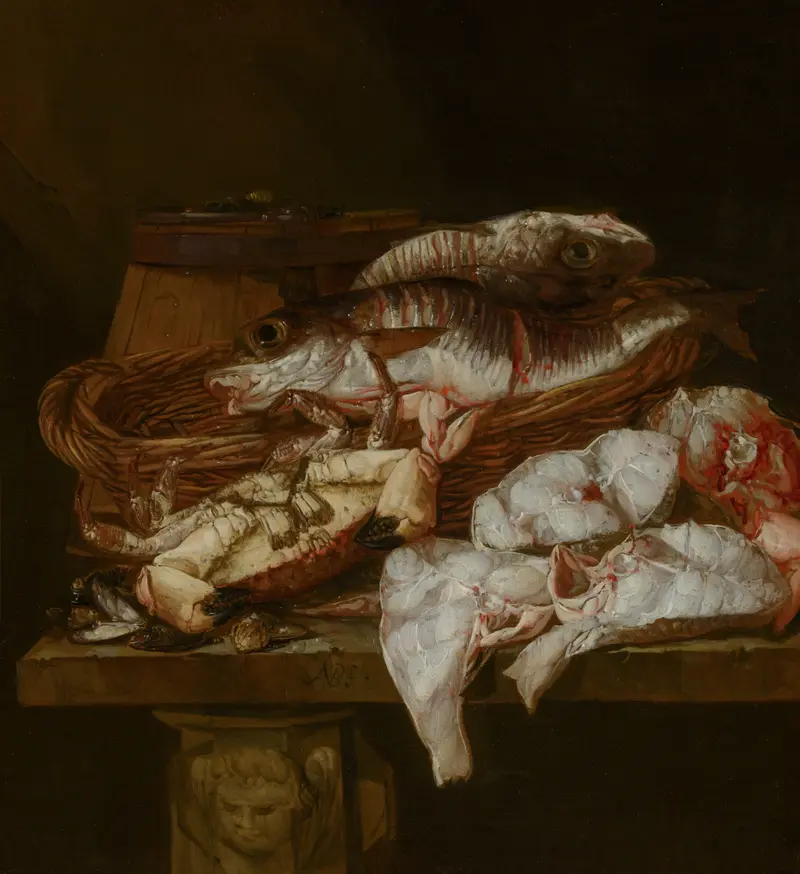
Still Life with Seafood
Abraham van Beyeren





