
Still-life with Carp — History & Facts
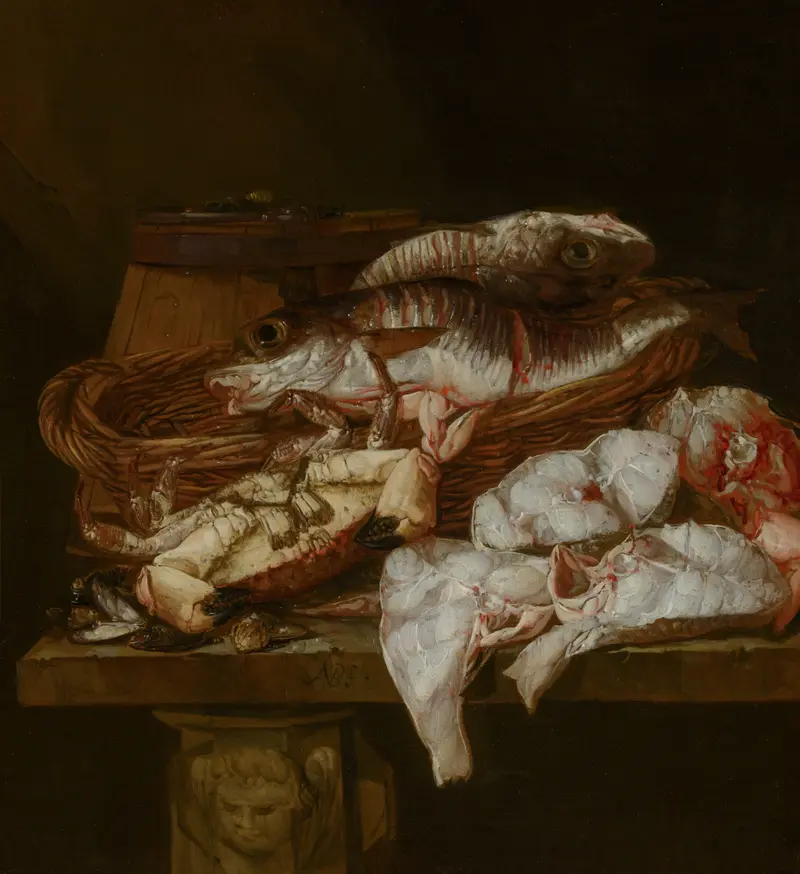
What first catches the eye in Still-life with Carp is the way the painter has coaxed a quiet drama from the ordinary: a table crowded with fish, their scales catching the light as if they have just been lifted from water. The largest carp hovers above the rest, almost suspended, its silvery body rendered with such care that each glistening scale seems to pulse with life. The light falls from the left, illuminating the slick, cold bodies and picking out the metallic sheen of a jug tucked behind them.
There is no clutter, no riot of color—just the cool, muted palette of browns, greys, and silvers, which lets the viewer linger on the subtle play of texture: the rough wood, the wet skin, the smooth metal. The composition draws the gaze in a slow arc from the largest fish down to the smallest, inviting us to imagine the world beyond the table’s edge. Painted between 1645 and 1650, this work belongs to the tradition of Dutch still-life that flourished in the seventeenth century, when painters like Abraham van Beyeren found poetry in the everyday. Such paintings were often commissioned by prosperous merchants or displayed in homes as a testament to abundance, skill, and the fleeting nature of earthly pleasures.
The genre was shaped by a culture fascinated with trade, the sea, and the bounty it brought—here, the fish themselves become a quiet celebration of both nature and human industry. Though history has kept few traces of this particular canvas, its survival in a modern collection is a reminder of the era’s fascination with the ordinary made extraordinary. Look again at the shimmering carp: it is as much a portrait of a fish as of a world that prized observation, patience, and the pleasures of the table.
More Artworks by Abraham van Beyeren

Still Life
Abraham van Beyeren
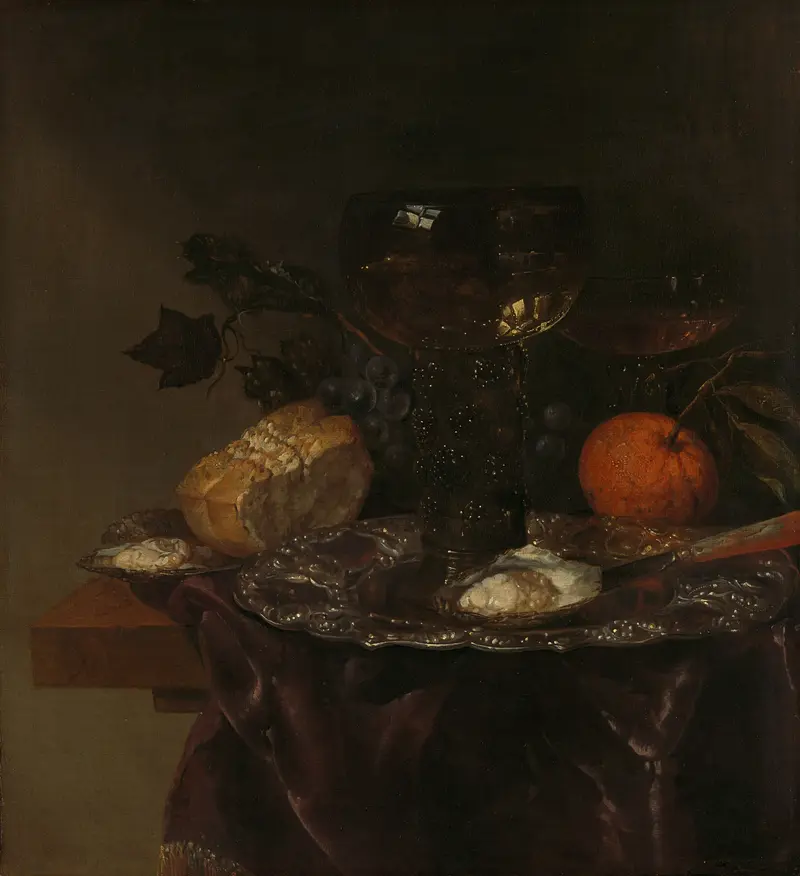
Still Life
Abraham van Beyeren
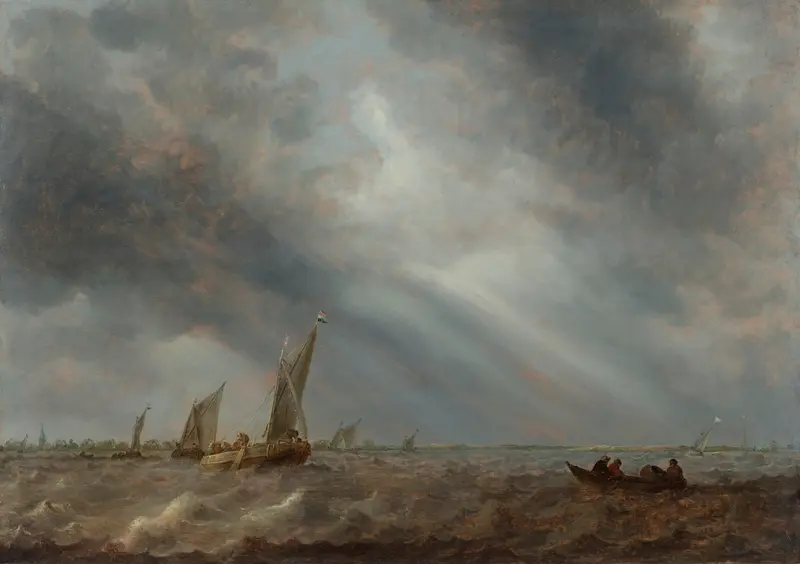
Various sailing vessels and a rowing boat with fishermen on choppy waters under a stormy sky
Abraham van Beyeren
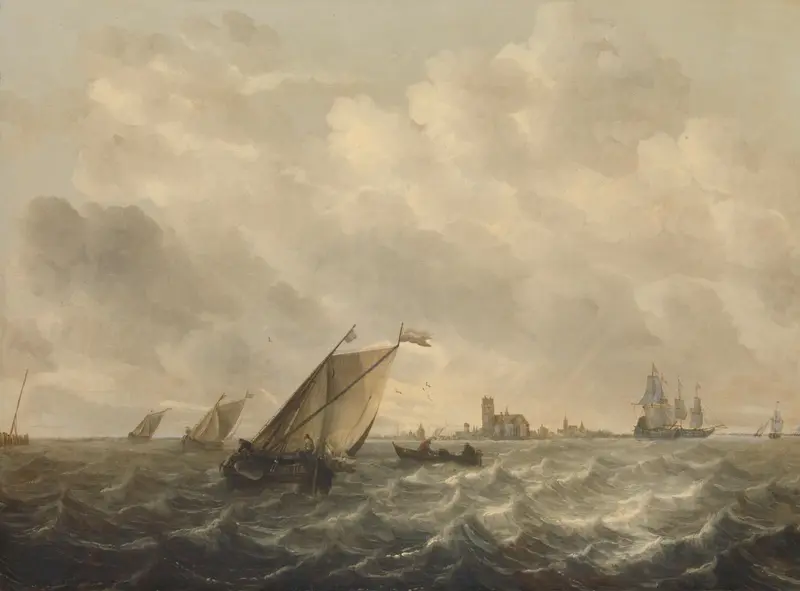
River View
Abraham van Beyeren
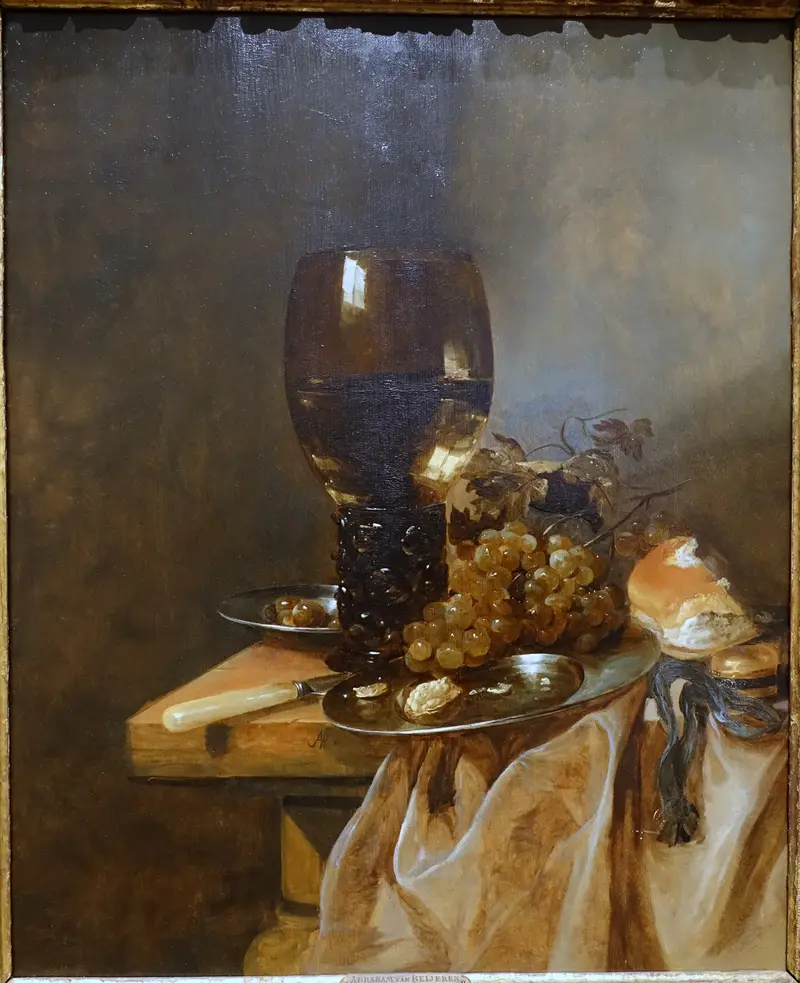
A Roemer with Grapes, a Pewter Plate and a Roll
Abraham van Beyeren
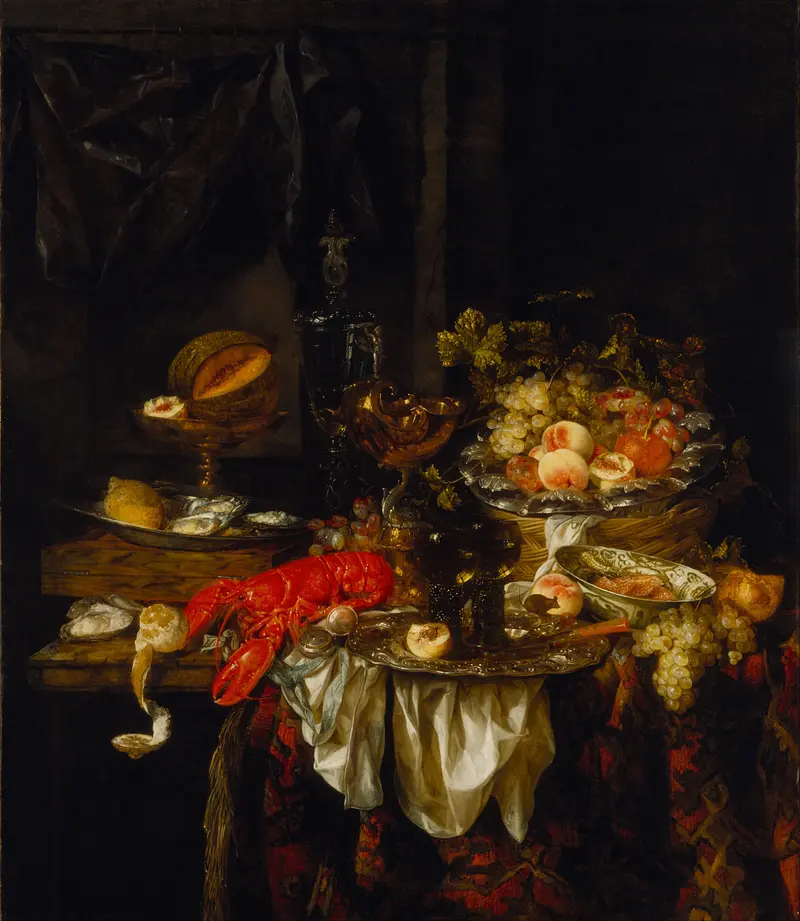
Banquet Still Life
Abraham van Beyeren
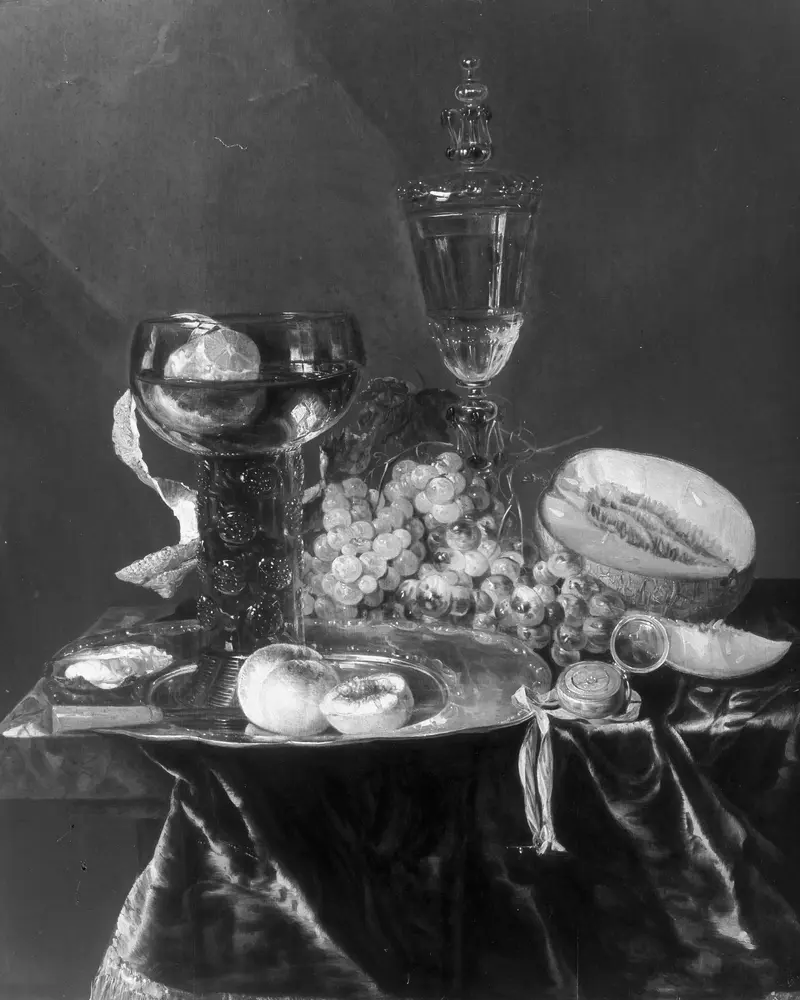
Still life with a glass lid goblet
Abraham van Beyeren
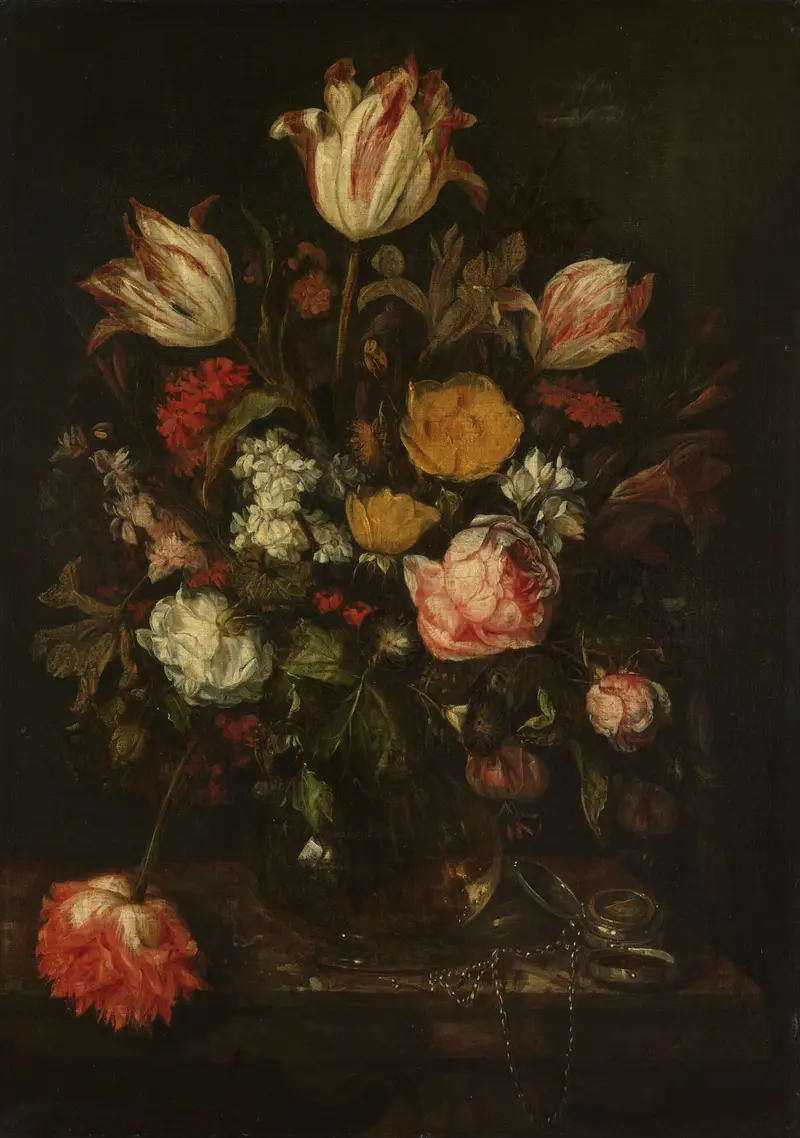
Still life with flowers
Abraham van Beyeren
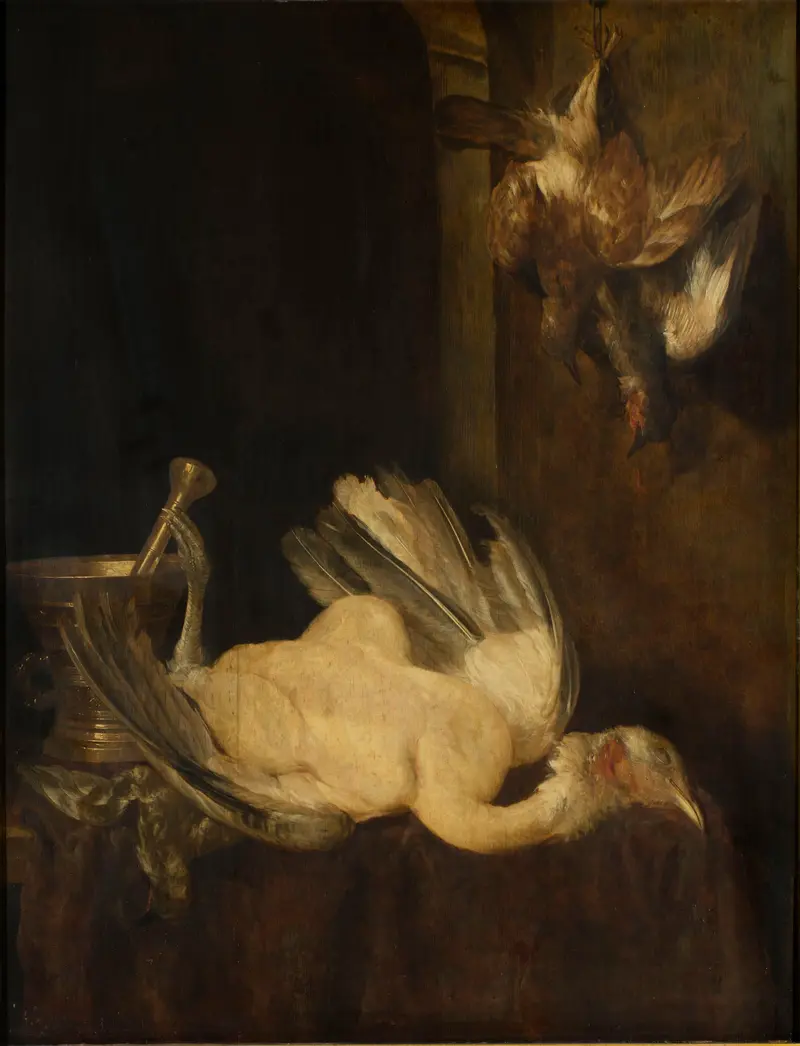
Still life with dead birds
Abraham van Beyeren
Still Life with Seafood
Abraham van Beyeren





