
Still Life with Crabs on a Pewter Plate — History & Facts
What first catches the eye in Still Life with Crabs on a Pewter Plate is the almost theatrical interplay of textures and reflections: the cool gleam of pewter, the translucent skin of grapes, the brittle armor of crabs, all set beneath a glass goblet that seems to shimmer with its own light. The painter, Abraham Mignon, draws the viewer in with a careful choreography of objects, leading the gaze from the clustered fruit at left, across the plate of crabs, to the delicate glasswork that crowns the scene. Every element is arranged not just for beauty, but for drama—the way the red currants tumble forward, almost as if they might roll off the ledge, or how the vine leaves curl and cast shadows that deepen the sense of depth and abundance.
The crabs themselves, posed with claws slightly raised, add a note of tension, as if the stillness could break at any moment. Painted in 1669, this work belongs to a world where still life was more than decoration; it was a coded language of wealth, trade, and the fleeting nature of pleasure. In the Dutch Golden Age, such paintings were prized by a rising merchant class eager to display their prosperity and taste, and artists like Mignon responded with ever more intricate displays of imported delicacies and precious glassware. The choice of crabs, grapes, and peaches speaks to a fascination with rarity and seasonality, while the meticulous rendering of every surface reflects the era’s obsession with observation and detail.
Although little is recorded about this specific painting’s journey—its current collection simply noted as “own work, Wmpearl”—it stands as a testament to a time when the everyday was transformed, through paint and patience, into something worth contemplating again and again.
More Artworks by Abraham Mignon

Still Life with Flowers and a Watch
Abraham Mignon
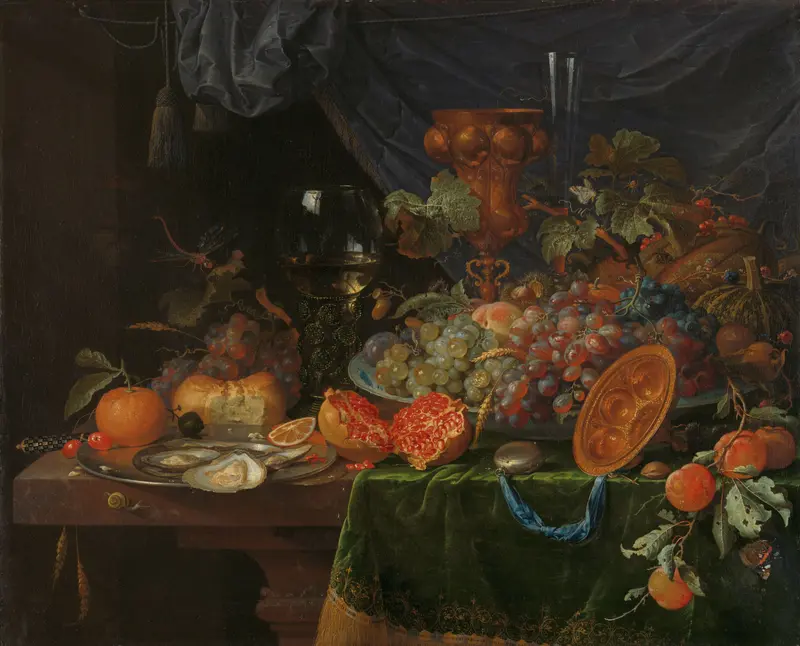
Still Life with Fruit and Oysters
Abraham Mignon
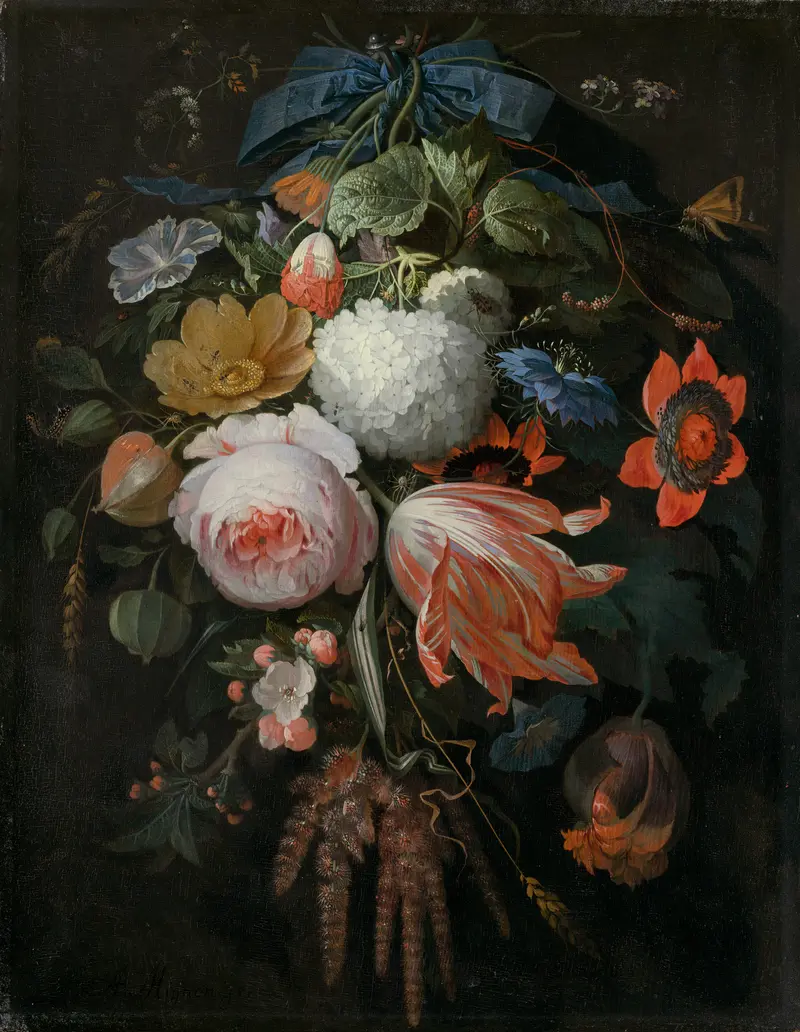
A Hanging Bouquet of Flowers
Abraham Mignon
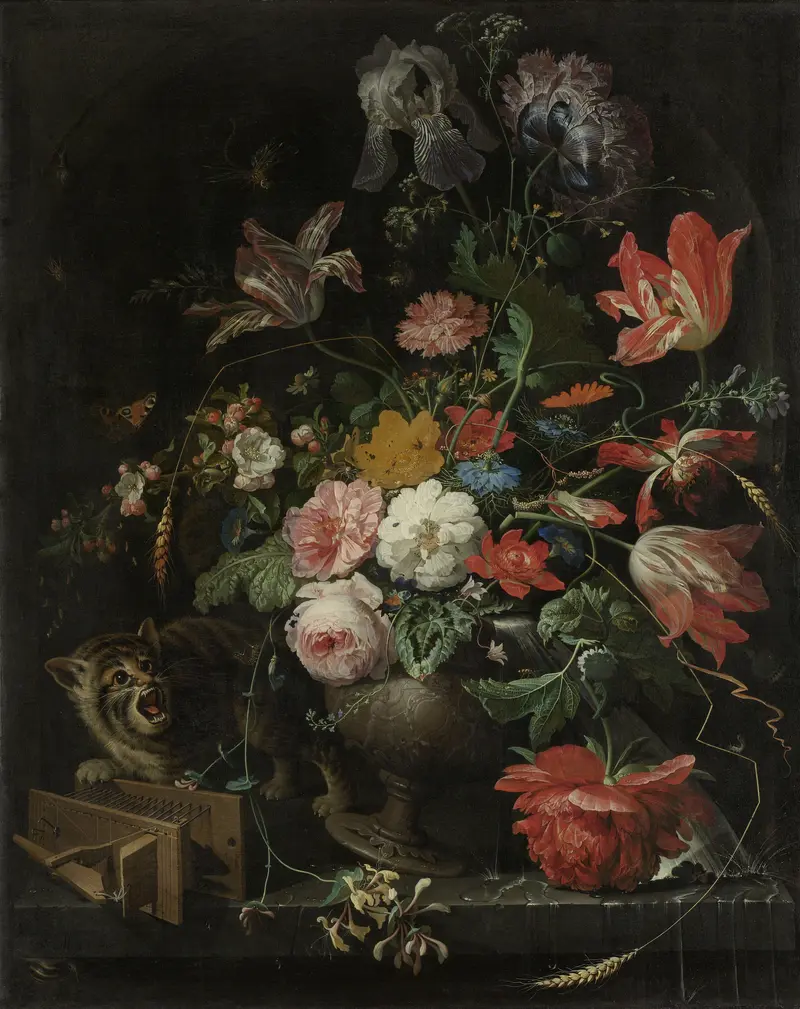
Bouquet with cat and mousetrap
Abraham Mignon
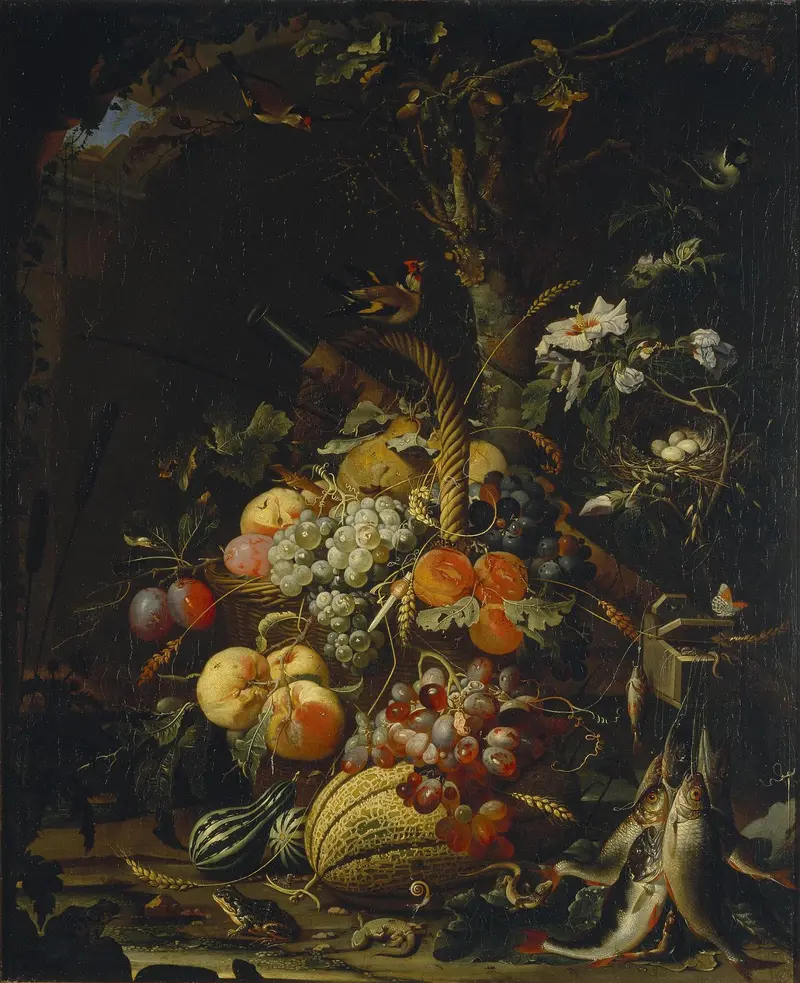
Forest floor still life with fruit, fish and a bird's nest
Abraham Mignon
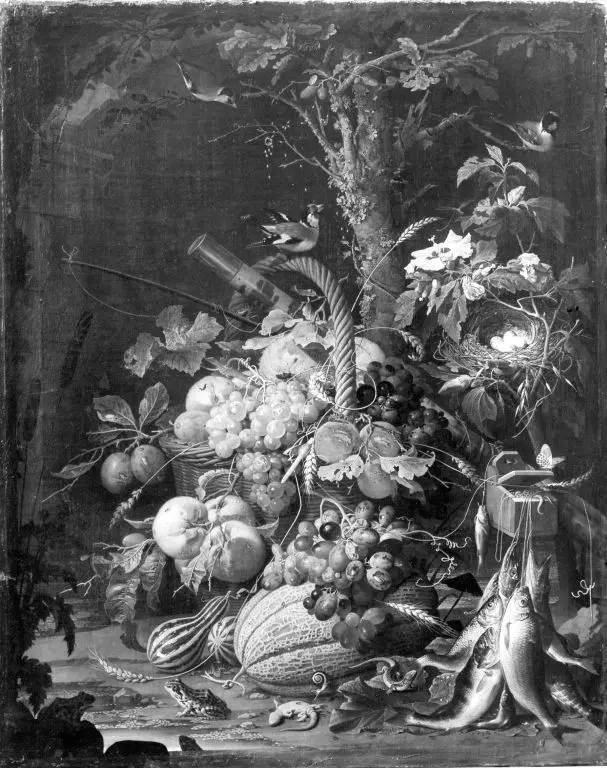
Still life with fruit, fish and a bird's nest
Abraham Mignon
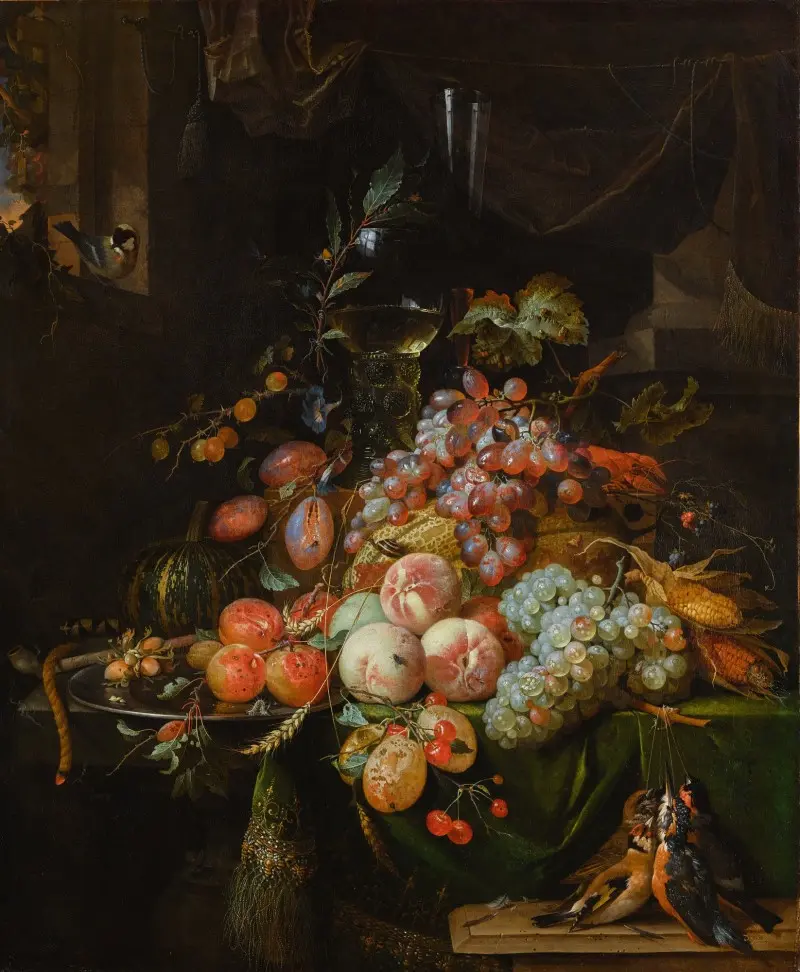
Still Life with Plums, Peaches, Apricots, Grapes and a Melon
Abraham Mignon
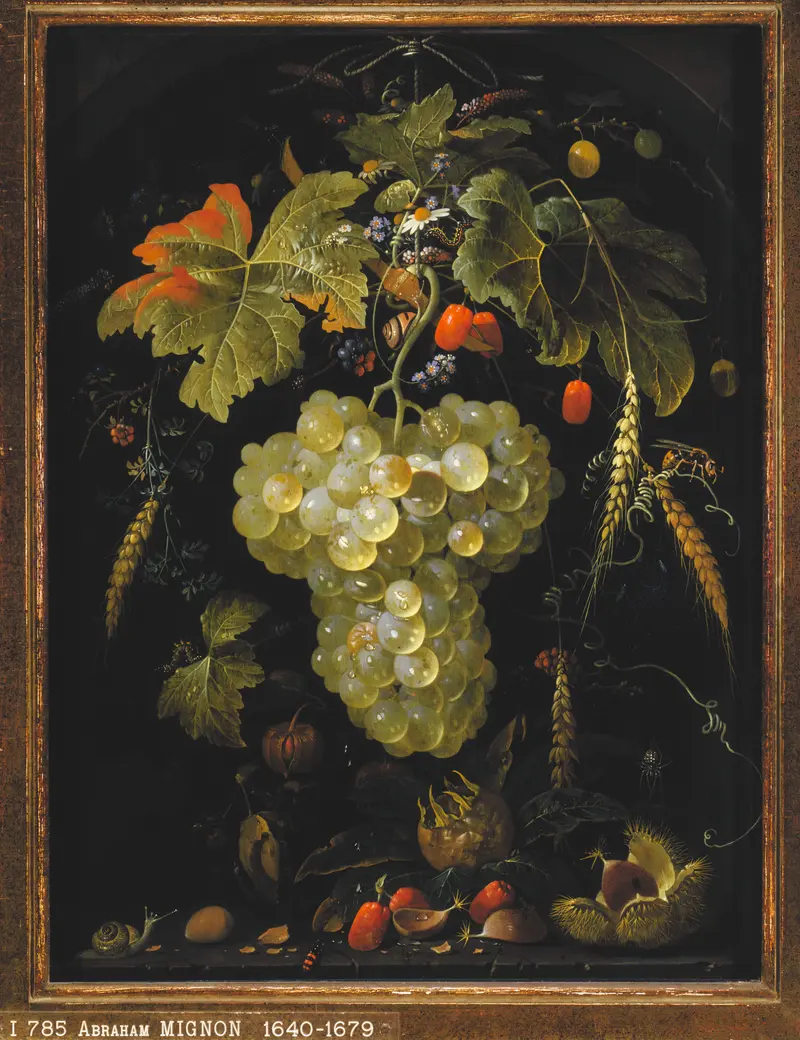
Festoon of fruit suspended from a rope, in a niche
Abraham Mignon
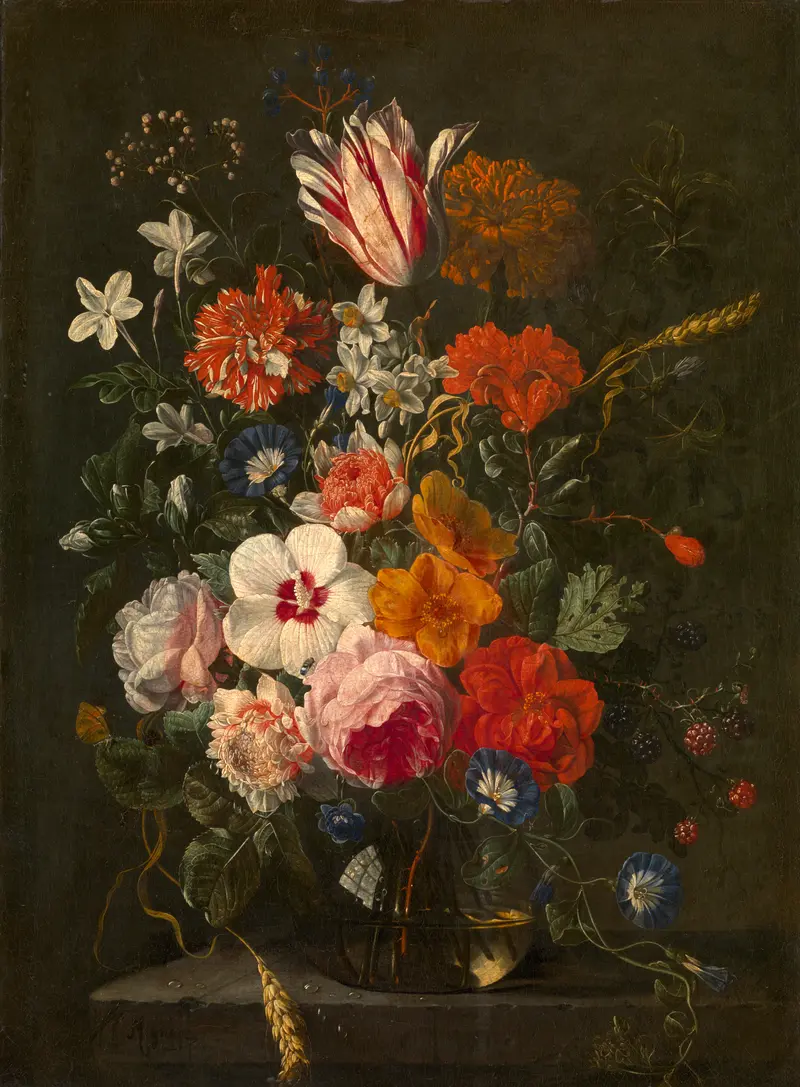
Flowers and a branch of berries in a glass vase on a stone ledge
Abraham Mignon
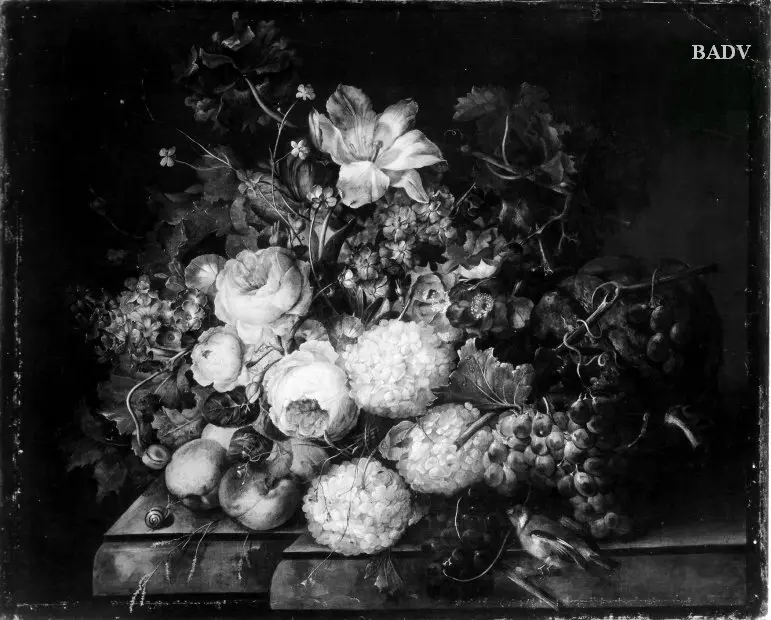
Flowers and fruit on a plinth
Abraham Mignon





