
Still Life with Fish and Crustaceans — History & Facts
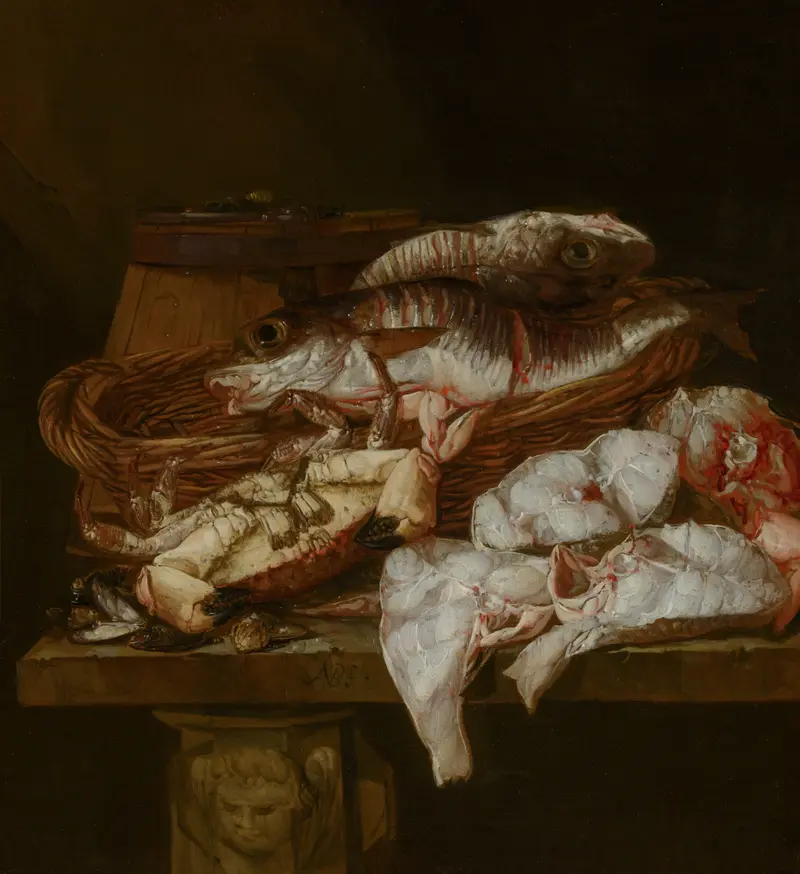
A sharp shaft of light slices across the table, catching the glisten of fish scales and the rough armor of crabs, as if the day’s catch has just been hauled in and set down for inspection. The eye is drawn first to the vivid orange of a salmon steak, its color a rare burst among the silvers and creams of the surrounding seafood. Every detail feels deliberate: the curling edges of the fish, the scattered crustaceans, the folds of a blue cloth half-hidden in shadow.
The arrangement is not just about abundance, but about texture and contrast—soft flesh against hard shell, the order of baskets against the casual sprawl of the catch. The knife, resting at the edge, hints at the next act: preparation, transformation, perhaps even a feast. Painted after 1666, Still Life with Fish and Crustaceans belongs to the world of Dutch Golden Age still life, when artists like Abraham van Beyeren turned the humble bounty of the sea into meditations on wealth, nature, and the fleeting pleasures of the table. Such works were prized by the prosperous merchant class, who saw in them both a celebration of trade and a reminder of life’s transience.
The genre thrived on technical bravura—note the moist gleam on the fish, the subtle play of shadow in the baskets—yet always invited viewers to look closer, to find meaning in the ordinary. Today, the painting resides in the collection of the Museum of Fine Arts in Ghent, its origins partly veiled by time, but its invitation to linger and look remains as clear as ever.
More Artworks by Abraham van Beyeren

Still Life
Abraham van Beyeren
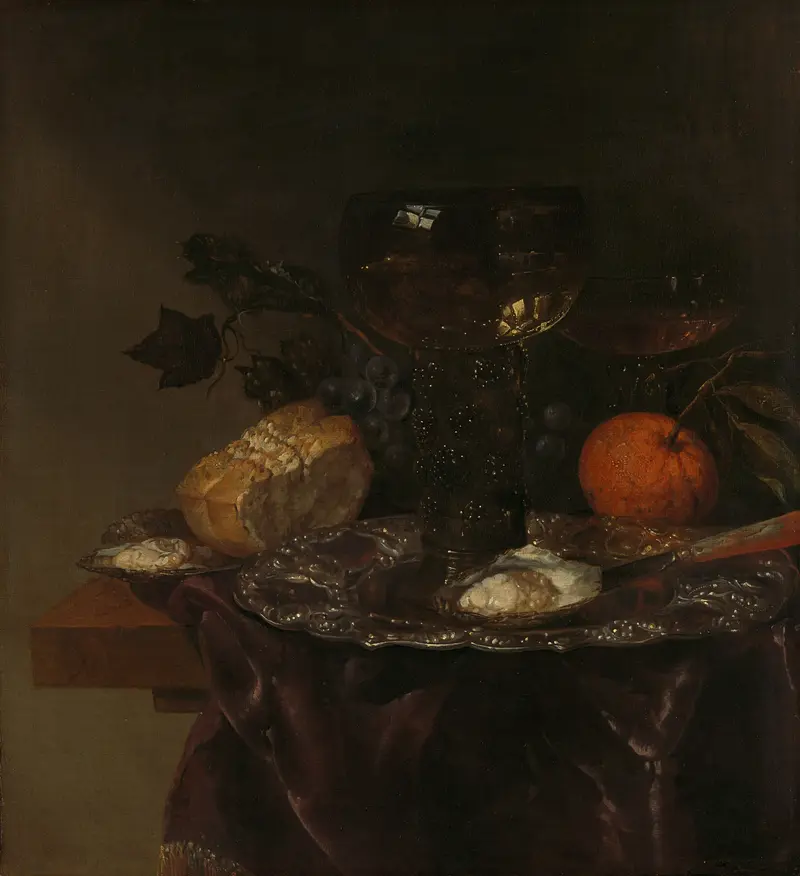
Still Life
Abraham van Beyeren
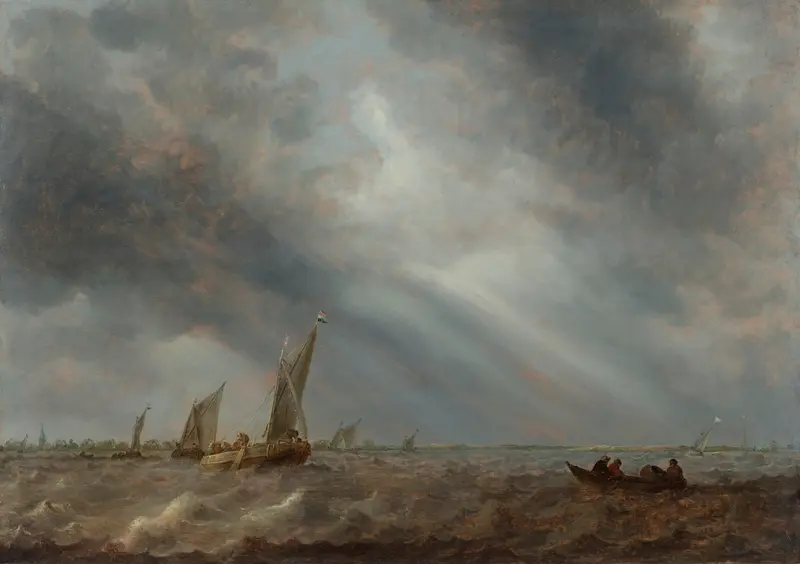
Various sailing vessels and a rowing boat with fishermen on choppy waters under a stormy sky
Abraham van Beyeren
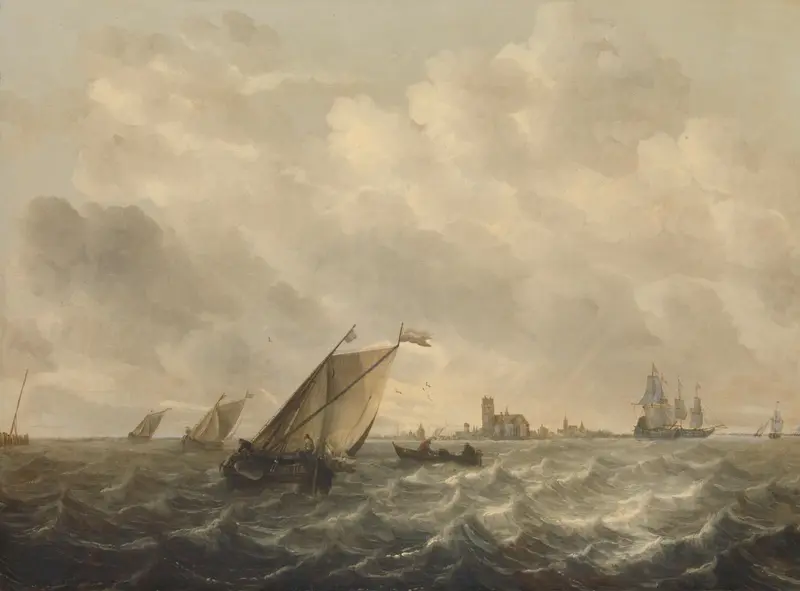
River View
Abraham van Beyeren
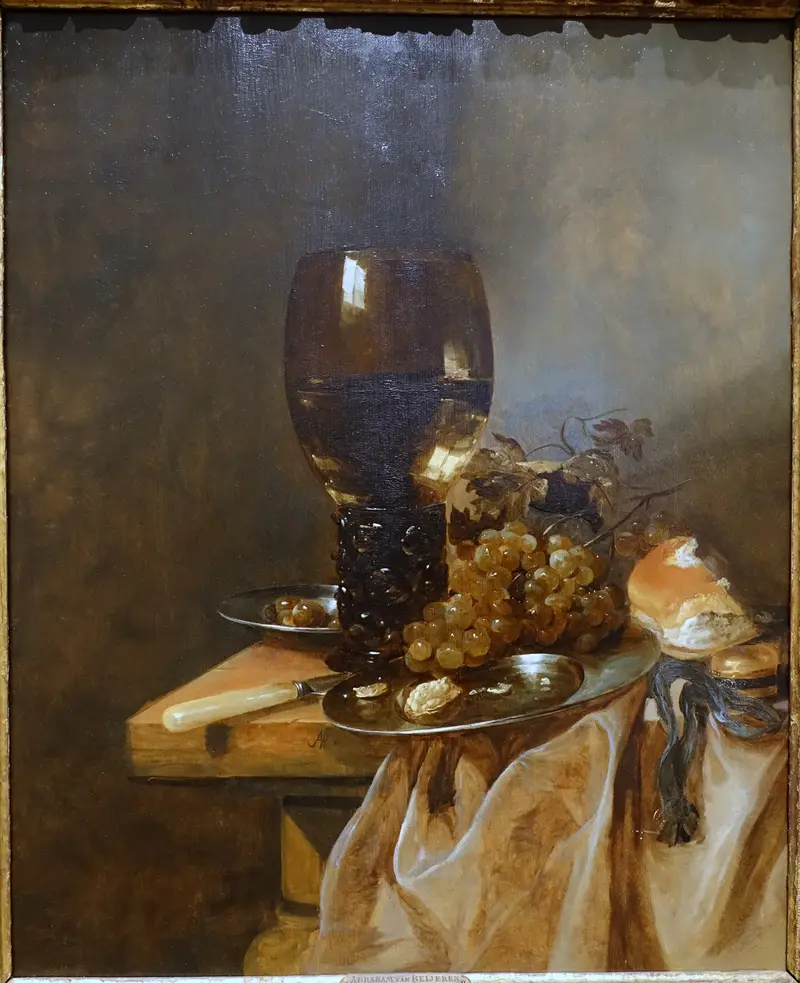
A Roemer with Grapes, a Pewter Plate and a Roll
Abraham van Beyeren
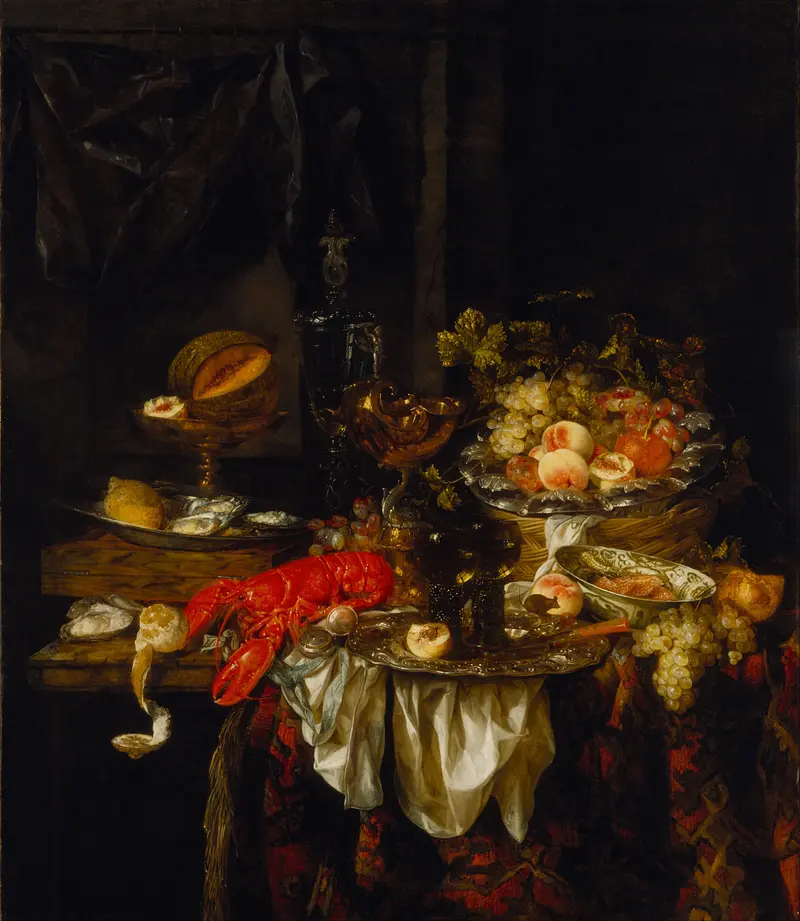
Banquet Still Life
Abraham van Beyeren
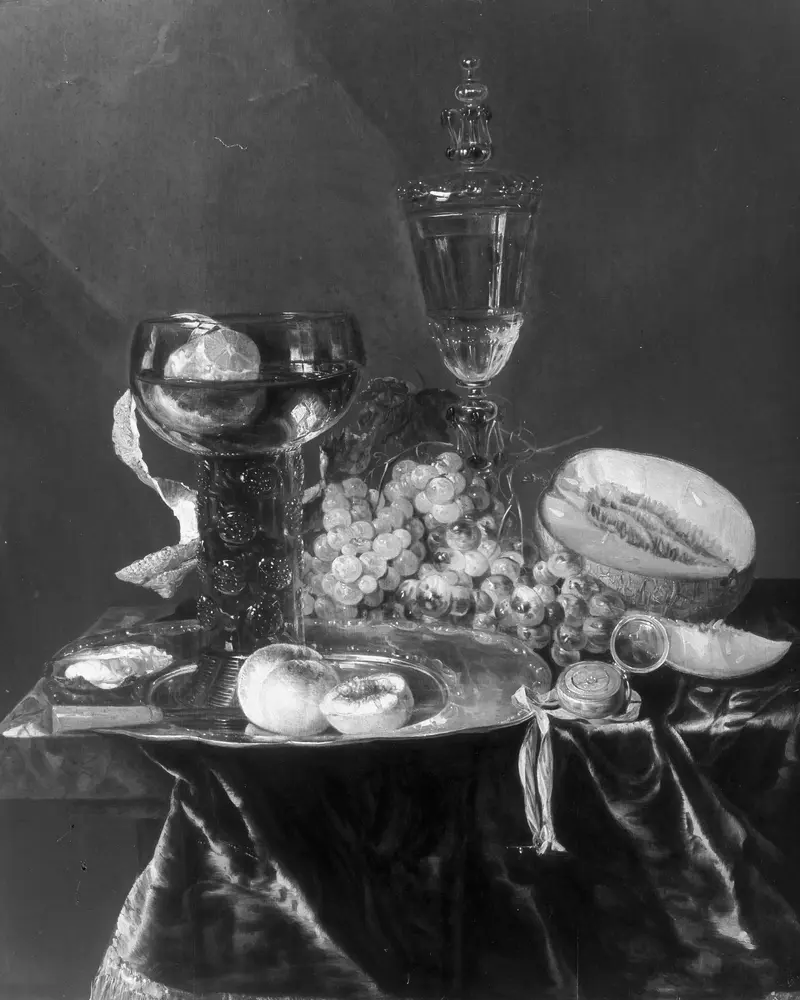
Still life with a glass lid goblet
Abraham van Beyeren
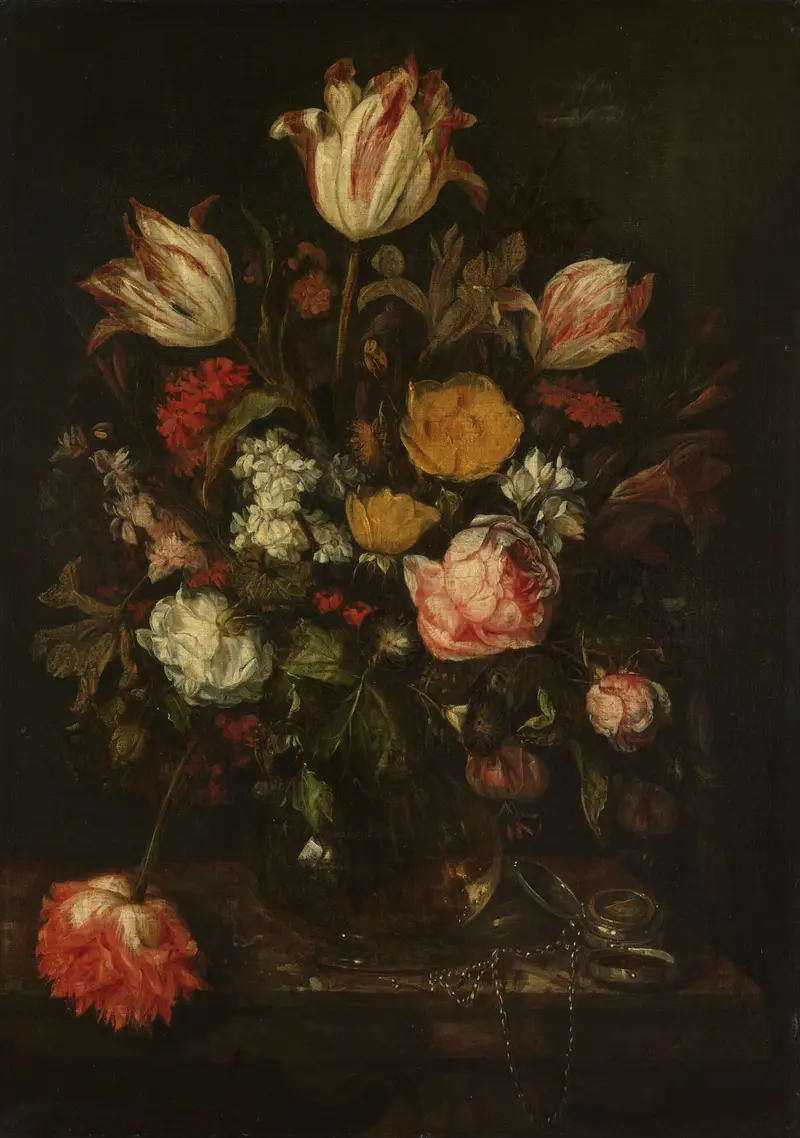
Still life with flowers
Abraham van Beyeren
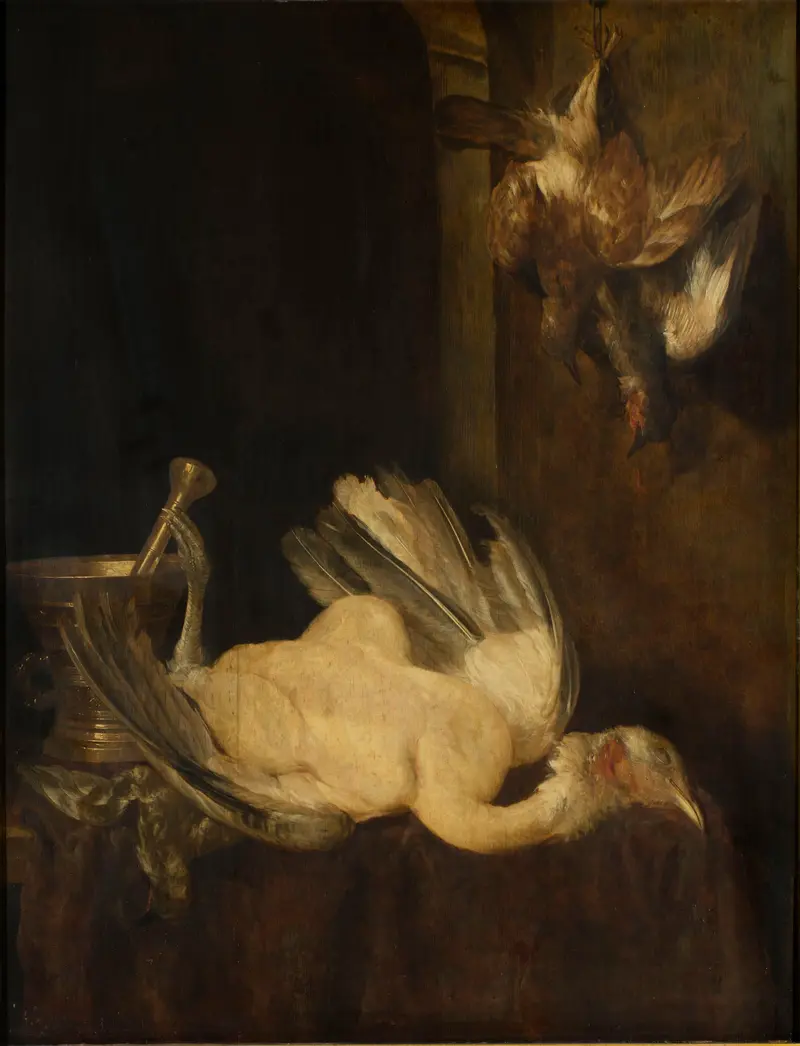
Still life with dead birds
Abraham van Beyeren
Still Life with Seafood
Abraham van Beyeren





