
Still Life with Fruit — History & Facts
A forest floor becomes a stage for abundance and quiet drama in Still Life with Fruit by Abraham Mignon. Every inch of the painting is alive with detail: a tangle of grapes, peaches, plums, and melons glows against a dark, mossy backdrop, while tiny creatures—lizards, butterflies, and birds—thread the scene with movement. The light pools on the ripest fruit, drawing the eye to glistening skins and the delicate fuzz of a peach, before slipping away into the shadows where a bird’s nest is tucked among the branches.
Mignon’s careful arrangement is no accident; each element seems to lean into the next, as if the fruits and animals are caught in a moment of secret conversation. Works like this flourished in the late seventeenth-century Dutch and German worlds, where still life was both a celebration of nature’s bounty and a meditation on its fragility. Collectors of the period prized such paintings for their virtuoso technique and hidden meanings—symbols of wealth, transience, or the cycles of life. Abraham Mignon was known for his lush, intricate compositions, and this example, painted after 1672 and now in the Wallraf-Richartz-Museum, carries all the hallmarks of his mature style.
History has kept few traces of this specific canvas’s journey, but its careful balance of beauty and quiet warning invites you to look again, and then closer still.
More Artworks by Abraham Mignon

Still Life with Flowers and a Watch
Abraham Mignon
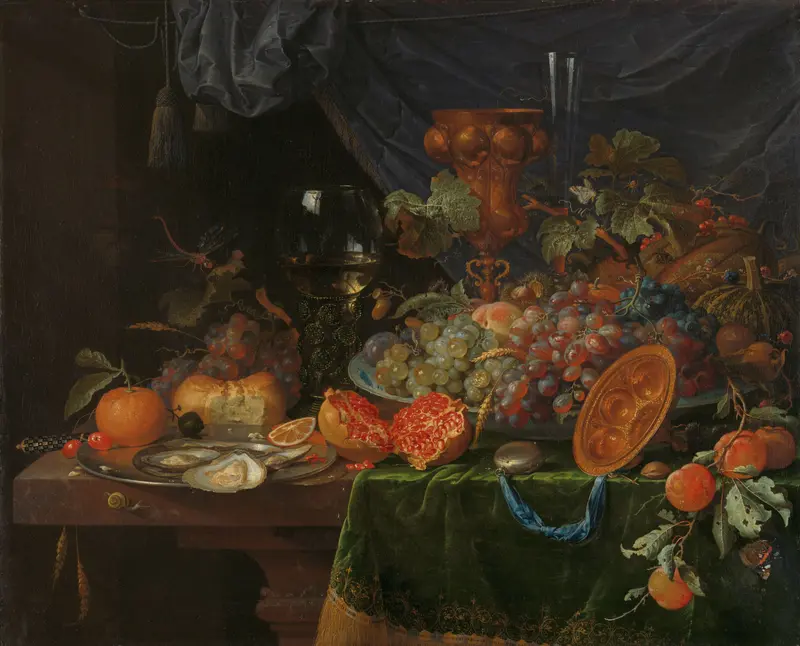
Still Life with Fruit and Oysters
Abraham Mignon
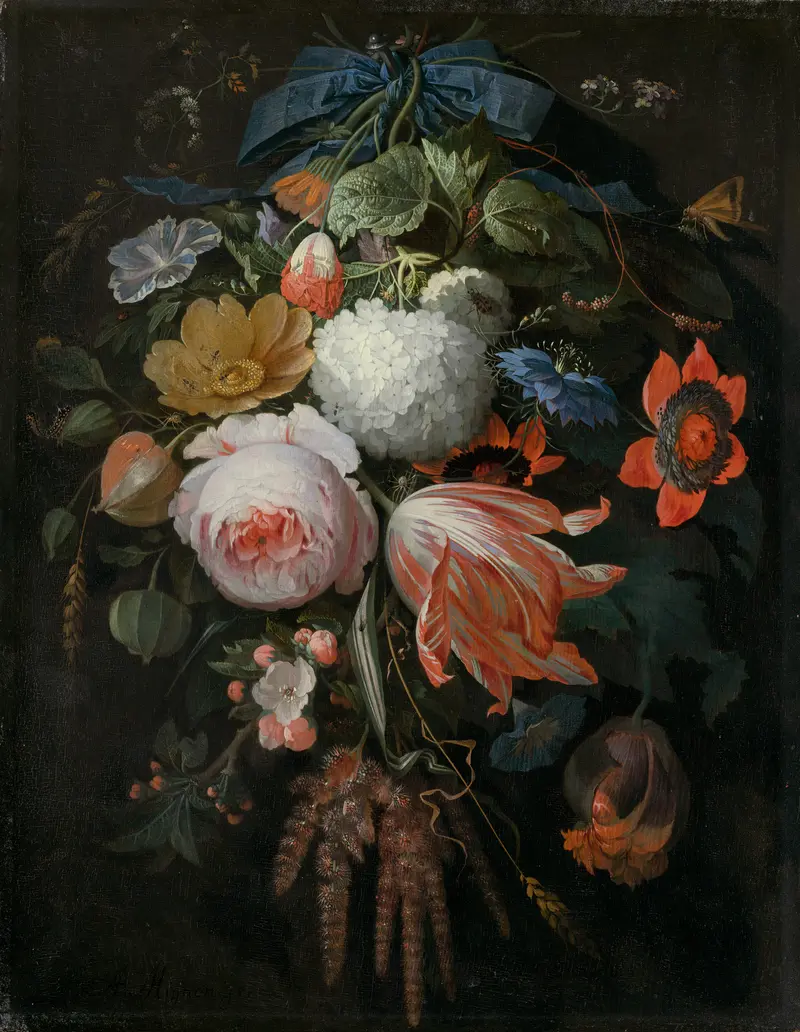
A Hanging Bouquet of Flowers
Abraham Mignon
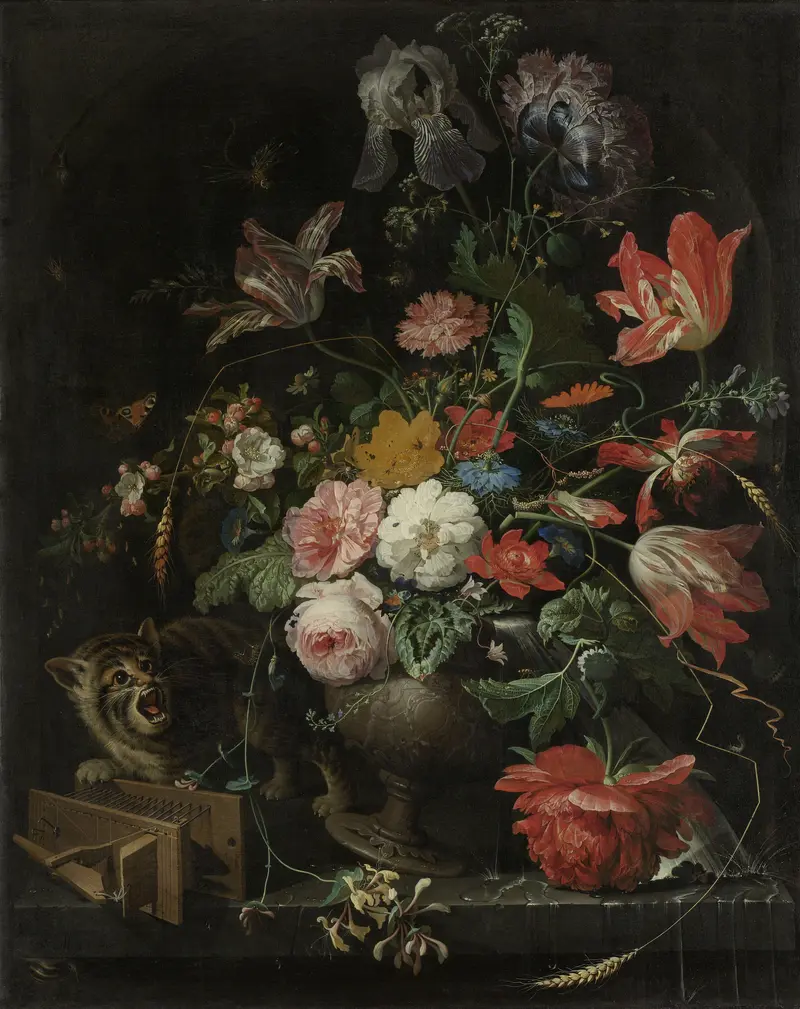
Bouquet with cat and mousetrap
Abraham Mignon
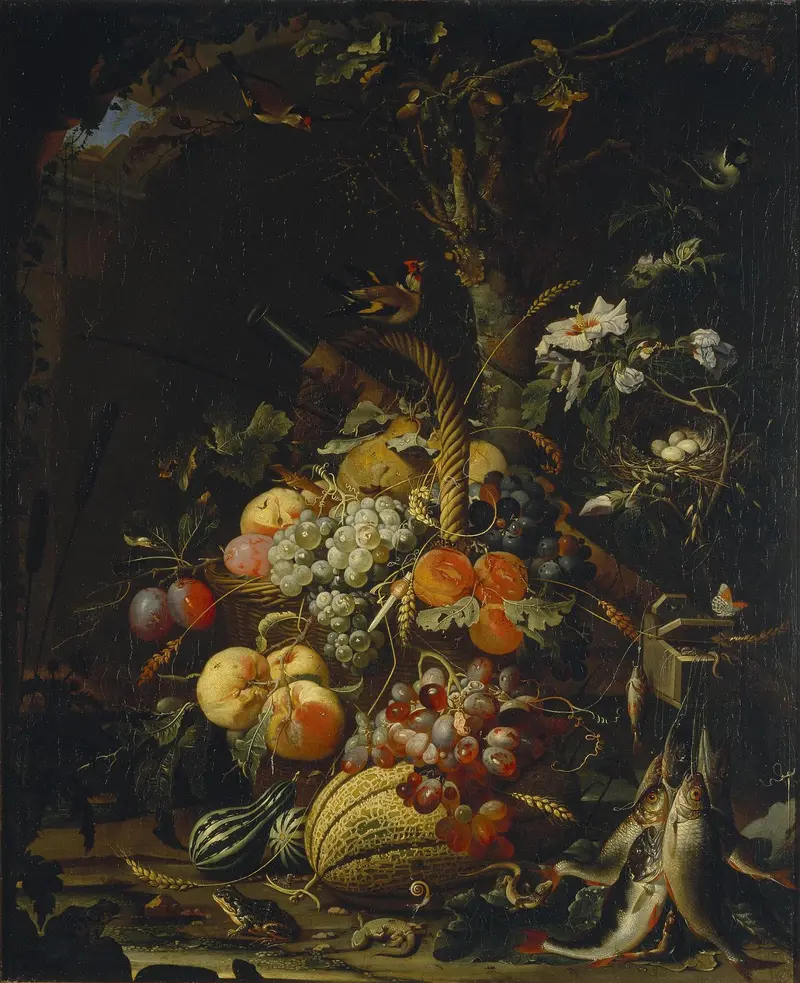
Forest floor still life with fruit, fish and a bird's nest
Abraham Mignon
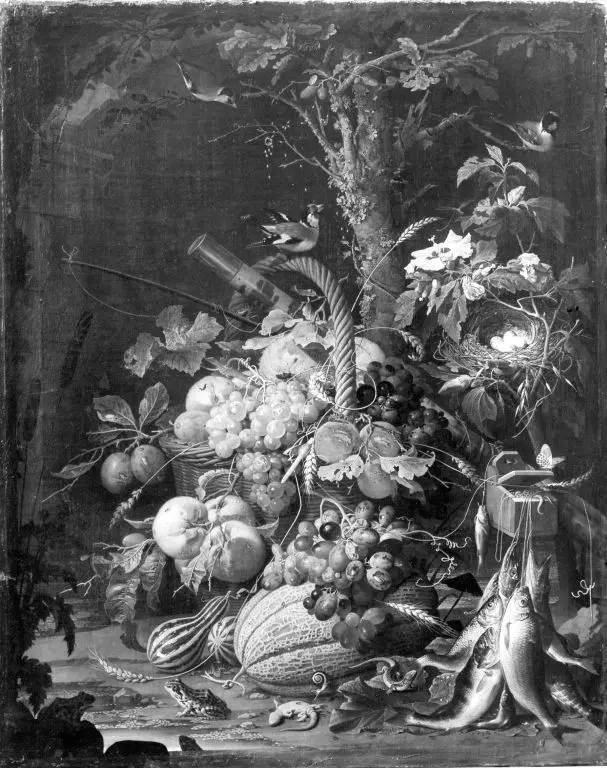
Still life with fruit, fish and a bird's nest
Abraham Mignon
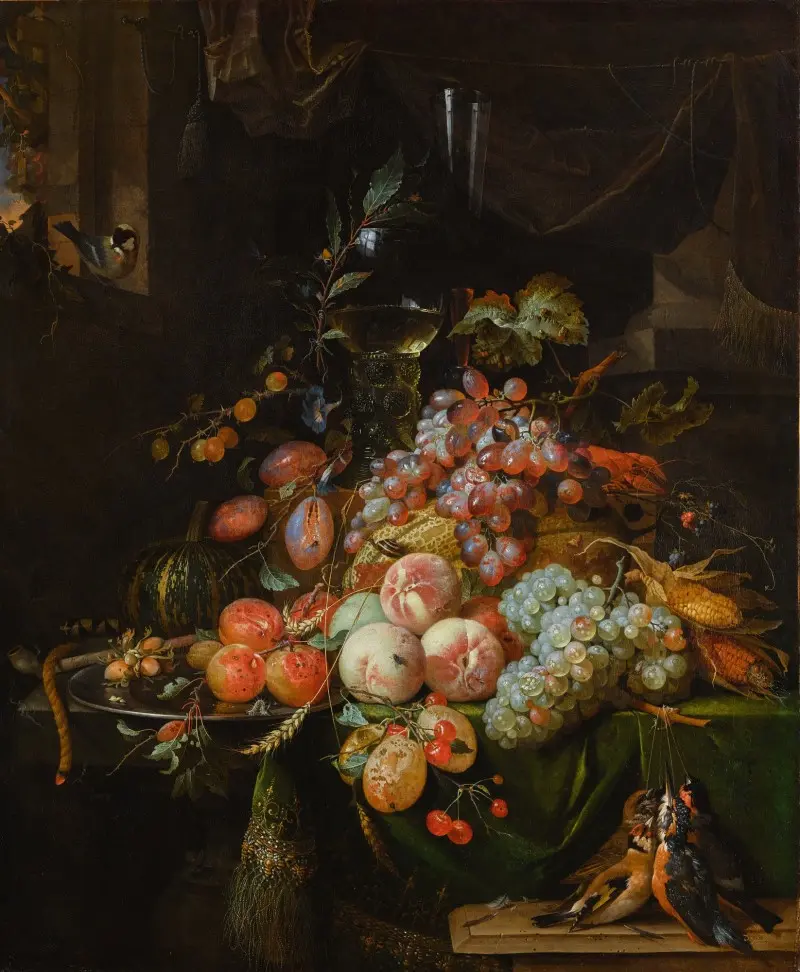
Still Life with Plums, Peaches, Apricots, Grapes and a Melon
Abraham Mignon
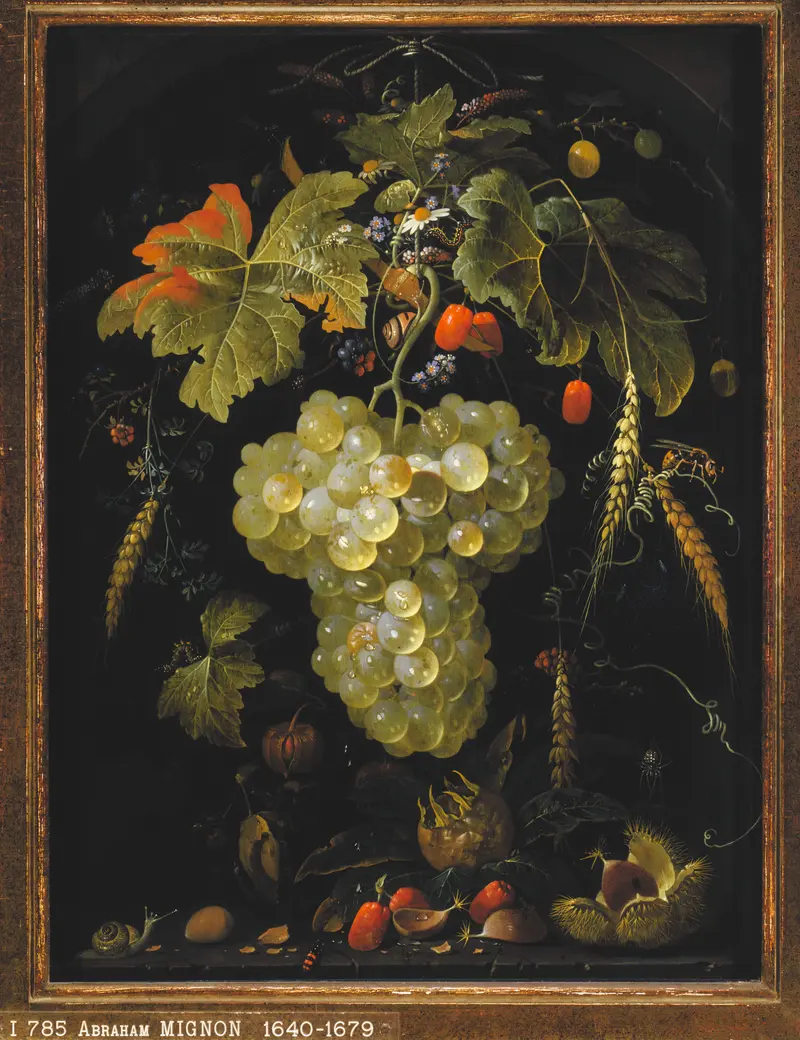
Festoon of fruit suspended from a rope, in a niche
Abraham Mignon
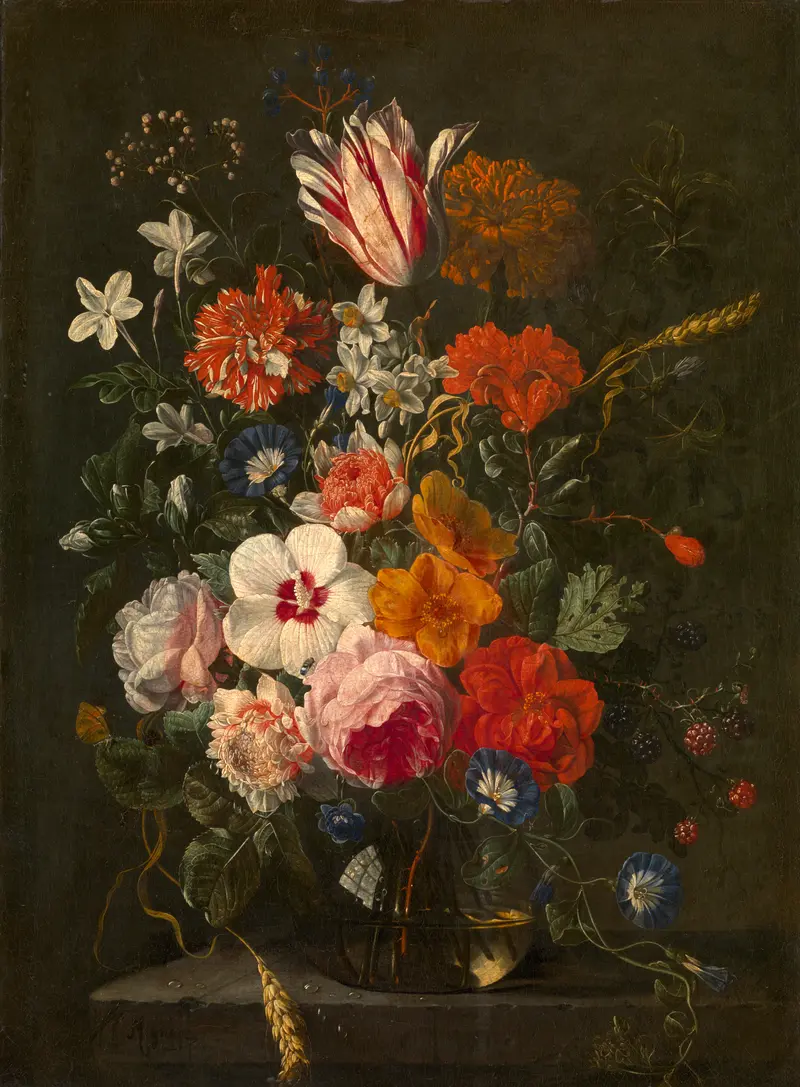
Flowers and a branch of berries in a glass vase on a stone ledge
Abraham Mignon
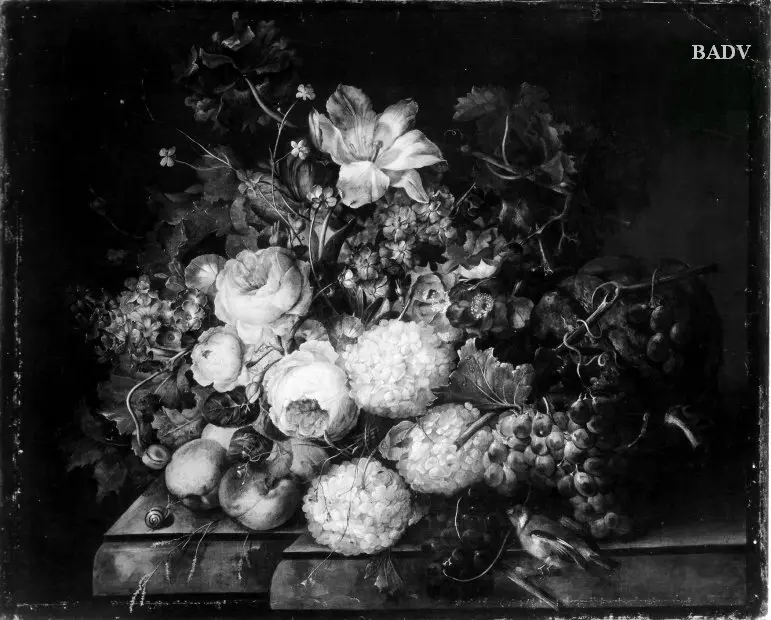
Flowers and fruit on a plinth
Abraham Mignon





