
Still Life with Fruit, Fish, and a Nest — History & Facts
What first catches the eye in Still Life with Fruit, Fish, and a Nest is the sheer abundance—nature’s riches tumbling together in a carefully staged, almost theatrical arrangement. The painter, Abraham Mignon, leads us from the lush, dew-speckled grapes and peaches at the heart of the basket to the glistening fish and curling gourds below, each object rendered with a precision that invites the viewer to linger. Look closer: a nest of eggs nestles in the foliage, a goldfinch perches on a basket handle, and a frog waits in the shadows, as if the whole scene might stir to life at any moment.
The play of light is deliberate, spotlighting the fruit and fish while letting the background dissolve into darkness, heightening the sense of drama and drawing the eye ever deeper into the composition. Painted around 1675, this work belongs to the golden age of Dutch and German still life, when artists like Mignon delighted collectors with images that celebrated both the beauty and fragility of earthly pleasures. Such paintings were prized by wealthy patrons for their technical brilliance and for the moral lessons woven into their details—here, the fleeting freshness of fruit, the vulnerability of eggs, and the ephemeral shimmer of fish all hint at the passage of time and the inevitability of decay. While history has kept few traces of this particular painting’s journey, its presence today in a major collection speaks to the enduring fascination of these intricate, symbolic worlds.
The next time you look, try to count the species—each one chosen, each one telling its own quiet story.
More Artworks by Abraham Mignon

Still Life with Flowers and a Watch
Abraham Mignon
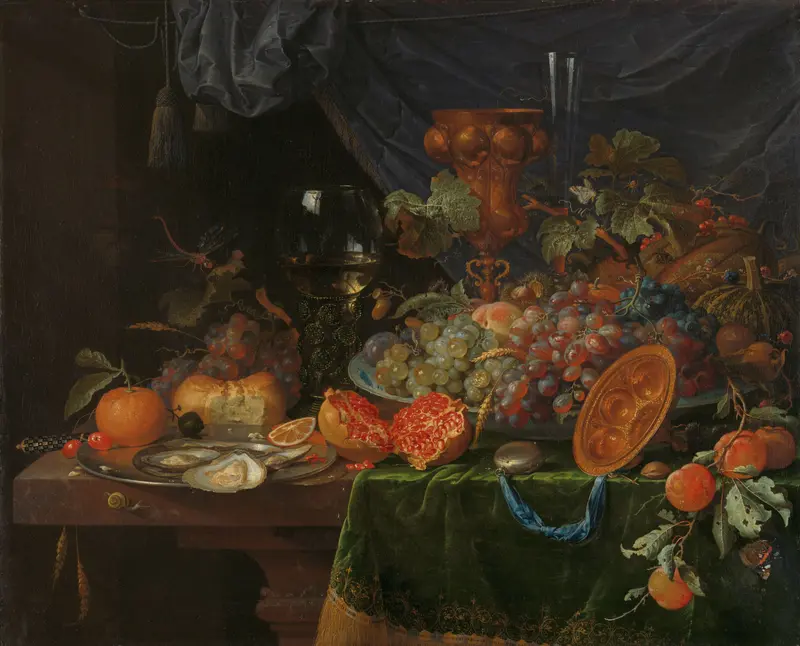
Still Life with Fruit and Oysters
Abraham Mignon
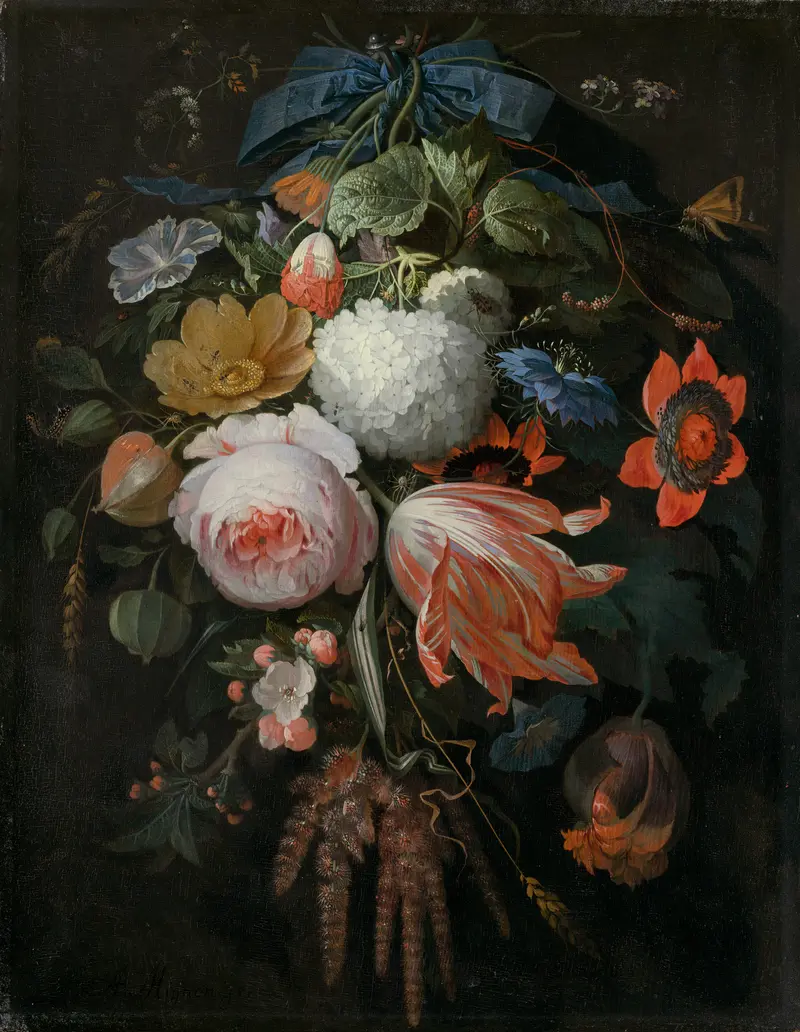
A Hanging Bouquet of Flowers
Abraham Mignon
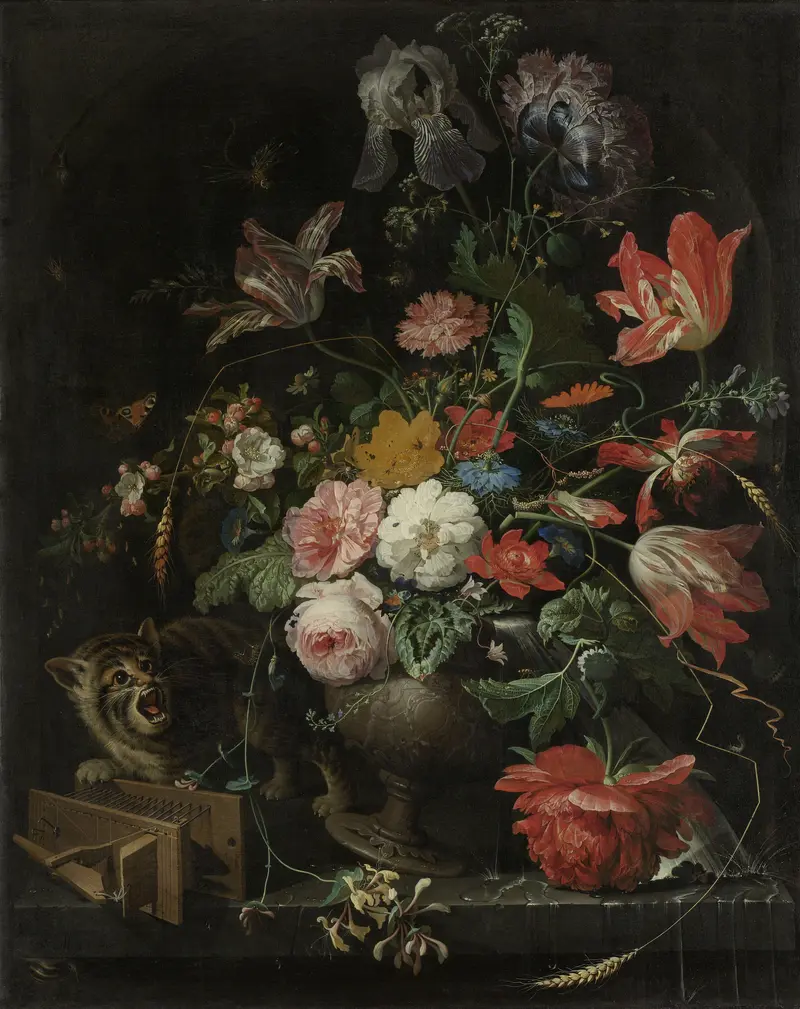
Bouquet with cat and mousetrap
Abraham Mignon
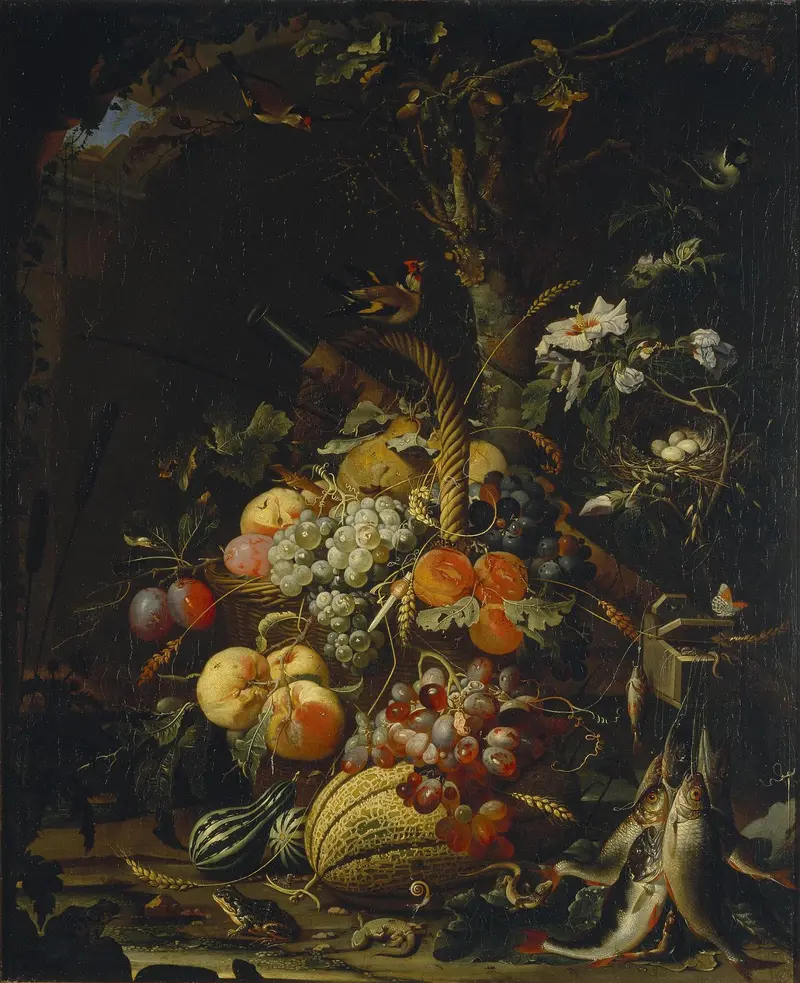
Forest floor still life with fruit, fish and a bird's nest
Abraham Mignon
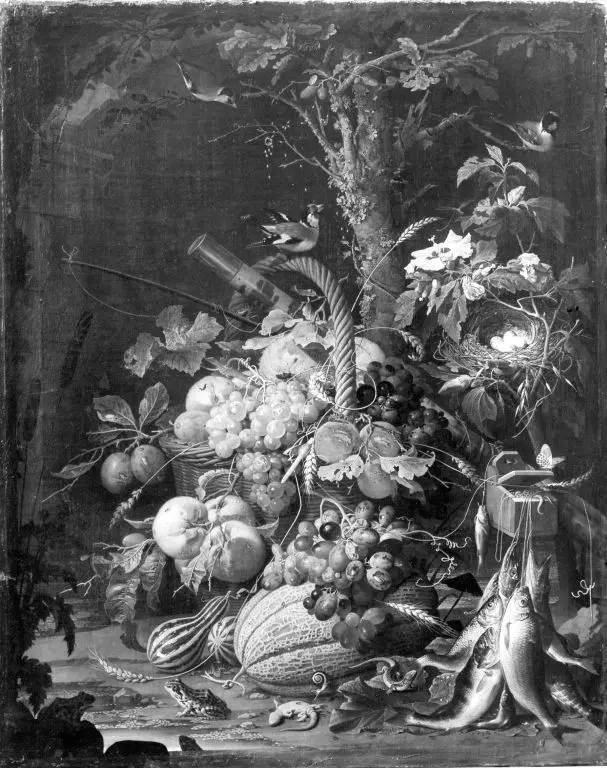
Still life with fruit, fish and a bird's nest
Abraham Mignon
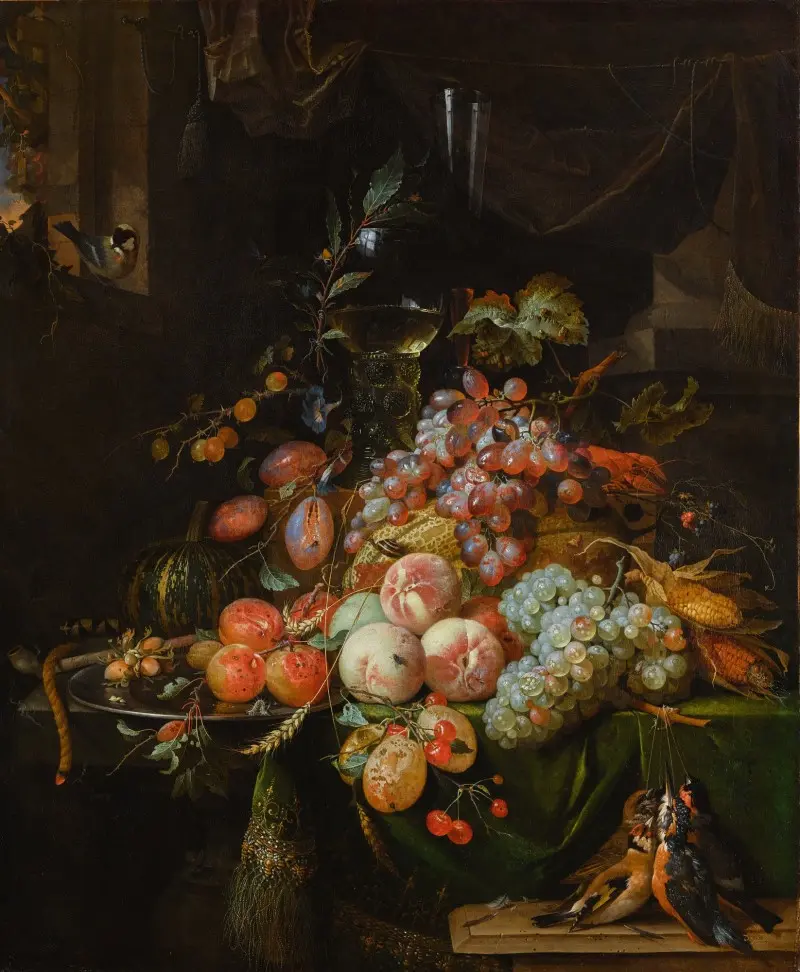
Still Life with Plums, Peaches, Apricots, Grapes and a Melon
Abraham Mignon
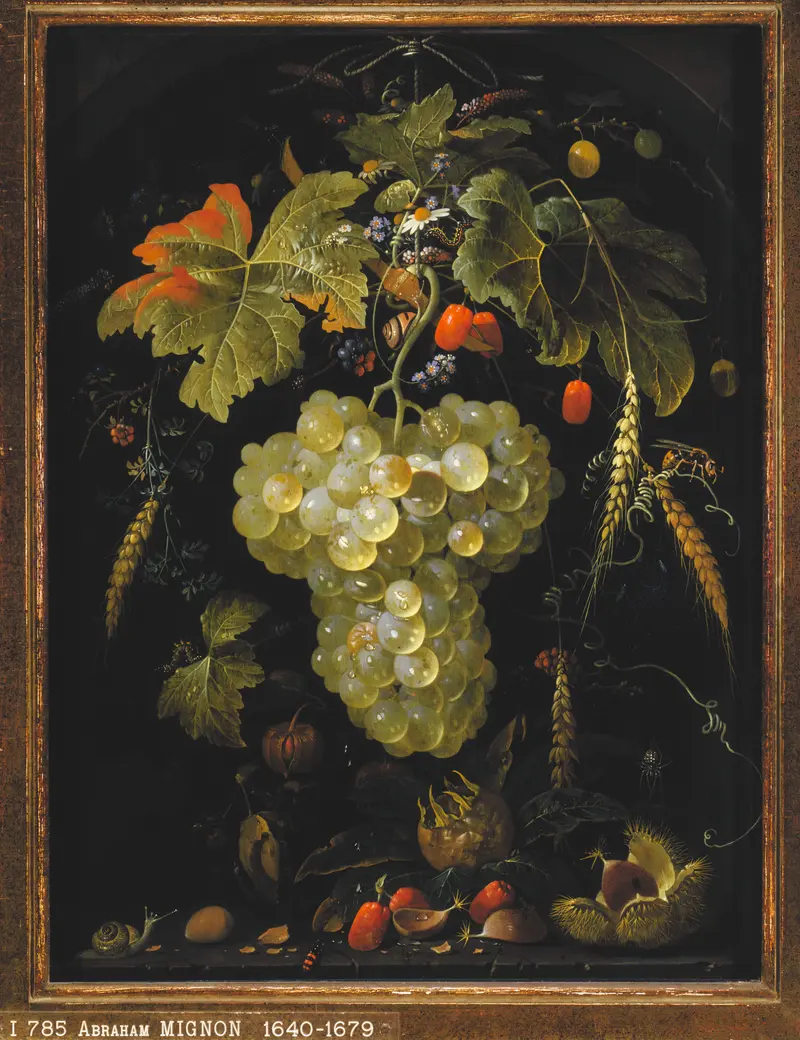
Festoon of fruit suspended from a rope, in a niche
Abraham Mignon
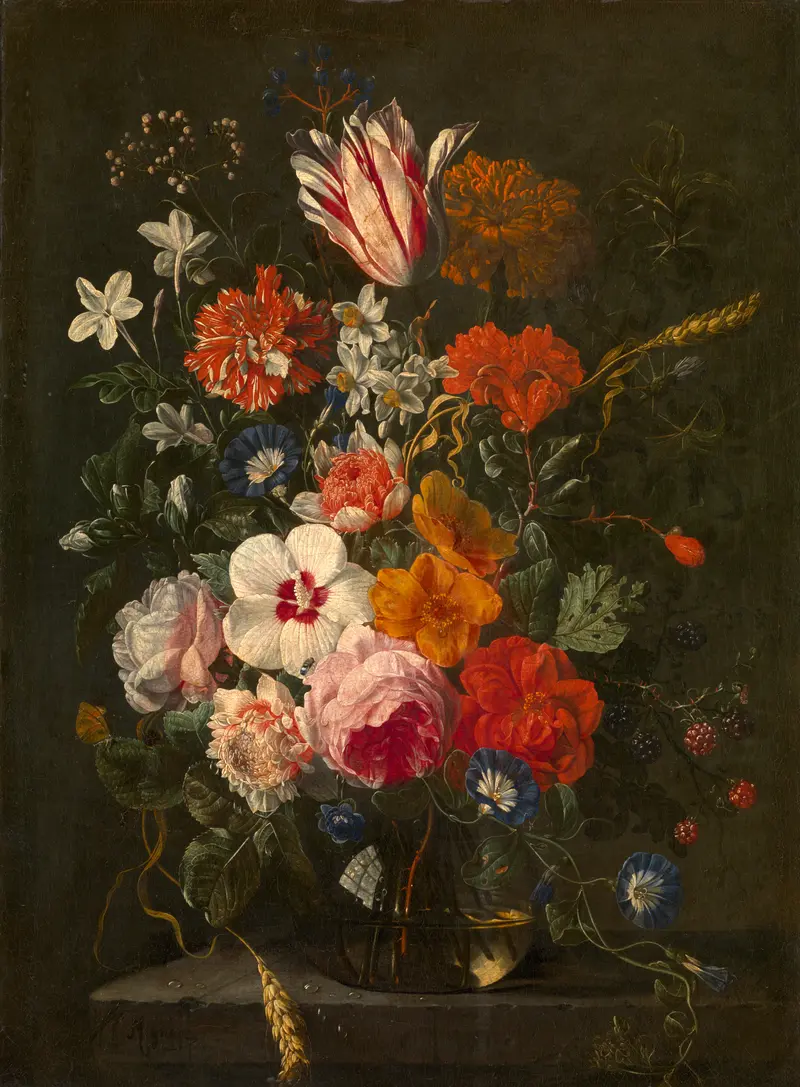
Flowers and a branch of berries in a glass vase on a stone ledge
Abraham Mignon
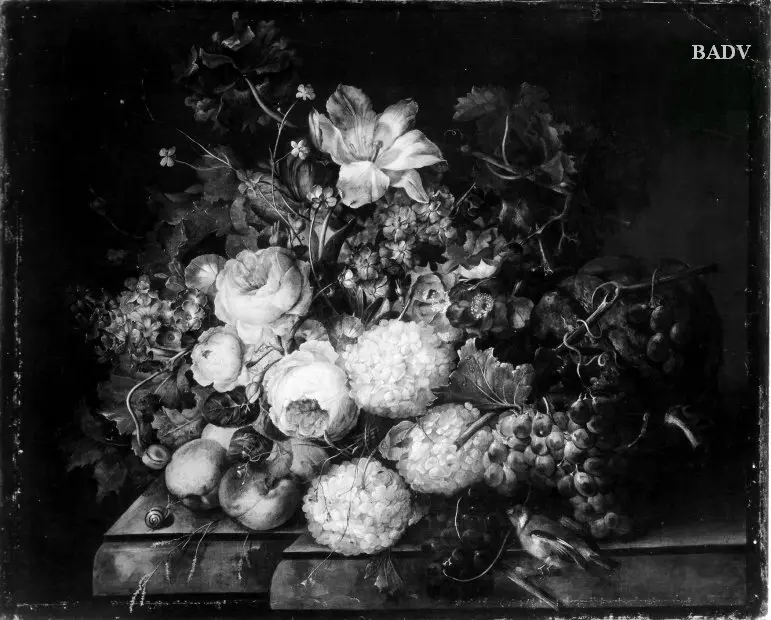
Flowers and fruit on a plinth
Abraham Mignon





