
Still Life with Fruit, Oysters and a Porcelain Bowl — History & Facts
What first arrests the eye in Still Life with Fruit, Oysters and a Porcelain Bowl is the sense of abundance teetering on the edge of chaos. A silver platter, heavy with opened oysters, glistens with droplets that threaten to slip off the stone table’s edge. Grapes tumble from their stem, one already broken loose, while a split pomegranate spills its jeweled seeds in a burst of red.
Every surface is alive with detail: snails inch along the marble, insects hover or crawl, and a porcelain bowl, painted with blue flowers, gleams coolly beside the warm orange of a pumpkin. The light, sharp and precise, picks out the textures—slick oyster flesh, rough shells, the velvet bloom on grapes—inviting the viewer to linger over each surface and shadow. This painting belongs to the world of the Dutch Golden Age, when still lifes like this one were prized for their technical brilliance and layered symbolism. Created between 1660 and 1679, it reflects a society fascinated by both the pleasures and the brevity of earthly delights.
Wealthy merchants commissioned such works to display their prosperity and taste, and to meditate, perhaps, on the fleeting nature of luxury: the oysters will be eaten, the fruit will rot, the insects will vanish. The presence of imported porcelain and exotic fruit speaks to the era’s global trade networks, while the meticulous rendering of every leaf and shell reveals the artist’s devotion to observation. History has kept few traces of this particular painting’s journey, but its invitation remains clear: look closely, and see how the world’s richness is always balanced with its fragility.
More Artworks by Abraham Mignon

Still Life with Flowers and a Watch
Abraham Mignon
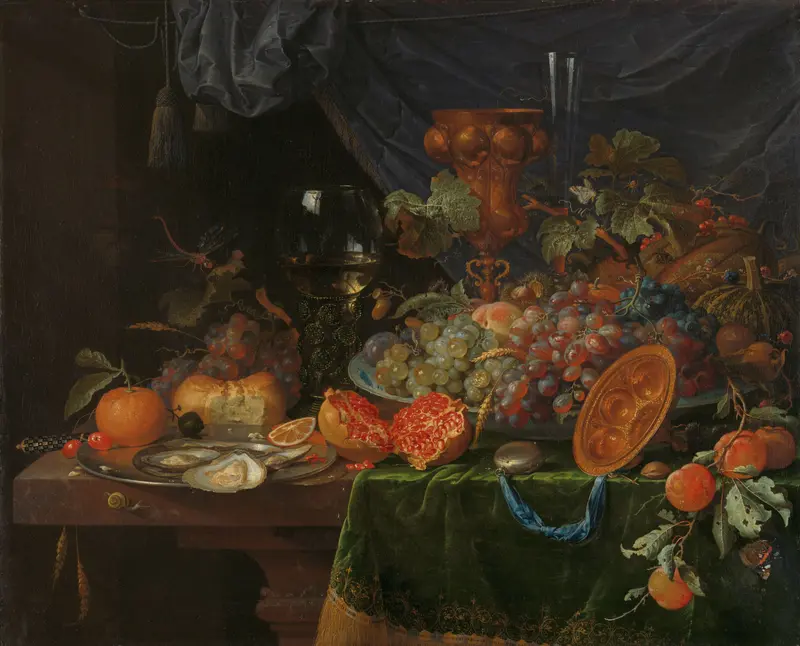
Still Life with Fruit and Oysters
Abraham Mignon
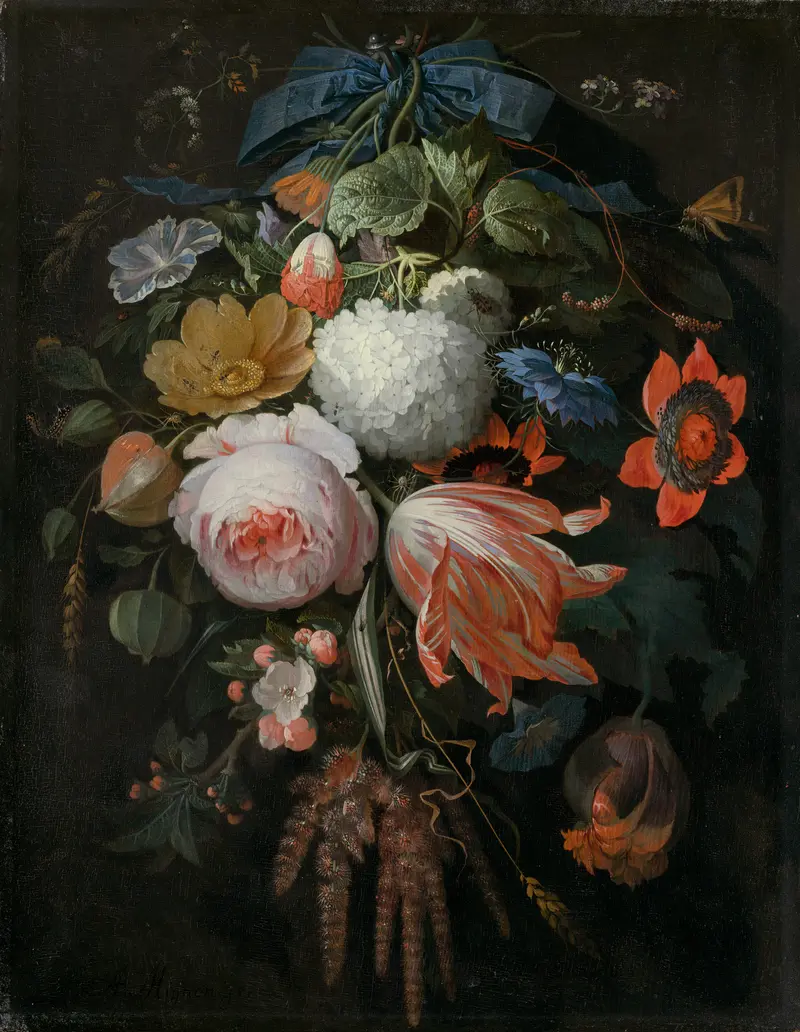
A Hanging Bouquet of Flowers
Abraham Mignon
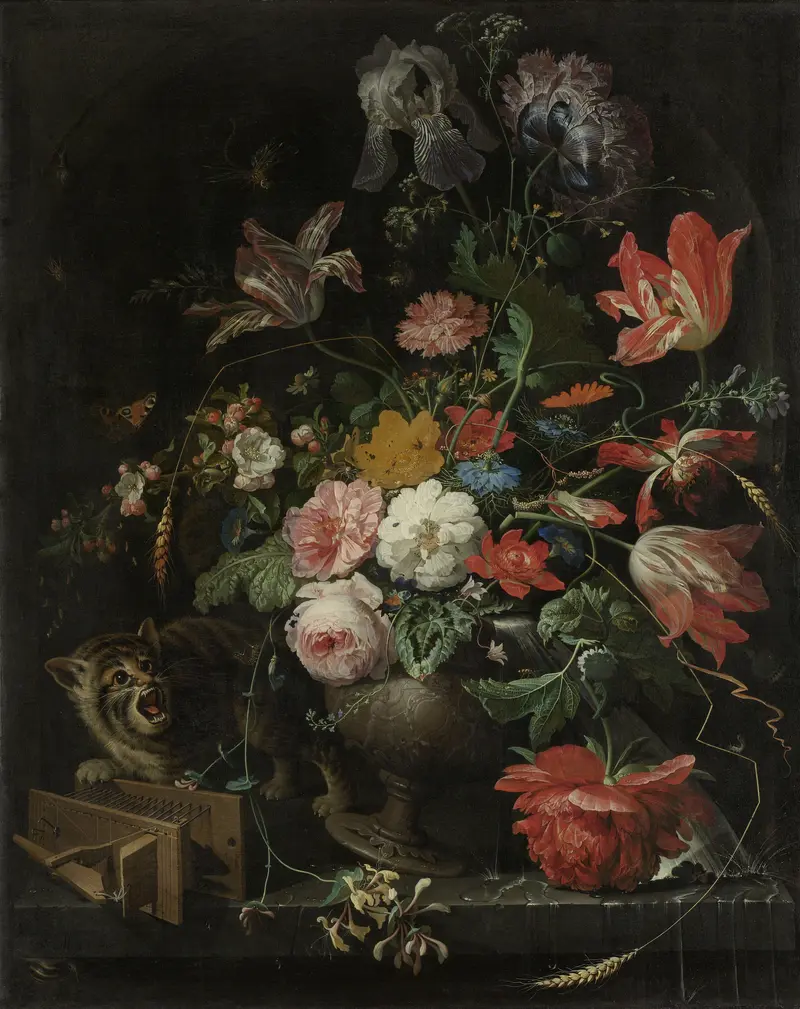
Bouquet with cat and mousetrap
Abraham Mignon
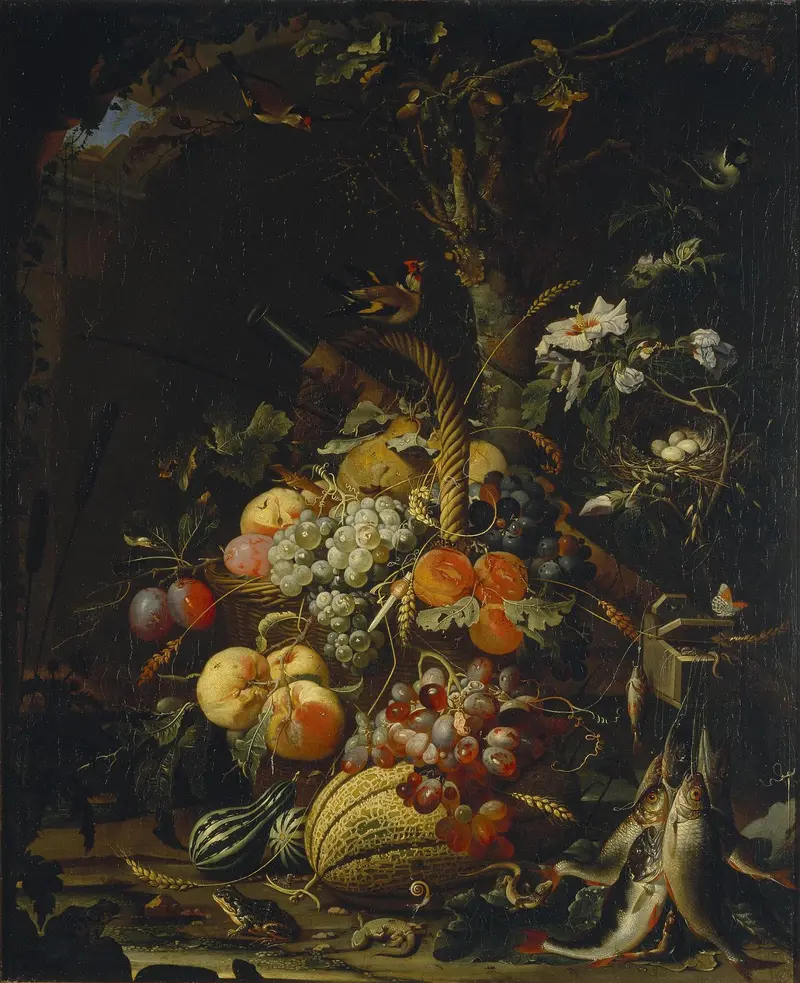
Forest floor still life with fruit, fish and a bird's nest
Abraham Mignon
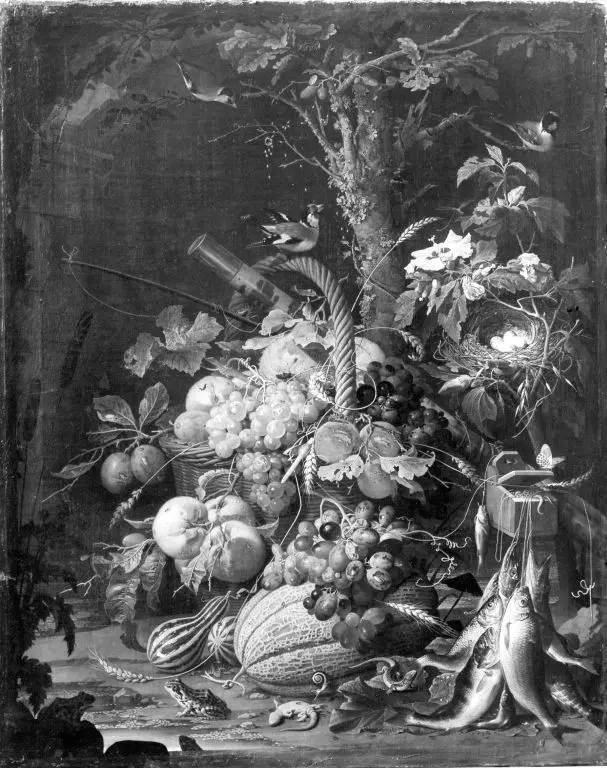
Still life with fruit, fish and a bird's nest
Abraham Mignon
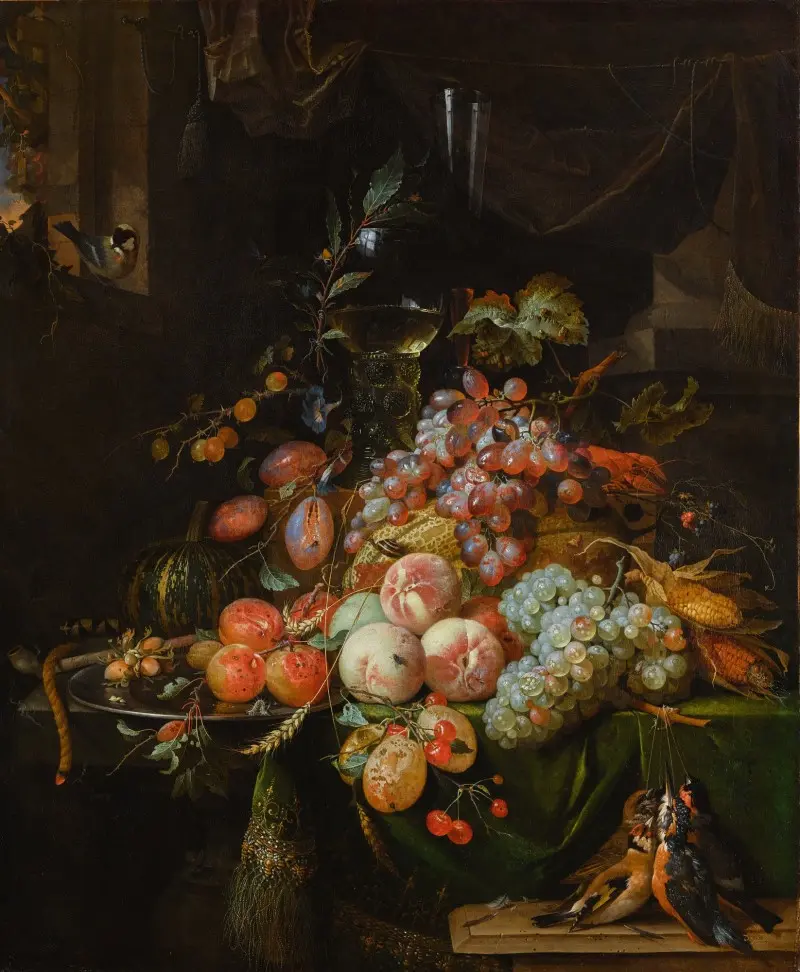
Still Life with Plums, Peaches, Apricots, Grapes and a Melon
Abraham Mignon
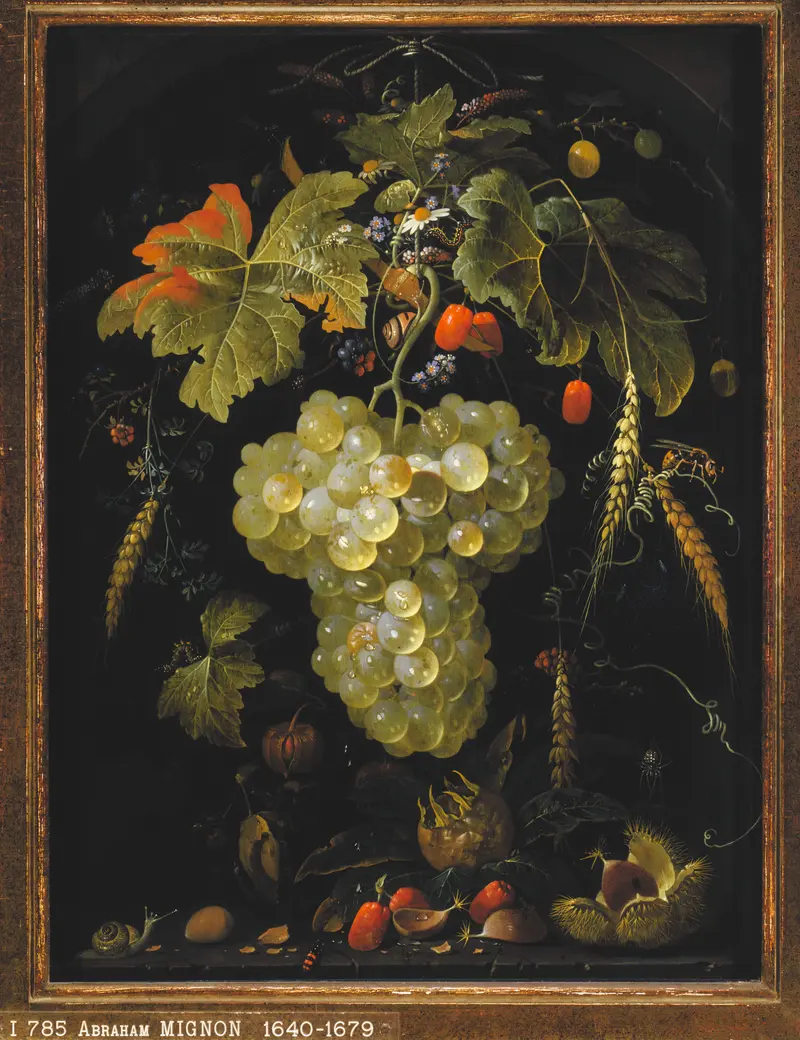
Festoon of fruit suspended from a rope, in a niche
Abraham Mignon
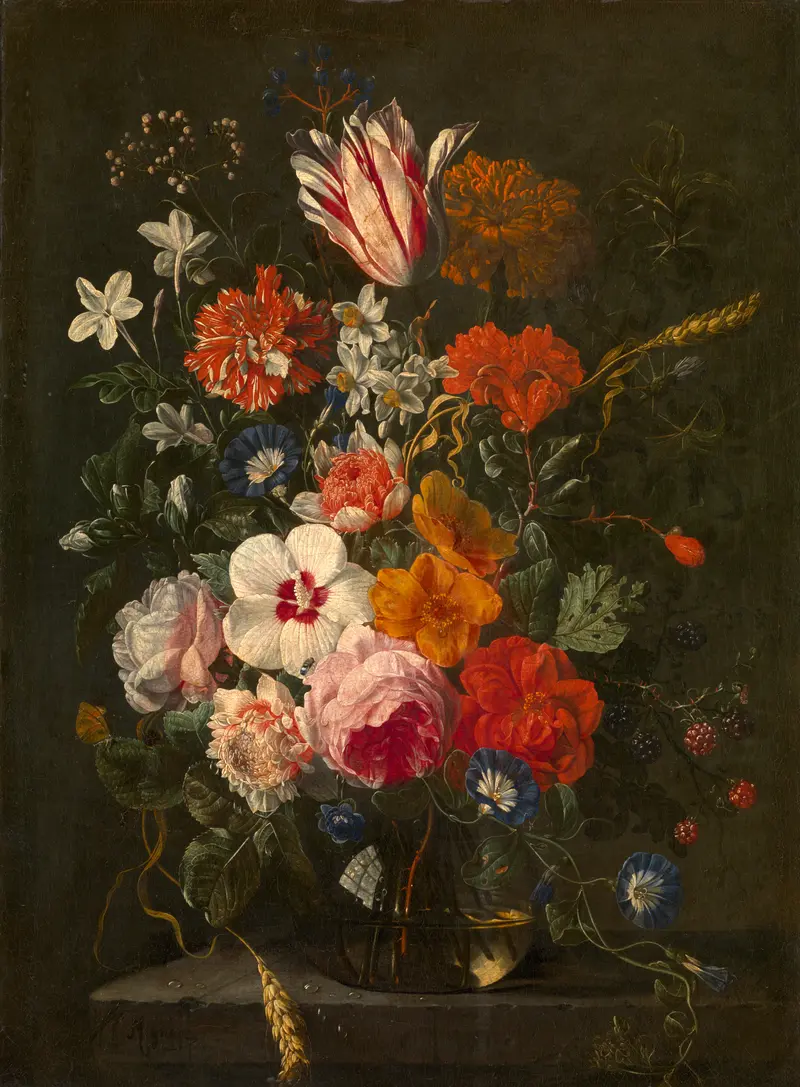
Flowers and a branch of berries in a glass vase on a stone ledge
Abraham Mignon
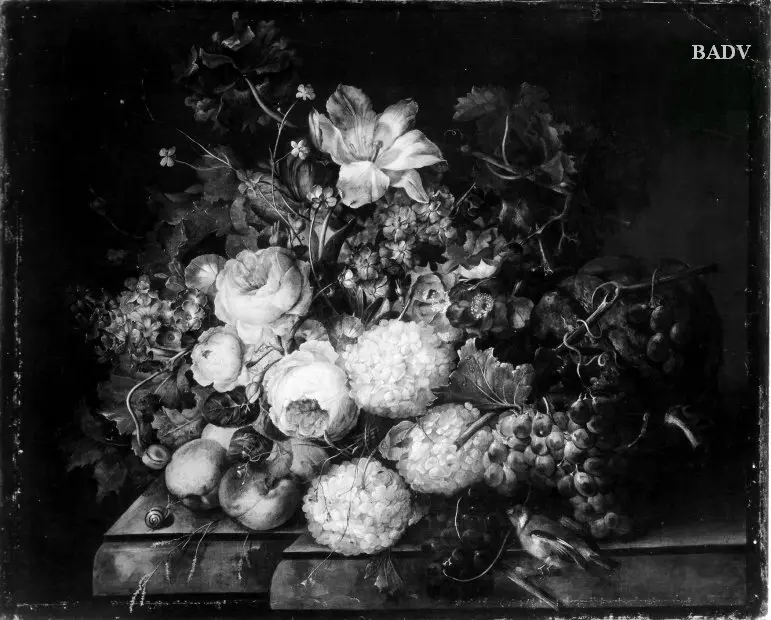
Flowers and fruit on a plinth
Abraham Mignon





