
Still Life with Fruit, Tin Plate and Wine Glasses — History & Facts
A tangle of curling vines and glistening fruit draws the viewer into a world where abundance teeters on the edge of decay. The surface of the tin plate gleams beneath two peaches, their skins marked by the gentle bruises of ripeness, while grapes—both pale and ruby—spill across the table, catching the light in translucent orbs. A butterfly hovers near the edge, and a snail inches forward, reminders that this feast is fleeting, already claimed by the natural world.
The glassware, delicate and tall, stands sentinel behind the fruit, its clarity contrasting with the dense, shadowed background. Every detail, from the fine hairs on a chestnut burr to the curling tendrils of pumpkin, is rendered with a watchmaker’s care, inviting the eye to linger and discover. Painted around 1663, this still life by Abraham Mignon belongs to a tradition that flourished in the Dutch Golden Age, when such images were prized for their technical brilliance and their layered meanings. Collectors of the time delighted in these paintings not just as displays of wealth and taste, but as meditations on the passage of time and the pleasures of the senses.
The presence of overripe fruit, insects, and curling leaves hints at the fragility beneath the surface, a gentle warning wrapped in beauty. Now in the Städel collection, this work stands as a testament to a moment when painters transformed the everyday into a stage for light, texture, and the quiet drama of nature—look again, and see how much the world can hold in a single, silent moment.
More Artworks by Abraham Mignon

Still Life with Flowers and a Watch
Abraham Mignon
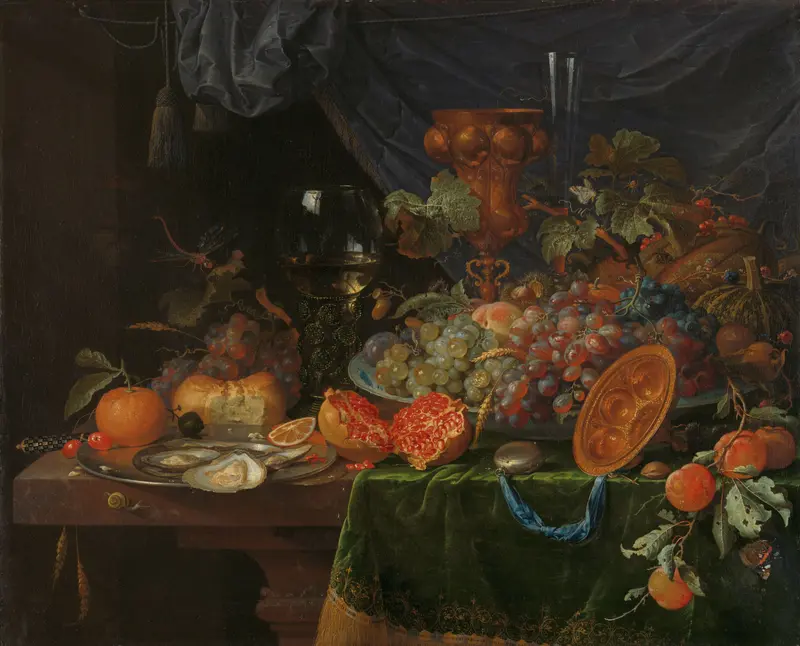
Still Life with Fruit and Oysters
Abraham Mignon
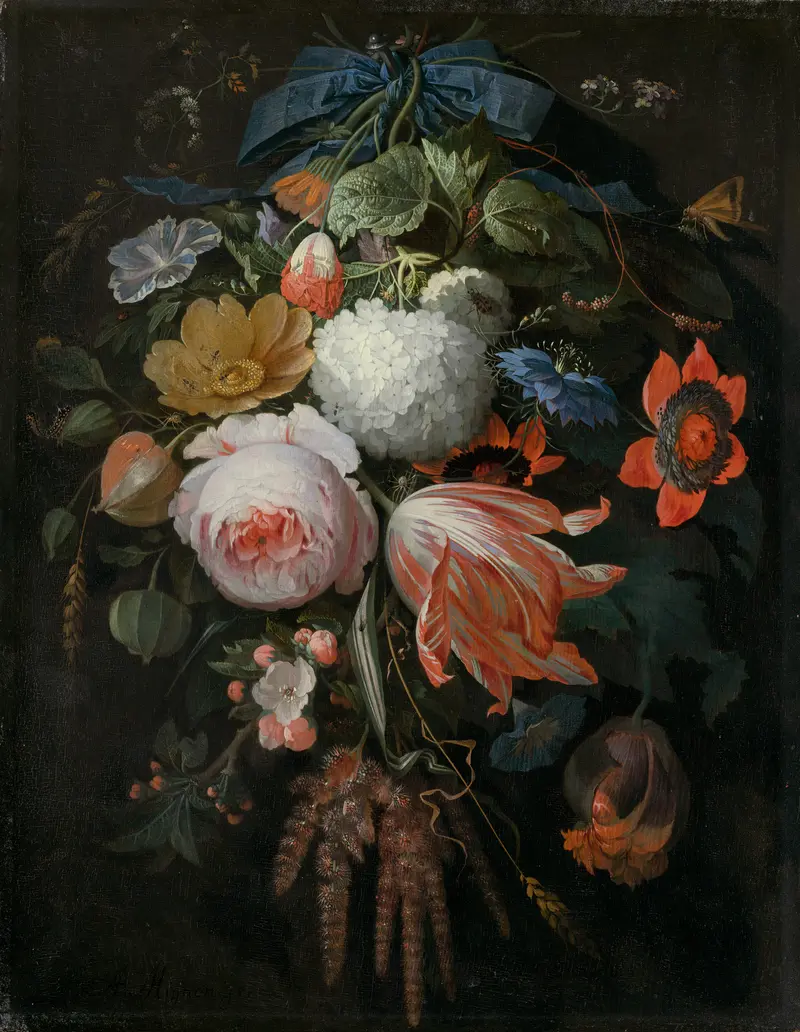
A Hanging Bouquet of Flowers
Abraham Mignon
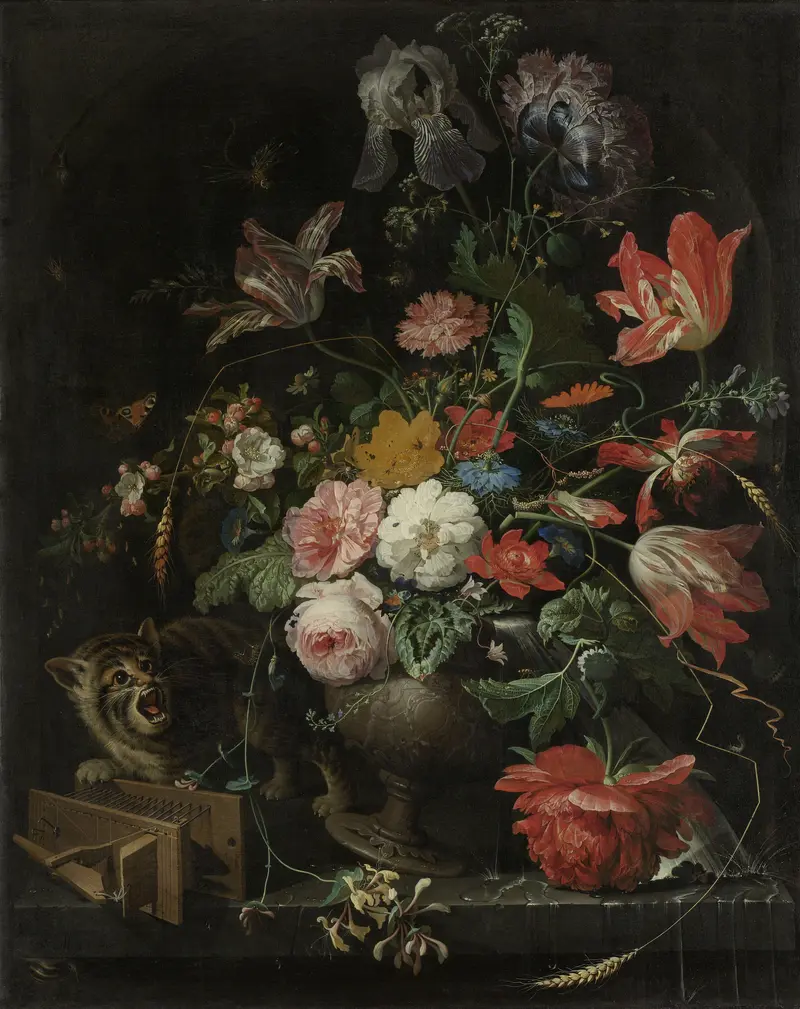
Bouquet with cat and mousetrap
Abraham Mignon
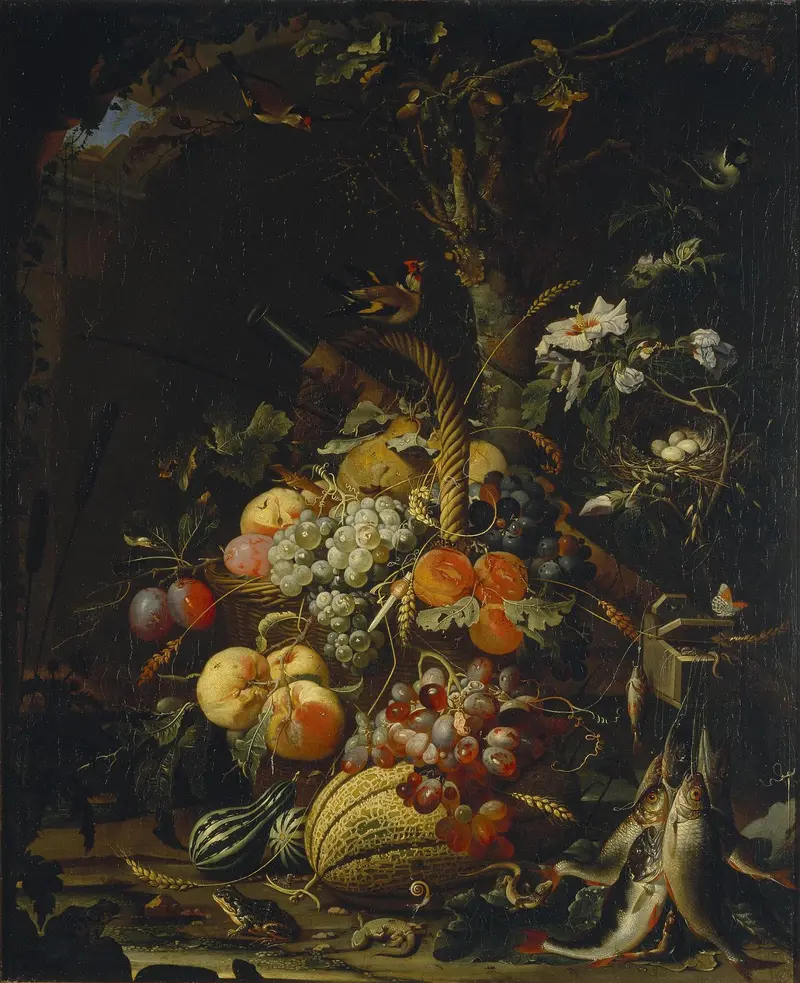
Forest floor still life with fruit, fish and a bird's nest
Abraham Mignon
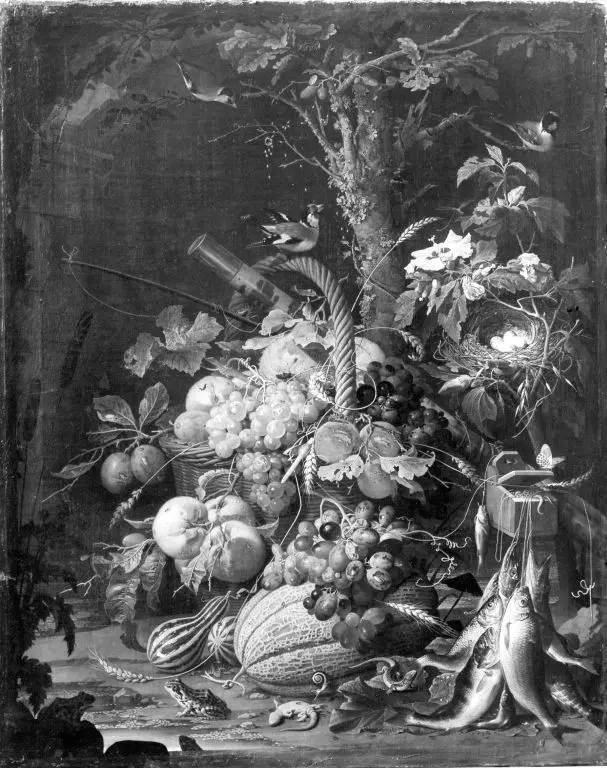
Still life with fruit, fish and a bird's nest
Abraham Mignon
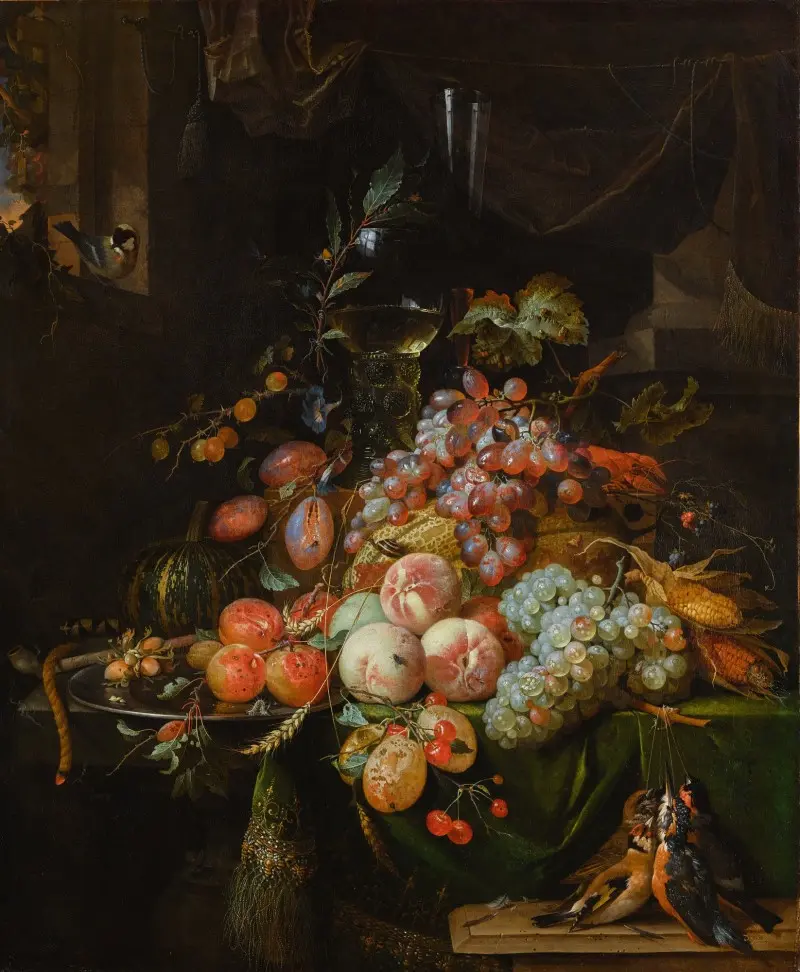
Still Life with Plums, Peaches, Apricots, Grapes and a Melon
Abraham Mignon
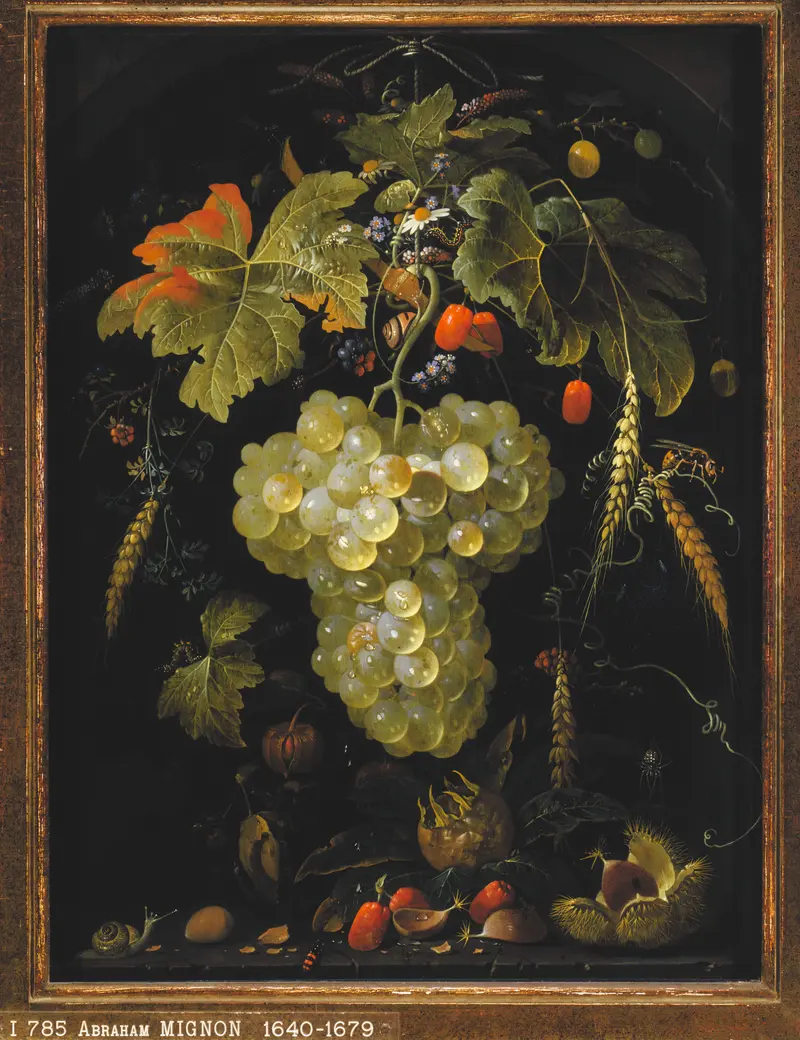
Festoon of fruit suspended from a rope, in a niche
Abraham Mignon
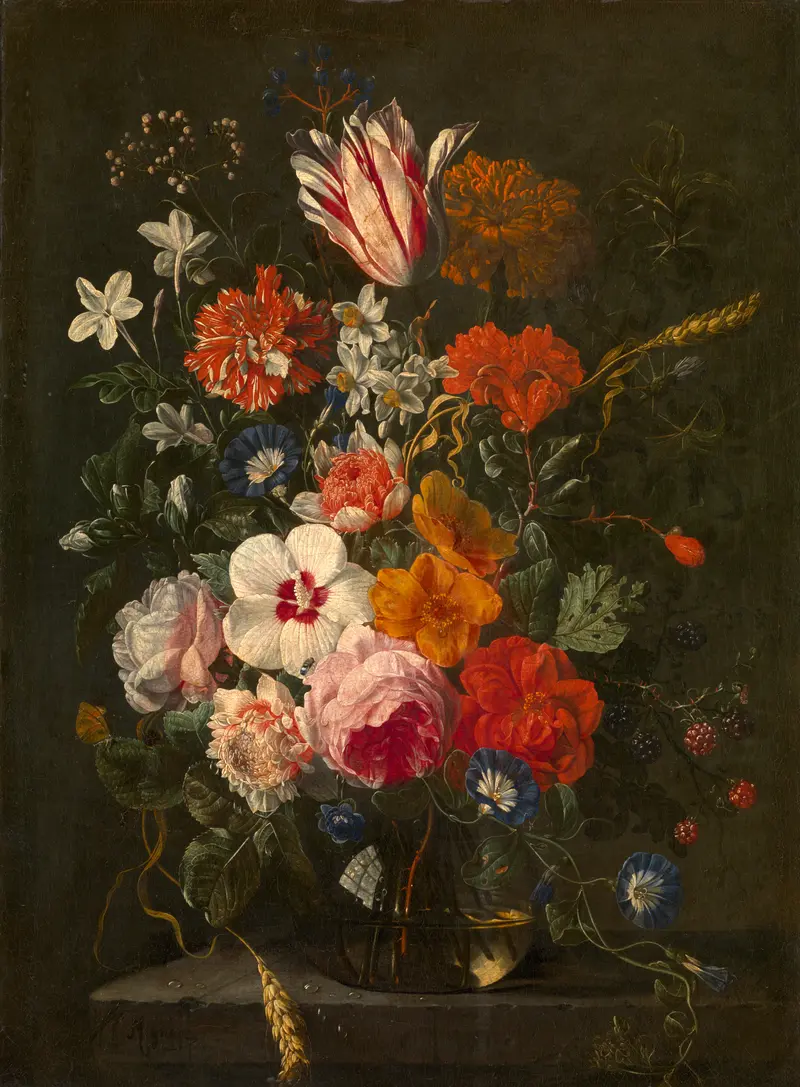
Flowers and a branch of berries in a glass vase on a stone ledge
Abraham Mignon
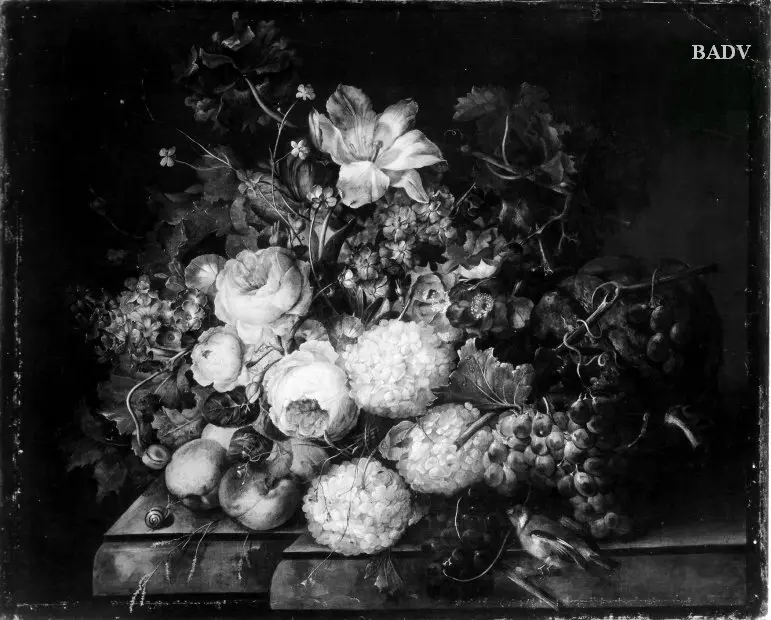
Flowers and fruit on a plinth
Abraham Mignon





