
Still Life with Game and Fowl — History & Facts
A single shaft of light slices through the gloom, catching on the pale breast of a fowl and the glint of a brass mortar, while the rest of the scene dissolves into shadow. The drama here is not in action, but in the hush after the hunt: a rabbit’s lifeless eye meets the viewer’s gaze, and a plucked bird hangs, its raw flesh exposed, suspended in a moment between abundance and absence. Each object is arranged with deliberate care, the textures—downy feathers, taut skin, cool metal, and bursting grapes—inviting the eye to linger.
The light leads us from the hanging game to the table below, where fruit and vessels promise a feast, but the somber palette and heavy shadows warn of nature’s cycle and the fleetingness of earthly pleasures. Works like this, painted in the Dutch Republic between 1640 and 1690, were more than mere displays of technical prowess. They were prized by wealthy merchants and burghers eager to adorn their homes with reminders of prosperity and the fruits of both labor and trade. Yet, these still lifes—especially those by artists such as Abraham van Beyeren—often carried a second message: a meditation on mortality and the vanity of riches, hidden beneath the surface of sumptuous detail.
This painting, now in the Mauritshuis, stands as a quiet testament to that era’s fascination with both the beauty and brevity of life. Look again at the gleam on the grapes or the limp paw of the hare, and consider what the painter asks us to remember.
More Artworks by Abraham van Beyeren

Still Life
Abraham van Beyeren
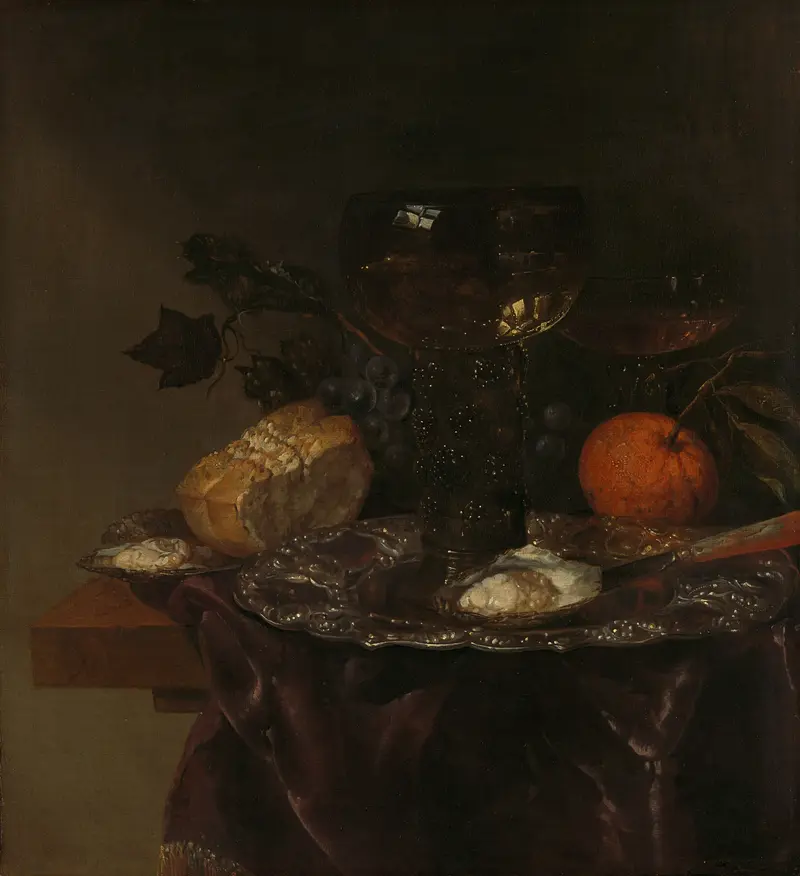
Still Life
Abraham van Beyeren
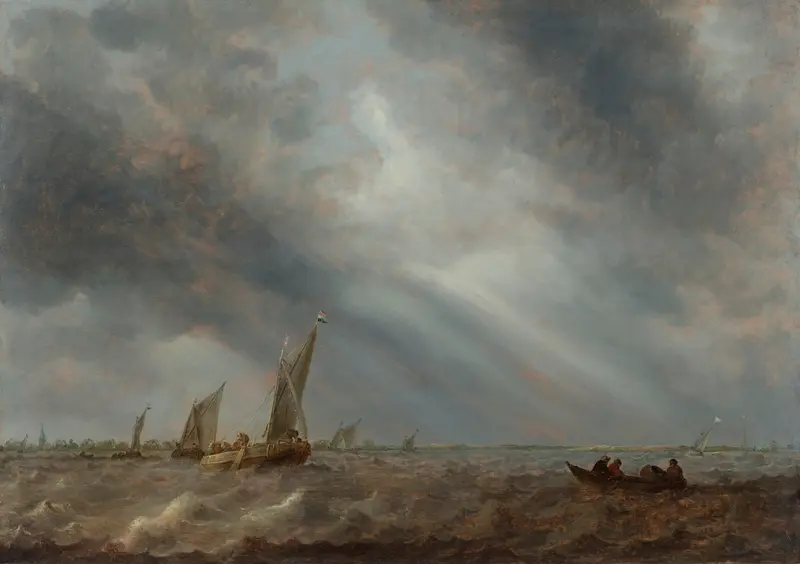
Various sailing vessels and a rowing boat with fishermen on choppy waters under a stormy sky
Abraham van Beyeren
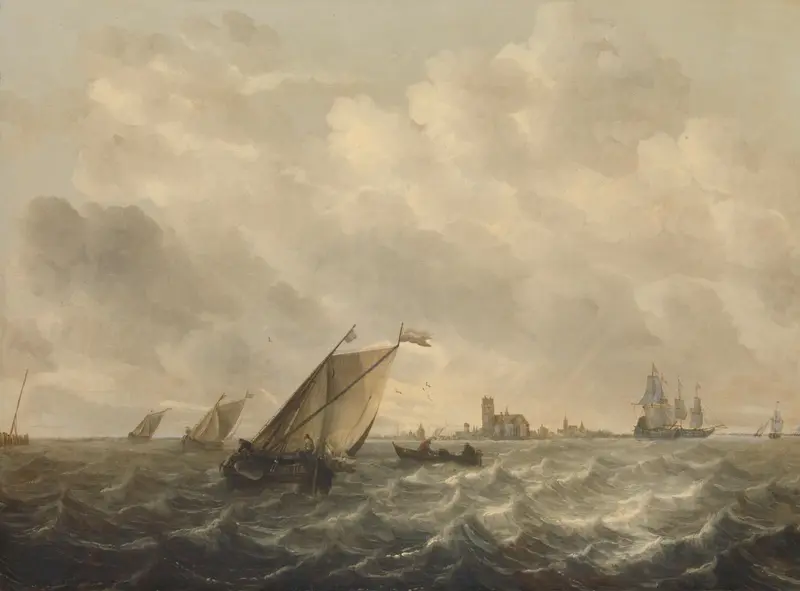
River View
Abraham van Beyeren
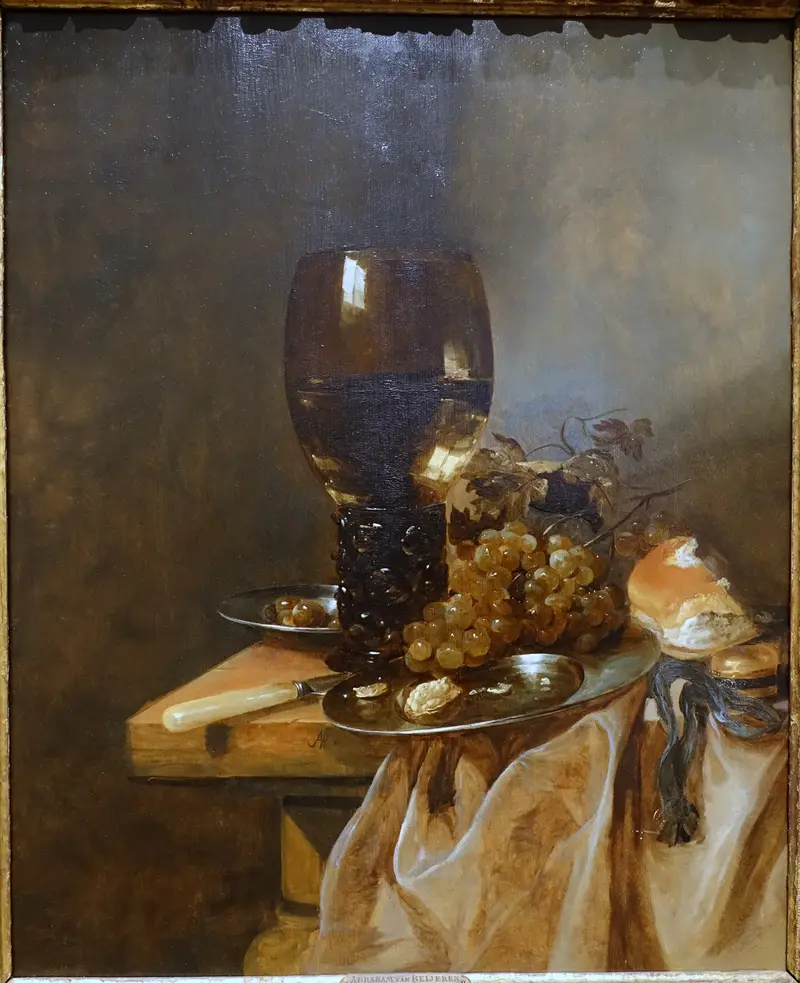
A Roemer with Grapes, a Pewter Plate and a Roll
Abraham van Beyeren
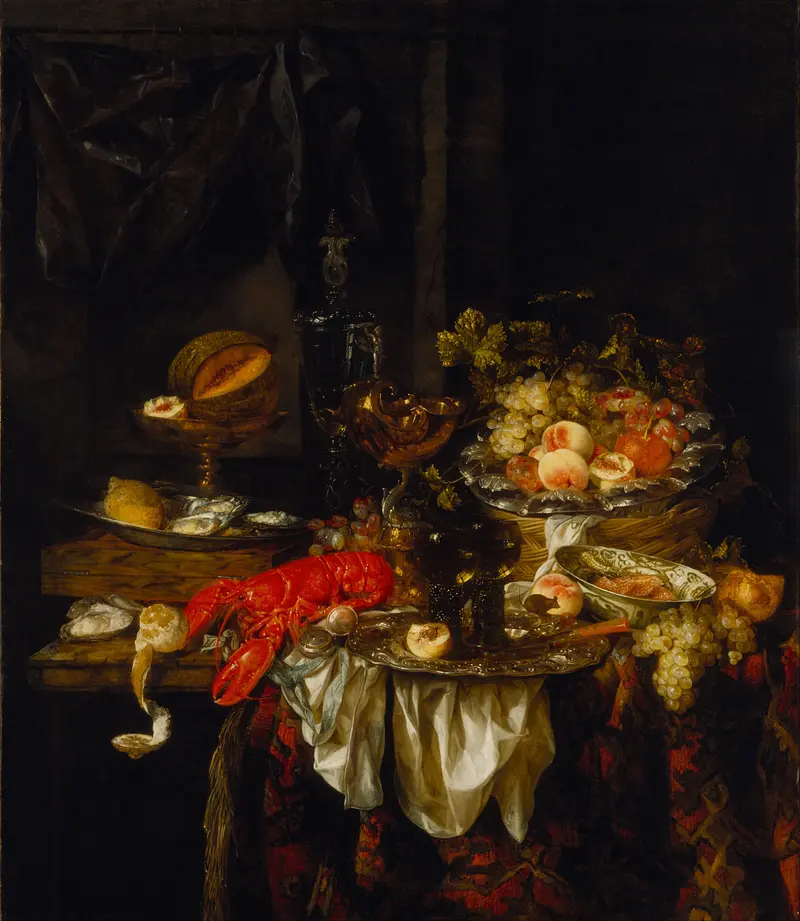
Banquet Still Life
Abraham van Beyeren
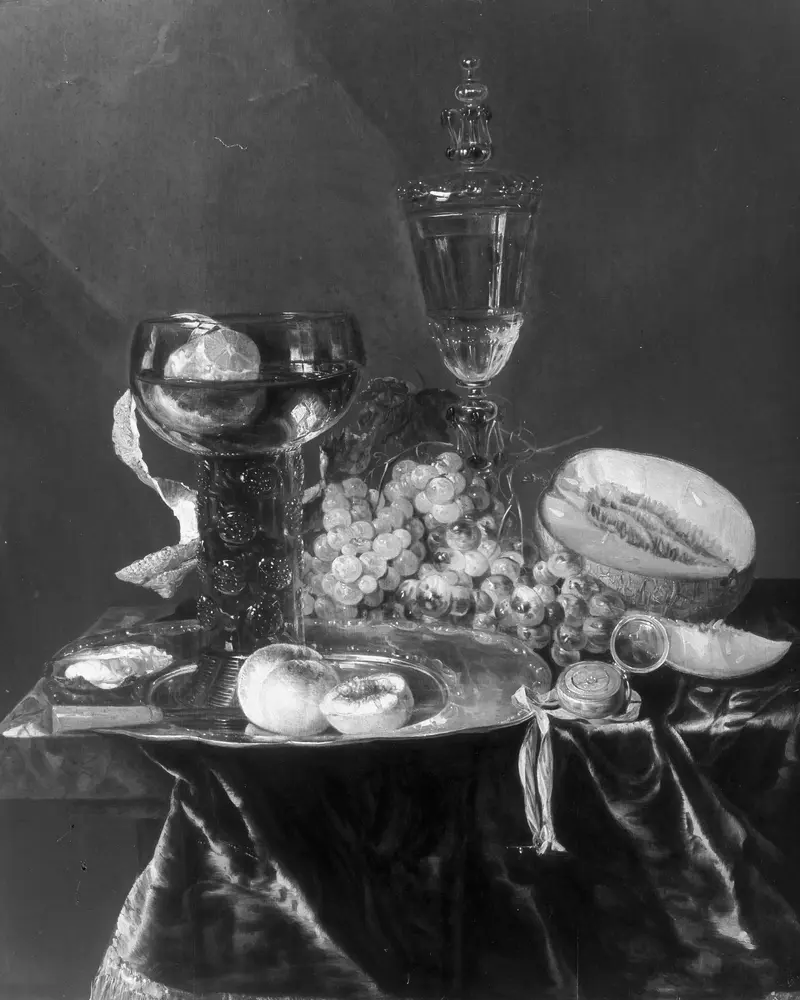
Still life with a glass lid goblet
Abraham van Beyeren
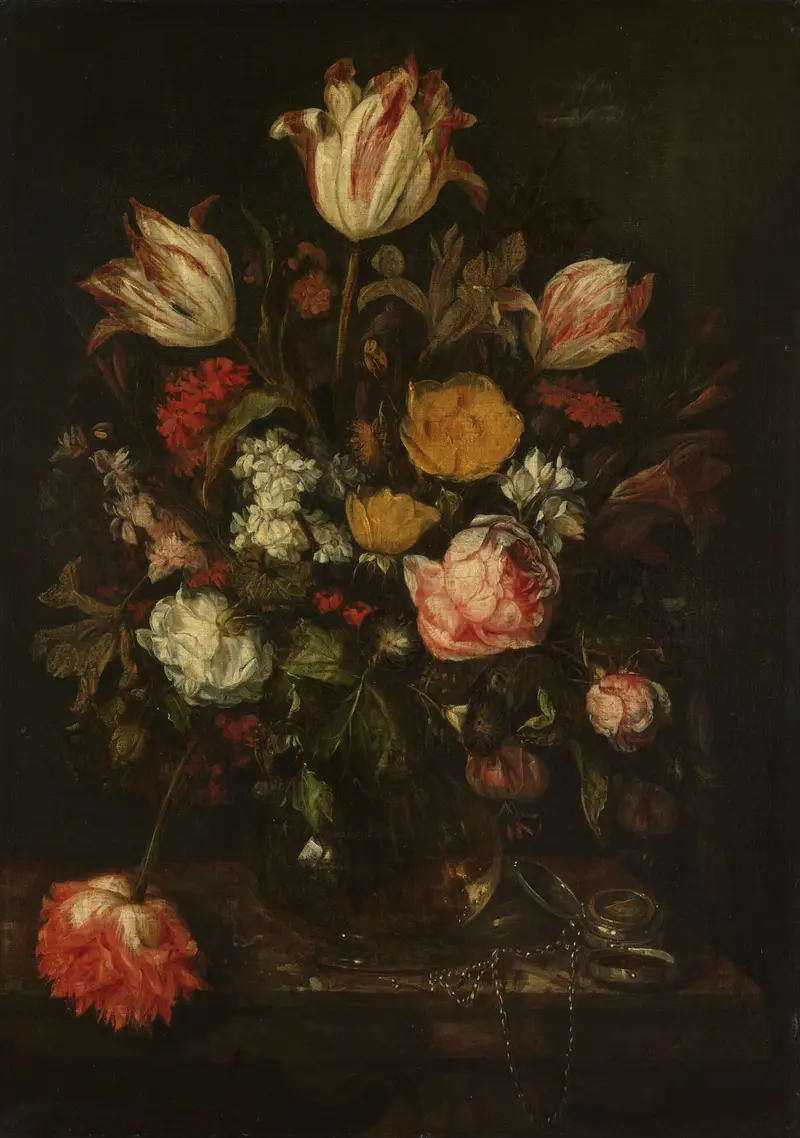
Still life with flowers
Abraham van Beyeren
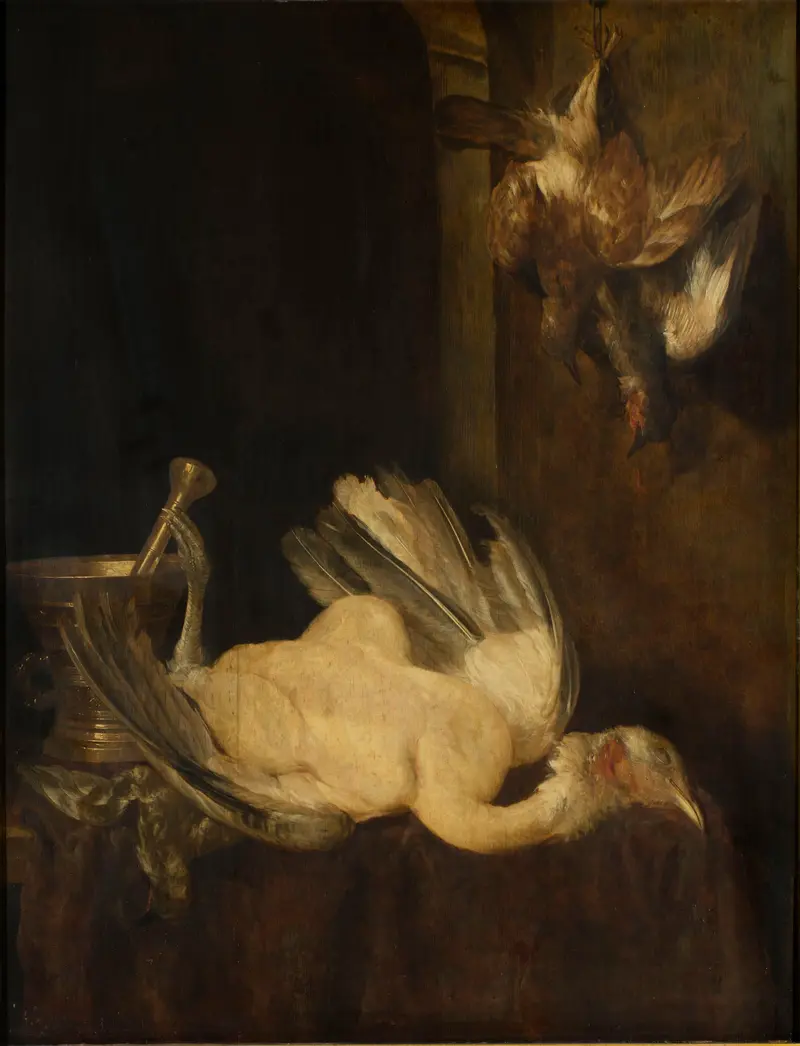
Still life with dead birds
Abraham van Beyeren
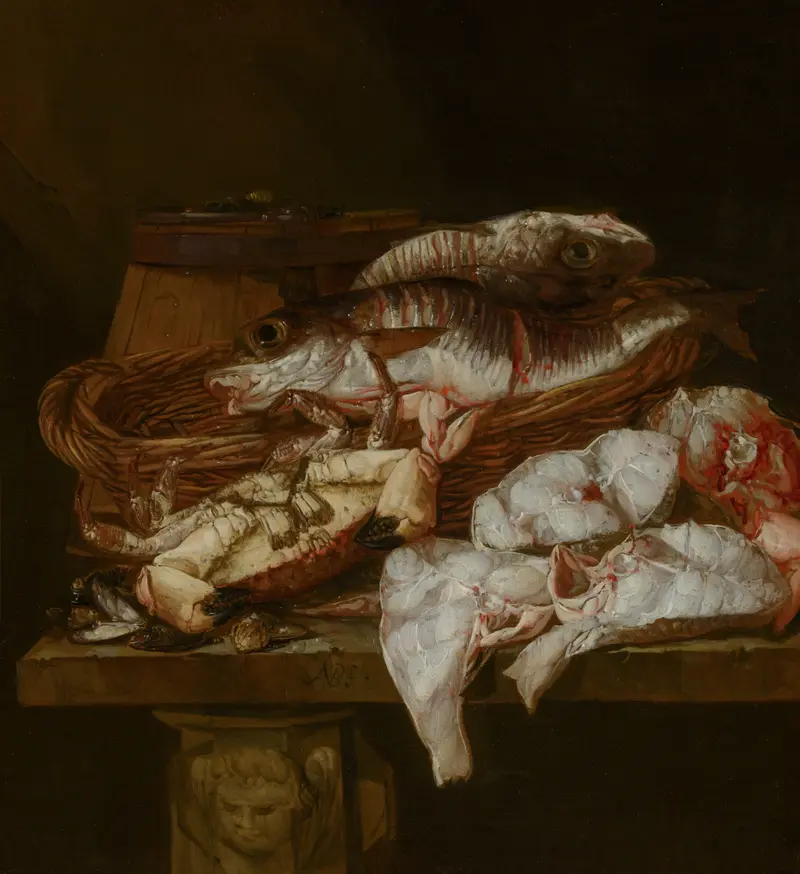
Still Life with Seafood
Abraham van Beyeren





