
Still life with grapes and other fruit — History & Facts
A tangle of vines and curling tendrils seems to spill out of the shadows, drawing the viewer’s gaze into a world where fruit glows as if lit from within. The eye is first caught by the pale, blushing peach at the center, its skin split to reveal the tender flesh inside—a moment of ripeness so exact that it feels almost accidental. Grapes of every hue cluster around it, their translucent skins catching glimmers of light, while a butterfly hovers above, poised on the edge of a curling leaf.
Every element is arranged to suggest abundance and fragility, the fullness of nature balanced on the brink of decay. The dark background pushes the fruit forward, making each detail—down to the dew on a grape or the delicate shell—stand out as if freshly picked. Painted between 1670 and 1674, this still life belongs to a tradition that flourished in the Dutch Golden Age, when artists like Abraham Mignon transformed everyday objects into meditations on beauty and impermanence. Such works were prized by wealthy merchants and collectors, who saw in them a celebration of prosperity and a reminder of life’s fleeting pleasures.
The genre’s popularity mirrored a society fascinated by trade, science, and the natural world, where even a simple peach or grape could become a symbol of time’s passage. Today, the painting resides in the collection of Museum Boijmans Van Beuningen, its quiet drama inviting us to linger over the details and consider what is gained—and lost—in a single moment of ripeness.
More Artworks by Abraham Mignon

Still Life with Flowers and a Watch
Abraham Mignon
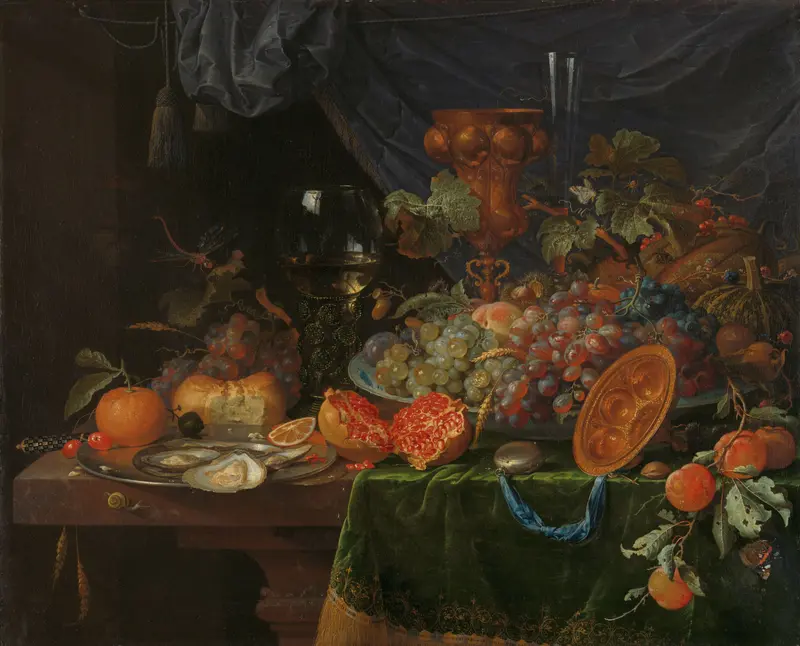
Still Life with Fruit and Oysters
Abraham Mignon
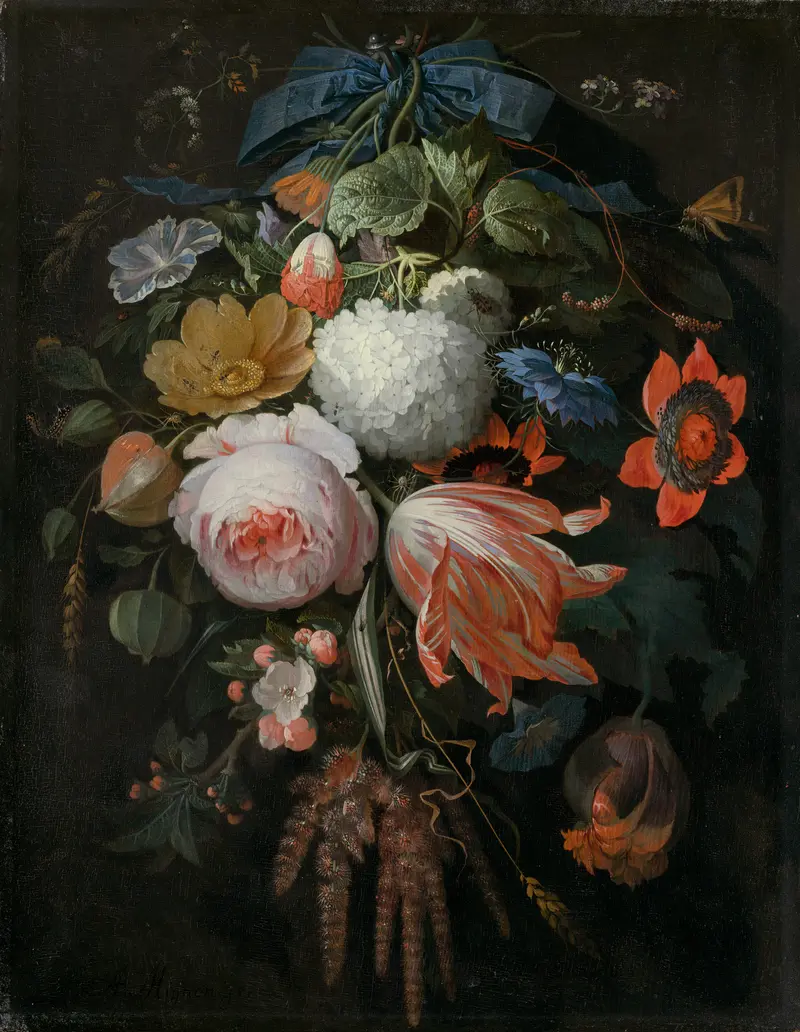
A Hanging Bouquet of Flowers
Abraham Mignon
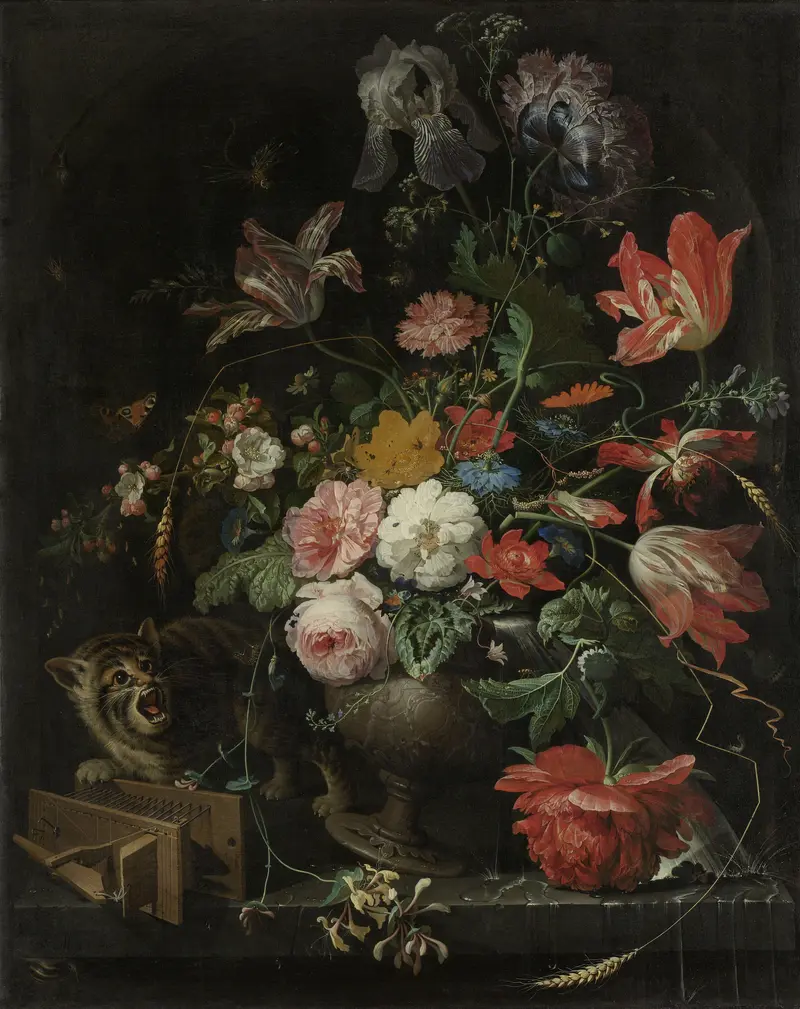
Bouquet with cat and mousetrap
Abraham Mignon
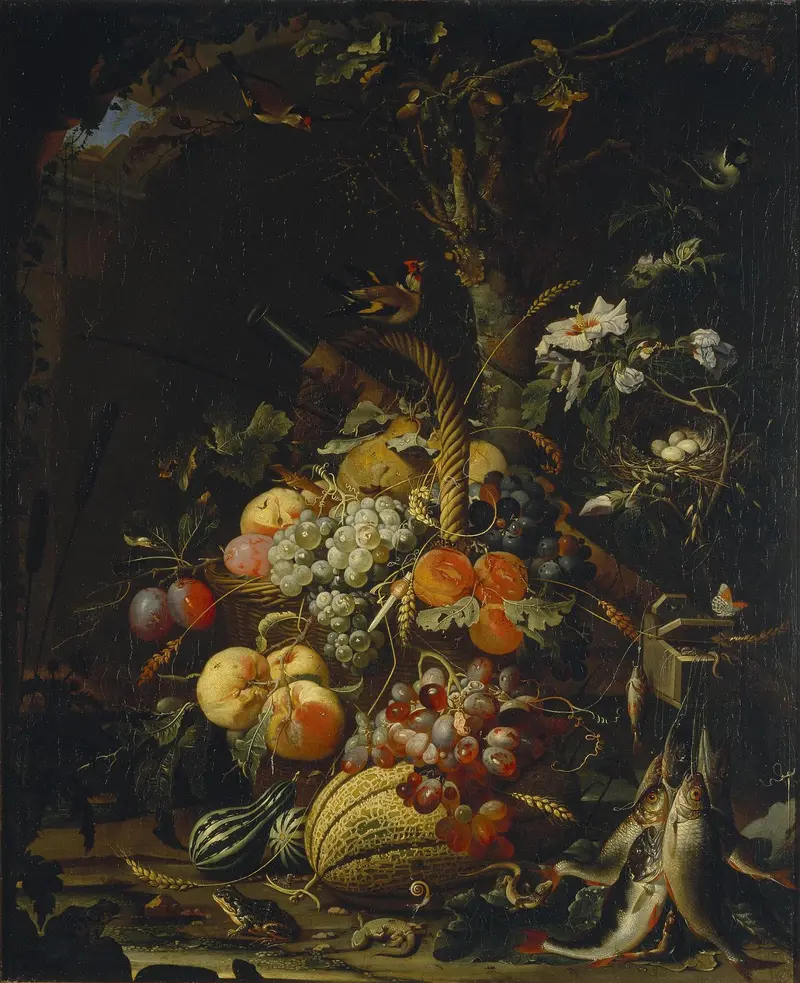
Forest floor still life with fruit, fish and a bird's nest
Abraham Mignon
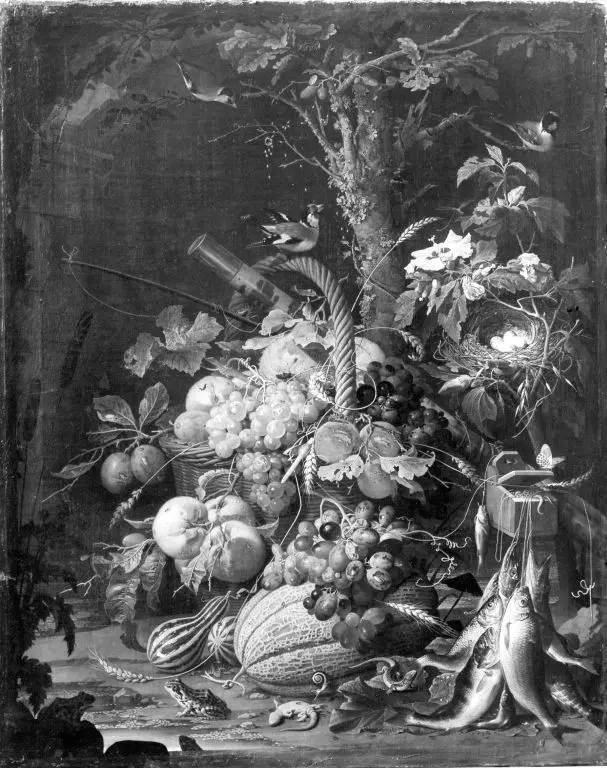
Still life with fruit, fish and a bird's nest
Abraham Mignon
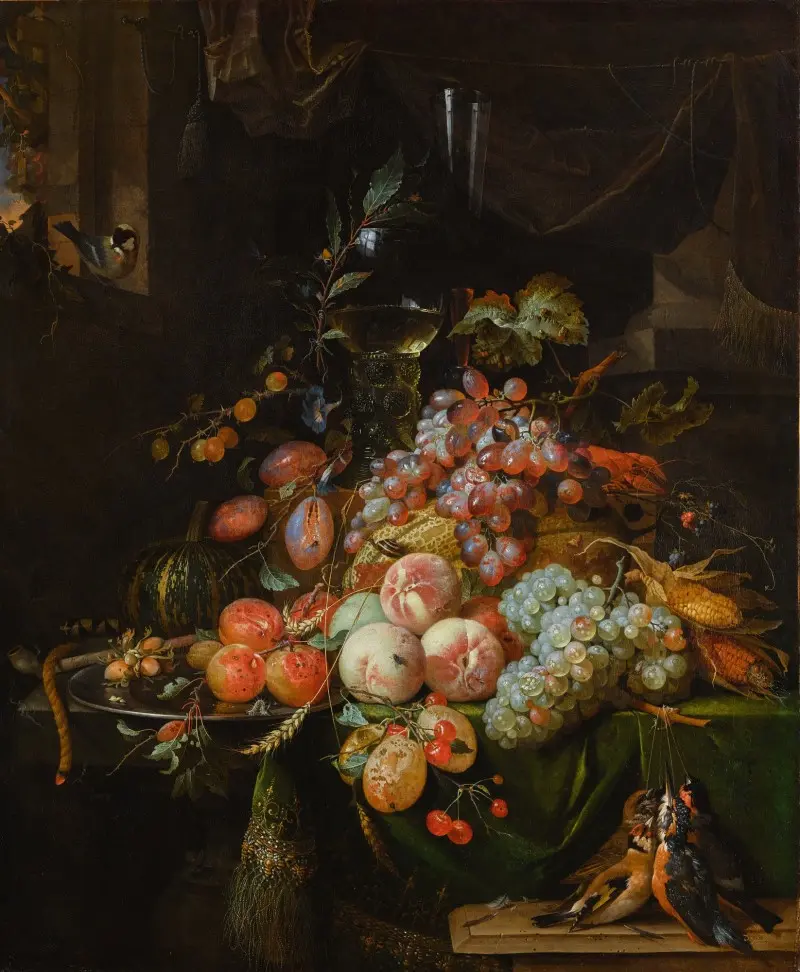
Still Life with Plums, Peaches, Apricots, Grapes and a Melon
Abraham Mignon
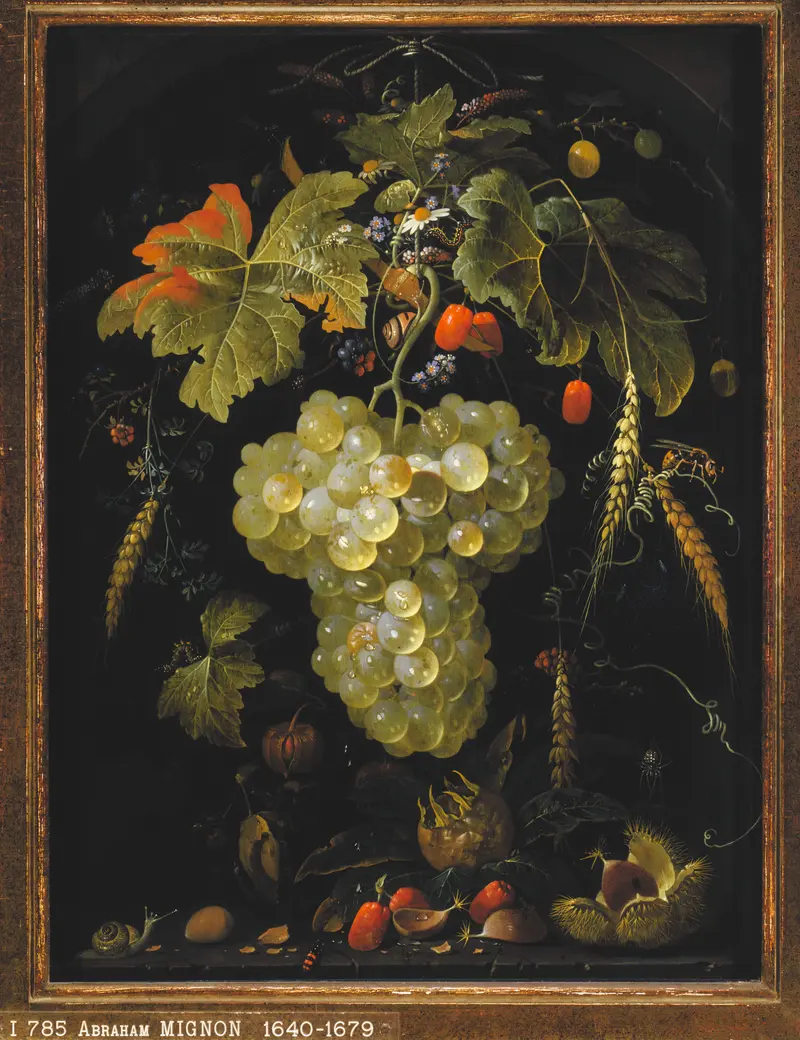
Festoon of fruit suspended from a rope, in a niche
Abraham Mignon
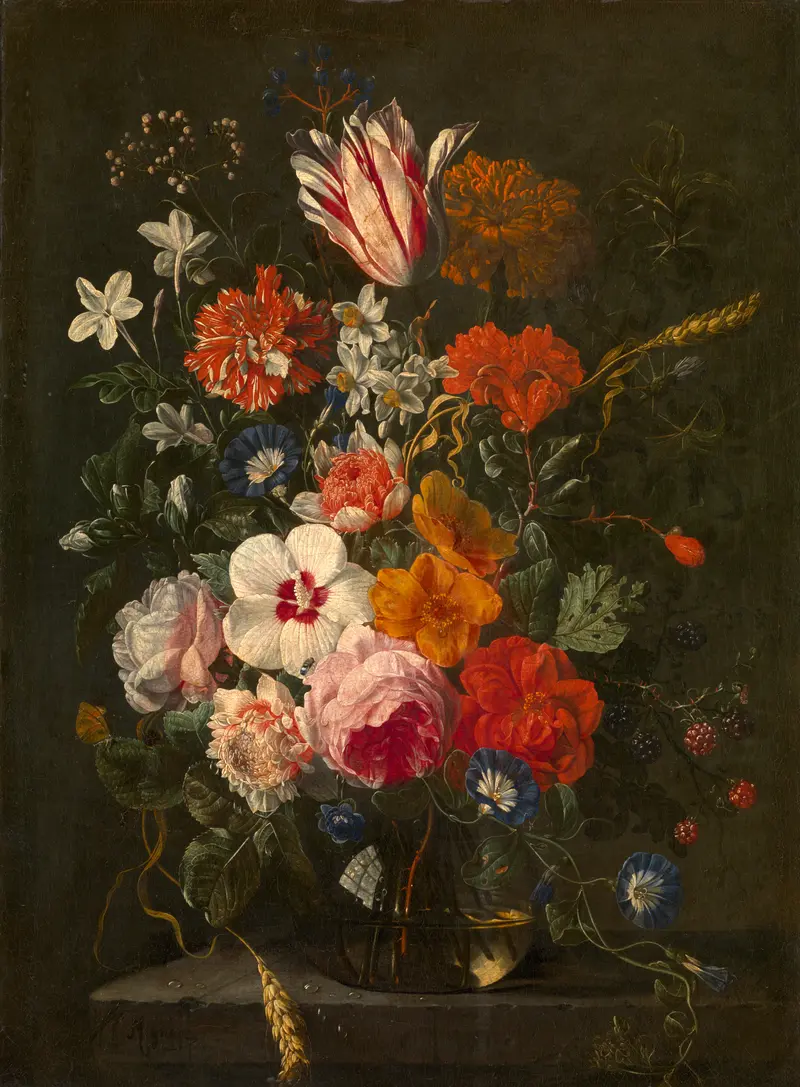
Flowers and a branch of berries in a glass vase on a stone ledge
Abraham Mignon
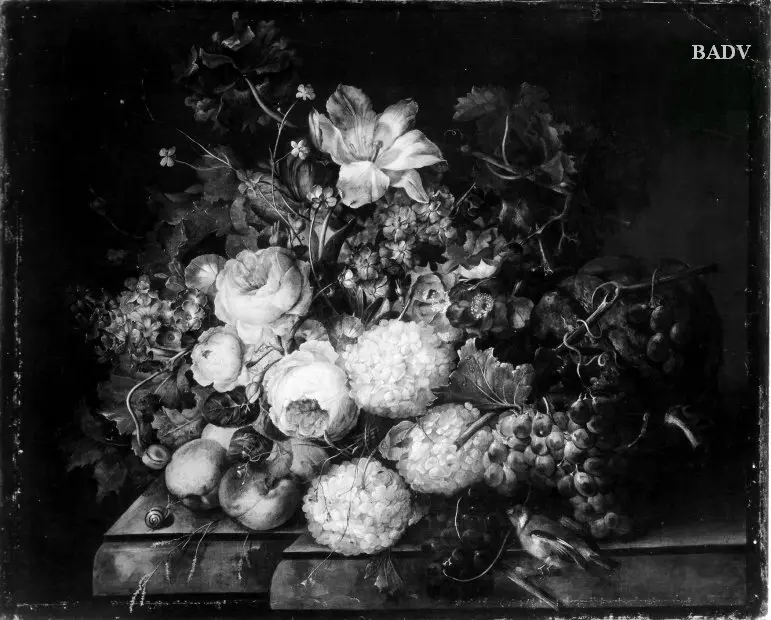
Flowers and fruit on a plinth
Abraham Mignon





