
Still Life with Landscape — History & Facts
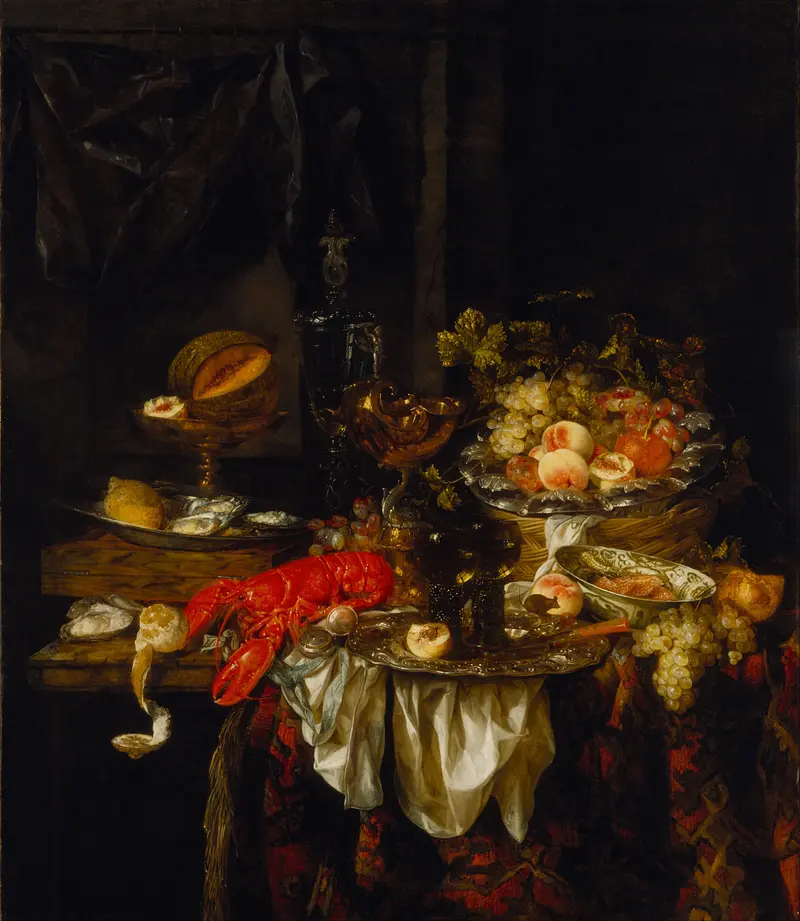
The first thing to catch the eye in Still Life with Landscape is the sheer abundance, as if the table groans under the weight of its own riches. A velvet cloth tumbles over the edge, its folds rendered with such care that you can almost feel the weight, while a riot of objects—gilded vessels, peeled fruit, a lobster, and delicate glassware—crowd the foreground. The light, cool and directional, glances off metal and shell, drawing the viewer’s gaze from the opulent nautilus cup at center to the translucent grapes and the pink gleam of shrimp.
Behind this feast, a window opens onto a distant, quiet landscape, a world apart from the sensory excess of the table. Every detail is a deliberate invitation: the half-peeled lemon, the overturned glass, the open book—each a signpost in a silent drama of luxury and fleeting pleasure. Painted in 1650, this work belongs to the golden age of Dutch still life, when artists like Abraham van Beyeren turned the banquet table into a stage for both technical bravura and quiet moral reflection. Such paintings were prized by a new class of wealthy merchants, eager to display their taste and prosperity, yet always aware of the moral lessons encoded in these scenes: the perishability of food, the fragility of glass, the moment when the feast ends.
Still Life with Landscape now resides at the Dallas Museum of Art, a reminder of a world where art and affluence mingled, and where every glint of silver or shadowed grape could prompt a viewer to pause—and look again.
More Artworks by Abraham van Beyeren

Still Life
Abraham van Beyeren
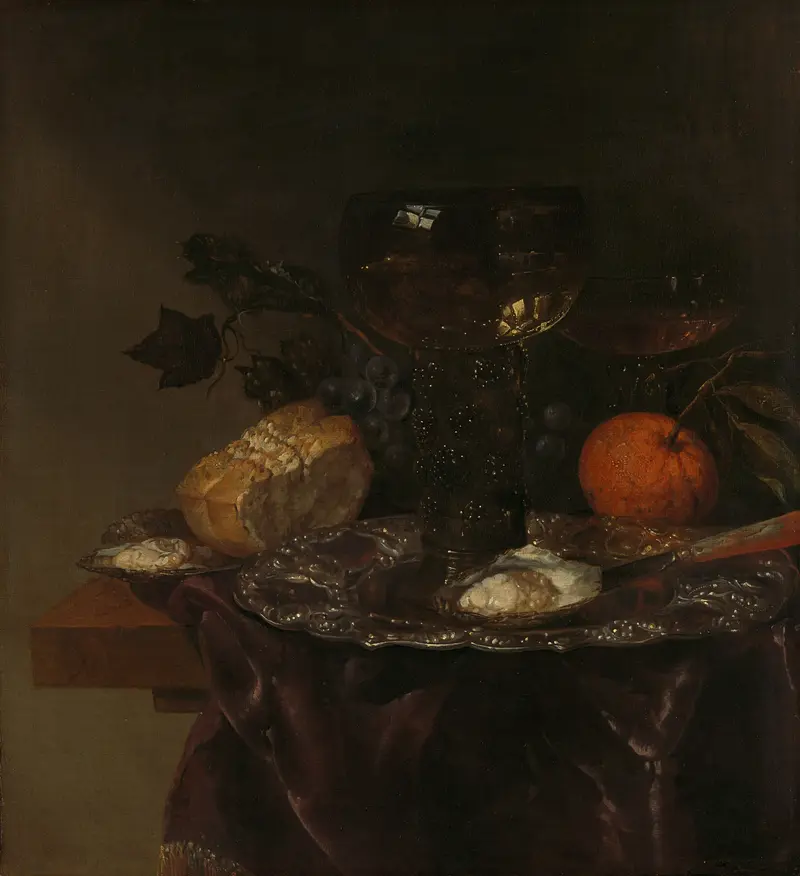
Still Life
Abraham van Beyeren
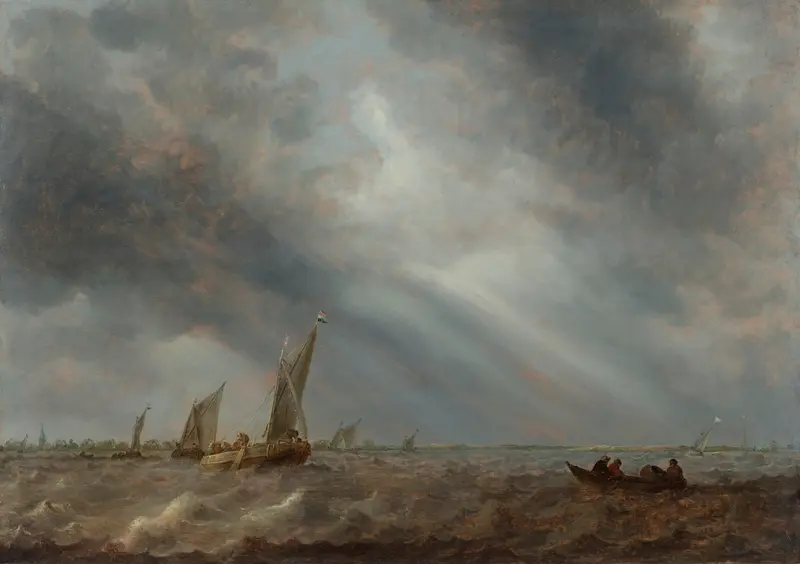
Various sailing vessels and a rowing boat with fishermen on choppy waters under a stormy sky
Abraham van Beyeren
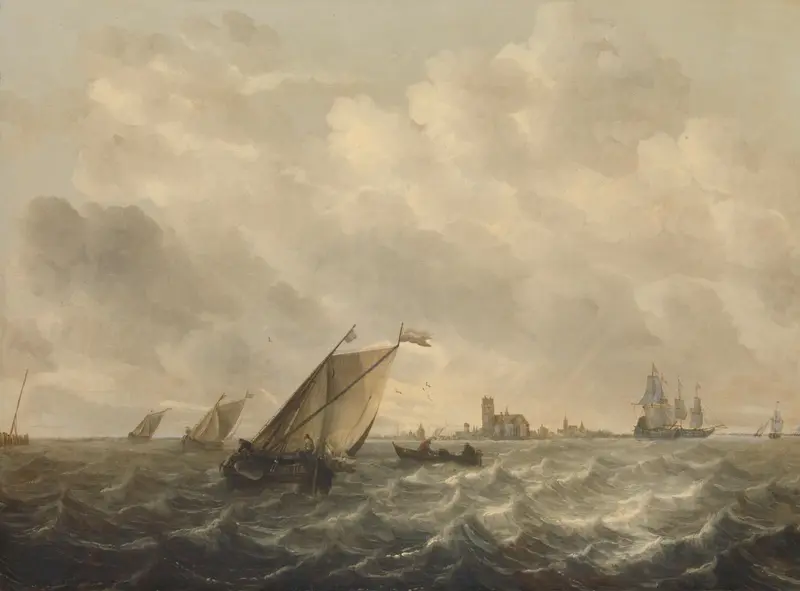
River View
Abraham van Beyeren
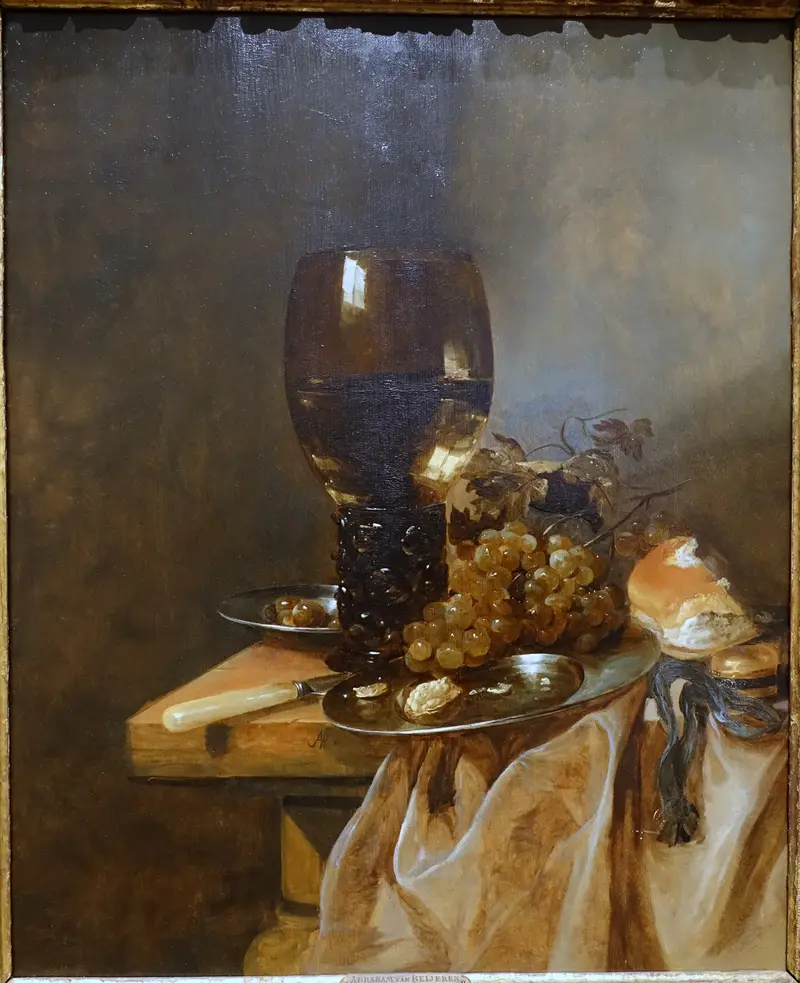
A Roemer with Grapes, a Pewter Plate and a Roll
Abraham van Beyeren
Banquet Still Life
Abraham van Beyeren
Still life with a glass lid goblet
Abraham van Beyeren
Still life with flowers
Abraham van Beyeren
Still life with dead birds
Abraham van Beyeren
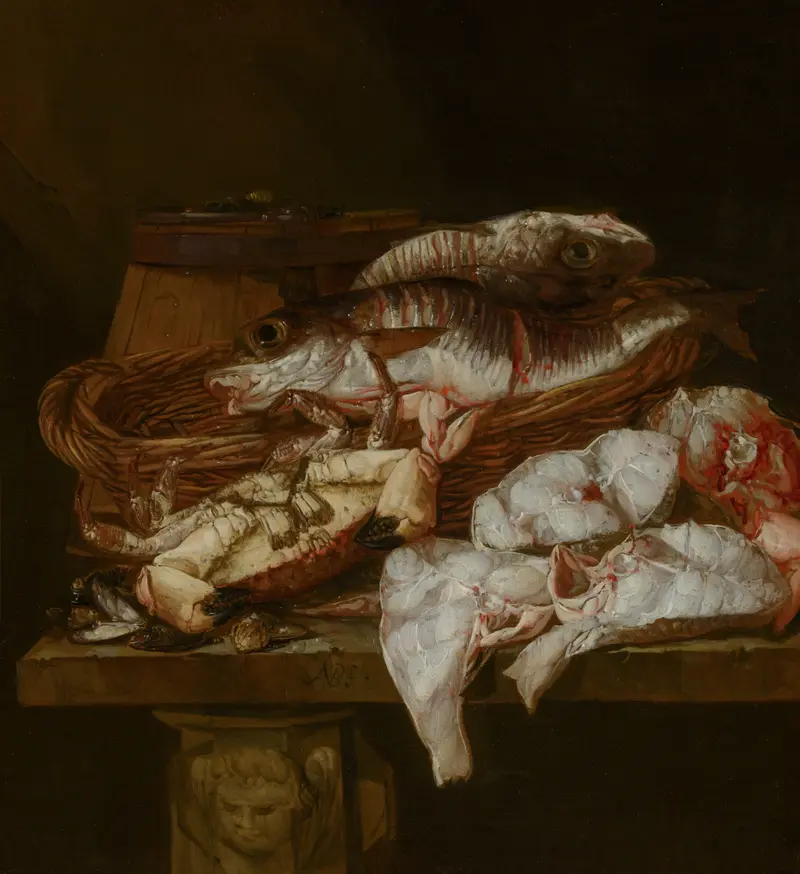
Still Life with Seafood
Abraham van Beyeren





