
Still Life with Lobster and Fruit — History & Facts
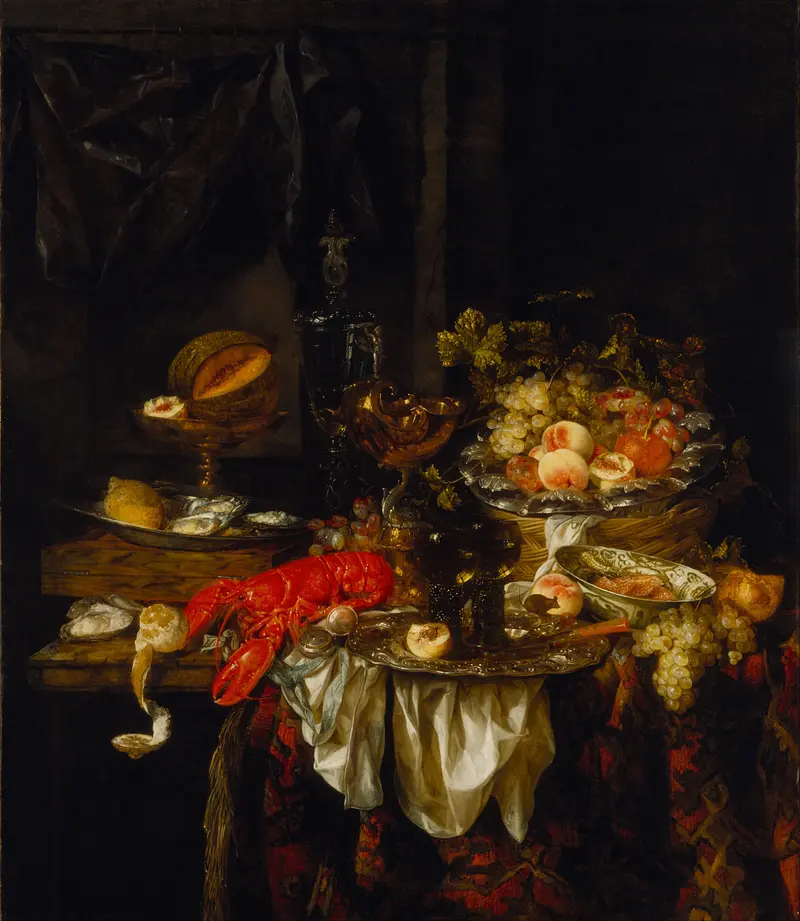
A feast for the eyes unfolds in the deep shadow and gleaming highlights of Still Life with Lobster and Fruit. Your gaze is first caught by the brilliant red lobster, its shell almost luminous against the velvet drapery, as if freshly plucked from the sea and set atop a silver platter. All around it, the artist orchestrates a careful chaos: a peeled lemon spirals downward, its rind curling like a ribbon; a glass goblet lies toppled, its reflection echoing the glint of gold and glass; peaches, grapes, and a split melon spill from a porcelain bowl, their textures rendered with a tactile precision that tempts the senses.
The towering vessel at the back, with its ornate curves, draws the eye upward, anchoring the composition and hinting at the wealth and taste of whoever might have set this table. Works like this, painted in the early 1650s, belong to the flourishing tradition of Dutch still life, where artists such as Abraham van Beyeren turned the bounty of the table into meditations on abundance and impermanence. In the prosperous Dutch Republic, such paintings decorated the homes of merchants and burghers, celebrating both their worldly success and their awareness of its fleeting nature. The genre is known for its coded messages: the overturned glass, the half-peeled fruit, the glistening seafood all remind viewers of the pleasures and vanities of earthly life.
Though little is recorded about the journey of this particular canvas before its arrival at the Metropolitan Museum of Art, its lush detail and theatrical arrangement invite you to linger, to imagine the world that produced such spectacles—and to wonder what stories the table might tell if the guests were to return.
More Artworks by Abraham van Beyeren

Still Life
Abraham van Beyeren
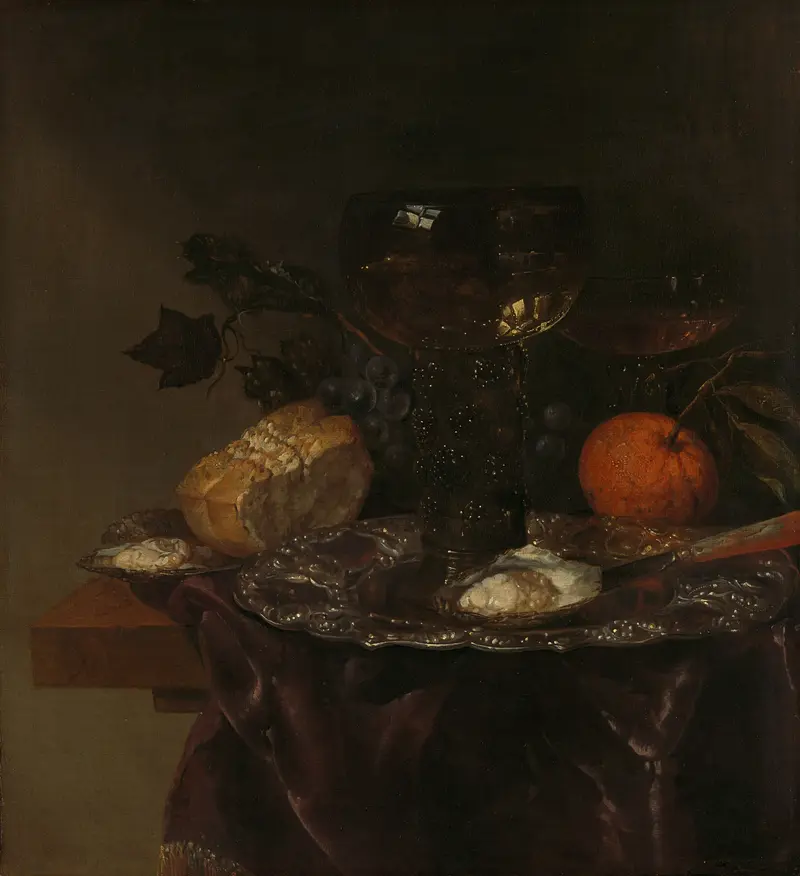
Still Life
Abraham van Beyeren
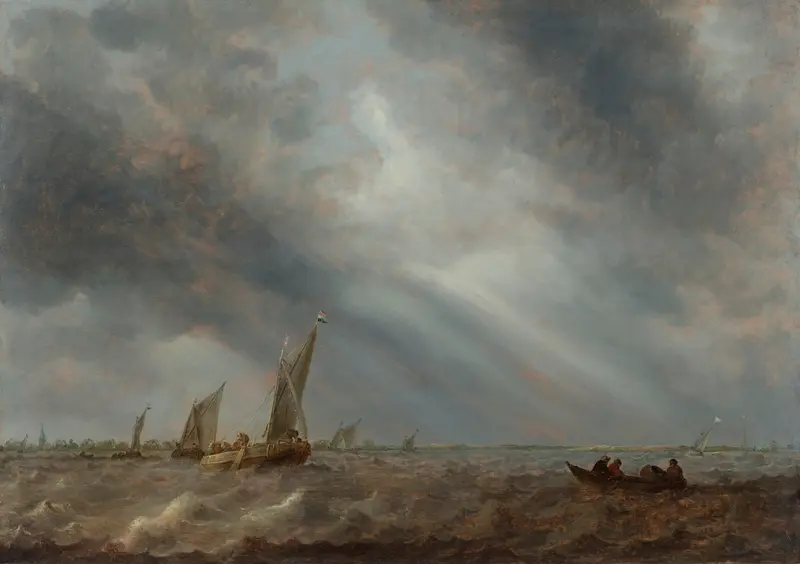
Various sailing vessels and a rowing boat with fishermen on choppy waters under a stormy sky
Abraham van Beyeren
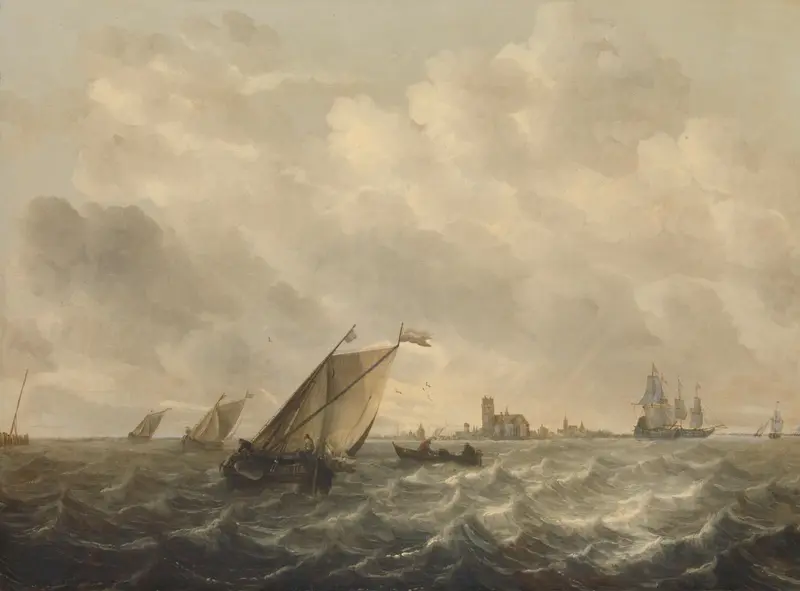
River View
Abraham van Beyeren
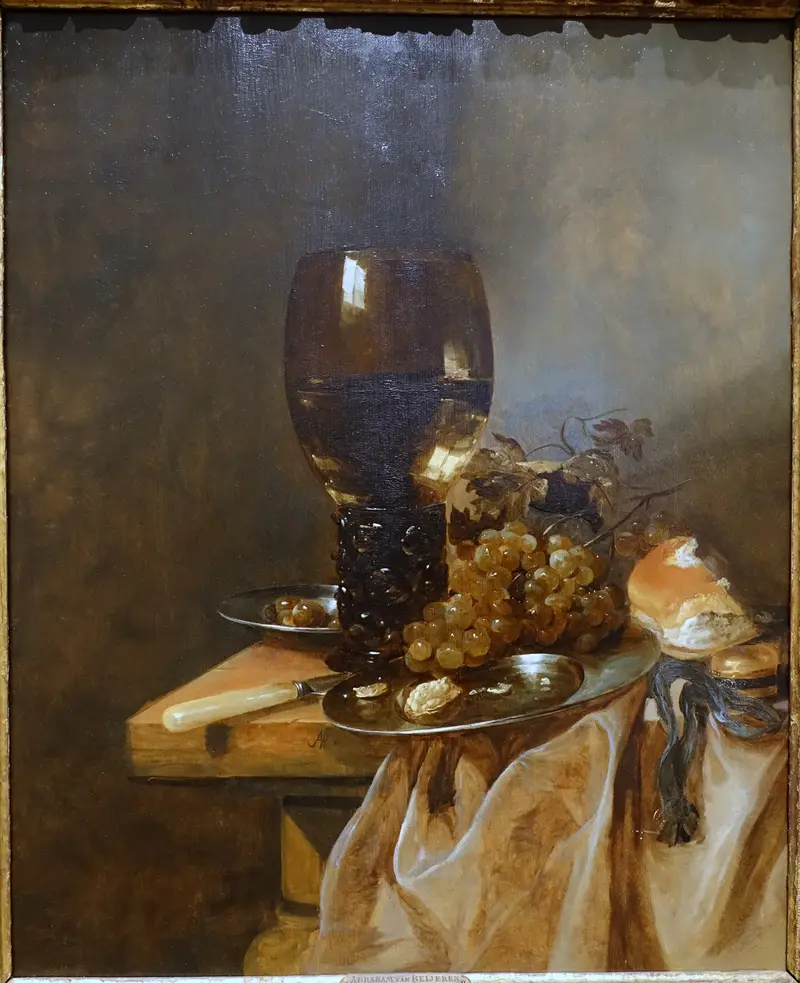
A Roemer with Grapes, a Pewter Plate and a Roll
Abraham van Beyeren
Banquet Still Life
Abraham van Beyeren
Still life with a glass lid goblet
Abraham van Beyeren
Still life with flowers
Abraham van Beyeren
Still life with dead birds
Abraham van Beyeren
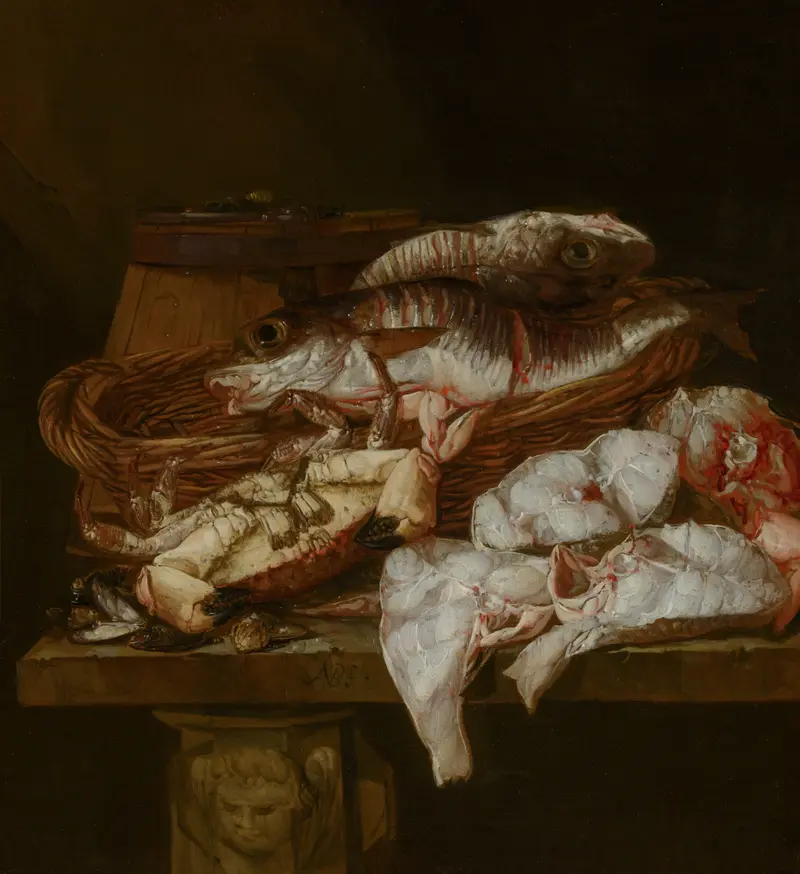
Still Life with Seafood
Abraham van Beyeren





