
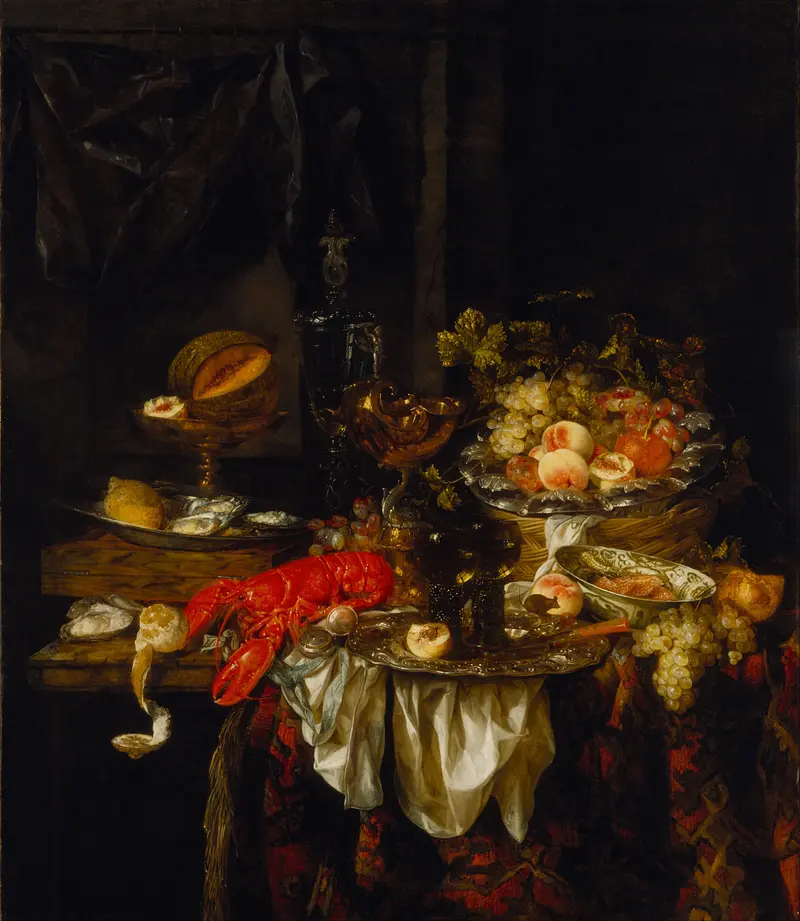
Still life with lobster, fruit, peeled lemon, rummer, silver dish and faience dish on a dark tablecloth — History & Facts
What first catches the eye in Still life with lobster, fruit, peeled lemon, rummer, silver dish and faience dish on a dark tablecloth is the almost theatrical arrangement of abundance, as if the table has been set for a banquet just moments before the guests arrive. The lobster sprawls across the shimmering platters, its shell catching the light and drawing a bright line through the darker folds of the tablecloth. Grapes tumble from a silver dish, their translucent skins rendered with such care that they seem to glow from within, while peaches and a peeled lemon—its rind curling away in a deliberate spiral—hint at both freshness and fleetingness.
The rummer, half-filled and catching reflections, stands like a silent witness to the gathering, and the play of light across glass, metal, and fruit invites the viewer to linger over each surface and texture. This is a scene not just of plenty, but of careful orchestration, where every element has been chosen to dazzle the senses. Painted between 1650 and 1670, this work belongs to the world of the Dutch Golden Age, when still lifes like this one by Abraham van Beyeren became prized possessions among the wealthy merchant class. Such paintings were more than mere decoration: they were celebrations of prosperity, reminders of the transience of pleasure, and subtle displays of taste and status.
The artist’s mastery lies in his ability to turn everyday luxury into a meditation on time and enjoyment—each glint of silver, each bead of moisture on the fruit, speaks to the skills and ambitions of both painter and patron. Today, housed in the Staatliche Museen zu Berlin, this painting stands as a testament to an era when art and affluence walked hand in hand, and every detail was a coded message for those who knew how to look.
More Artworks by Abraham van Beyeren

Still Life
Abraham van Beyeren
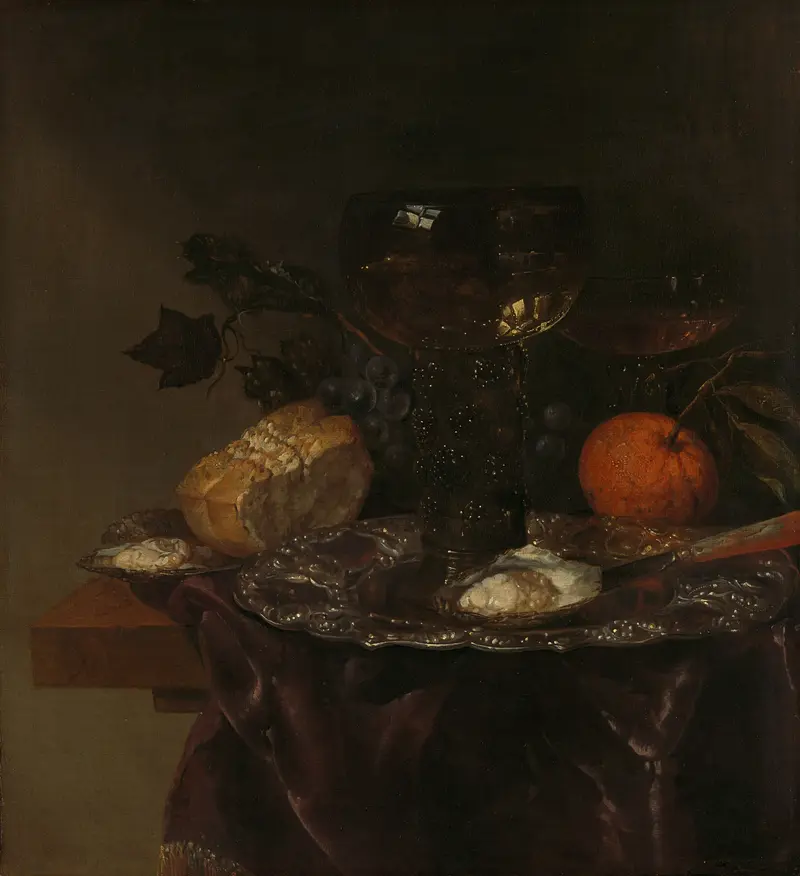
Still Life
Abraham van Beyeren
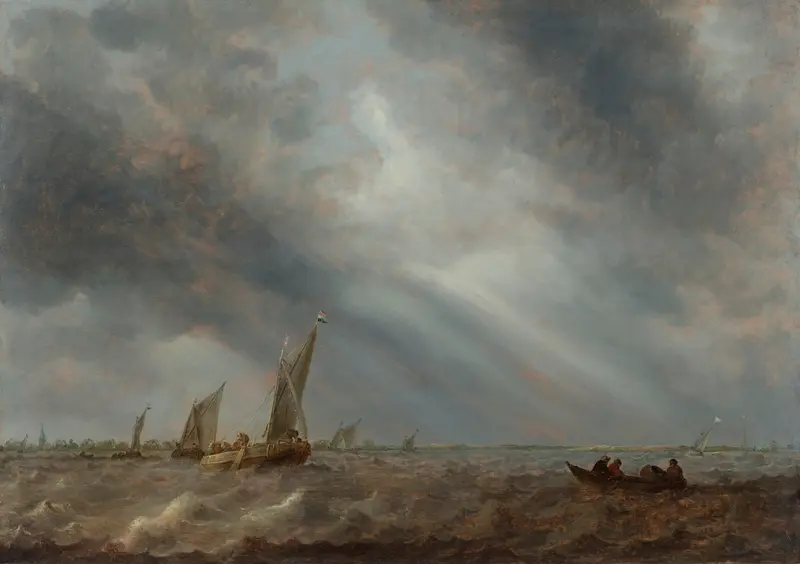
Various sailing vessels and a rowing boat with fishermen on choppy waters under a stormy sky
Abraham van Beyeren
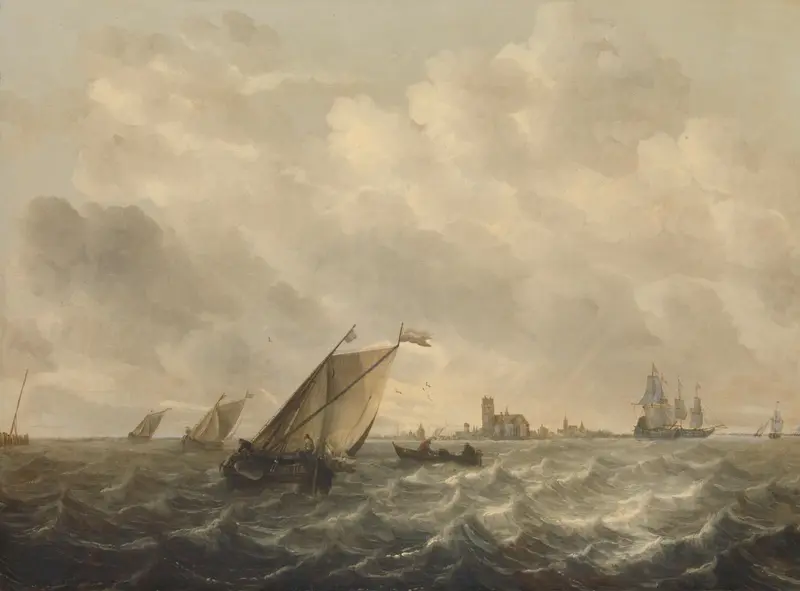
River View
Abraham van Beyeren
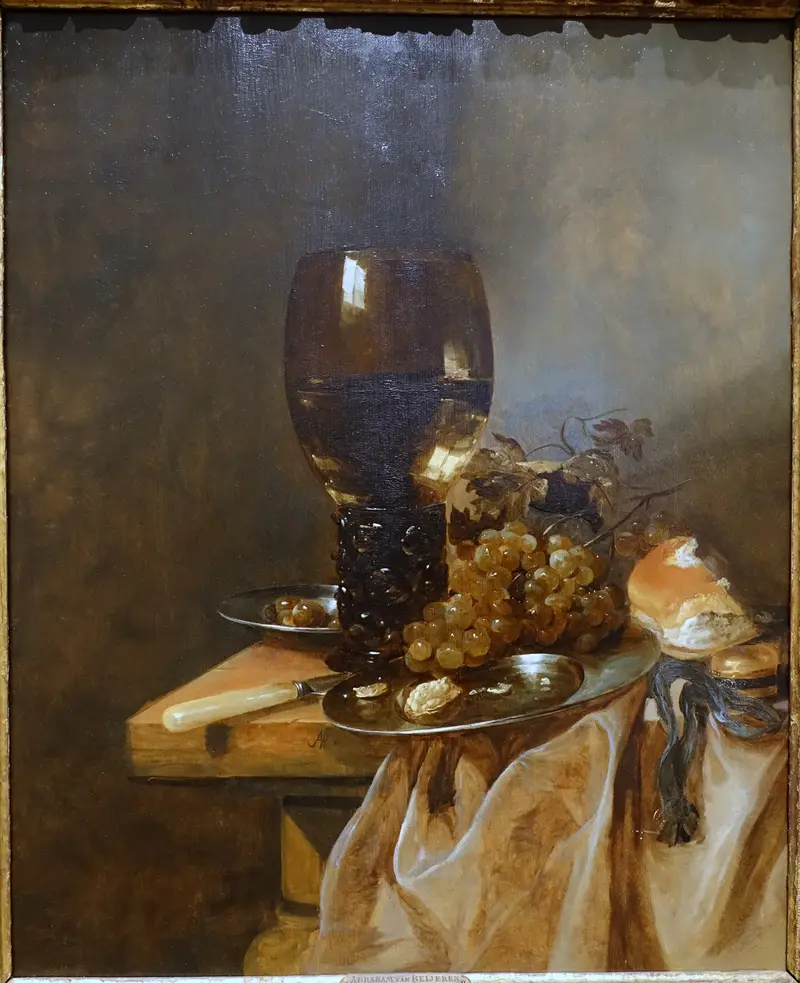
A Roemer with Grapes, a Pewter Plate and a Roll
Abraham van Beyeren
Banquet Still Life
Abraham van Beyeren
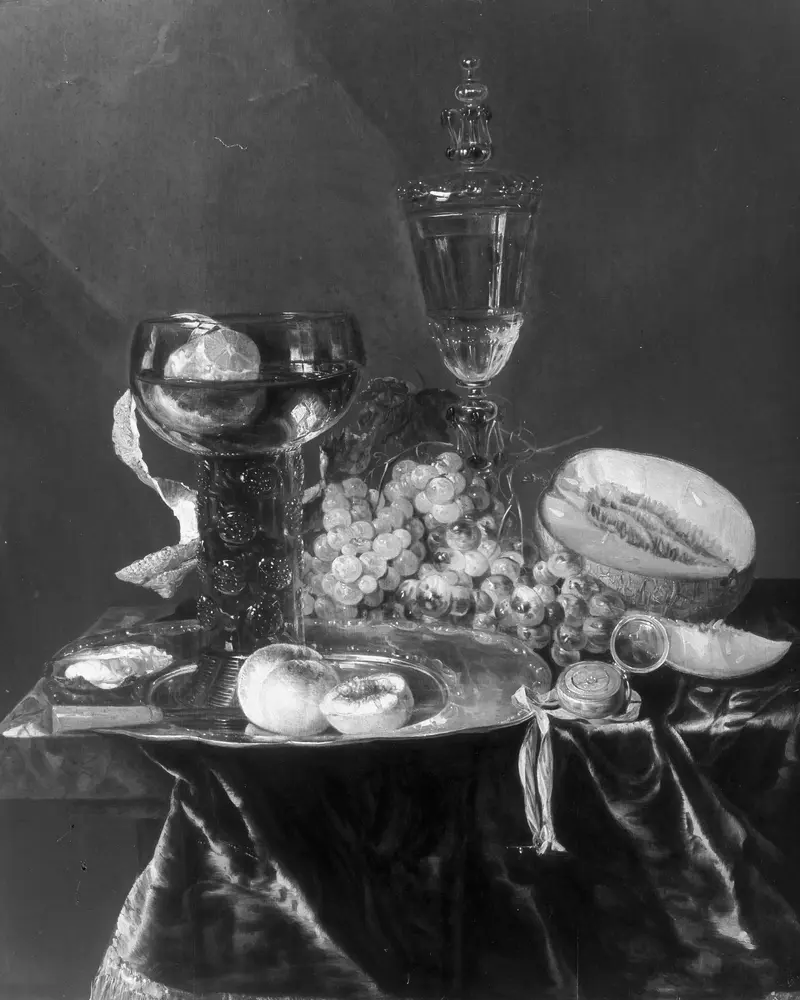
Still life with a glass lid goblet
Abraham van Beyeren
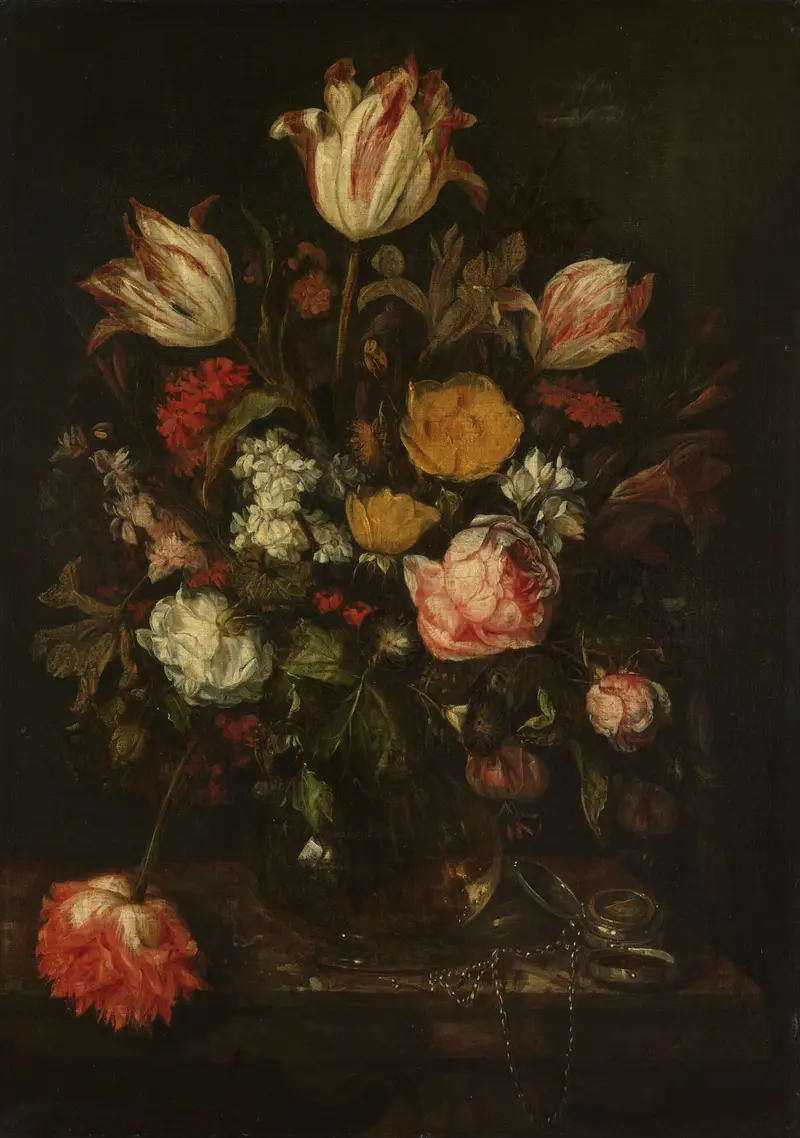
Still life with flowers
Abraham van Beyeren
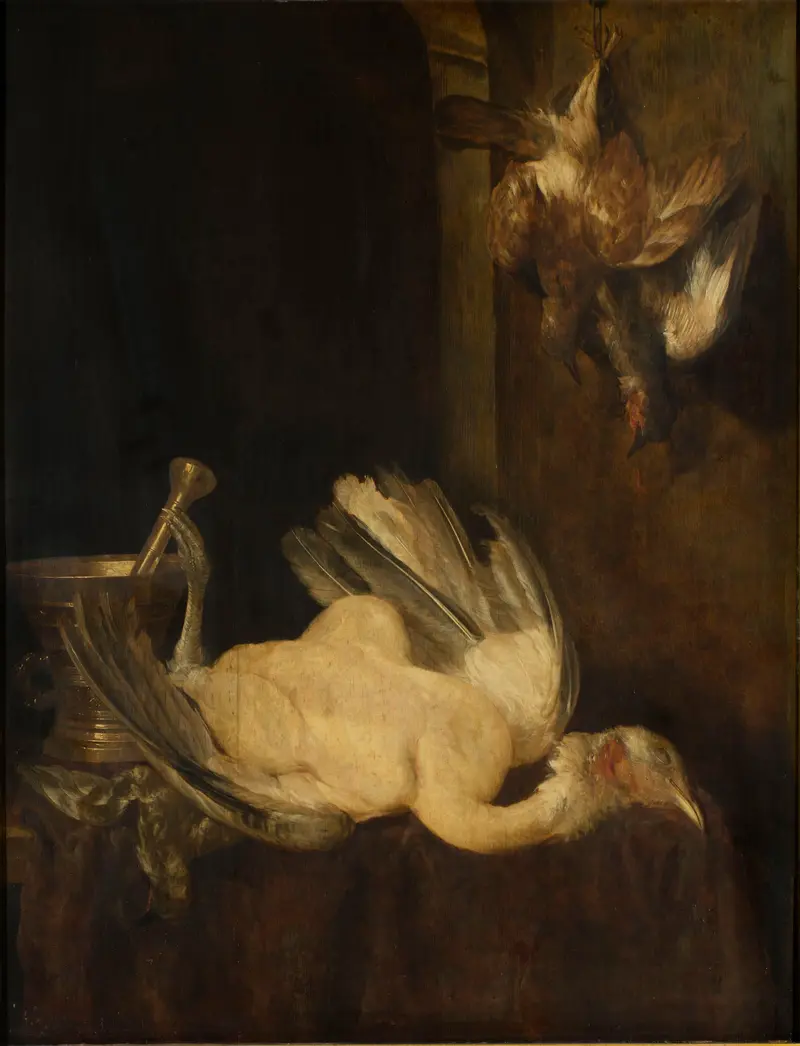
Still life with dead birds
Abraham van Beyeren
Still Life with Seafood
Abraham van Beyeren





