
Still-Life with Peaches — History & Facts
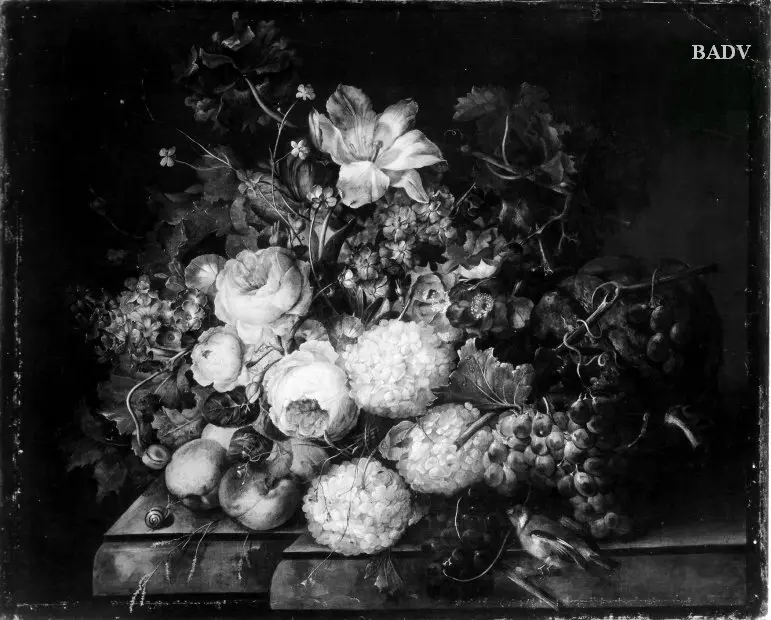
What first draws the eye in Still-Life with Peaches by Abraham Mignon is not the fruit, but the sense that something just happened—a drop of water clings to a peach, a snail inches across the ledge, and a bee hovers as if caught mid-flight. The light is orchestrated to lead you from the glistening grapes and peaches in the foreground up to the curling vine leaves above, each detail rendered with a precision that borders on the miraculous. The peaches, heavy and flushed, are not alone: a chestnut, still half in its spiky husk, and a scatter of wheat and curling tendrils hint at a world beyond the frame.
Even the smallest details—a stray dewdrop, a hidden insect—invite the viewer to linger, searching for meaning in the abundance and the decay. Painted in the 1660s, this still life belongs to a world where such images were more than decoration: they were meditations on the fleeting nature of pleasure and the richness of creation. In the Dutch and German lands of Mignon’s time, collectors prized these works for their technical bravura and their subtle reminders of mortality and providence. The careful arrangement of fruit, wheat, and insects would have spoken to viewers about the cycles of nature and the passage of time, themes that resonated in an age of both scientific discovery and religious reflection.
History has kept few traces of this particular painting’s early journey, but its presence today in the Web Gallery of Art’s collection lets us see how, even centuries later, a still life can feel very much alive.
More Artworks by Abraham Mignon

Still Life with Flowers and a Watch
Abraham Mignon
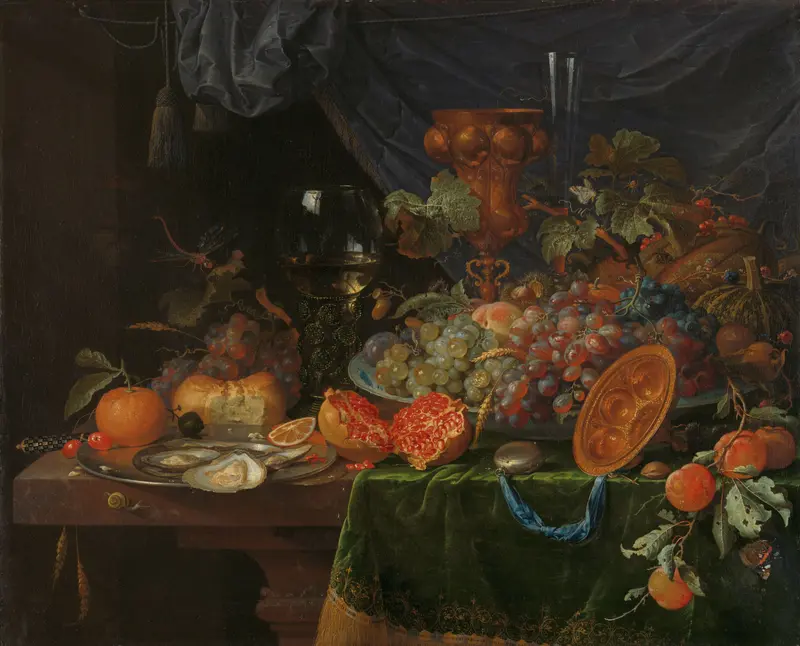
Still Life with Fruit and Oysters
Abraham Mignon
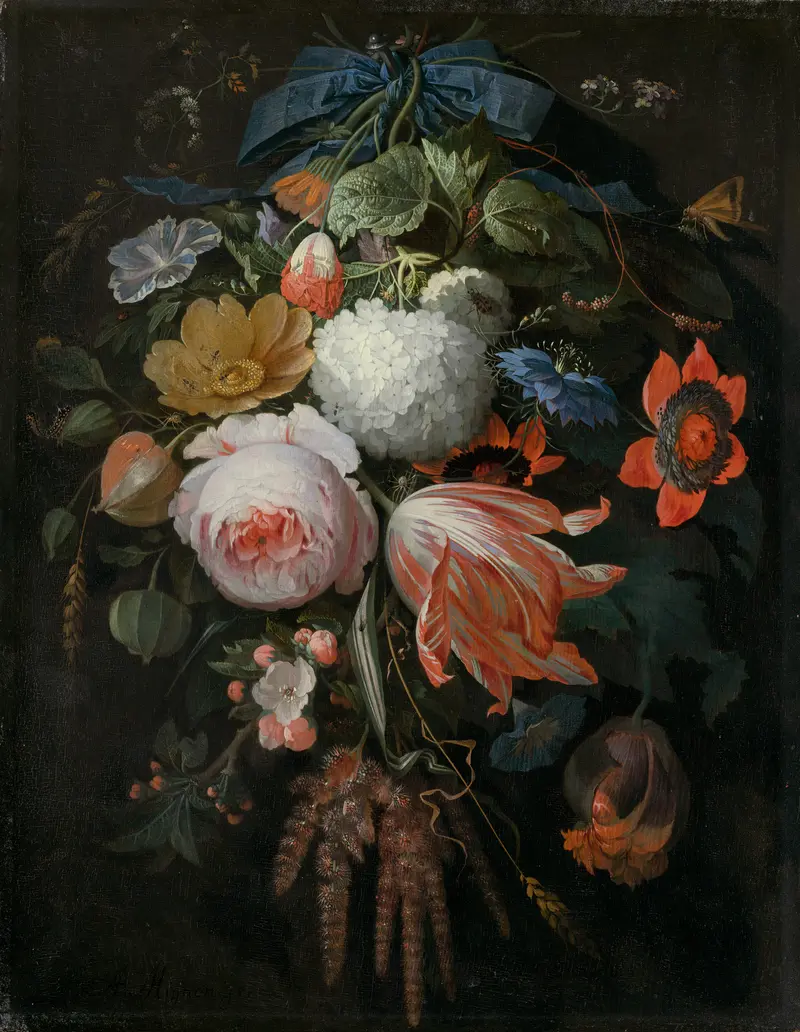
A Hanging Bouquet of Flowers
Abraham Mignon
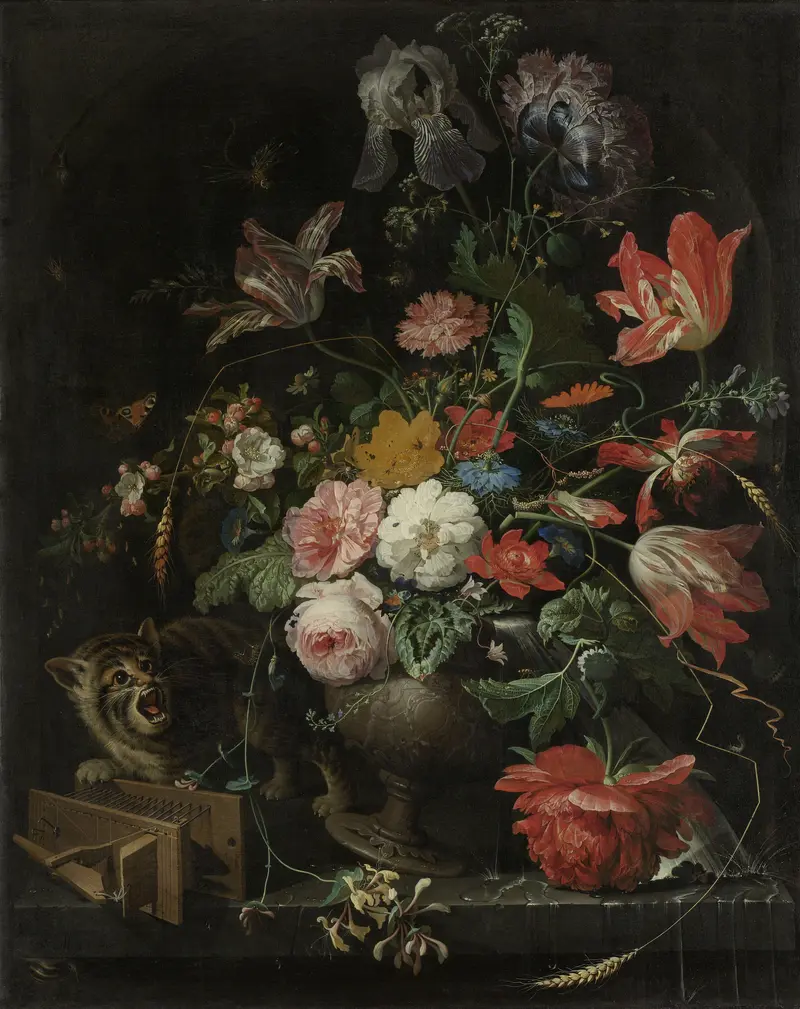
Bouquet with cat and mousetrap
Abraham Mignon
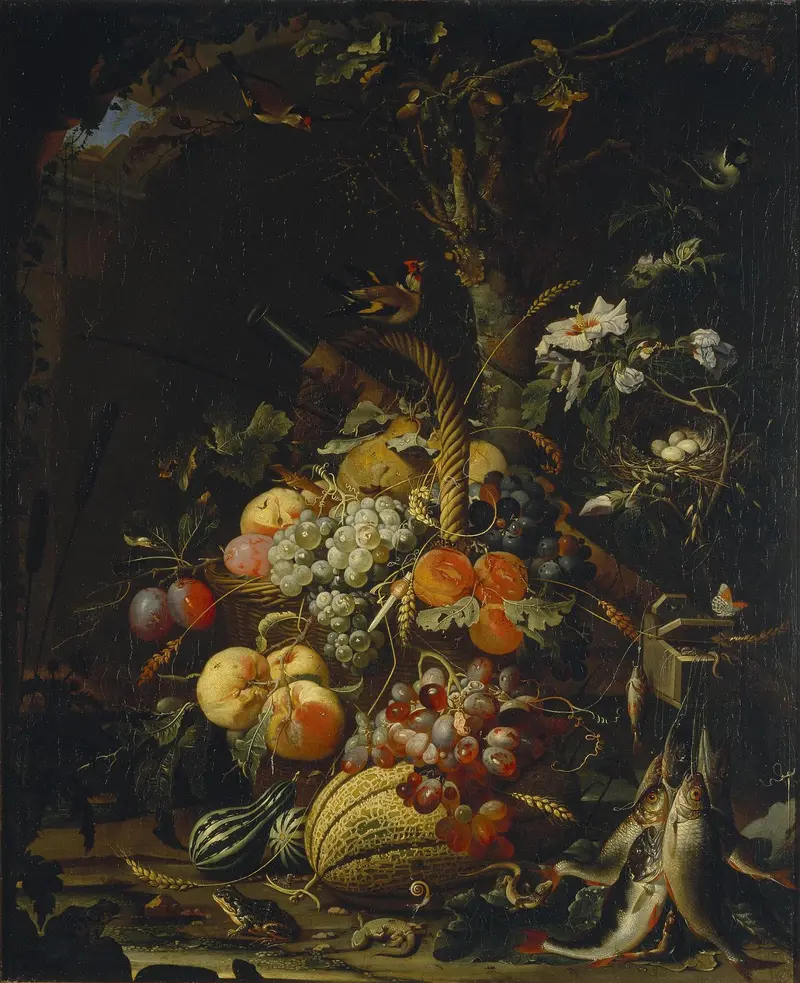
Forest floor still life with fruit, fish and a bird's nest
Abraham Mignon
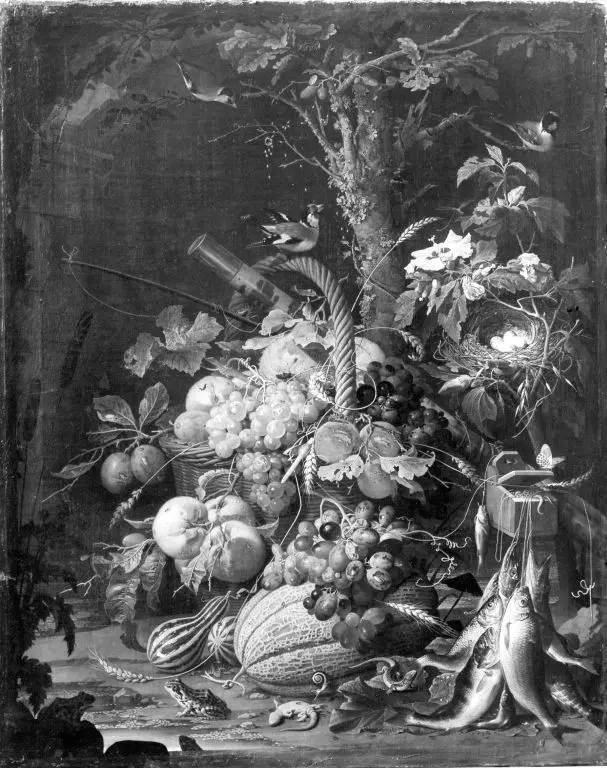
Still life with fruit, fish and a bird's nest
Abraham Mignon
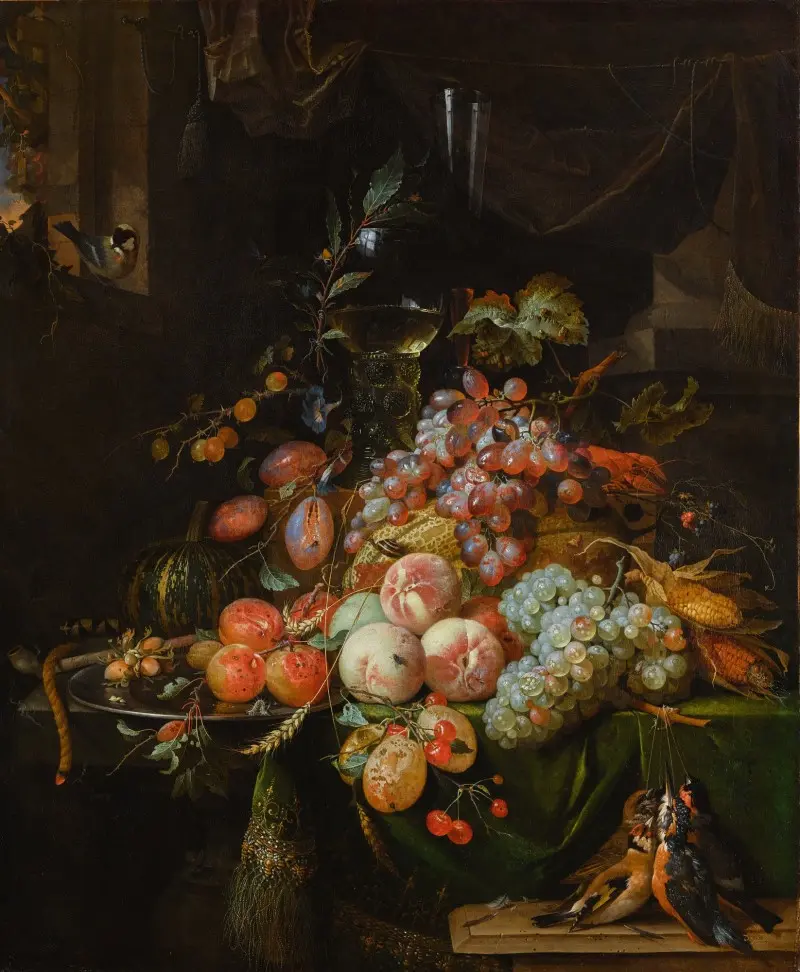
Still Life with Plums, Peaches, Apricots, Grapes and a Melon
Abraham Mignon
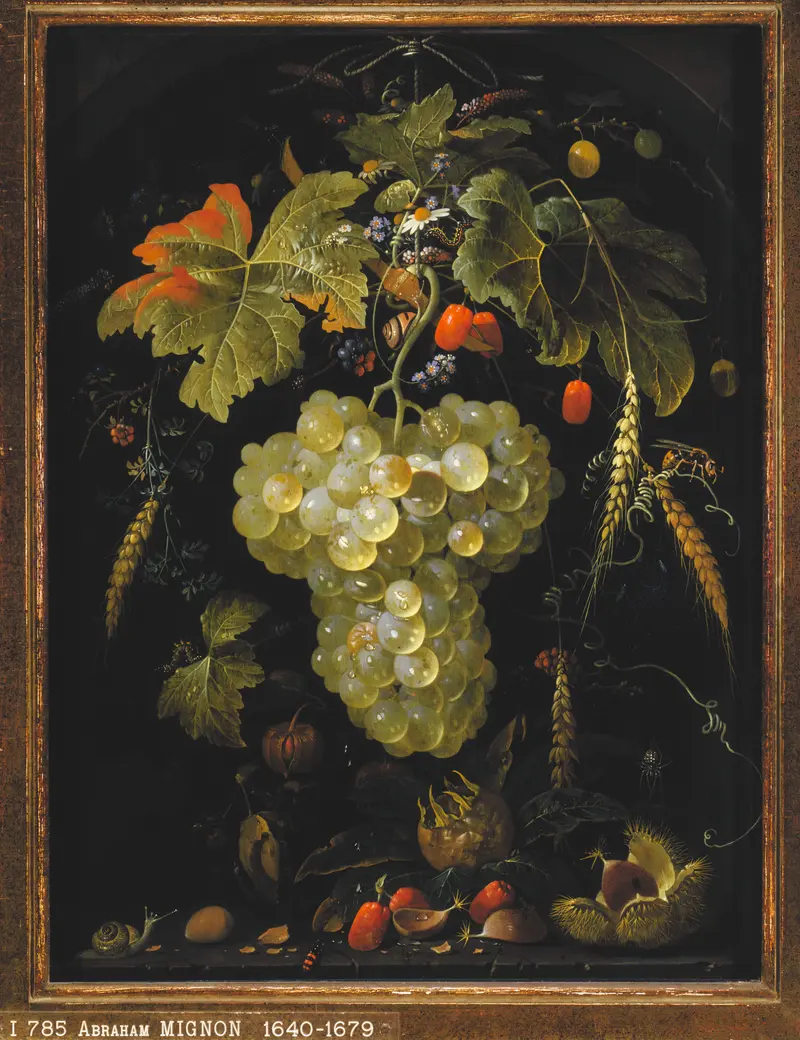
Festoon of fruit suspended from a rope, in a niche
Abraham Mignon
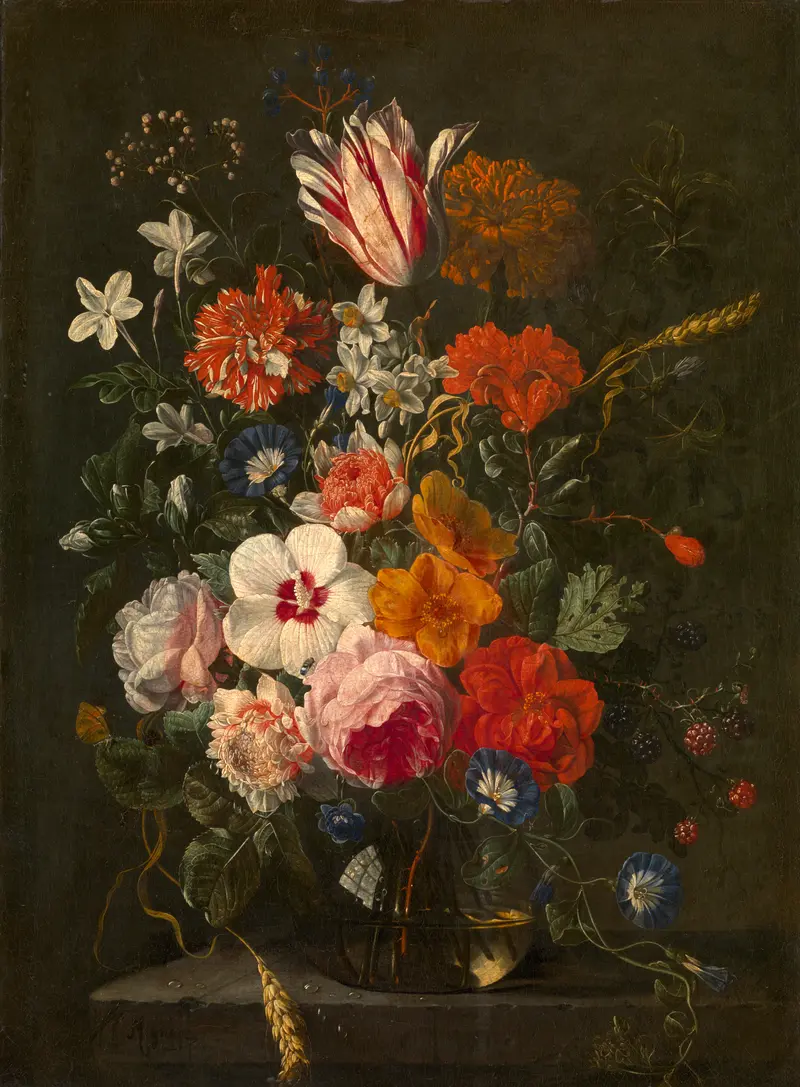
Flowers and a branch of berries in a glass vase on a stone ledge
Abraham Mignon
Flowers and fruit on a plinth
Abraham Mignon





