
Stille life — History & Facts
The first thing that seizes the eye in Stille life is the sheer abundance—an overflowing banquet of fruit, gleaming metal, and luxurious fabrics, all caught in a moment of poised disorder. The velvet cloth cascades over the table’s edge, its folds rendered so richly they seem to absorb the dim light, while a crumpled napkin and peeled lemon curl forward, inviting you closer. Every surface glistens: the silver pitcher reflects the cool light, the peaches and grapes blush with ripeness, and a golden goblet rises like a trophy above the feast.
Nothing here is accidental—the half-peeled lemon, the scattered shells, and the upended glass all hint at recent revelry, a world just out of frame. The palette is deep and autumnal, with shadows lending drama and a sense of fleeting luxury, as if the pleasures of the table might vanish at any moment. Painted in 1665, this work belongs to the golden age of Dutch still life, when artists like Abraham van Beyeren transformed everyday abundance into a stage for both pride and reflection. Such paintings were prized by wealthy merchants and burghers, reminders of prosperity and the fruits of global trade, yet also gentle warnings about the brevity of pleasure—motifs like the lemon’s twist or the wilting flowers often hinted at time’s passage.
While little is recorded about the specific journey of this painting, its presence in the Geheugen van Nederland collection places it among the treasures of a nation that once ruled the world’s seas and markets. It is a silent conversation between opulence and impermanence, best appreciated by lingering over every surface and shadow.
More Artworks by Abraham van Beyeren

Still Life
Abraham van Beyeren
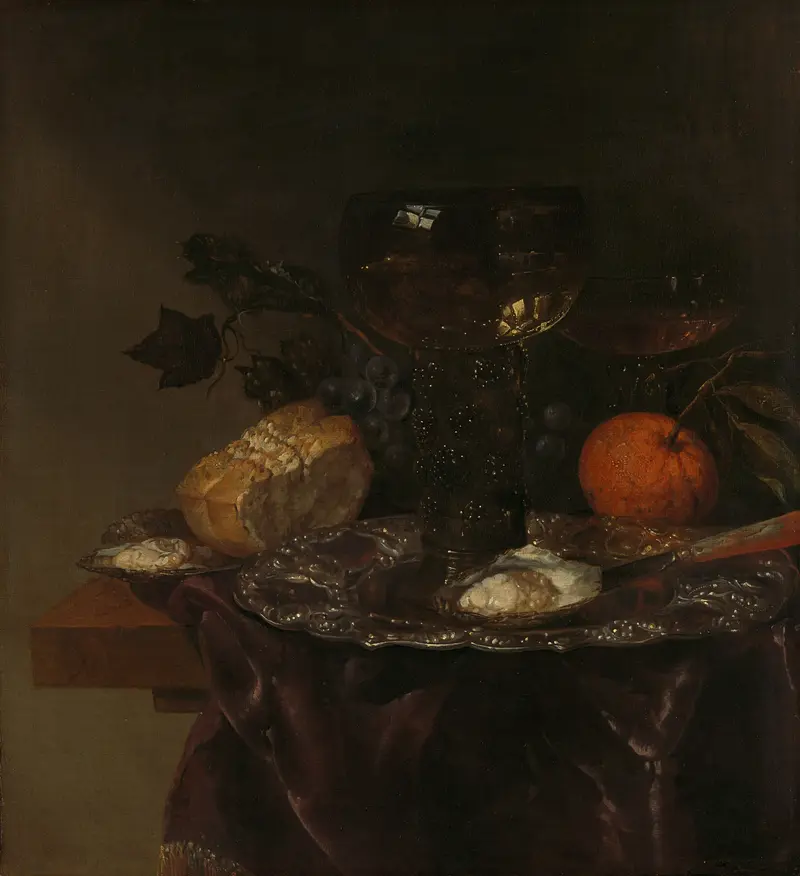
Still Life
Abraham van Beyeren
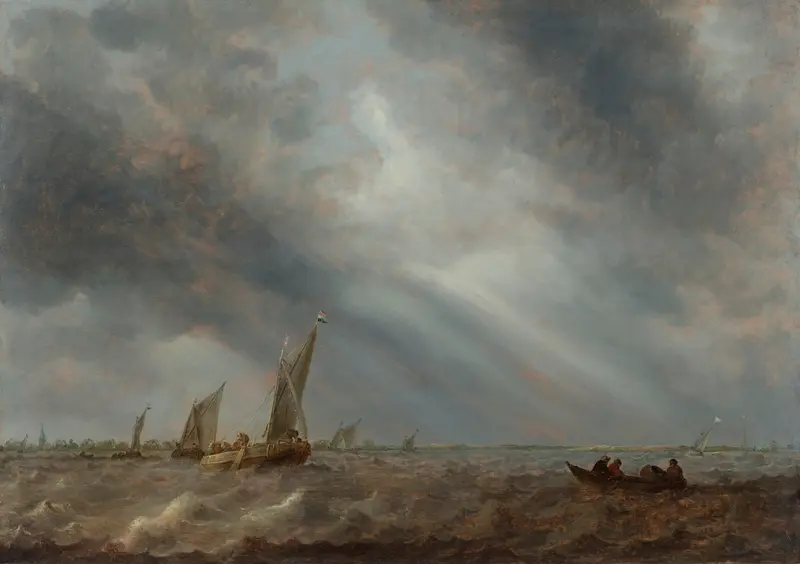
Various sailing vessels and a rowing boat with fishermen on choppy waters under a stormy sky
Abraham van Beyeren
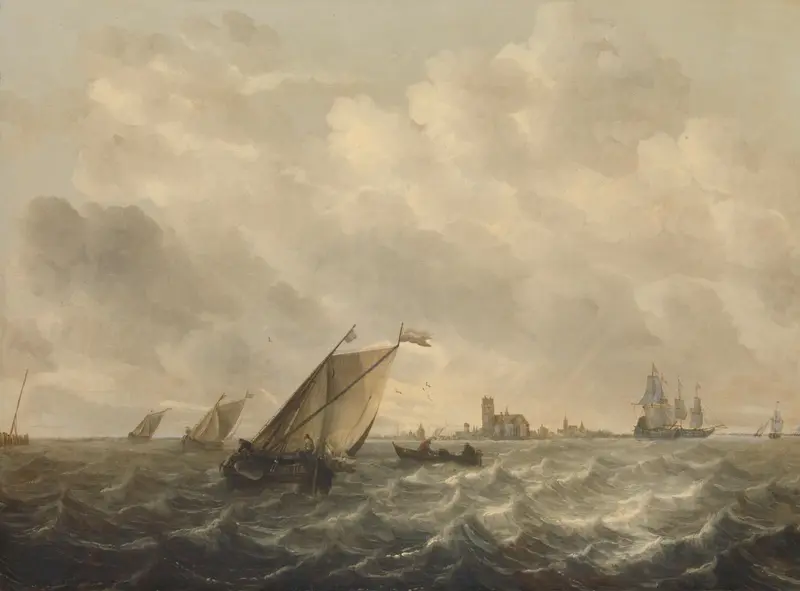
River View
Abraham van Beyeren
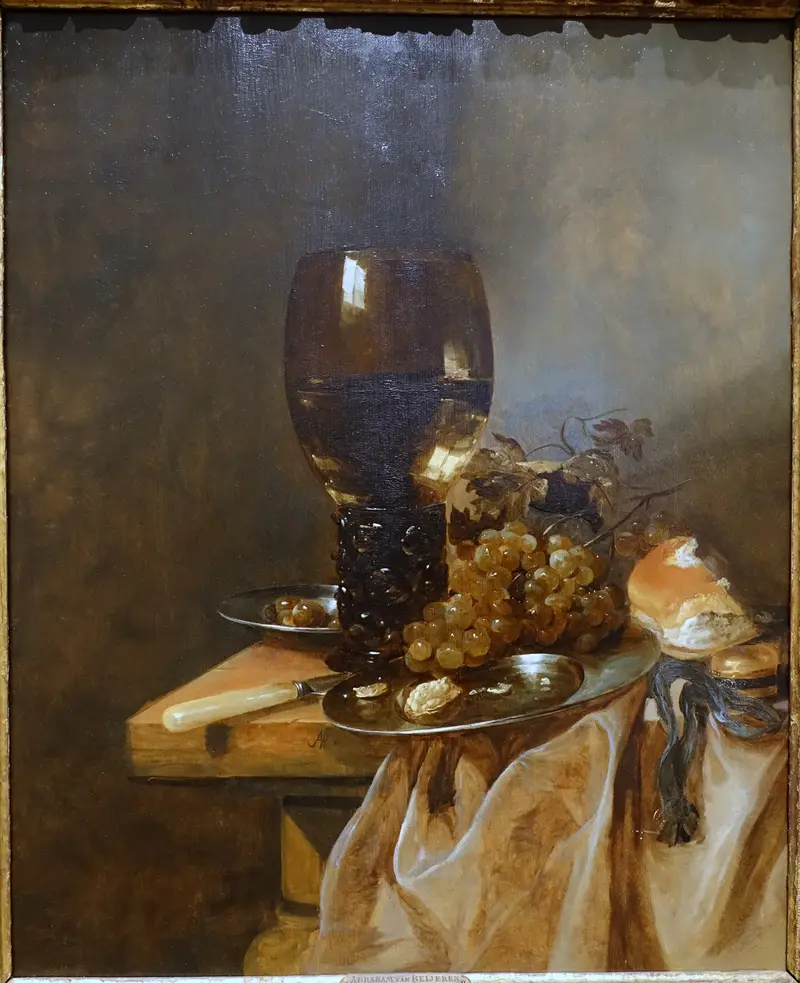
A Roemer with Grapes, a Pewter Plate and a Roll
Abraham van Beyeren
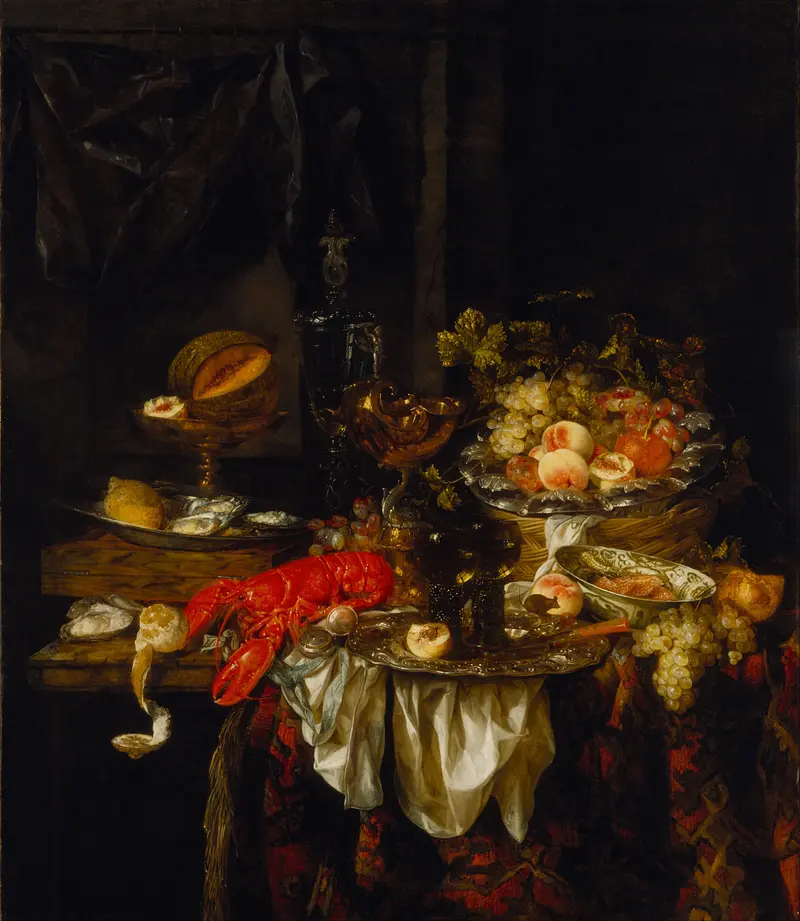
Banquet Still Life
Abraham van Beyeren
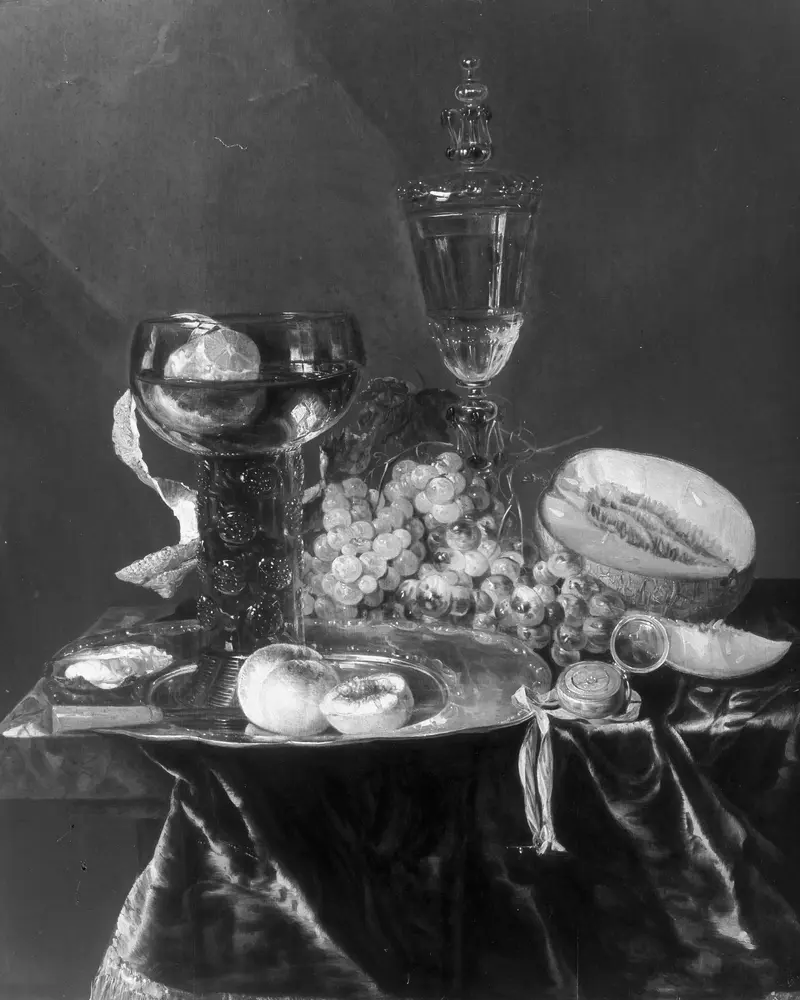
Still life with a glass lid goblet
Abraham van Beyeren
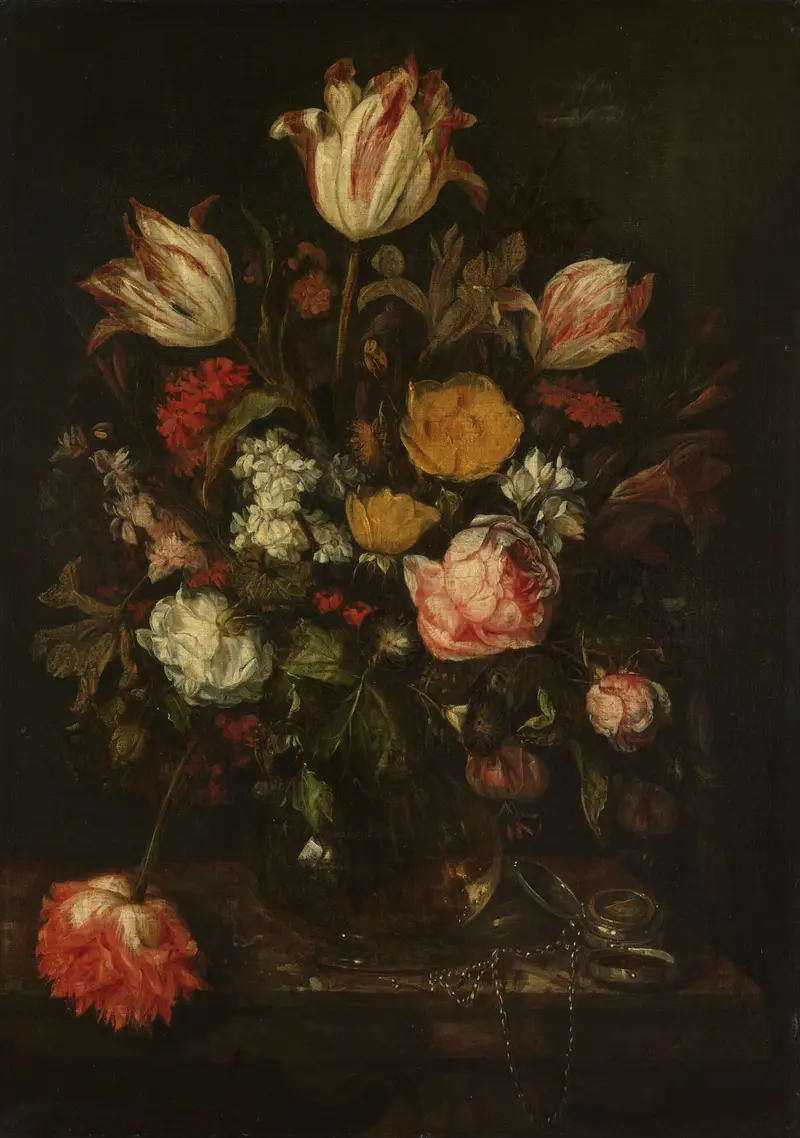
Still life with flowers
Abraham van Beyeren
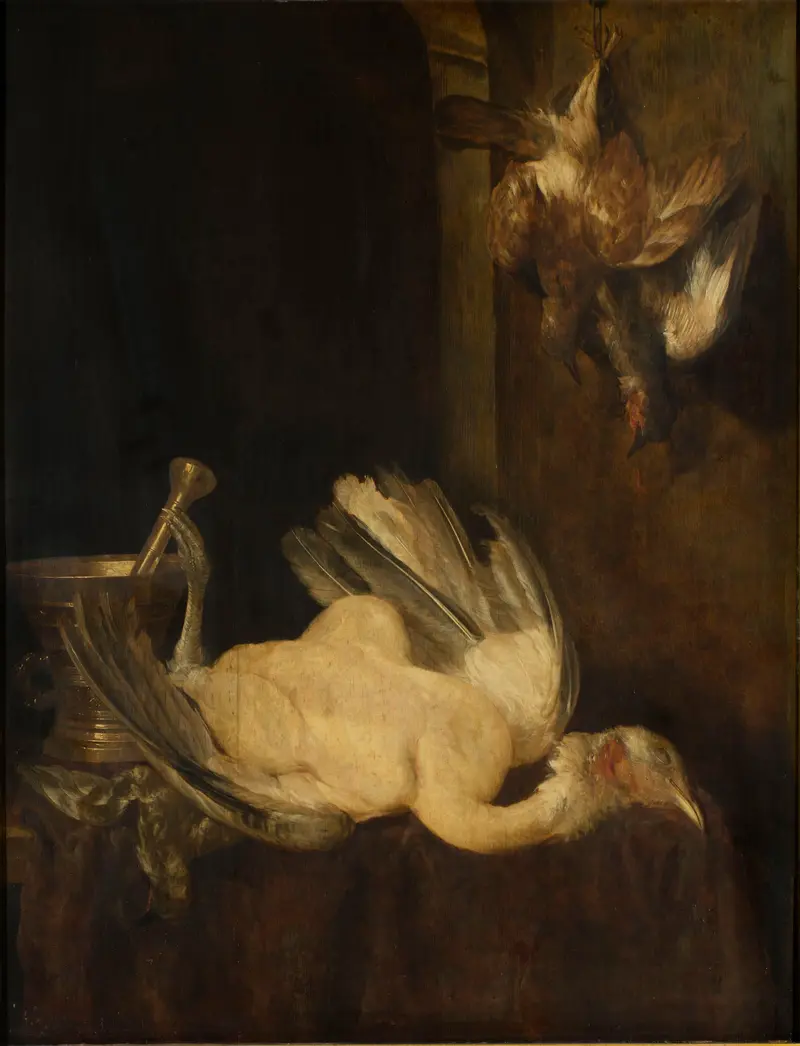
Still life with dead birds
Abraham van Beyeren
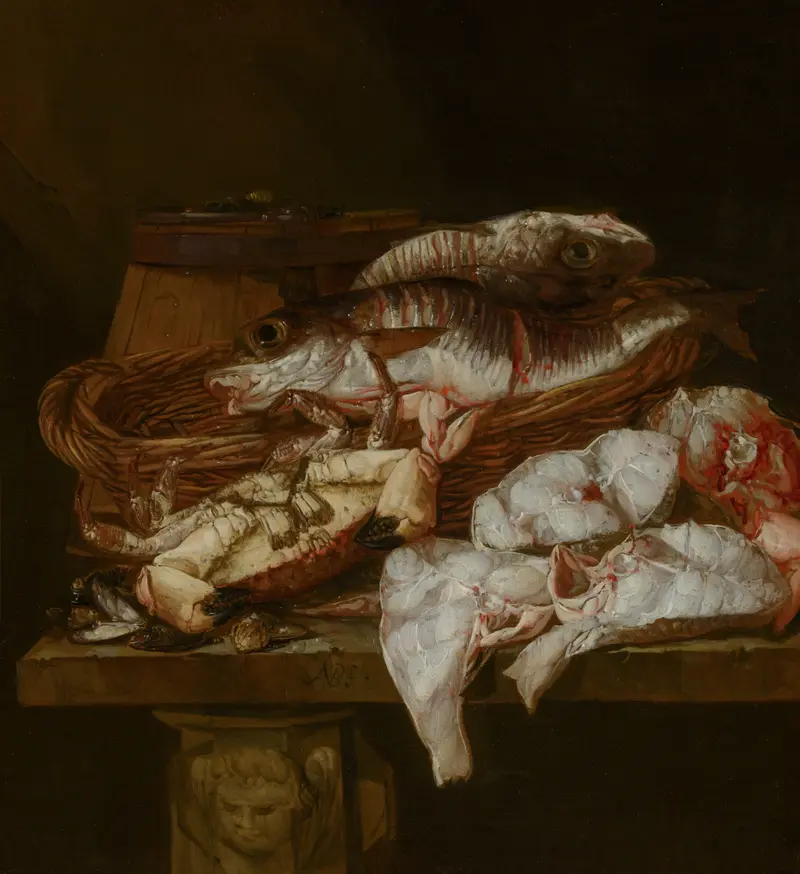
Still Life with Seafood
Abraham van Beyeren





