
Stream in the Mountains — History & Facts
What secret hides in the quiet of the canvas? In the stillness of Stream in the Mountains, an overwhelming sense of solitude envelops the viewer, beckoning us to explore the depths of its tranquility. Look to the lower right, where the gentle water flows, its reflective surface capturing the whisper of the clouds above. Notice how the soft hues of greens and browns intertwine, illustrating the lush vegetation that borders the stream, while the distant mountains loom in muted blue-gray tones. The painter’s delicate brushwork creates a harmonious balance between light and shadow, inviting the eye to wander through this serene landscape.
The overall composition feels alive with nature's stillness, yet hints at a human absence that amplifies the feeling of isolation. There’s a profound contrast between the vibrant life present in the foreground and the distant, imposing mountains that suggest both majesty and isolation. The interplay of light hints at transient moments, perhaps representing the fleeting nature of connection in an expansive world. Each element, from the flowing water to the craggy peaks, speaks to a lingering loneliness, evoking reflections on one's journey through life's landscapes. In the 1850s, while creating this work, the artist found himself amidst a growing shift toward realism in American art.
Inness was influenced by the Hudson River School, yet sought a more emotive expression of nature's sublime beauty. During this period, he faced personal challenges but also embraced the evolving artistic dialogue around nature and humanity, culminating in a vision that profoundly resonated with the solitude captured in this painting.
More Artworks by George Inness
Browse all →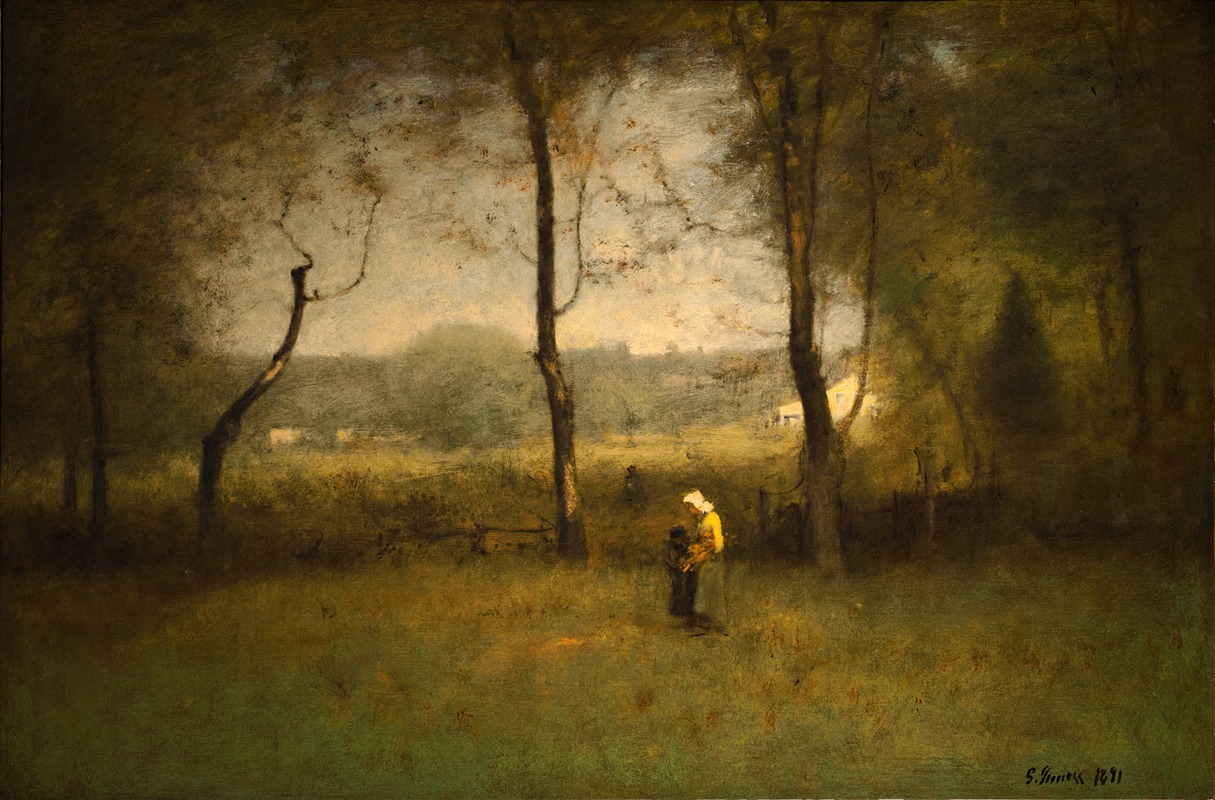
Autumn Woods
George Inness
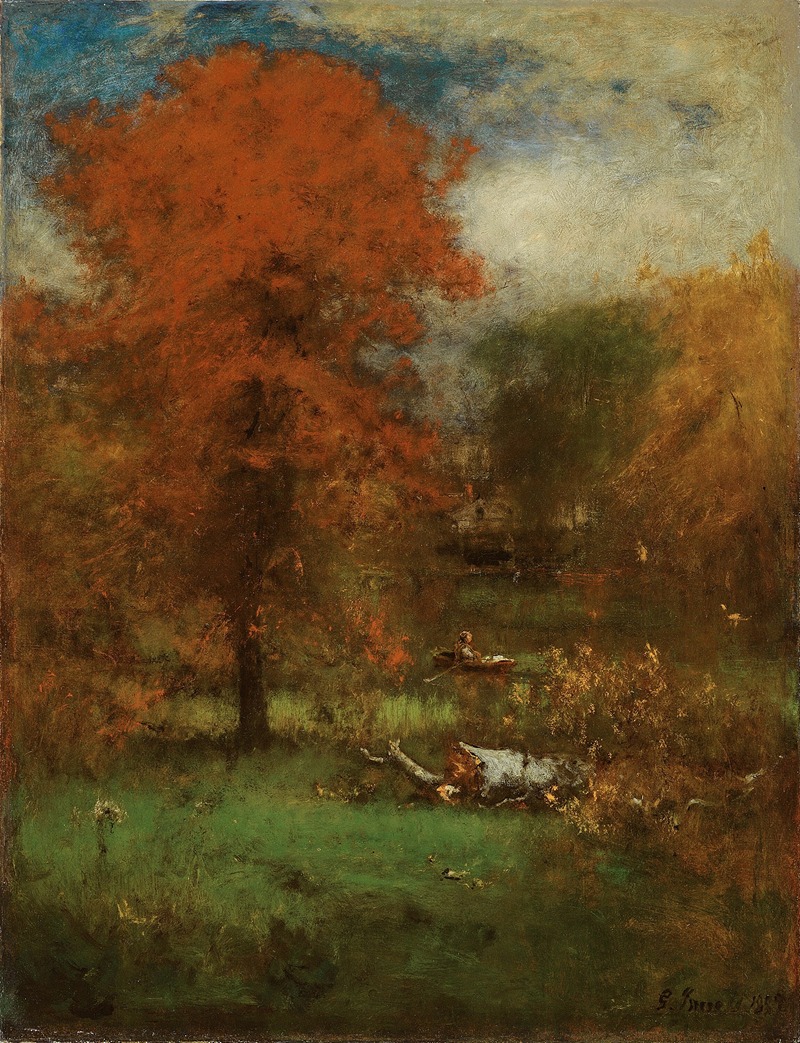
The Mill Pond
George Inness
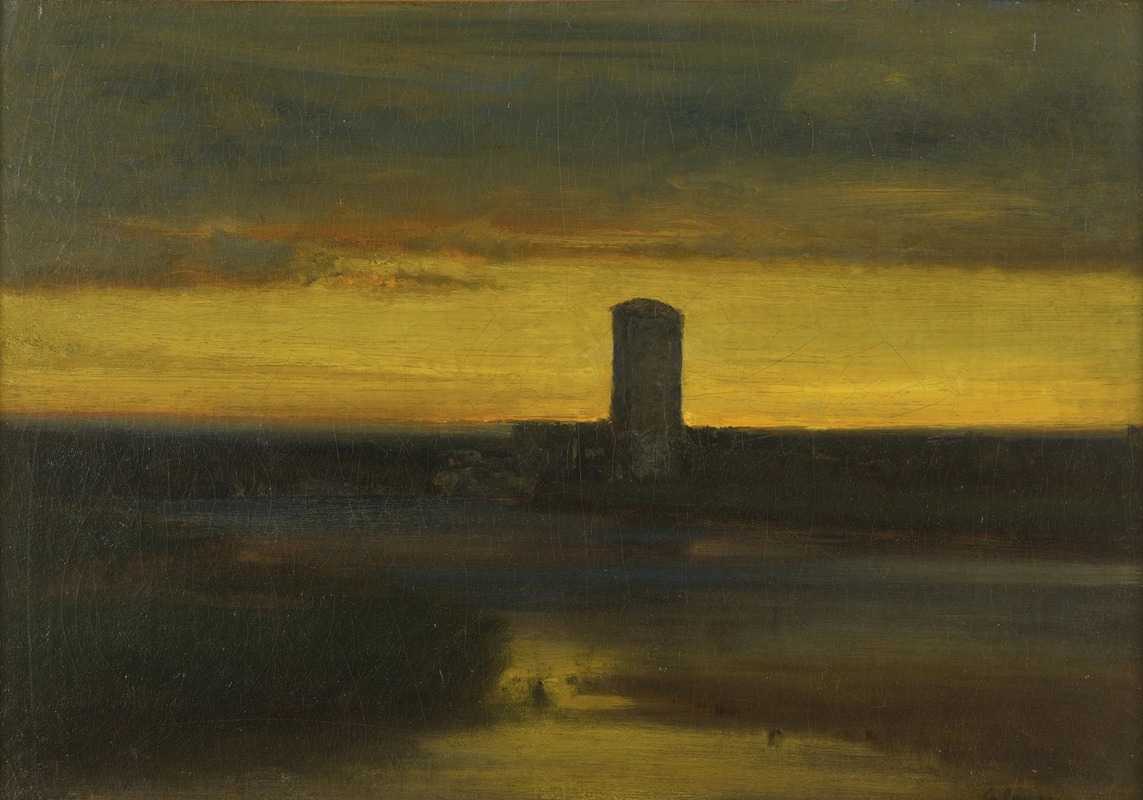
Afterglow
George Inness
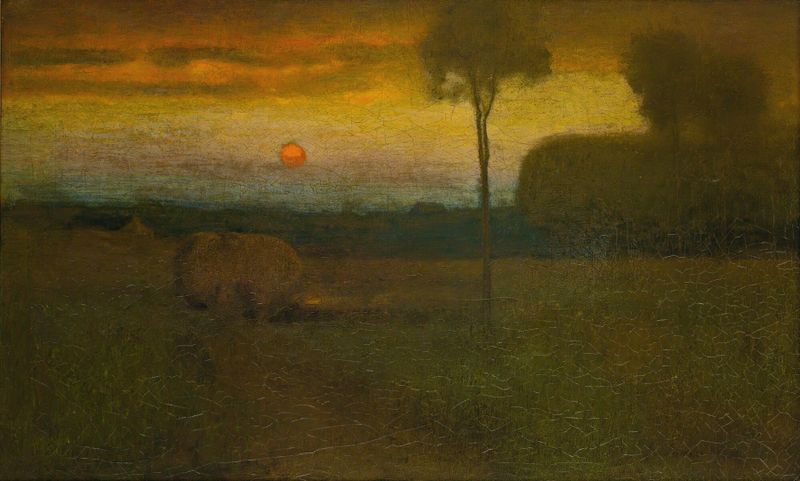
Landscape (Evening Landscape)
George Inness

Montclair
George Inness

View in Berkshire County, Massachusetts, Clearing Off after a September Storm
George Inness

October
George Inness
Landscape, Sunset
George Inness
Afterglow
George Inness
Catskill Mountains
George Inness





