
Street in Montmartre, Paris — History & Facts
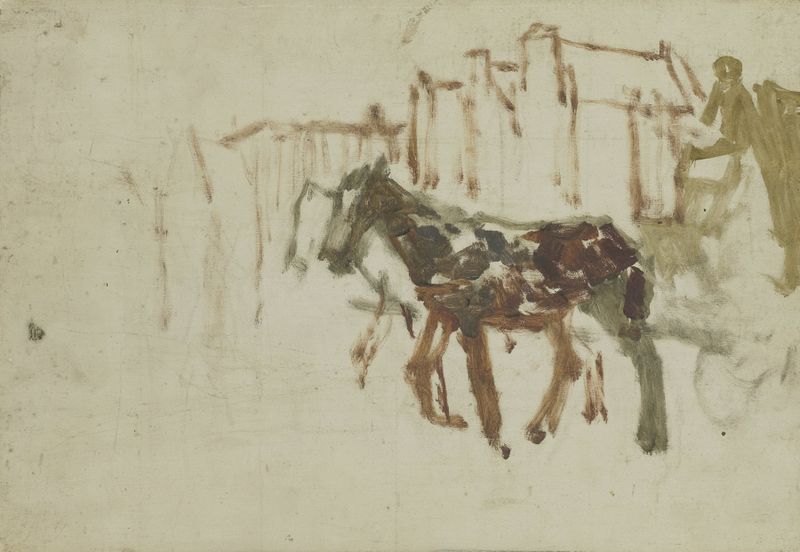
Can beauty exist without sorrow? In the dance of light and shadow through the streets of Montmartre, this question resonates deeply, urging us to explore the innocence woven into its vibrant tapestry. Look to the left at the hazy outlines of figures merging with the cobblestone path, their silhouettes softened by the twilight glow. Notice how the colors blend seamlessly — warm ochres and cool blues swirl together, capturing the fleeting moments of a Parisian evening. The brushwork is both dynamic and fluid, evoking a sense of movement, as though the street itself breathes with life, pulling you into its embrace. Yet, amidst the lively scene, a subtle tension lingers.
The figures, caught in their mundane activities, embody both joy and an unspoken melancholy, hinting at the lives lived beyond the canvas. The juxtaposition of the lively street against the muted tones of dusk suggests a fleeting innocence, a reminder that every moment of beauty carries the weight of time's passage. Here, even the simplest interactions feel steeped in complexity, revealing the bittersweet nature of everyday existence. Painted in the heart of Paris during a period marked by artistic experimentation and social change, the artist captured this scene around the turn of the 20th century.
Breitner's work reflects a transitional moment in art, bridging traditional realism and the burgeoning modernist movements. He was influenced by his surroundings and the vibrant culture that defined Montmartre, where he melded the impressionistic style with a keen eye for the human experience.
More Artworks by George Hendrik Breitner
Browse all →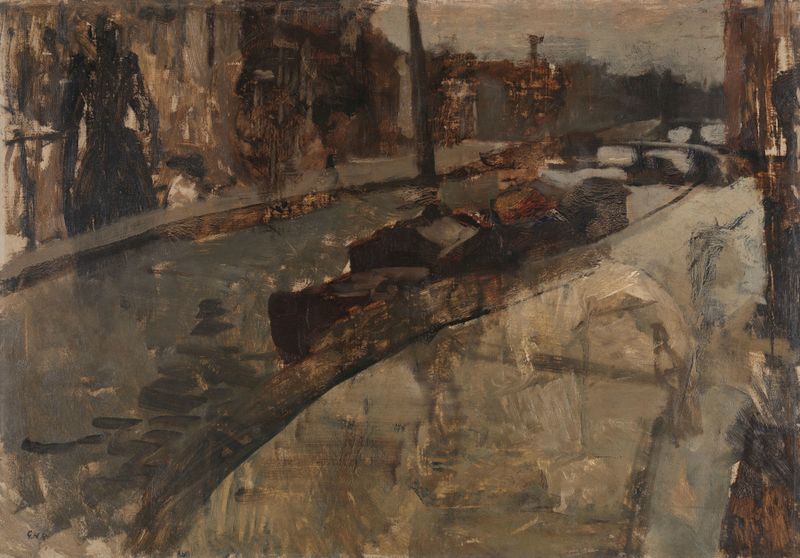
Prinsengracht near Lauriergracht, Amsterdam
George Hendrik Breitner
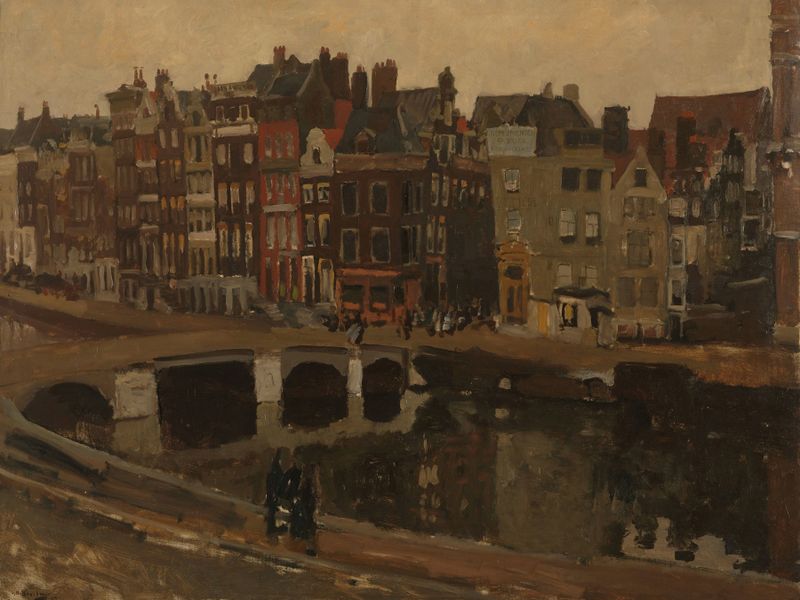
The Rokin, Amsterdam
George Hendrik Breitner

The Rokin, Amsterdam
George Hendrik Breitner
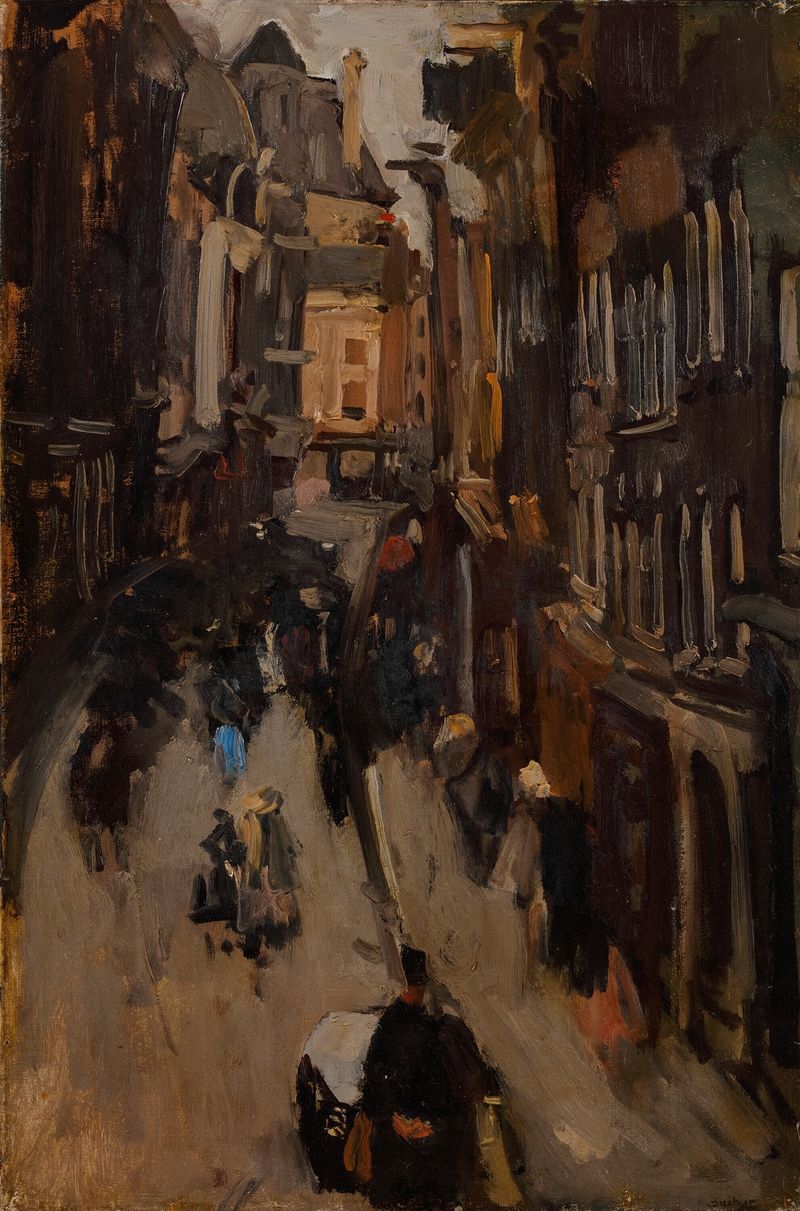
A busy day in the Kalverstraat, Amsterdam
George Hendrik Breitner

The Damrak, Amsterdam
George Hendrik Breitner
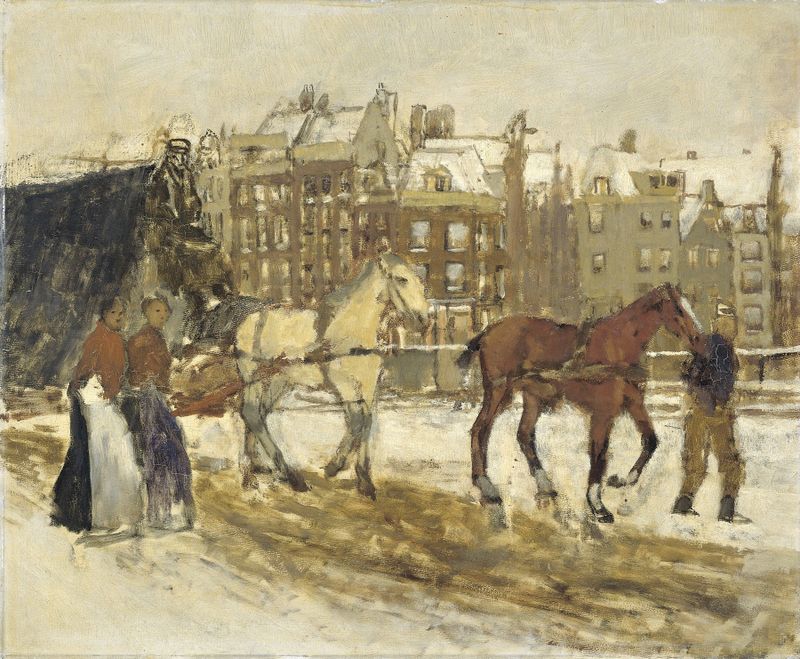
The Rokin, Amsterdam
George Hendrik Breitner

The Baanbrugsteeg looking from the Haarlemmerdijk towards the Vinkenstraat and the Brouwersgracht
George Hendrik Breitner

The Leidsegracht, Amsterdam
George Hendrik Breitner
The Rokin
George Hendrik Breitner

Gezicht op de Dam
George Hendrik Breitner





