
Study for Le Bec du Hoc, Grandcamp — History & Facts
When Georges Seurat visited the Normandy coast in 1885, he was not yet the celebrated pioneer of Pointillism, but a young artist in the midst of radical experimentation. Among the sketches he produced during this period is Study for Le Bec du Hoc, Grandcamp, an early exploration of the technique that would soon define his career. This work stands out because it captures a real place—Le Bec du Hoc, a dramatic cliff jutting into the Channel—at a time when the French coastline was becoming a favorite subject for avant-garde painters.
The study is one of several Seurat made at Grandcamp, each a step toward his monumental Seascape at Grandcamp. Here, Seurat chooses a moment of stillness: the massive promontory rises from the sea, its form simplified into blocks of color and light. The artist’s methodical application of small, distinct touches—whether in oil or another medium—translates the shifting atmosphere and the play of sunlight on rock and water into a mosaic of tones. Unlike the sweeping drama of Claude Monet’s Normandy cliffs, Seurat’s study is analytical, almost scientific, reducing nature to its essential structures.
The horizon is calm, the sea a band of muted blue, while the cliff itself dominates the composition, inviting the viewer to contemplate its weight and permanence. The exact medium of this study remains uncertain, as does its early history, but it is typical of the preparatory works Seurat produced before embarking on his larger canvases. Such studies were rarely exhibited in his lifetime, serving instead as private laboratories for his evolving theories of color and perception. Today, Study for Le Bec du Hoc, Grandcamp is recognized as a key document in the genesis of Neo-Impressionism, marking the transition from Impressionist spontaneity to the measured precision that would define Seurat’s mature style.
Its survival offers a rare glimpse into the artist’s working process and his fascination with the interplay of nature and technique.
More Artworks by Georges Seurat
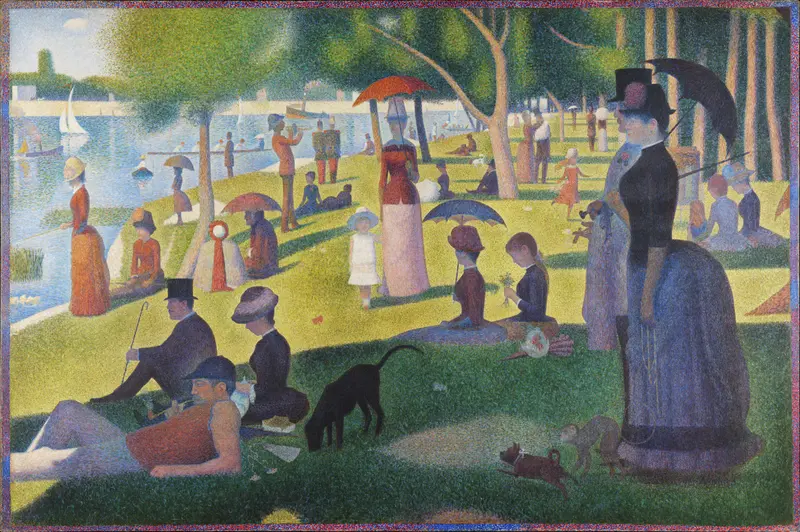
A Sunday Afternoon on the Island of La Grande Jatte
Georges Seurat
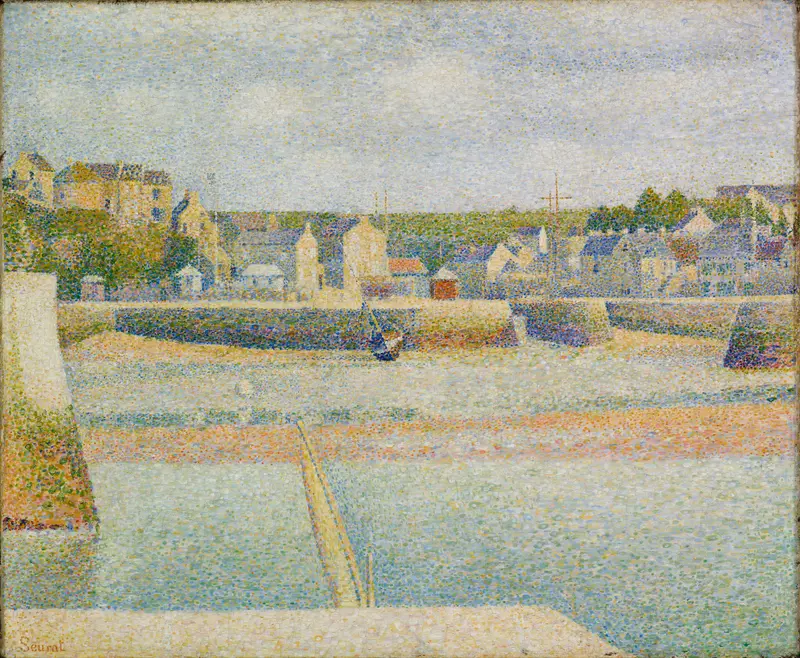
Port-en-Bessin, The Outer Harbor (Low Tide)
Georges Seurat
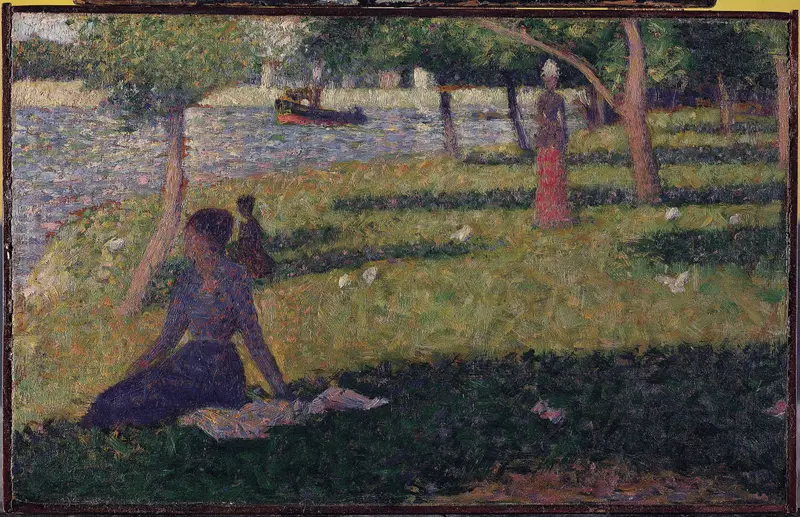
Étude pour ‘La Grande Jatte’ (Study for ‘La Grande Jatte’)
Georges Seurat
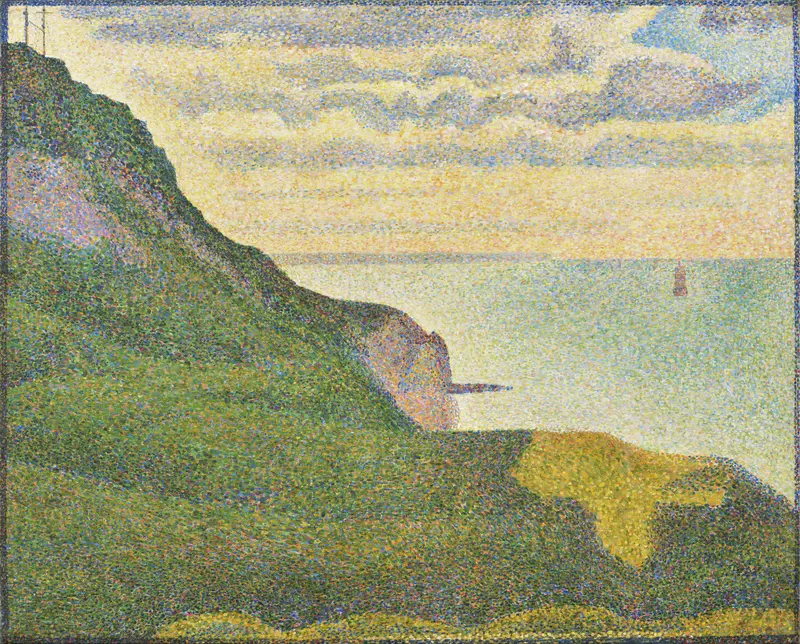
Seascape at Port-en-Bessin,Normandy
Georges Seurat
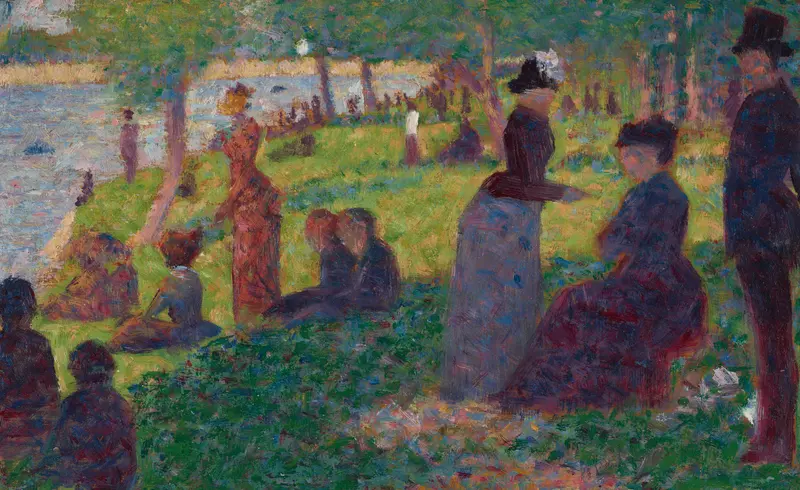
Oil Sketch for "A Sunday on La Grande Jatte — 1884"
Georges Seurat
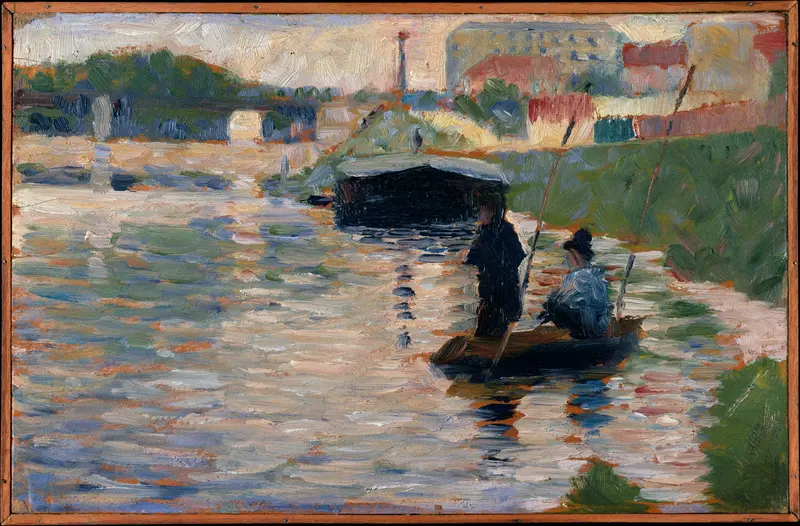
View of the Seine
Georges Seurat
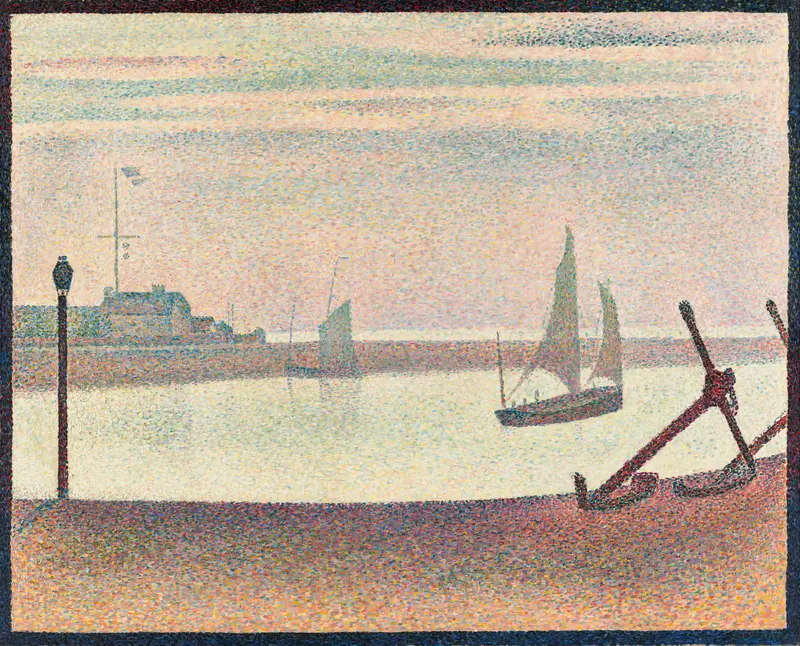
The Channel at Gravelines, Evening
Georges Seurat
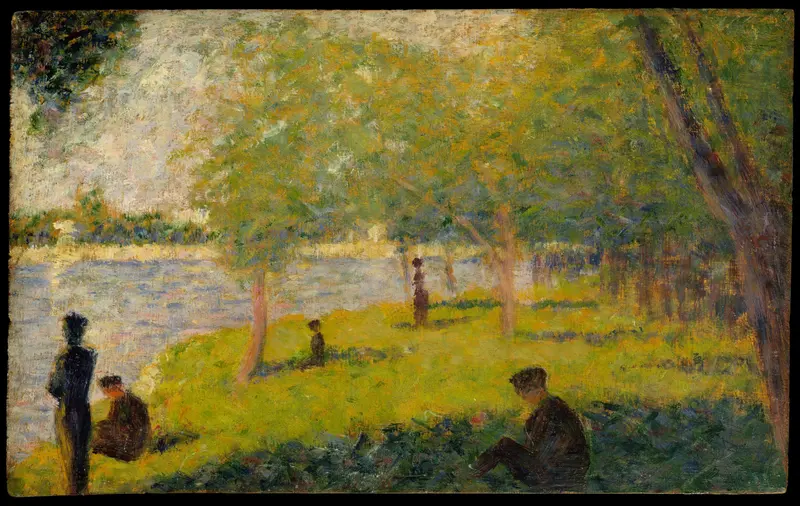
Study for ‘A Sunday on La Grande Jatte’
Georges Seurat
Study for A Sunday on La Grande Jatte
Georges Seurat
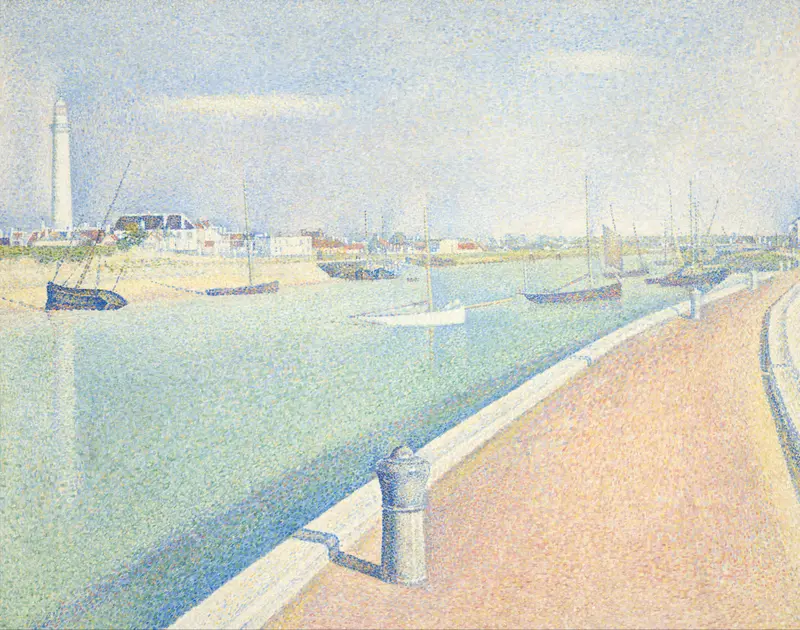
The Channel of Gravelines, Petit Fort Philippe
Georges Seurat
More Landscape Art

The Starry Night
Vincent van Gogh

View of Delft
Johannes Vermeer

Water Lilies
Claude Monet

The Grand Canal, Venice, looking north-west from the Ca' Corner to the Ca' Contarini degli Scrigni, with the campanile of Santa Maria della Carità
Canaletto

Windsor Castle
Canaletto

The Grand Canal looking North-East from the Palazzo Dolfin-Manin to the Rialto Bridge
Canaletto