
Study of a Headless Draped Figure with Arms Crossed — History & Facts
No face greets the viewer in Study of a Headless Draped Figure with Arms Crossed—a striking omission that has intrigued scholars for generations. The absence of a head in this study by Abraham Bloemaert is not a result of damage or loss, but rather a deliberate artistic choice, typical of preparatory works where the focus is on the pose and the fall of fabric. Such studies were essential tools for artists of the late Dutch Golden Age, allowing them to experiment with gesture and drapery before committing to a final composition. At the moment Bloemaert chose to capture, the figure’s arms are tightly crossed over the chest, the folds of the robe cascading in deep, shadowed pleats.
The gesture suggests humility, penitence, or perhaps mourning—a pose seen in countless religious scenes, especially those depicting saints or martyrs. By omitting the head, Bloemaert invites the viewer to focus entirely on the expressive language of the body and the play of light across the cloth. This approach recalls the preparatory sketches of Peter Paul Rubens, who likewise emphasized movement and drapery in his studies, though Bloemaert’s treatment is quieter and more restrained. The precise origins of this work remain uncertain; no record of a commission survives, and the medium itself is not definitively established.
However, Bloemaert was renowned for his role as a teacher and draughtsman in Utrecht, producing countless studies for both his own use and for the instruction of his many pupils. Works like this one, often kept in the artist’s studio or circulating among students, rarely made their way into public collections until centuries later. Today, Study of a Headless Draped Figure with Arms Crossed stands as a testament to the importance of the artist’s process and the enduring fascination with the expressive potential of the human form.
More Artworks by Abraham Bloemaert

Adam and Eve
Abraham Bloemaert
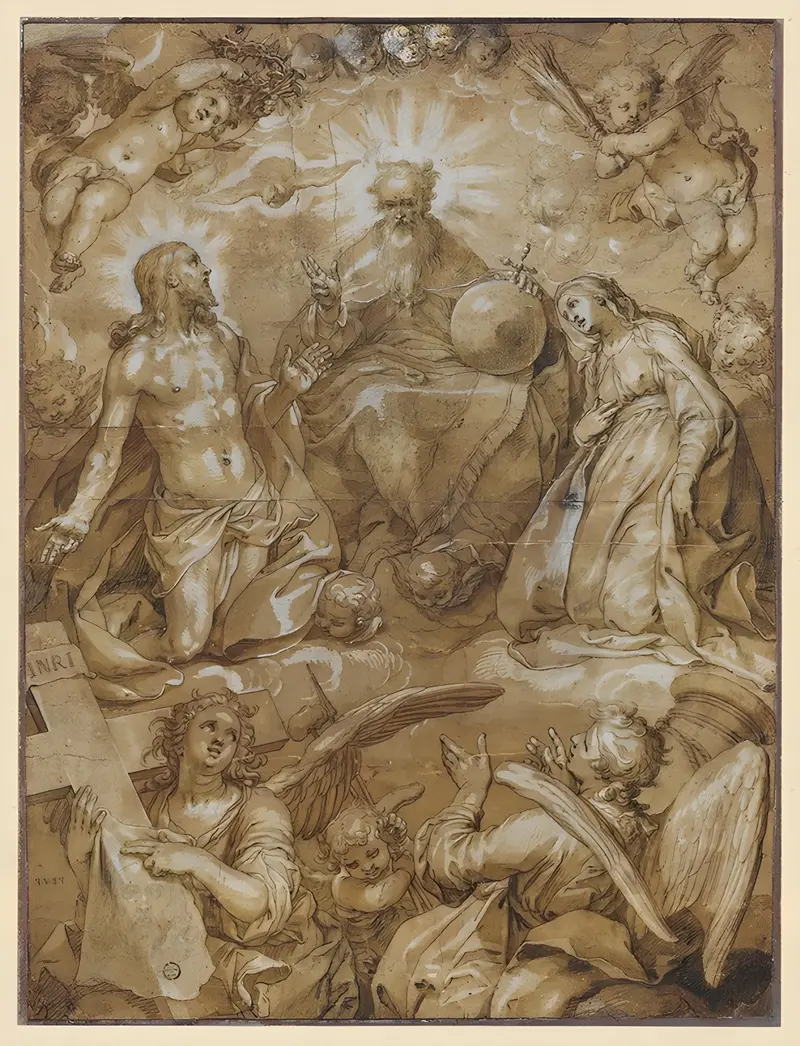
Intercession of Christ and Mary before God the Father
Abraham Bloemaert
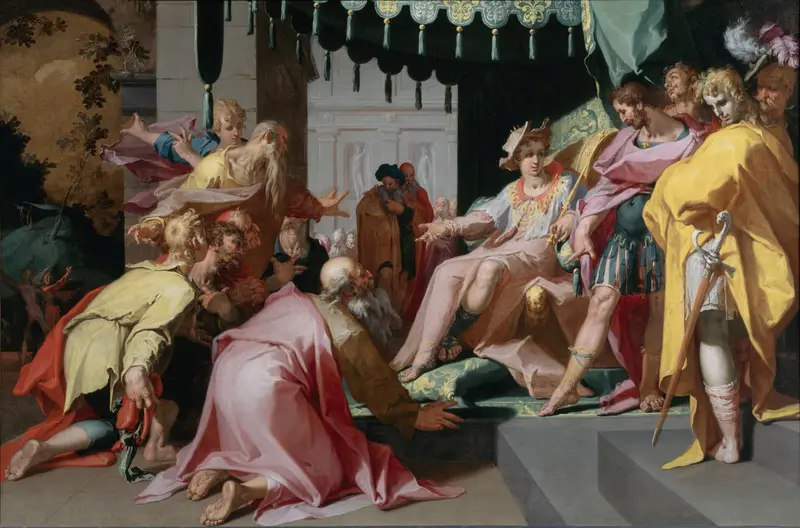
Joseph and his Brothers
Abraham Bloemaert
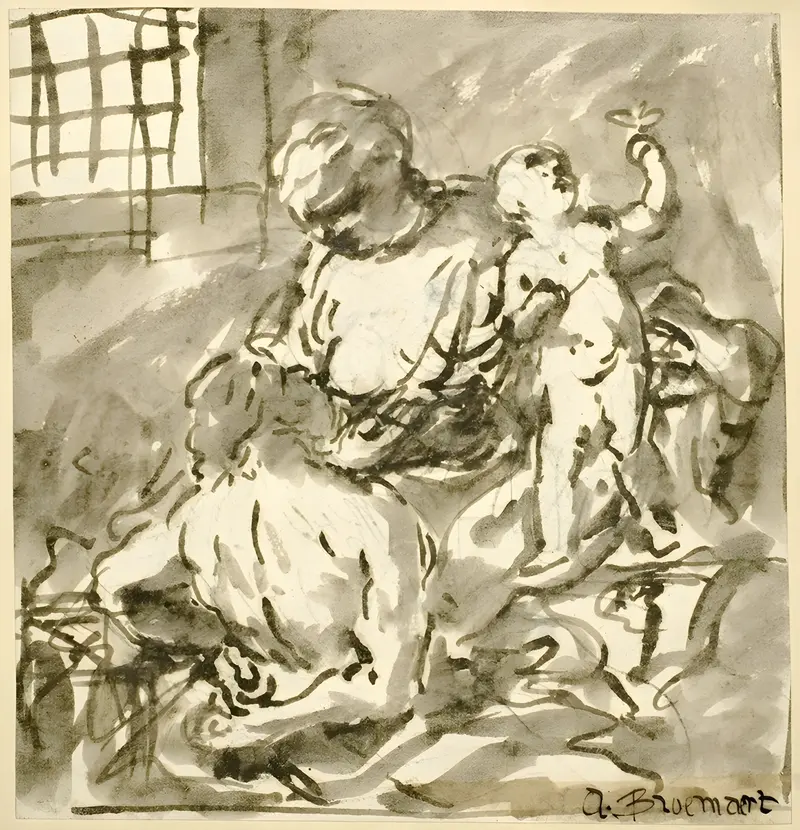
Caritas Romana
Abraham Bloemaert
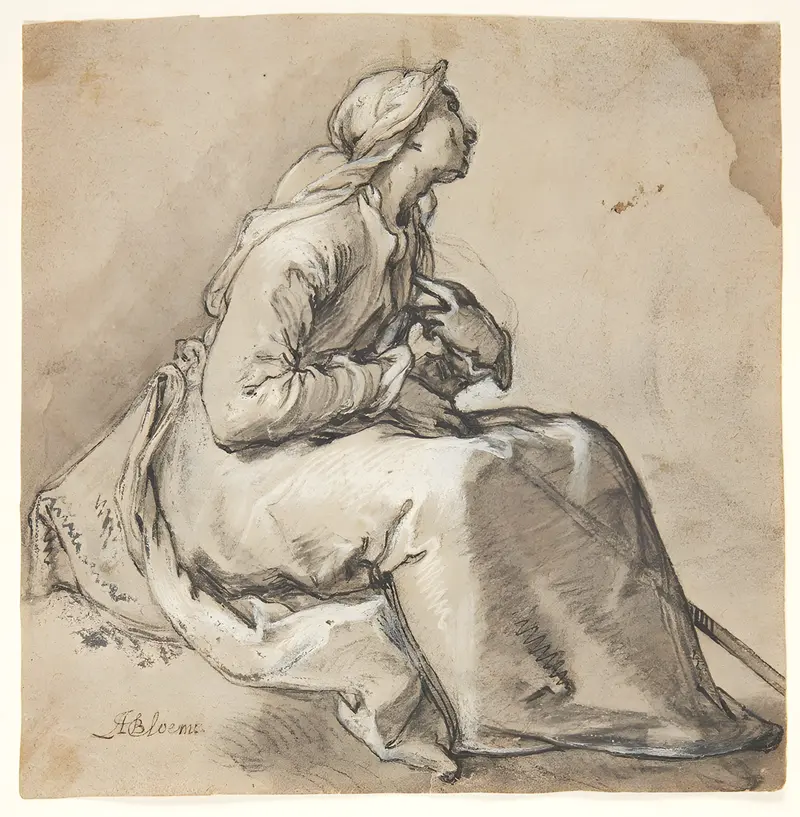
A seated woman facing right
Abraham Bloemaert
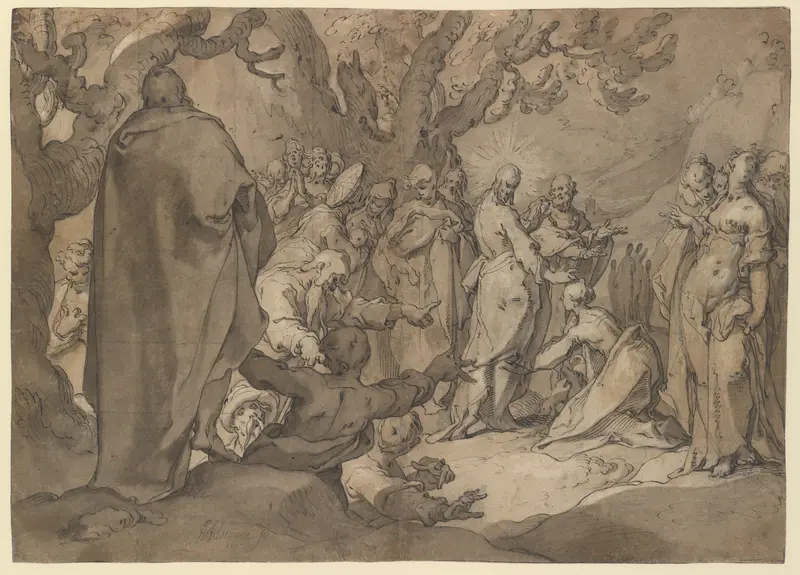
Christ and the Canaanite Women
Abraham Bloemaert
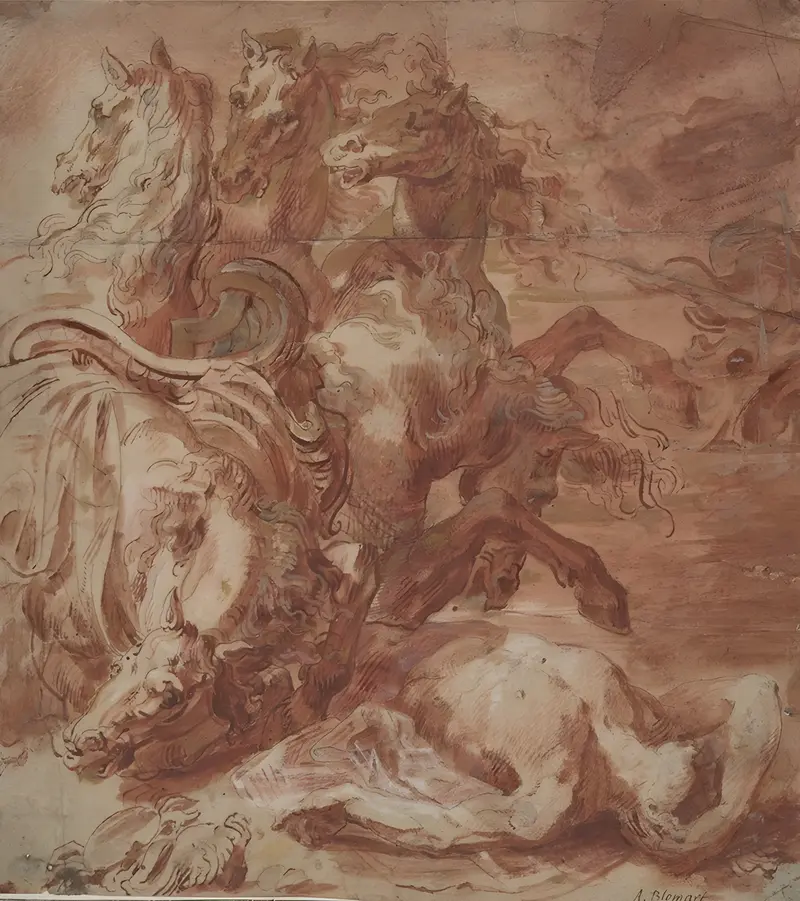
Hippolytus
Abraham Bloemaert
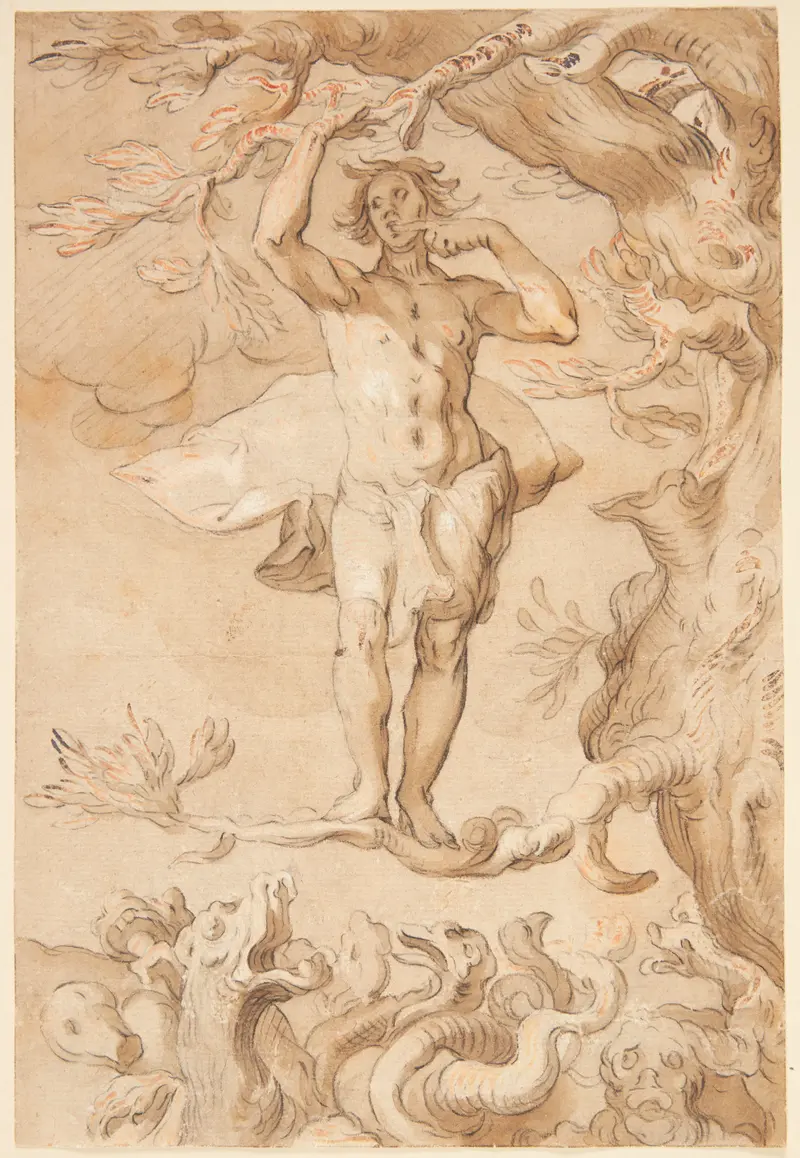
Den menneskelige glædes skrøbelighed En mand, der jages af en drage, klynger sig til en gren, mens han slikker honning af sin finger
Abraham Bloemaert

Moses Striking the Rock
Abraham Bloemaert
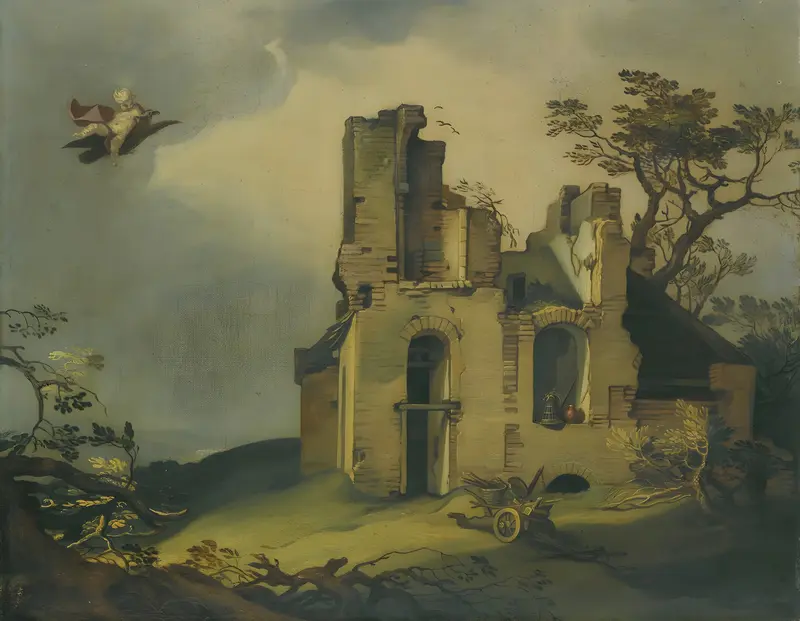
A Landscape With Ruins, With The Rape Of Ganymede
Abraham Bloemaert



