
Study of a woman in a wide mantle — History & Facts
No one knows the identity of the woman in Study of a woman in a wide mantle, and this anonymity is part of the drawing’s enduring fascination. Unlike many of his contemporaries, Abraham Bloemaert often used family members, students, or even local townspeople as models for his studies, leaving behind a body of work that blurs the line between portrait and practice. This particular sheet, with its quietly monumental figure, has led some scholars to speculate whether it was intended as a preparatory study for a lost painting, or simply a private exercise in capturing the play of fabric and form. The woman stands, enveloped in a voluminous mantle that falls in heavy folds, her face turned in gentle profile and her hands just visible beneath the drapery.
Bloemaert’s careful rendering of the cloth’s weight and the subtle shadows that gather in its creases invite the viewer to linger on the tactile reality of the garment. Her downcast gaze and composed posture suggest a moment of reflection or waiting, a mood that recalls the studies of Rembrandt or the quiet dignity of figures by Leonardo da Vinci. Yet, where Rembrandt might have used a burst of light to dramatize the scene, Bloemaert’s approach is softer, focusing on the harmony between figure and garment. The exact origins and journey of Study of a woman in a wide mantle remain uncertain, as is often the case with works on paper from the Dutch Golden Age.
Drawings like this were rarely signed or dated, and they circulated among artists’ studios as teaching tools or models for larger compositions. Today, the sheet is recognized as a testament to Bloemaert’s skill as a draftsman and his influence on generations of Dutch artists, including his own sons. Whether intended as a study or a finished work, it now stands as a quiet record of observation and artistry, preserved in a museum collection for viewers centuries later.
More Artworks by Abraham Bloemaert

Adam and Eve
Abraham Bloemaert
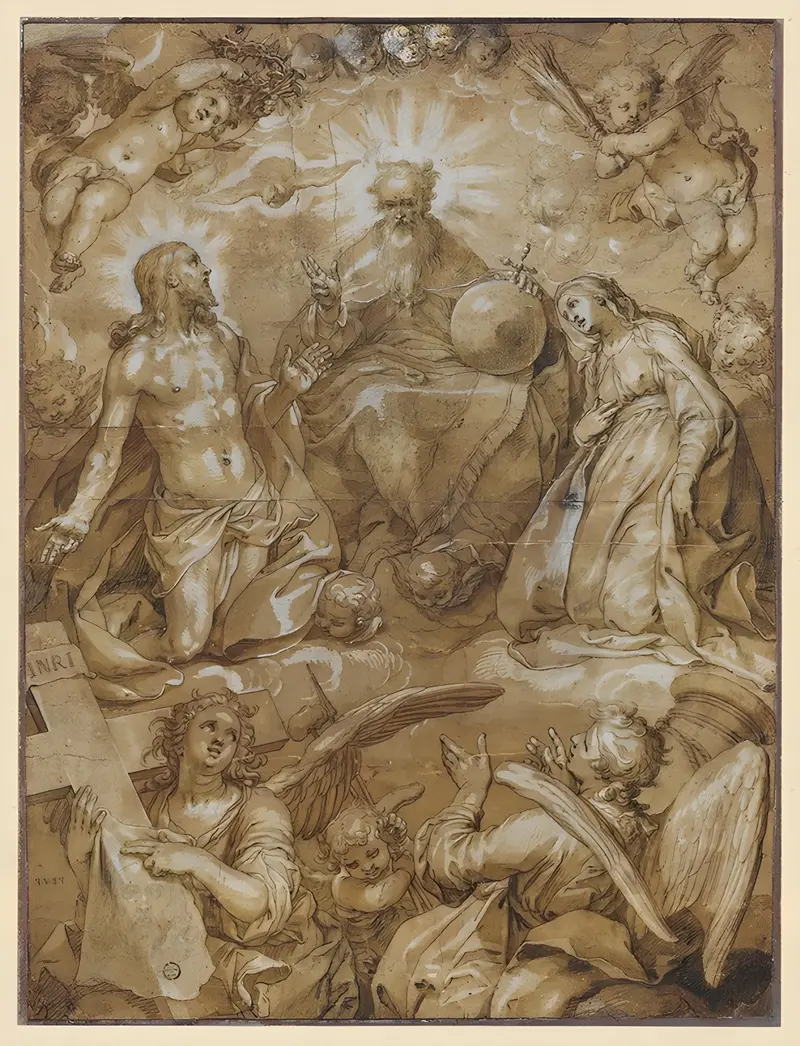
Intercession of Christ and Mary before God the Father
Abraham Bloemaert
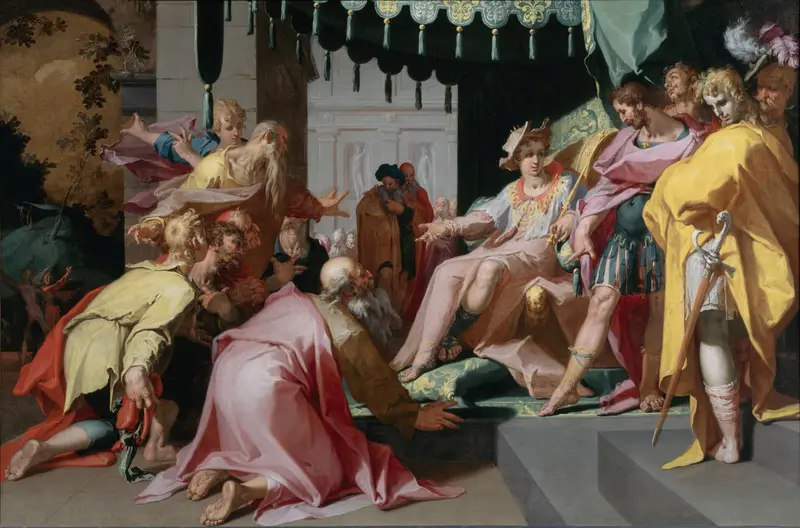
Joseph and his Brothers
Abraham Bloemaert
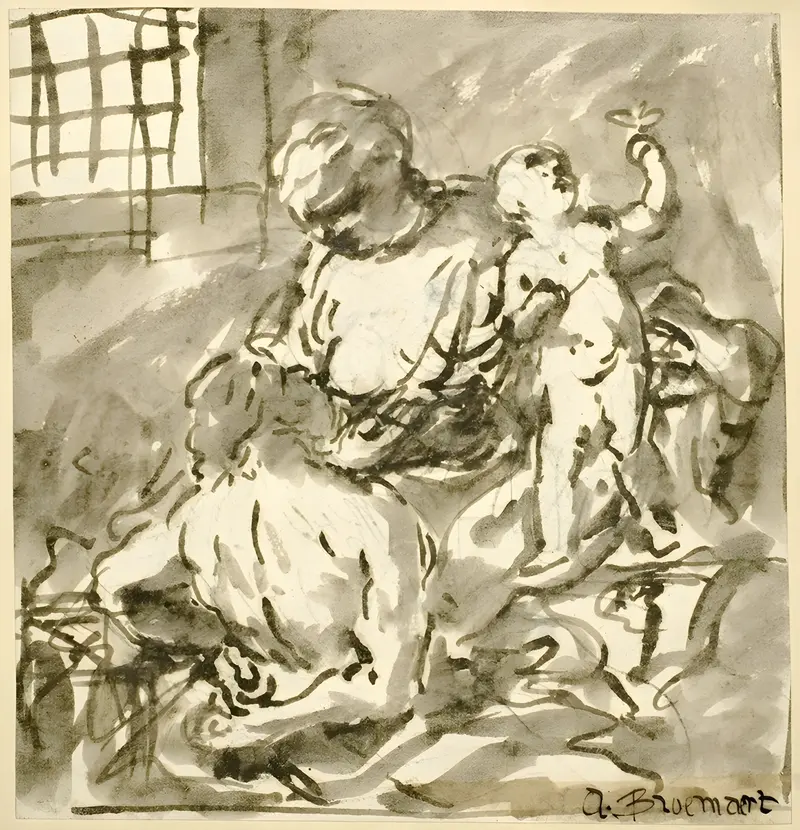
Caritas Romana
Abraham Bloemaert
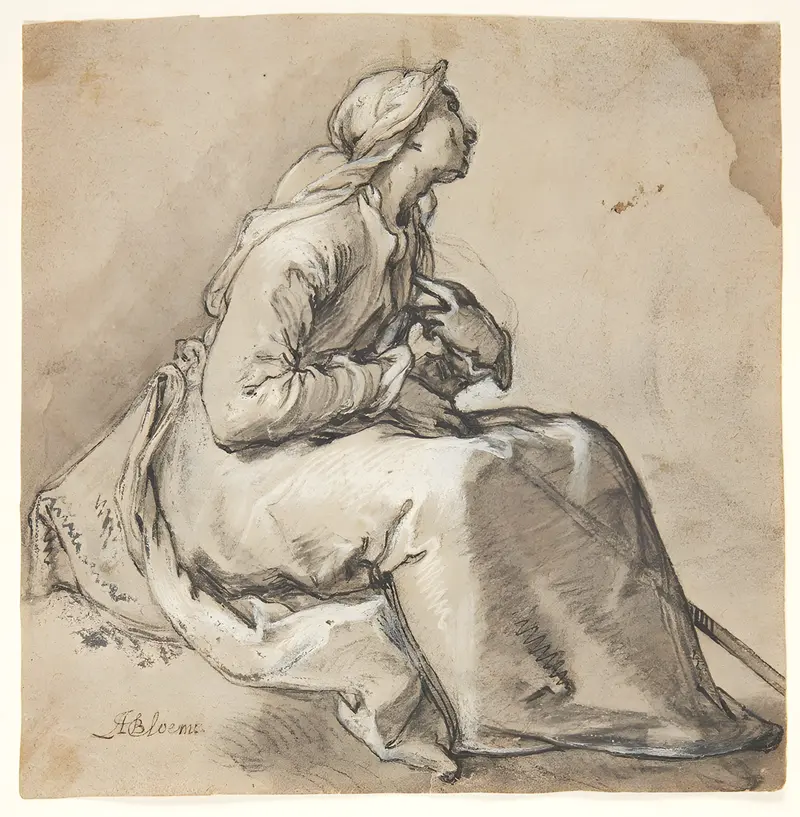
A seated woman facing right
Abraham Bloemaert
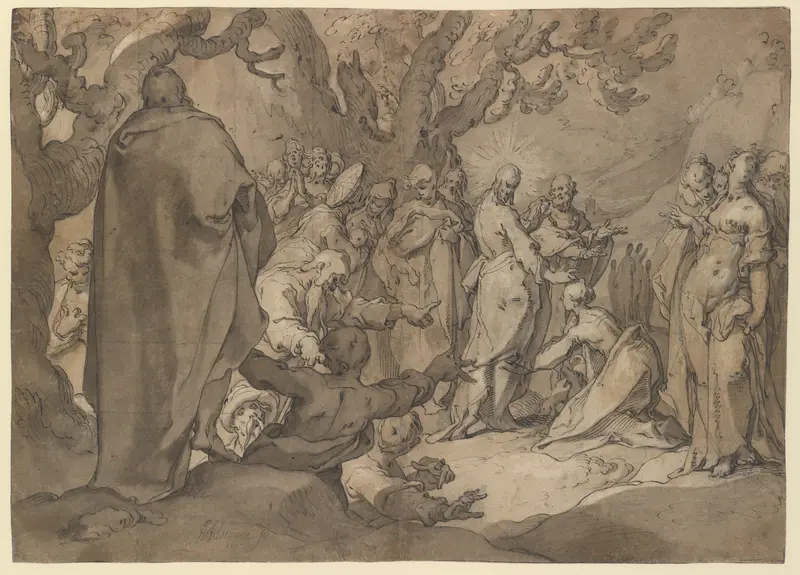
Christ and the Canaanite Women
Abraham Bloemaert
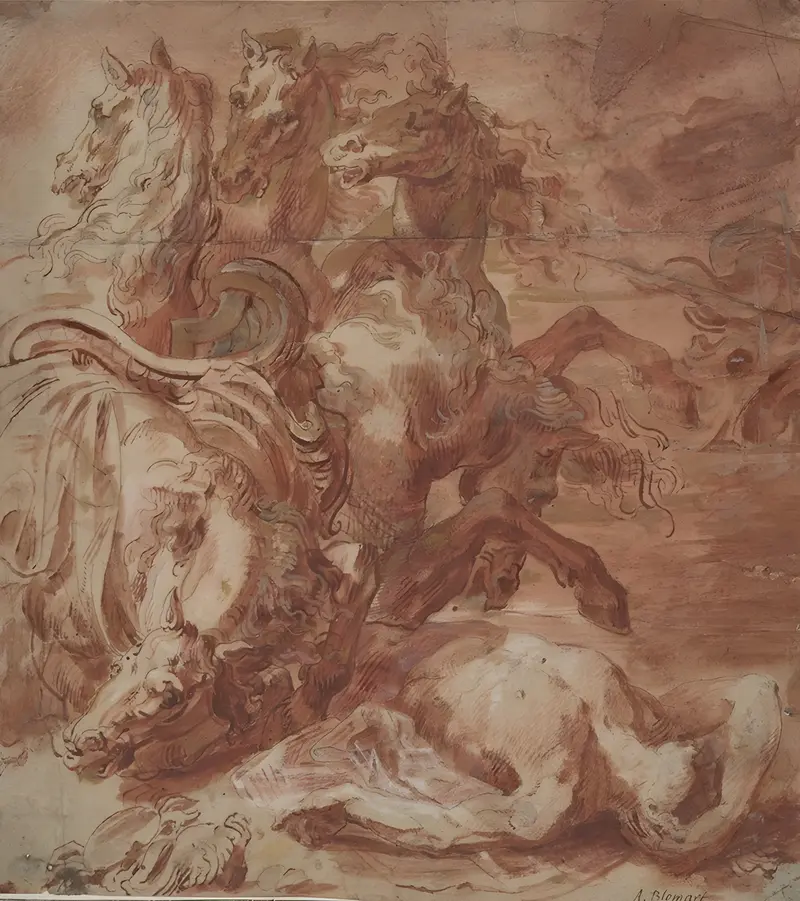
Hippolytus
Abraham Bloemaert
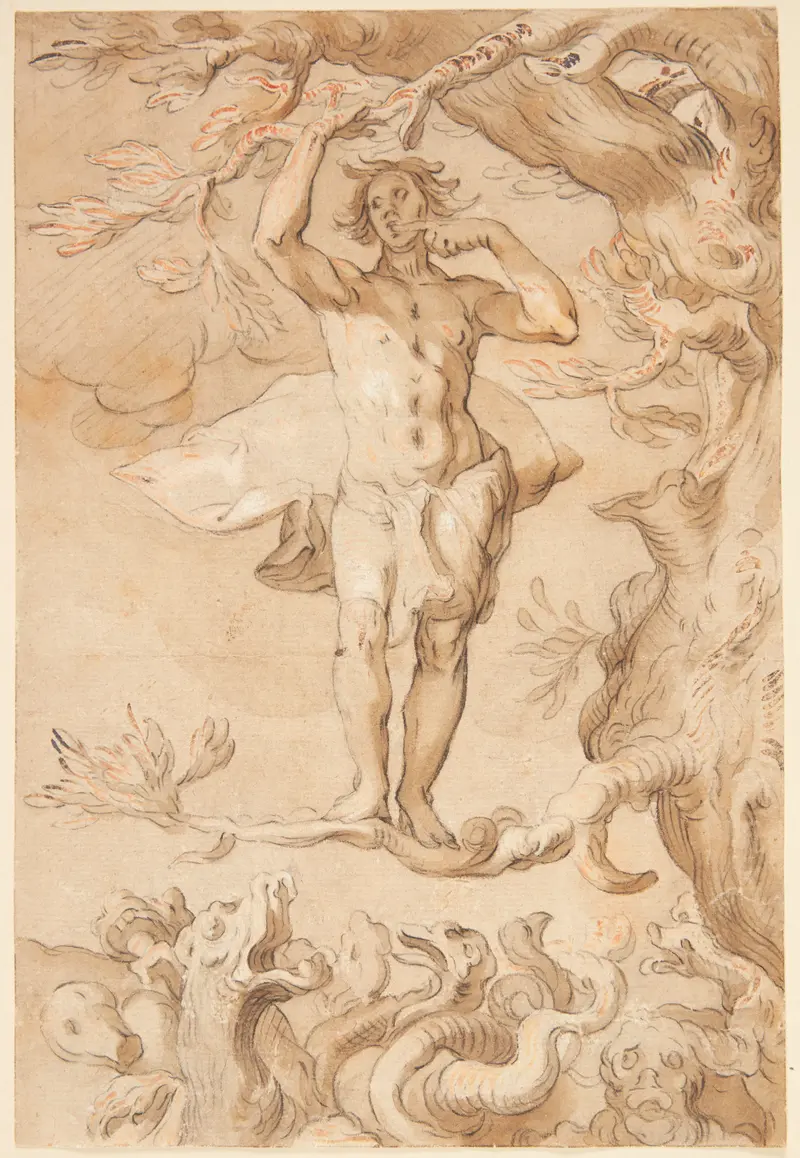
Den menneskelige glædes skrøbelighed En mand, der jages af en drage, klynger sig til en gren, mens han slikker honning af sin finger
Abraham Bloemaert

Moses Striking the Rock
Abraham Bloemaert
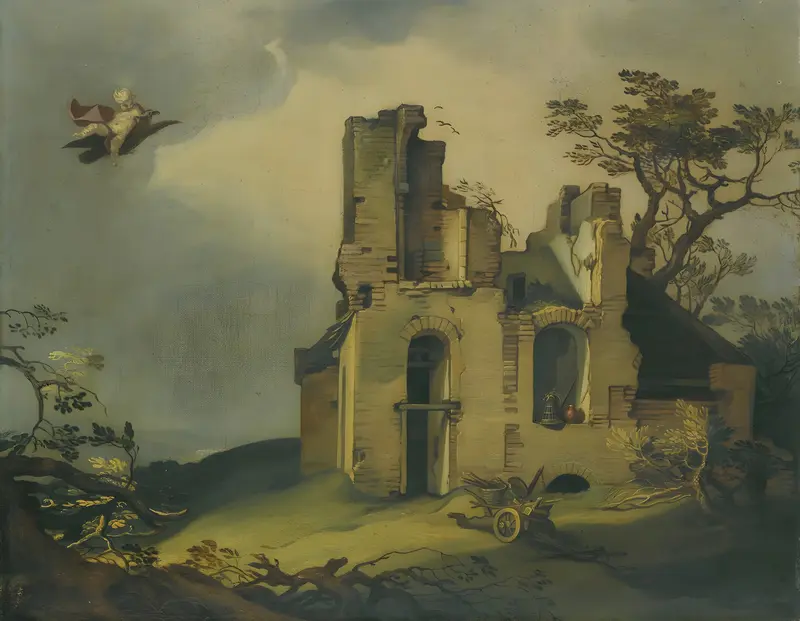
A Landscape With Ruins, With The Rape Of Ganymede
Abraham Bloemaert




