
Summer Foliage — History & Facts
Can paint confess what words never could? In Summer Foliage, the stillness of nature becomes a canvas for unspoken emotions, revealing the voids within our connections to the world around us. Focus on the gentle interplay of greens and yellows that envelop the canvas, drawing your gaze toward the vibrant canopy overhead. The leaves shimmer with a life of their own, each brushstroke seemingly whispering the secrets of summer. Notice how the dappled light filters through, creating a mesmerizing pattern that invites you deeper into the scene.
The soft, blurred edges lend an ethereal quality, as if the trees themselves are embracing a moment of introspection. Beneath the surface, the painting reveals a tension between tranquility and absence. The dense foliage, while alive and full of color, hints at a quiet loneliness; it suggests the beauty of life intertwined with the inevitability of loss. The choice of a lush summer setting may evoke a fleeting joy, yet it also reminds us of the transience of such moments, whispering of the void left behind in their wake.
Here, nature becomes a mirror reflecting our own heart's complexities. George Inness created this work in 1883 during a period when he was delving deeper into the spiritual aspects of nature. Living in New Jersey, he was influenced by the evolving American landscape and his romantic vision of the world. His focus shifted from mere representation to exploring the emotional resonance of place, a journey that mirrored the broader movements in art as Impressionism gained ground, allowing him to capture the subtleties of light and form in a profound, personal way.
More Artworks by George Inness
Browse all →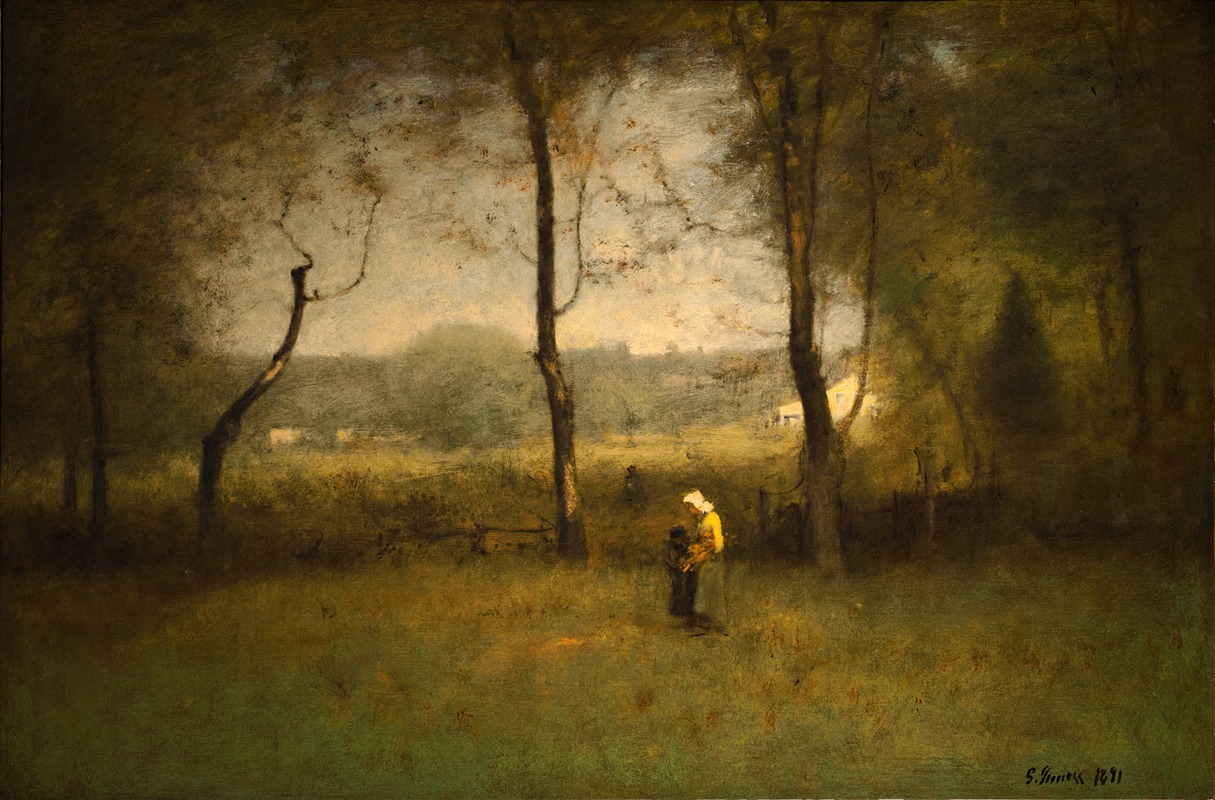
Autumn Woods
George Inness
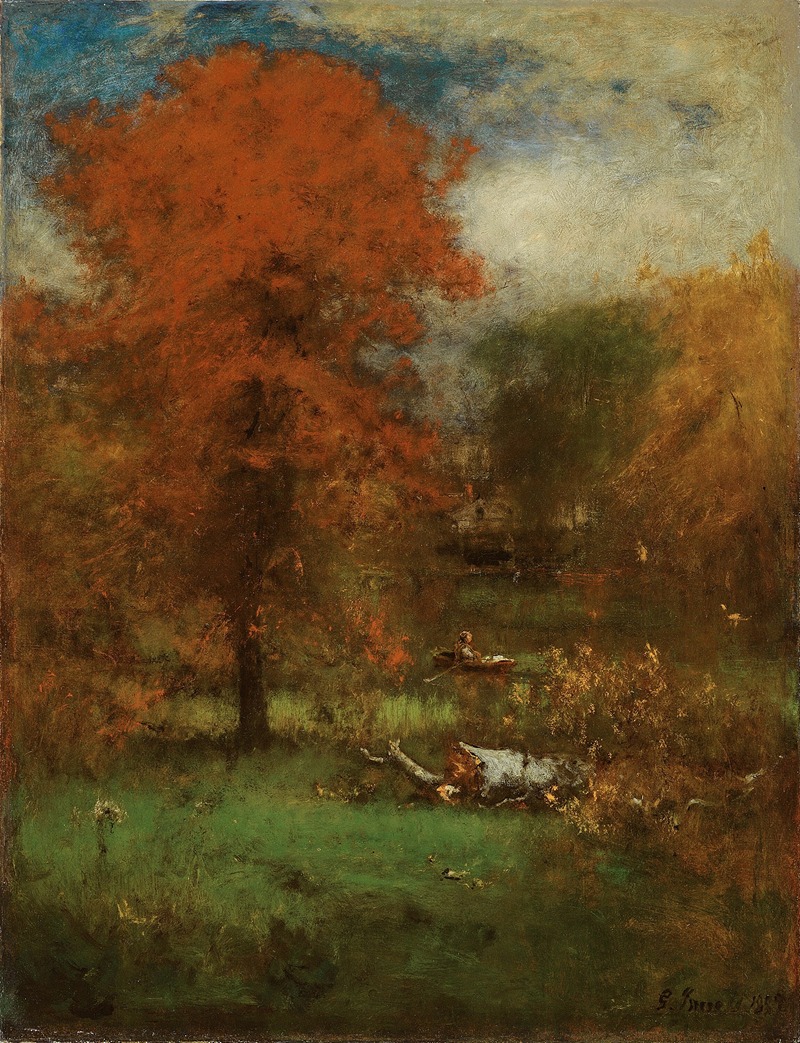
The Mill Pond
George Inness
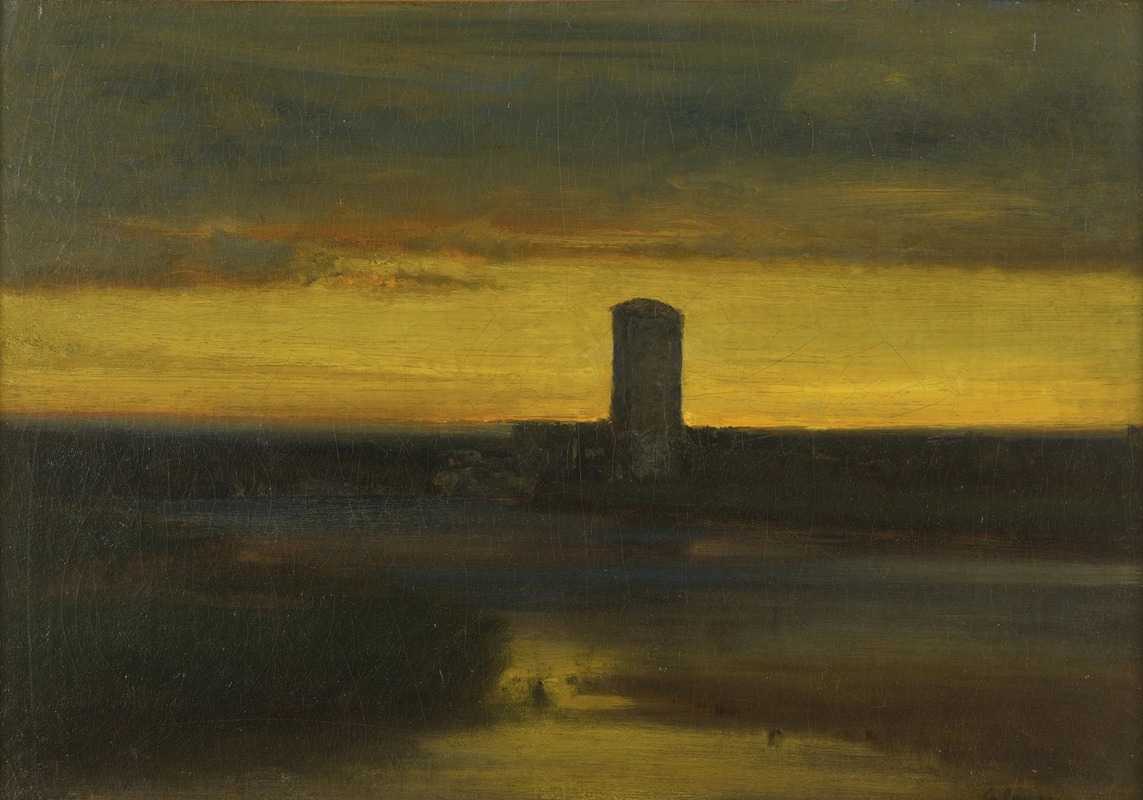
Afterglow
George Inness
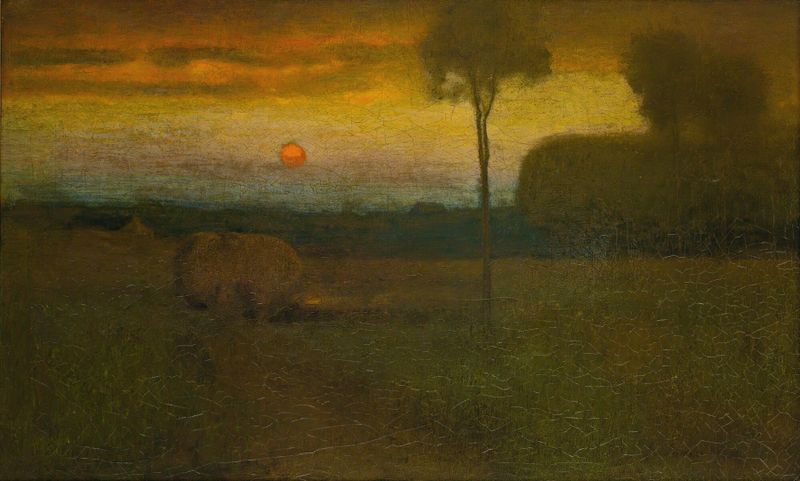
Landscape (Evening Landscape)
George Inness

Montclair
George Inness

View in Berkshire County, Massachusetts, Clearing Off after a September Storm
George Inness

October
George Inness
Landscape, Sunset
George Inness
Afterglow
George Inness
Catskill Mountains
George Inness





