
Summer's Day — History & Facts
What first catches the eye is the shimmering surface of the water, a restless mosaic of greens, blues, and lilacs that almost seems to move as you look. Two women, dressed in the height of late nineteenth-century fashion, share a small boat, their faces and gestures caught between conversation and reverie. The woman on the left, rendered with brisk, confident strokes, leans outward as if drawn by the play of light on the water, while her companion sits more upright, her gaze meeting the viewer’s with a delicate uncertainty.
A blue parasol, carelessly set aside, anchors the composition and hints at leisure, while the distant ducks and blurred trees dissolve into the haze of a warm afternoon. Every brushstroke feels immediate, a record of fleeting sunlight and shifting reflections. Painted in 1879, this scene belongs to the world of Impressionism, when artists like Berthe Morisot turned away from grand historical subjects to capture the pleasures and ambiguities of modern life. In these years, scenes of boating, promenades, and parks became emblems of a new, urban leisure, especially for the middle and upper classes who could afford such outings.
The painting’s loose, luminous technique—visible in the quick dabs that describe ripples, hats, and gloves—embodies the era’s fascination with the changing effects of light and atmosphere. Though little is recorded about the journey of this particular work, its date and style place it squarely within the period when women artists like Morisot were quietly reshaping the possibilities of painting. The longer you look, the more you sense the quiet drama of a moment suspended between conversation, nature, and the painter’s own searching gaze.
More Artworks by Berthe Morisot

The Harbor at Lorient
Berthe Morisot
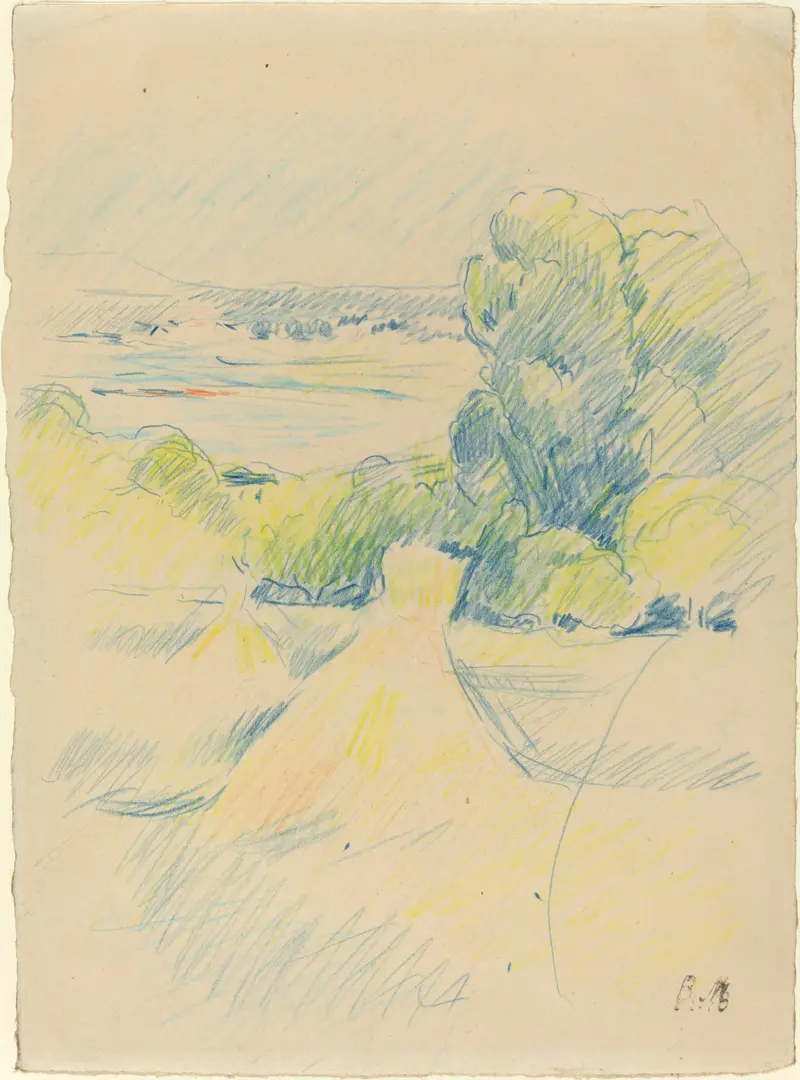
Landscape
Berthe Morisot

Hanging the Laundry out to Dry
Berthe Morisot

Woman in a Garden
Berthe Morisot

Young Girl with Hat
Berthe Morisot
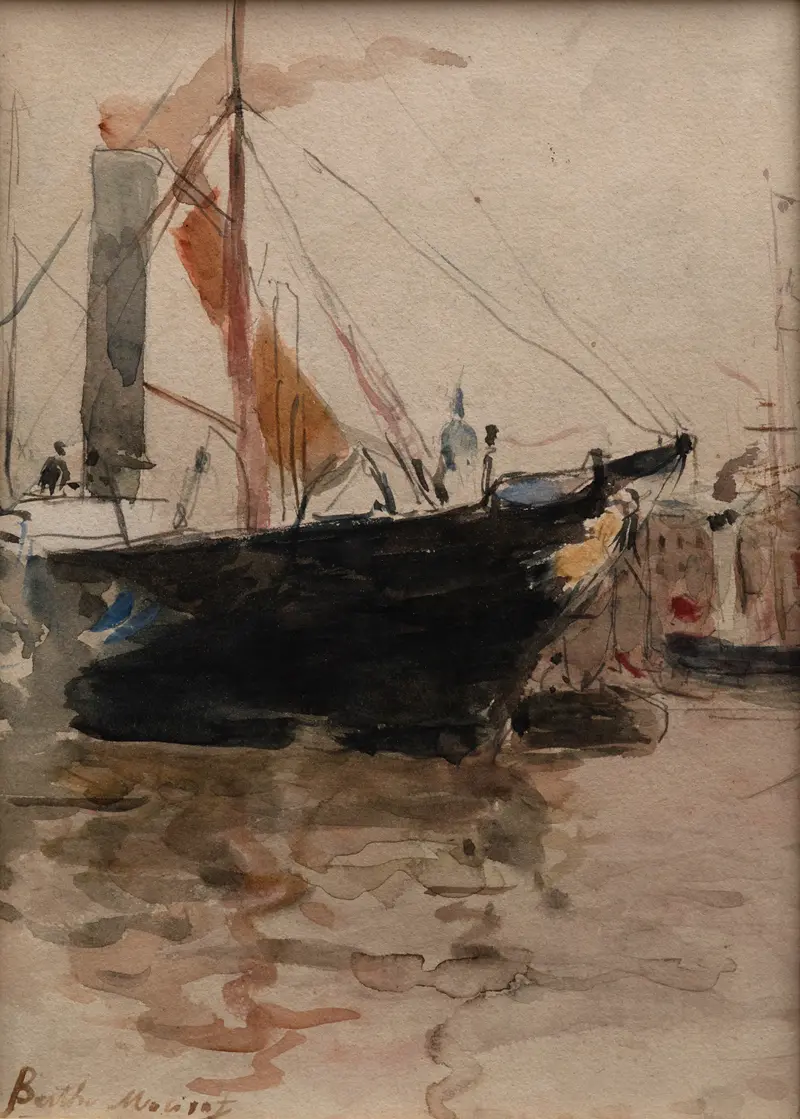
Harbor Scene, Isle of Wight
Berthe Morisot
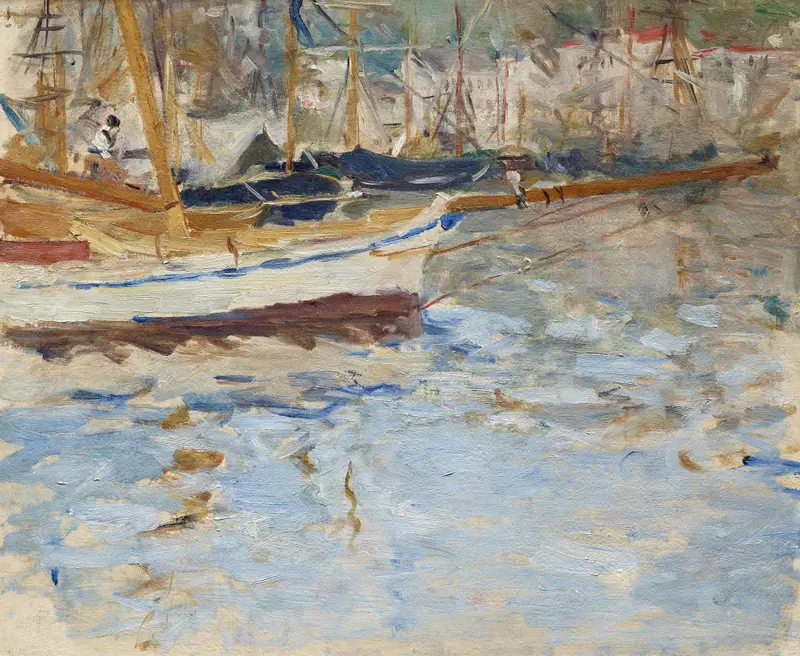
The Port of Nice
Berthe Morisot
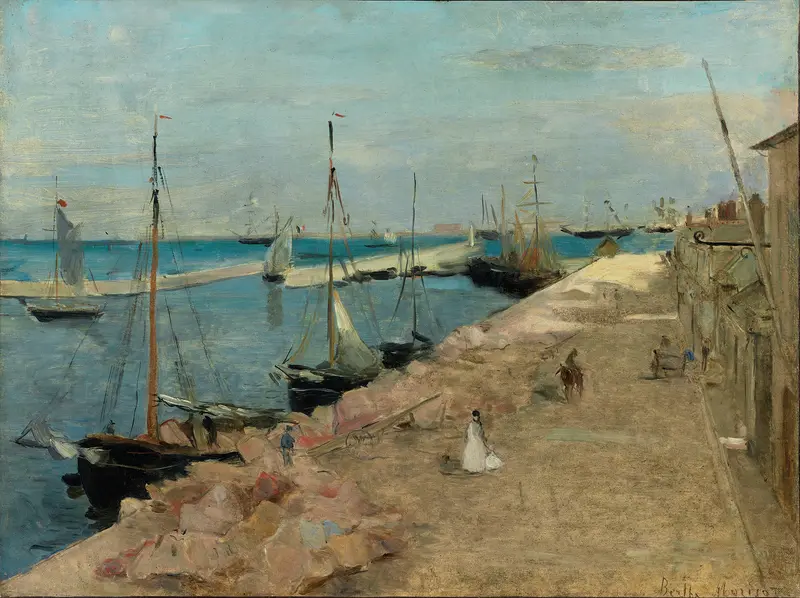
The Harbor at Cherbourg
Berthe Morisot

The Mother and Sister of the Artist
Berthe Morisot
Les Poires
Berthe Morisot





