
Sunday at Port-en-Bessin — History & Facts
When Georges Seurat arrived in Port-en-Bessin in the summer of 1888, he was already deep into his pioneering exploration of pointillism, but it was this Norman fishing village that inspired some of his most luminous experiments. Sunday at Port-en-Bessin stands out as one of the few major canvases Seurat painted outside Paris, capturing the quiet pulse of a real place on a specific day. The painting is also notable for its rarity: Seurat produced only a handful of large-scale landscapes in oil, and this work, with its precise dots and dashes, marks a turning point in his mature style.
While the exact circumstances of its commission remain unclear, contemporary critics immediately recognized its bold technique—one reviewer in 1889 described Seurat's seaside scenes as "a new science of painting, patient as nature herself." On the canvas, the viewer is drawn into a tranquil Sunday afternoon along the quayside, where boats rest in the harbor and townspeople stroll or linger in small groups. Seurat chooses the moment when leisure and labor briefly intersect: fishermen’s nets are drying, and the townsfolk, dressed in their best, promenade under the clear sky. The artist’s meticulous application of color—tiny, separated brushstrokes of pure pigment—creates a shimmering effect, making the water and sky pulse with light.
The upright masts and the gentle curve of the shoreline guide the eye through the composition, while the figures, rendered with a calm detachment, suggest both community and solitude. Unlike Monet’s more spontaneous brushwork in his own Normandy scenes, Seurat’s methodical approach lends the moment a sense of quiet order. Today, Sunday at Port-en-Bessin is recognized as a key work from Seurat’s mature period, painted just a year before his untimely death in 1891. Its provenance is less dramatic than some, but it has passed through several important private collections before finding a permanent home in a major museum.
The painting’s careful construction and luminous surface have made it a touchstone for understanding the ambitions of the Neo-Impressionist movement. Though Seurat’s career was brief, works like this demonstrate his lasting influence on both the science and poetry of painting.
More Artworks by Georges Seurat
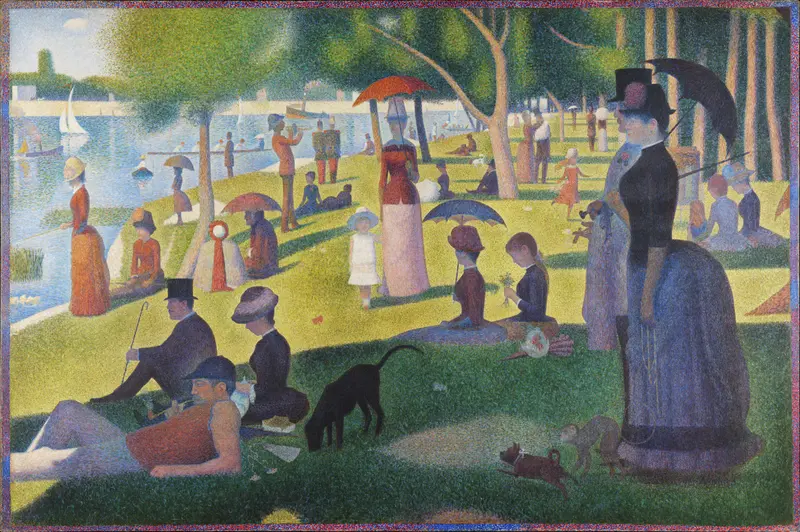
A Sunday Afternoon on the Island of La Grande Jatte
Georges Seurat
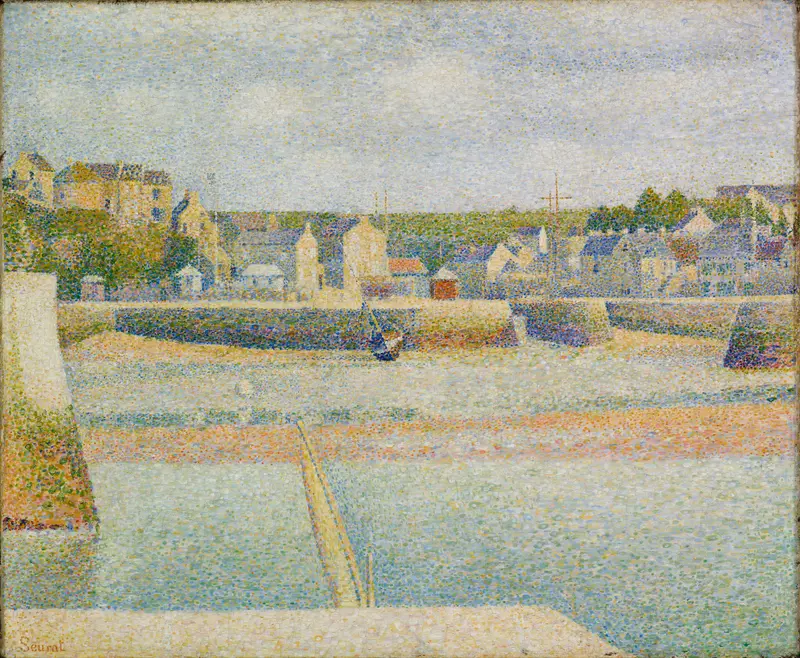
Port-en-Bessin, The Outer Harbor (Low Tide)
Georges Seurat
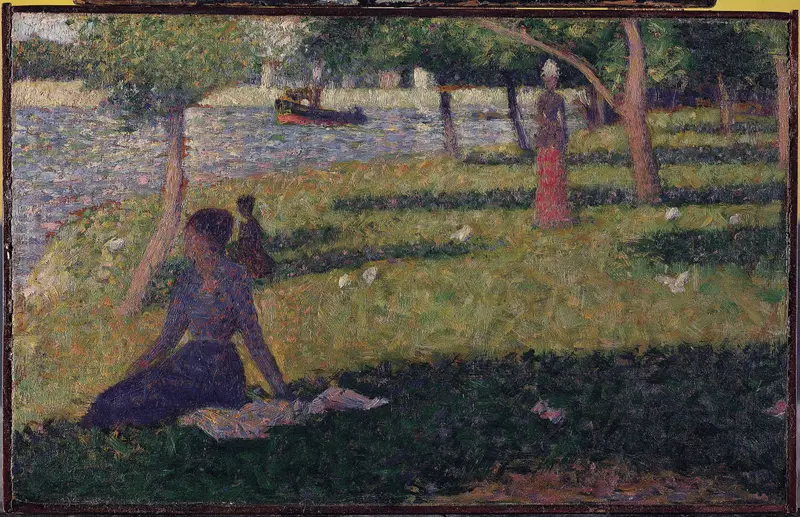
Étude pour ‘La Grande Jatte’ (Study for ‘La Grande Jatte’)
Georges Seurat
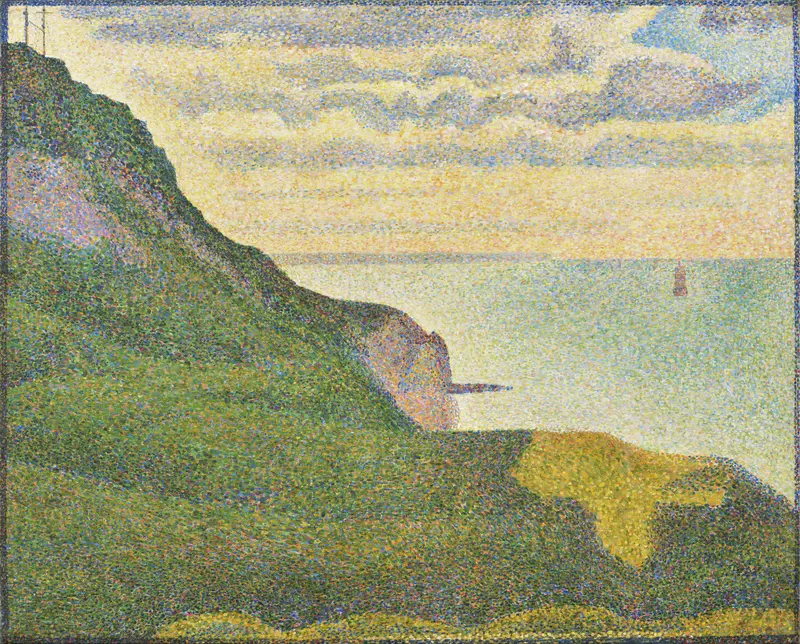
Seascape at Port-en-Bessin,Normandy
Georges Seurat
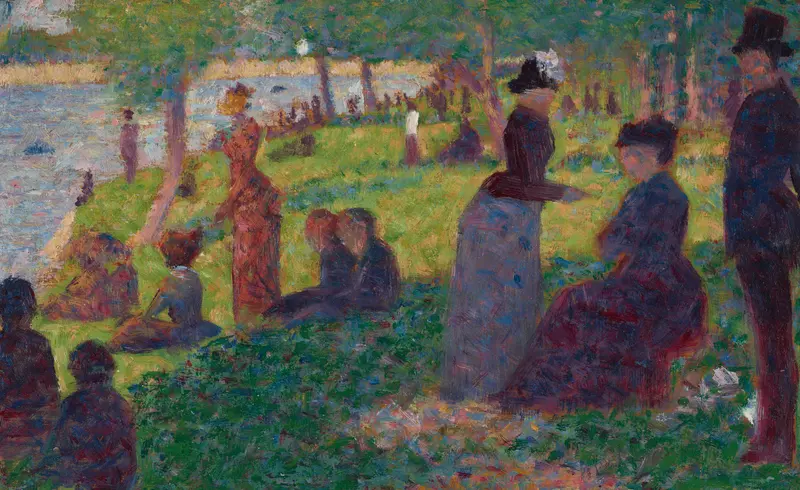
Oil Sketch for "A Sunday on La Grande Jatte — 1884"
Georges Seurat
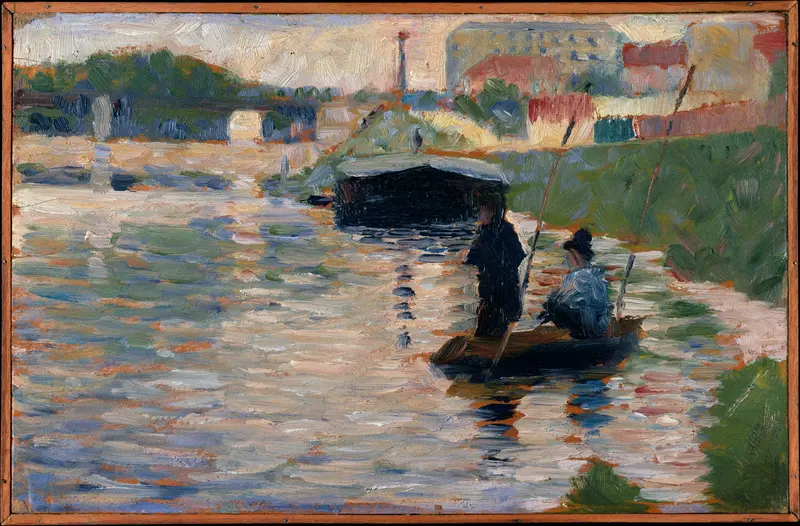
View of the Seine
Georges Seurat
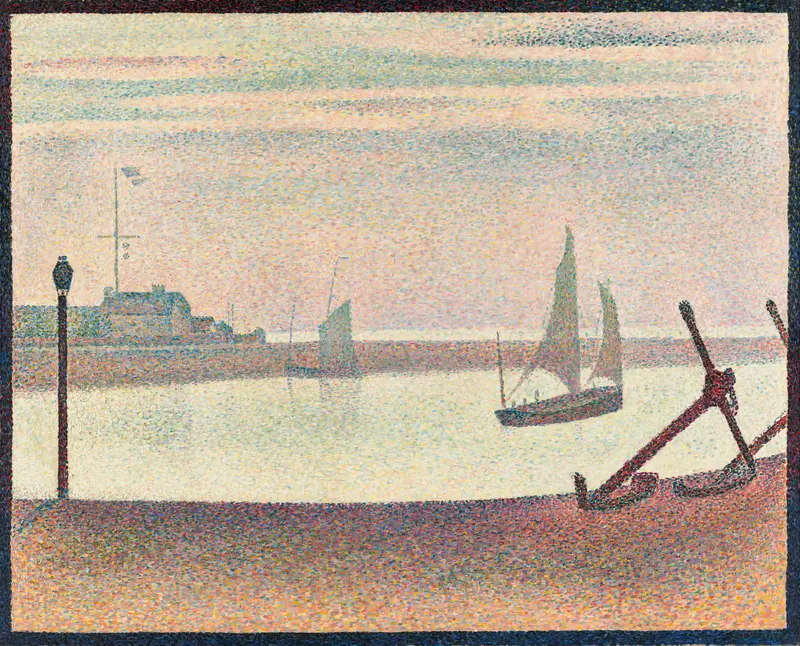
The Channel at Gravelines, Evening
Georges Seurat
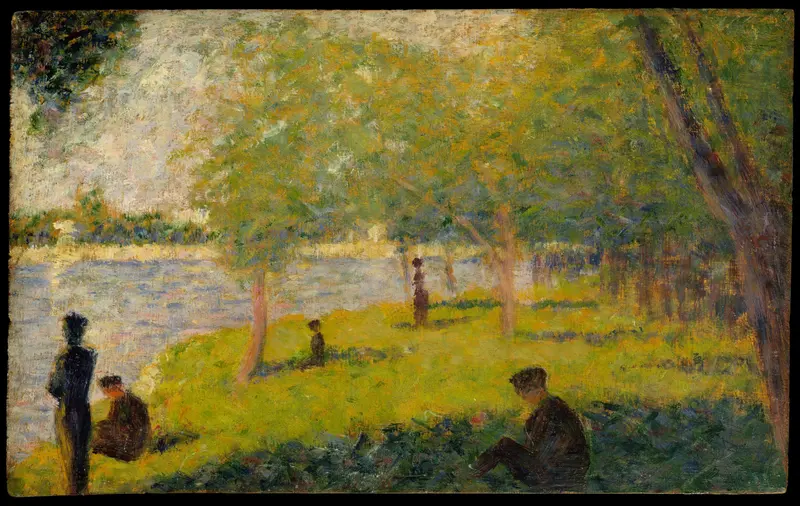
Study for ‘A Sunday on La Grande Jatte’
Georges Seurat
Study for A Sunday on La Grande Jatte
Georges Seurat
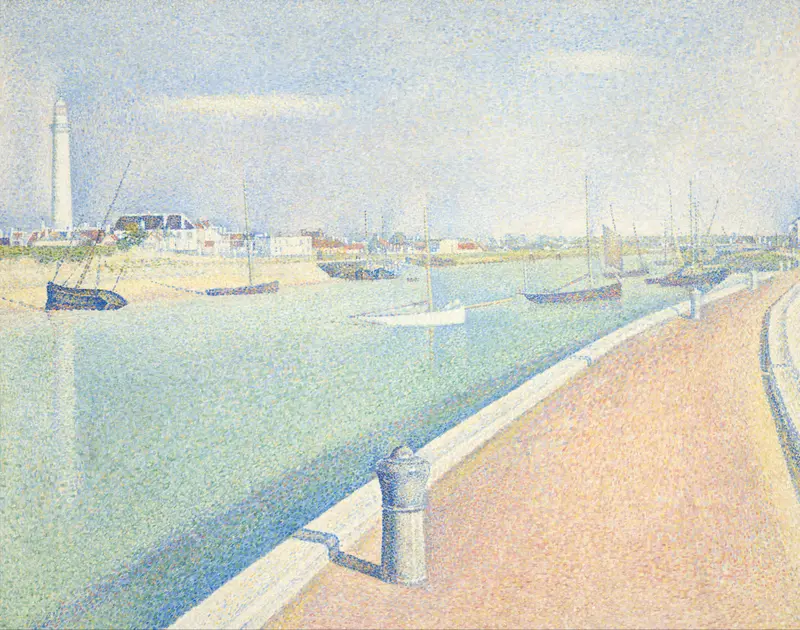
The Channel of Gravelines, Petit Fort Philippe
Georges Seurat





