
Sundown — History & Facts
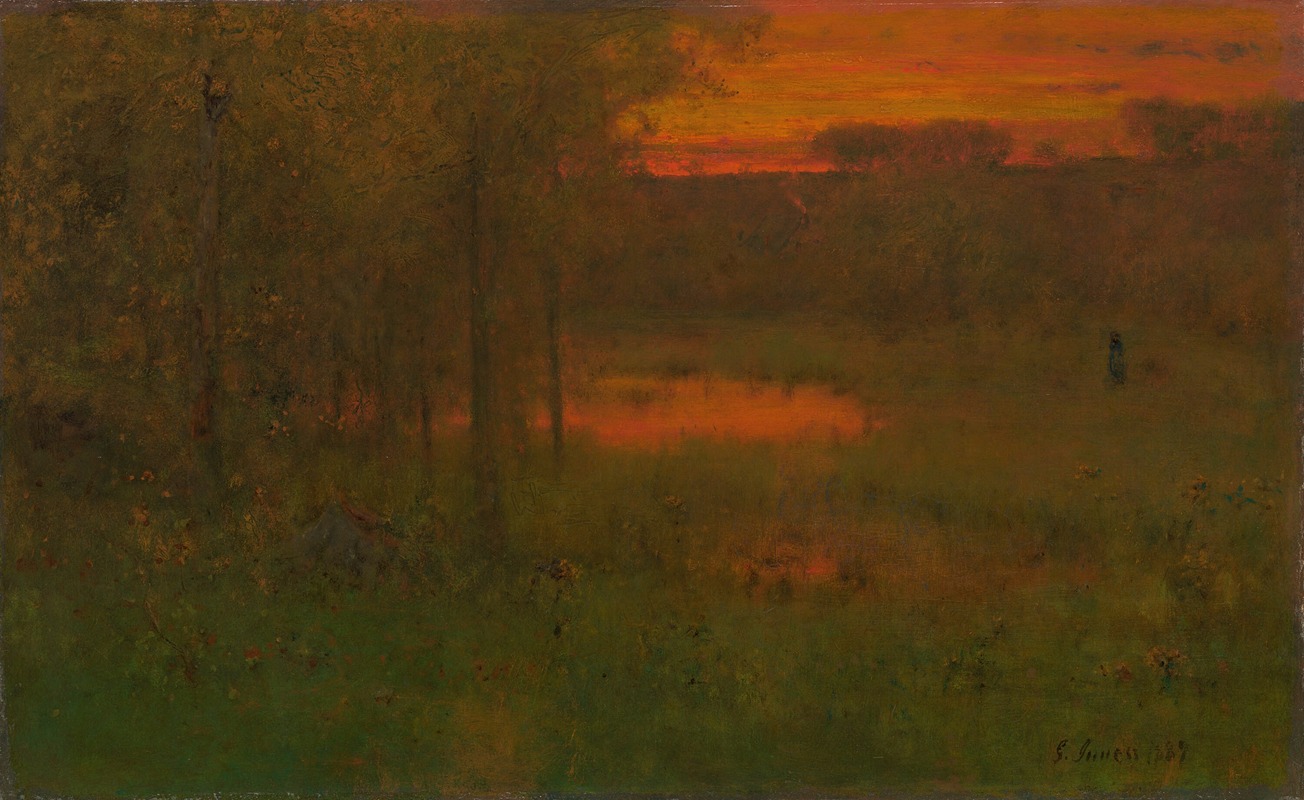
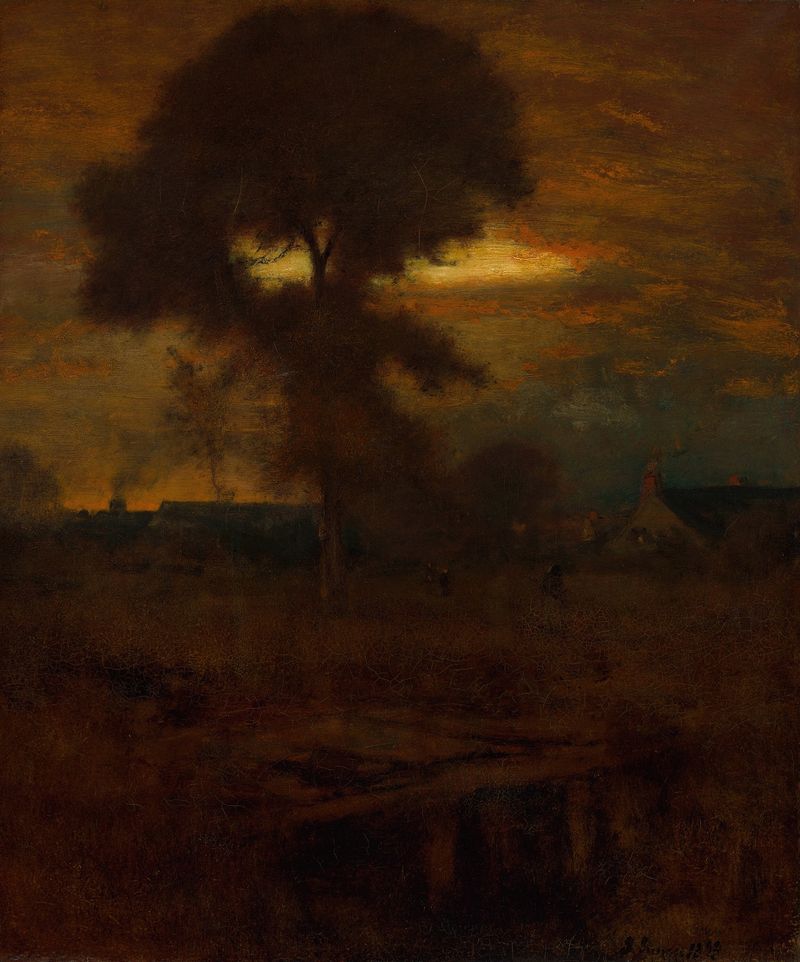
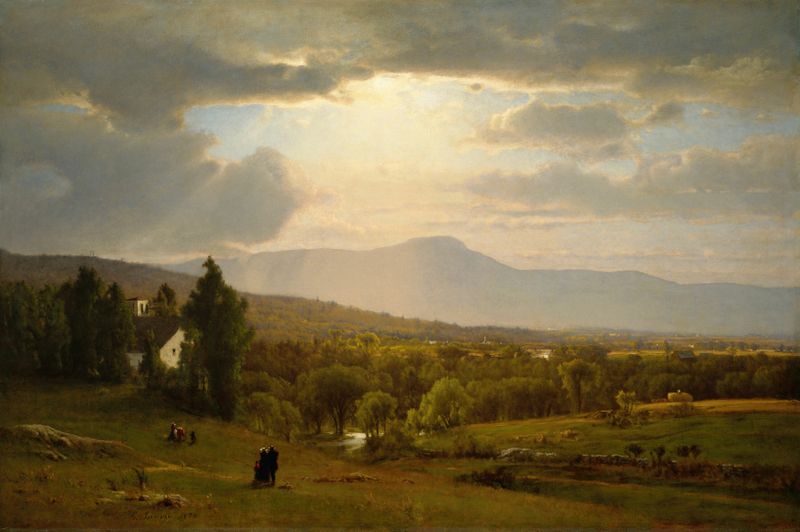
In the twilight of the 19th century, George Inness captured an ethereal moment in "Sundown," where the fading light signifies a serene yet poignant transition that resonates with the human experience. The painting unfolds with a delicate balance of soft hues, where warm golds and muted purples blend seamlessly in the sky, reflecting the day's end. Wispy clouds drift lazily across the horizon, their edges kissed by the lingering sunlight.
The foreground, a tranquil landscape dotted with gentle hills and silhouetted trees, invites the viewer to wander into a space that feels both intimate and boundless. Inness’s masterful brushwork evokes movement; the strokes flow like whispers in the breeze, inviting contemplation of nature's quiet beauty. Look closely, and you can almost feel the cool air settling in as day yields to night. At this time, Inness was deeply influenced by transcendental philosophies, grappling with the interconnectedness of nature and spirituality.
Living in a rapidly industrializing America, he sought solace in the quietude of landscapes, where he found a refuge from the clamor of modern life. This painting emerged during a period of personal introspection; the artist had recently embraced a more spiritual approach to art, believing that capturing the essence of nature would communicate deeper truths about existence. Inness infused "Sundown" with his longing for unity with the natural world, a poignant response to the tumultuous changes surrounding him. Though seemingly straightforward, "Sundown" was painted while Inness was experimenting with an innovative technique of glazing, allowing for a luminous quality that mimics the fading light of dusk.
This method not only enhanced the vibrancy of the colors but also reflected his quest for an emotional resonance that transcends mere representation. Such a revelation leaves us pondering how art serves as a bridge between our inner lives and the world around us, illuminating both beauty and melancholy.
More Artworks by George Inness
Browse all →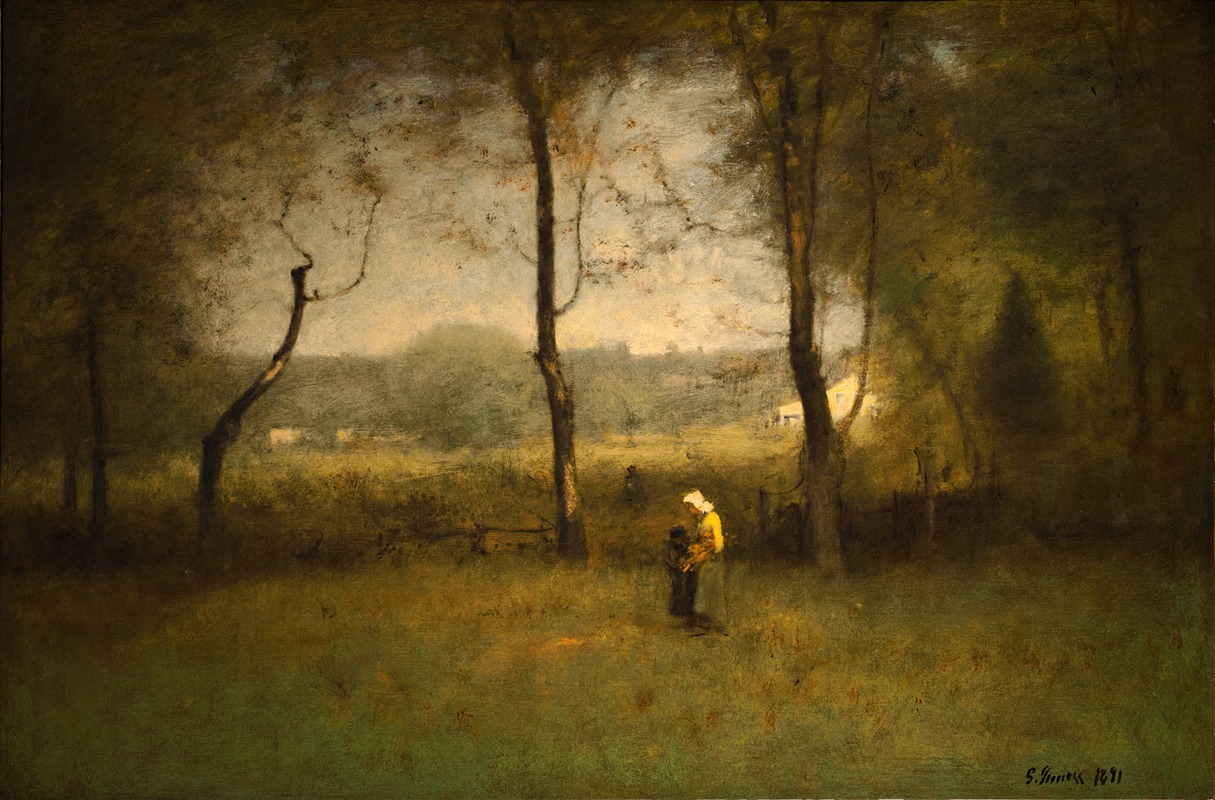
Autumn Woods
George Inness
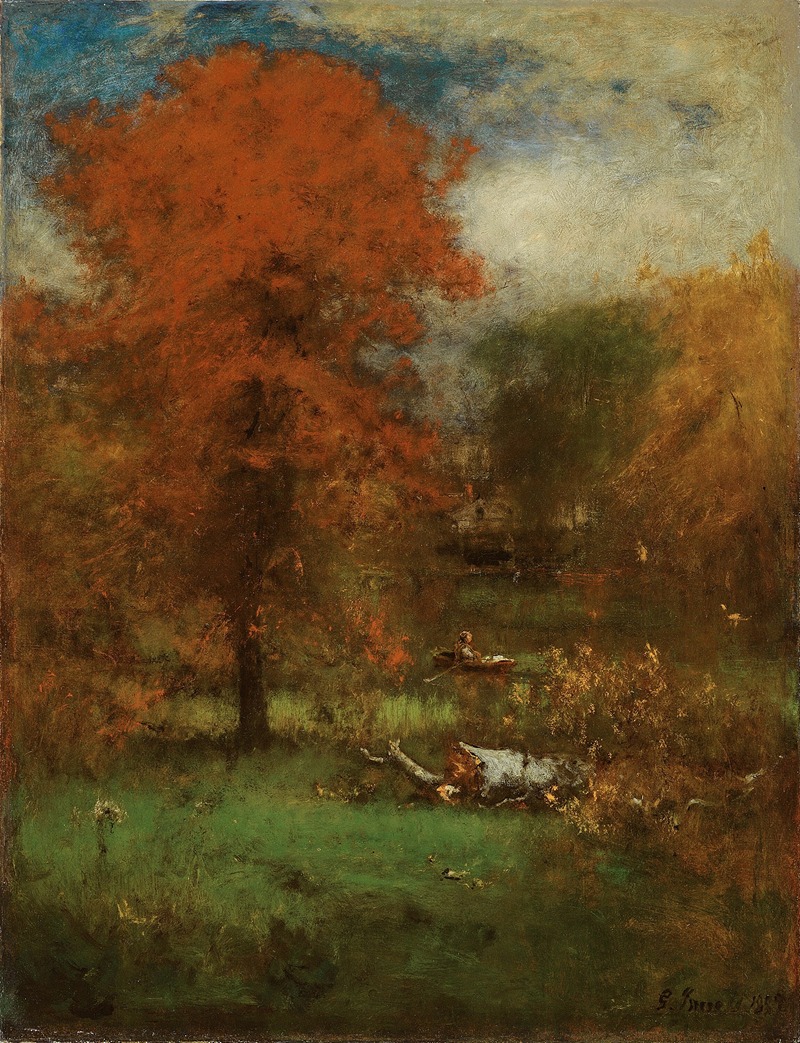
The Mill Pond
George Inness
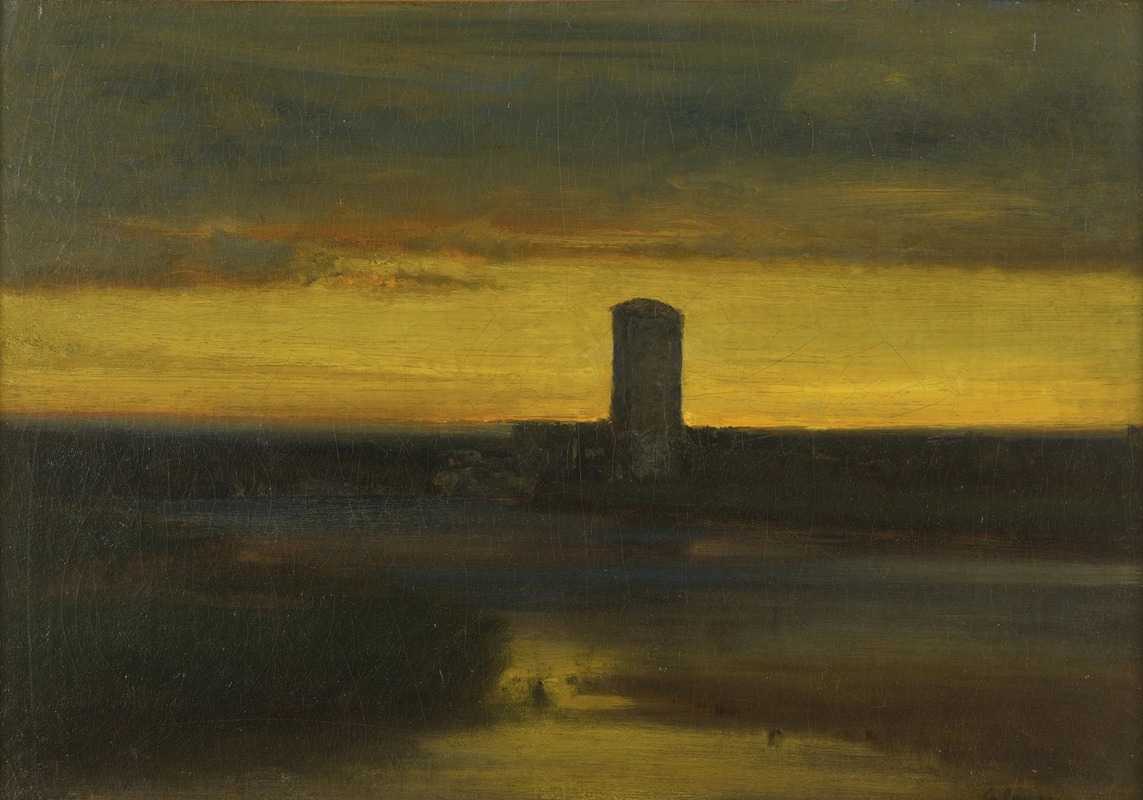
Afterglow
George Inness
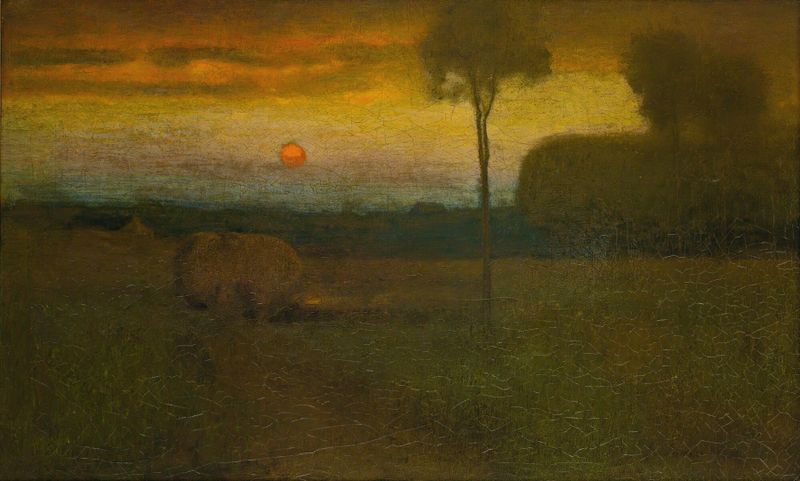
Landscape (Evening Landscape)
George Inness

Montclair
George Inness

View in Berkshire County, Massachusetts, Clearing Off after a September Storm
George Inness

October
George Inness
Landscape, Sunset
George Inness
Afterglow
George Inness
Catskill Mountains
George Inness





