
Sunny Autumn Day — History & Facts
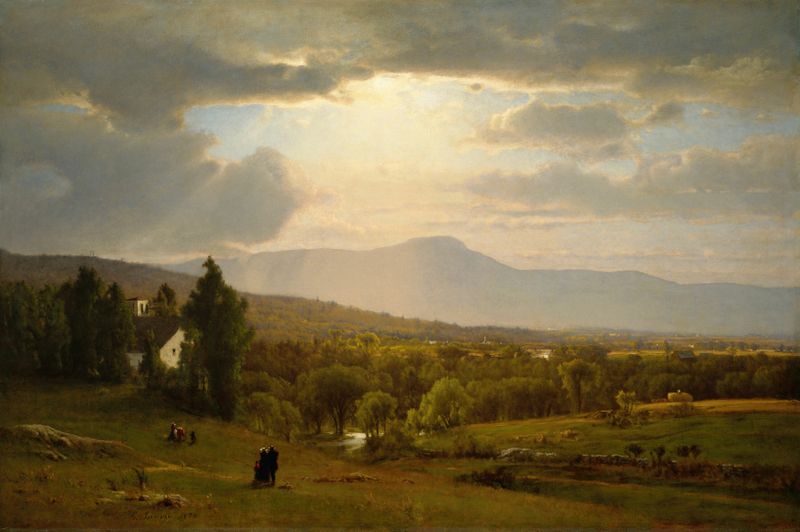
In Sunny Autumn Day, golden light spills across a tranquil scene, awakening the senses in a symphony of color and whispered secrets. The air vibrates with the crisp promise of fall, urging the viewer’s gaze to dance amidst the tapestry of trees, their leaves ablaze with warm hues, as if inviting one to step into a world where time has paused. Beneath the vibrant canopy, subtle shadows play, hinting at a deeper story. A lone figure meanders along a winding path, lost in contemplation, perhaps burdened by dreams entwined with nature's melancholy beauty.
The soft blur of the distant hills suggests a boundary between reality and nostalgia, while the interplay of light and shadow captures the fleeting essence of life — a reminder that every moment holds its weight. When George Inness painted Sunny Autumn Day in 1892, he was influenced by both transcendental philosophy and a profound sense of connection to nature. Amidst personal trials and societal change, Inness sought solace in landscapes, believing they held the key to unlocking emotions otherwise left unspoken. The simplicity of autumn, with its promise of transformation, mirrored his own yearning for peace and understanding amid a chaotic world.
More Artworks by George Inness
Browse all →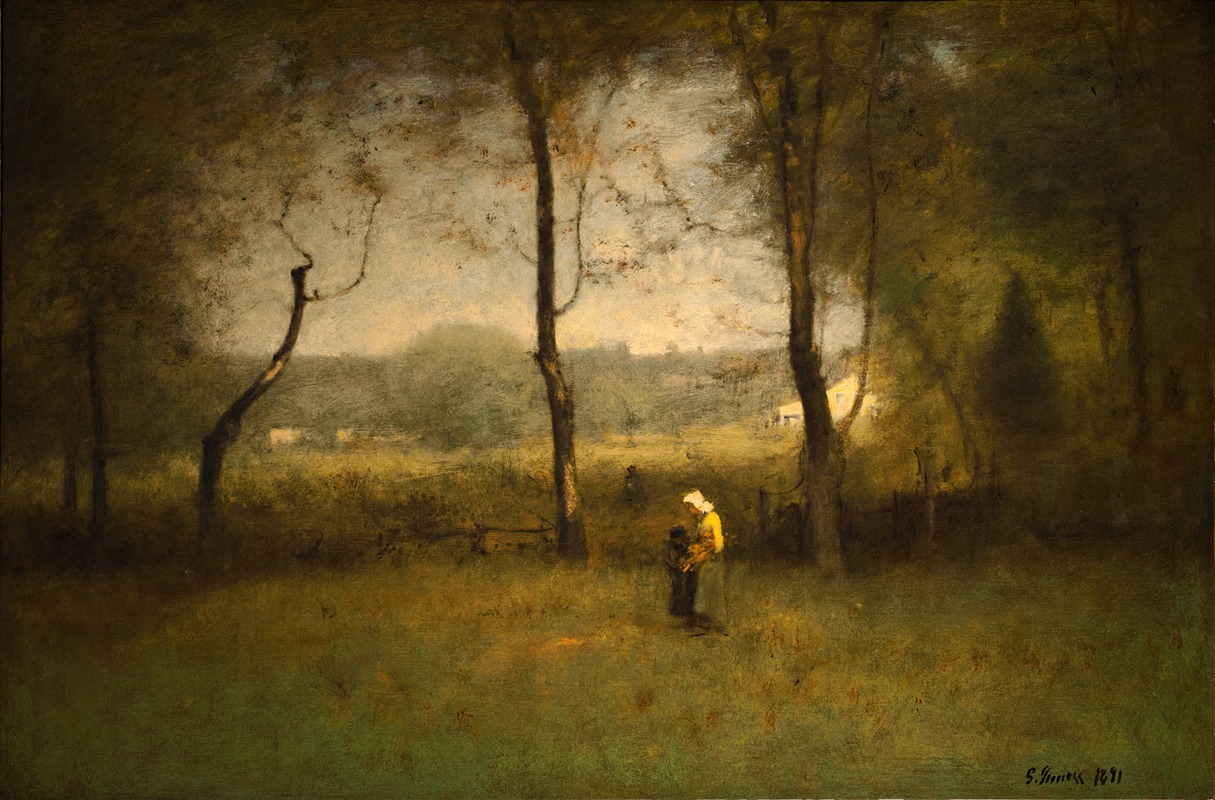
Autumn Woods
George Inness
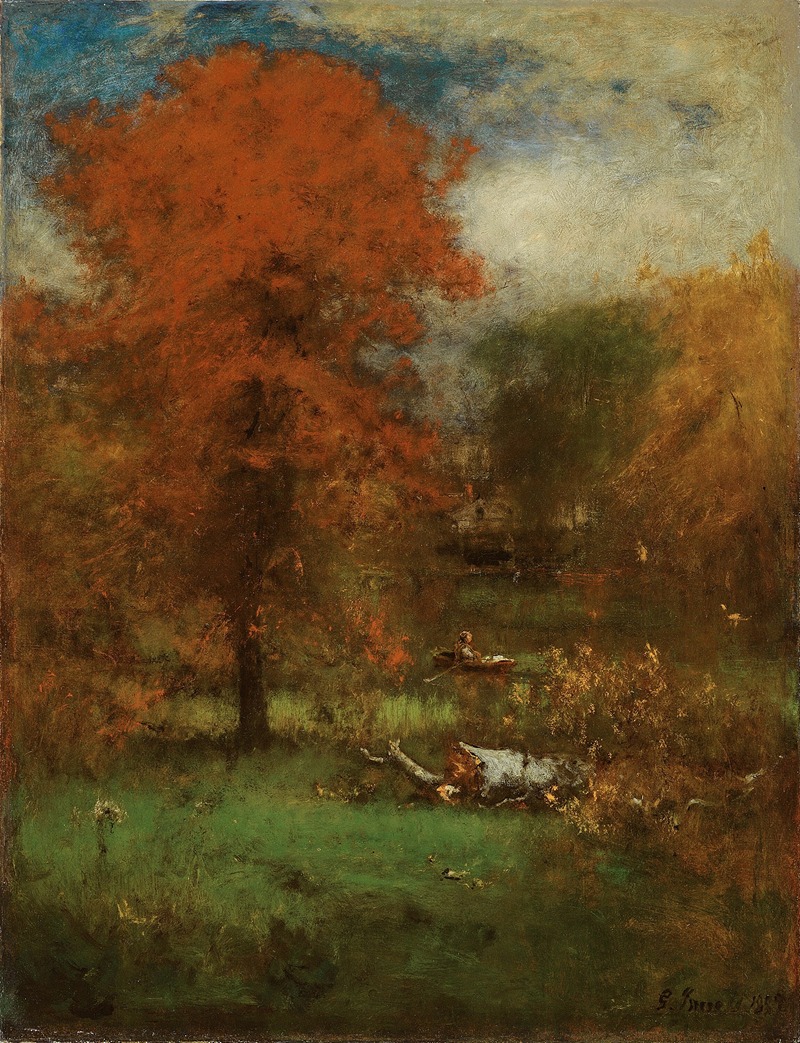
The Mill Pond
George Inness

Afterglow
George Inness

Landscape (Evening Landscape)
George Inness

Montclair
George Inness

View in Berkshire County, Massachusetts, Clearing Off after a September Storm
George Inness

October
George Inness
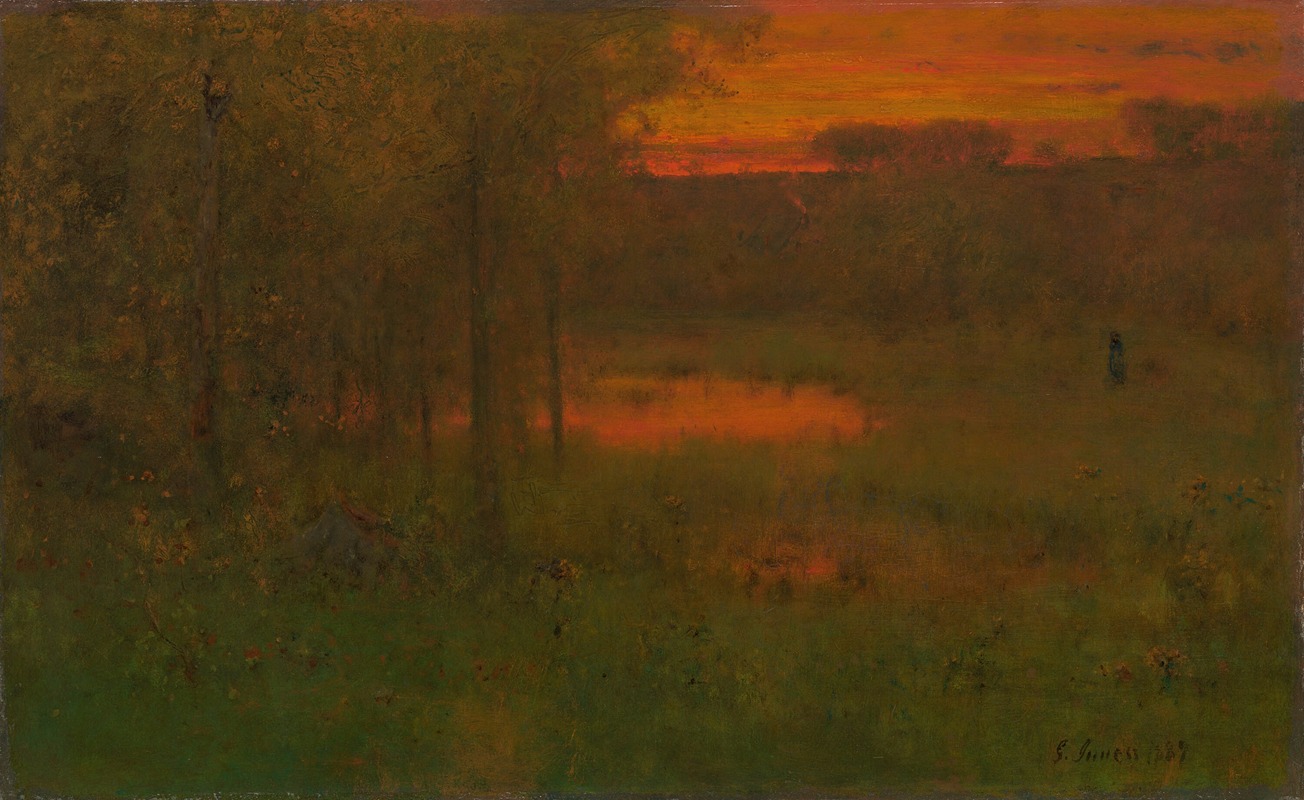
Landscape, Sunset
George Inness
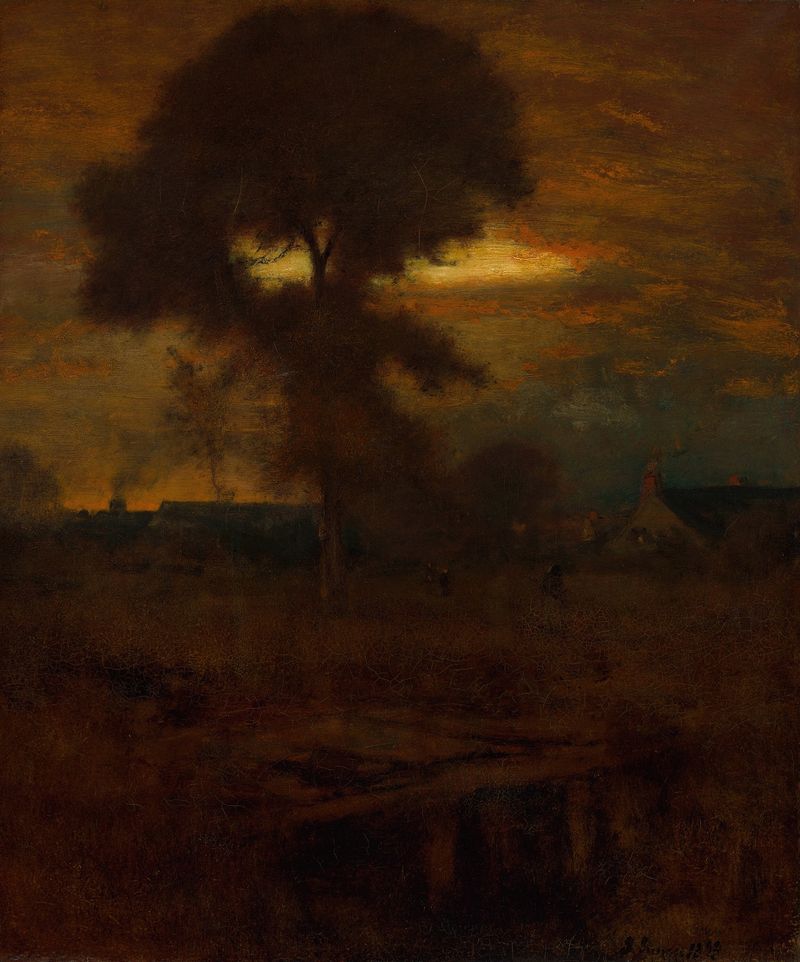
Afterglow
George Inness
Catskill Mountains
George Inness





