
Sunset — History & Facts
When Georges Seurat painted Sunset in 1881, he was just 21 years old and still years away from the radical innovations that would make him famous. Yet this early work has long fascinated scholars because it offers a rare glimpse of Seurat before Pointillism—before the dots, the theories, the manifestos. The painting’s medium has never been definitively identified, adding a layer of mystery; some suggest oil, others watercolor or pastel, but no consensus has emerged.
What is certain is that Sunset stands as one of the earliest surviving landscapes by Seurat, created during a formative period when he was absorbing lessons from the Impressionists while searching for his own voice. The scene Seurat chose is simple: the sun, low on the horizon, bathes a tranquil landscape in golden and rose hues. The brushwork is delicate, almost hesitant, as if the young artist is testing how far color and light alone can carry a mood. The fading sunlight glimmers across a still body of water, while dark silhouettes of trees and distant buildings anchor the composition.
Unlike Monet’s bustling sunsets or Pissarro’s rural evenings, Seurat’s approach is contemplative and restrained, foreshadowing the analytical eye he would later bring to A Sunday Afternoon on the Island of La Grande Jatte. The viewer is invited not just to see the sunset, but to feel the hush that settles as day gives way to night. Little is known about the early journey of Sunset as an object. It likely remained in Seurat’s studio or with his family until after his premature death in 1891, when interest in his early work began to grow.
The lack of documentation about its exhibition history and the uncertainty surrounding its medium have made it a subject of debate among curators and conservators. Today, Sunset is recognized as an important stepping stone in Seurat’s development, marking the transition from student exercises to the disciplined experimentation that would define the Neo-Impressionist movement. Its quiet beauty and unresolved mysteries continue to draw viewers and scholars alike.
More Artworks by Georges Seurat
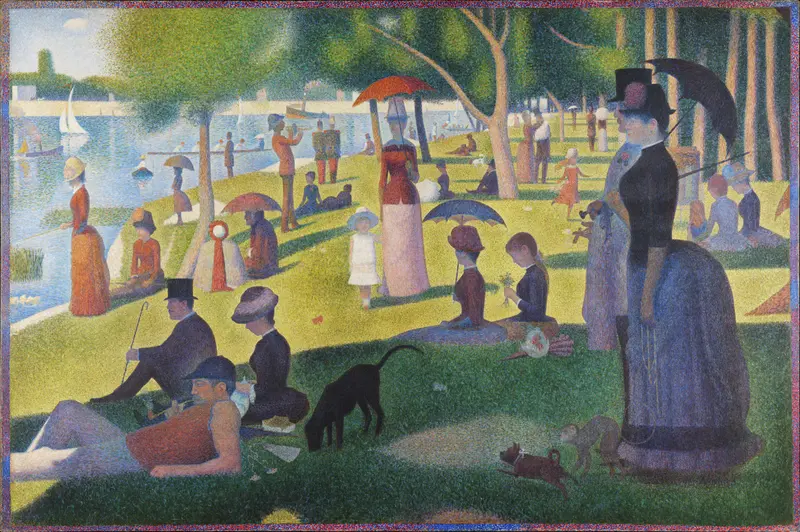
A Sunday Afternoon on the Island of La Grande Jatte
Georges Seurat
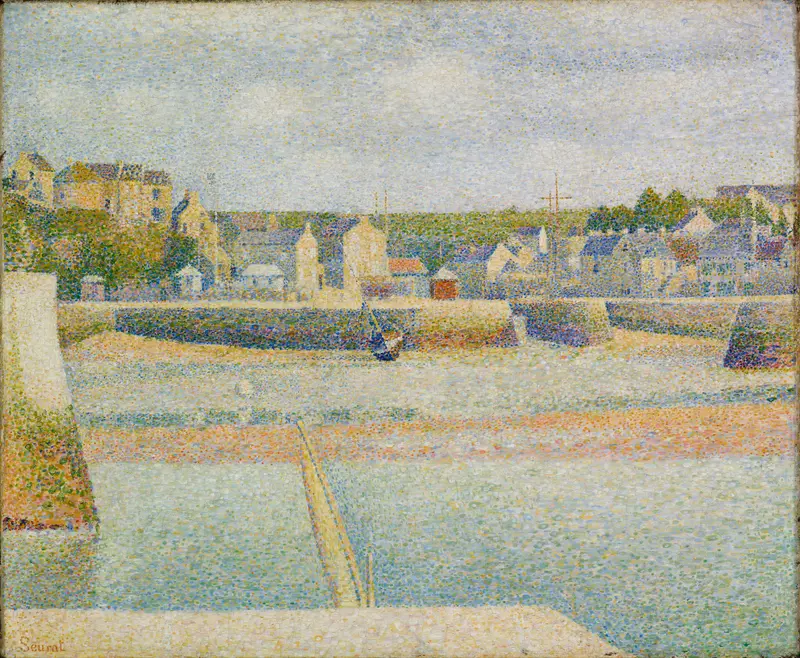
Port-en-Bessin, The Outer Harbor (Low Tide)
Georges Seurat
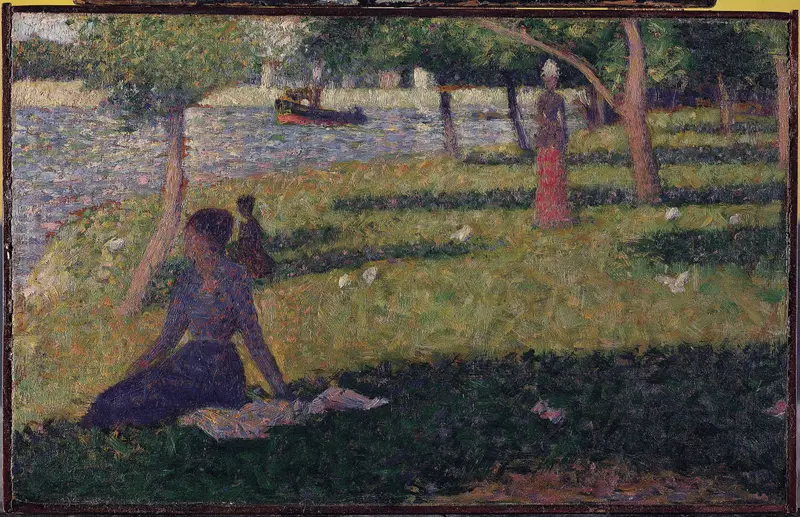
Étude pour ‘La Grande Jatte’ (Study for ‘La Grande Jatte’)
Georges Seurat
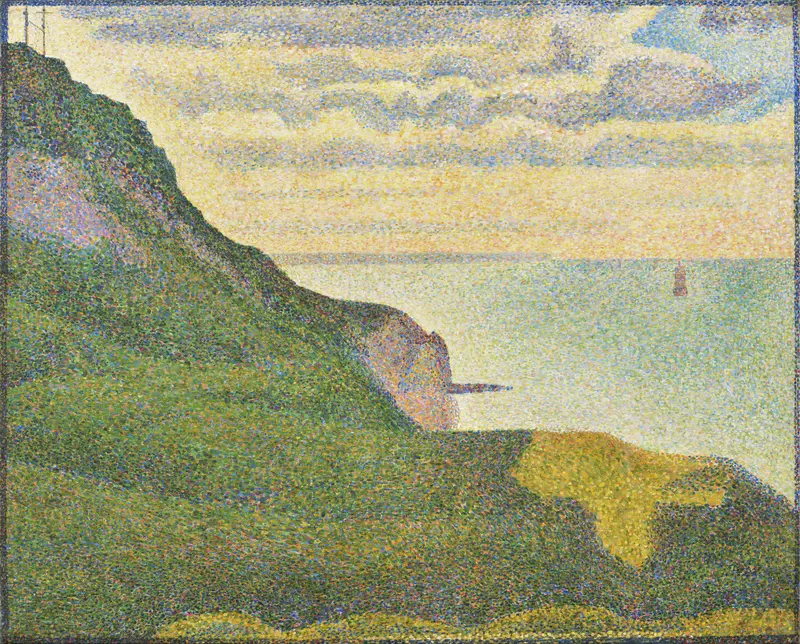
Seascape at Port-en-Bessin,Normandy
Georges Seurat
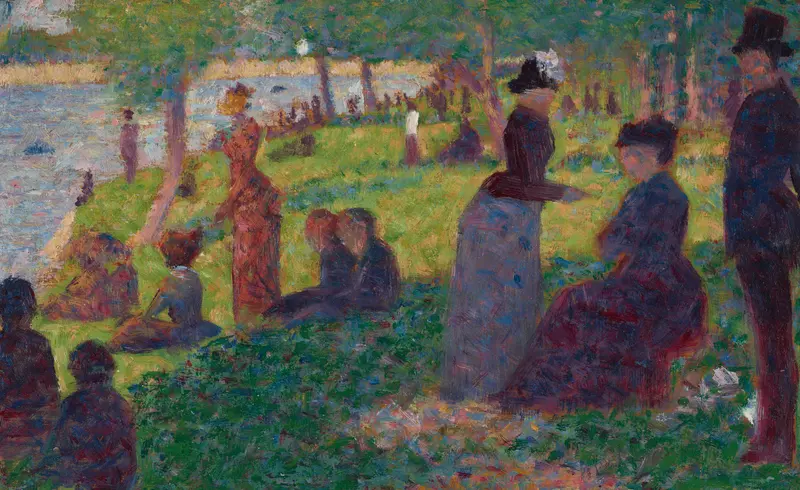
Oil Sketch for "A Sunday on La Grande Jatte — 1884"
Georges Seurat
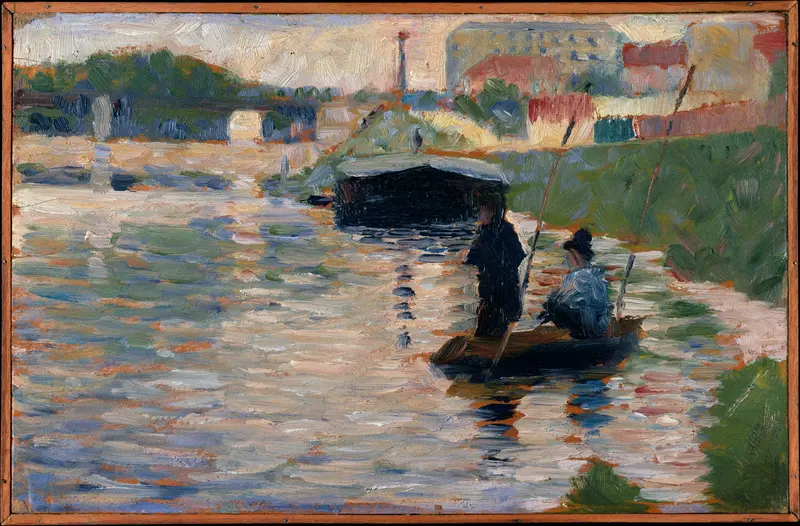
View of the Seine
Georges Seurat
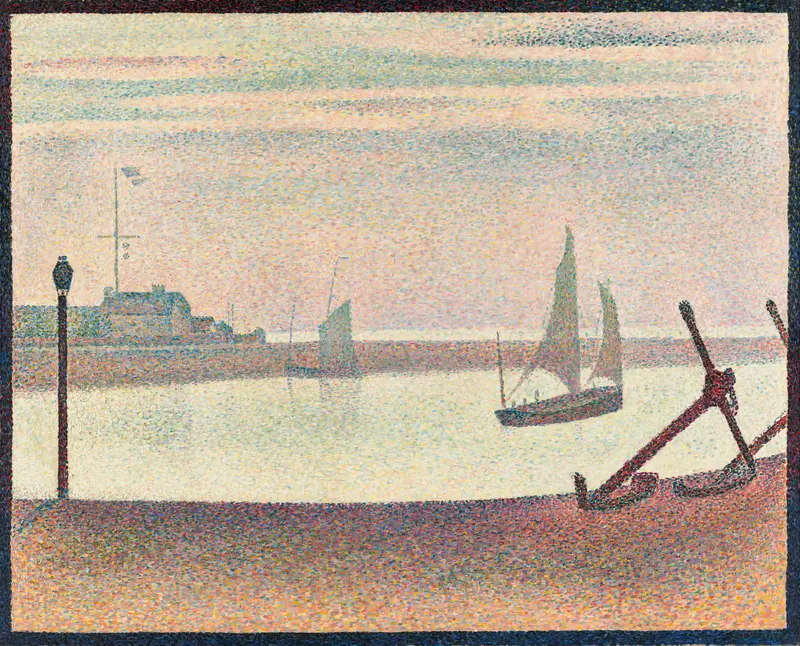
The Channel at Gravelines, Evening
Georges Seurat
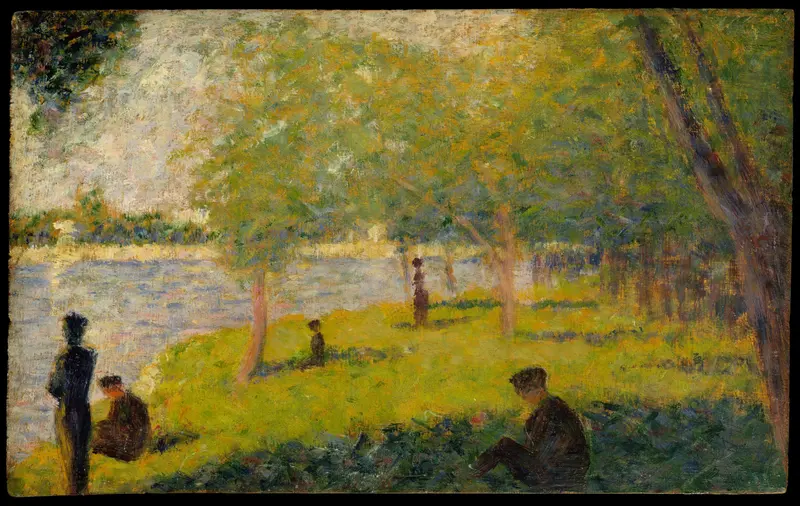
Study for ‘A Sunday on La Grande Jatte’
Georges Seurat
Study for A Sunday on La Grande Jatte
Georges Seurat
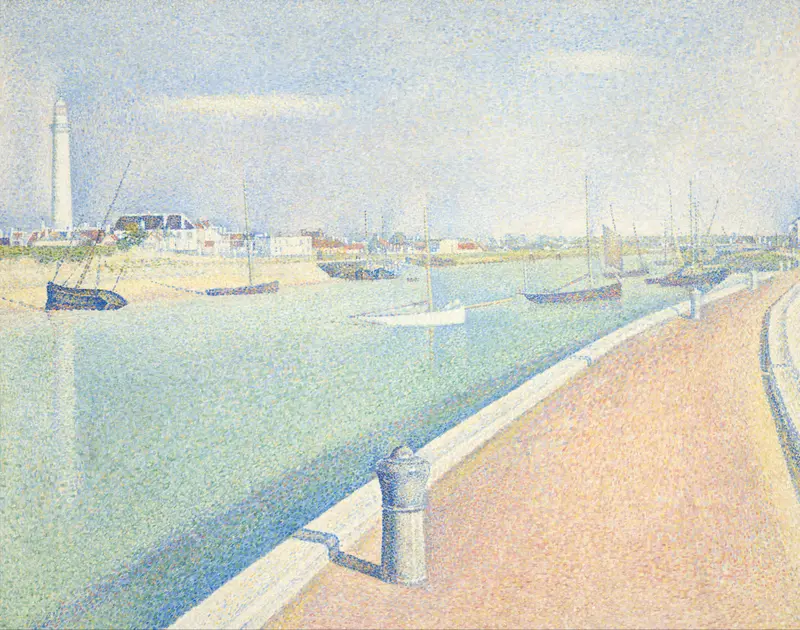
The Channel of Gravelines, Petit Fort Philippe
Georges Seurat
More Landscape Art

The Starry Night
Vincent van Gogh

View of Delft
Johannes Vermeer

Water Lilies
Claude Monet

The Grand Canal, Venice, looking north-west from the Ca' Corner to the Ca' Contarini degli Scrigni, with the campanile of Santa Maria della Carità
Canaletto

Windsor Castle
Canaletto

The Grand Canal looking North-East from the Palazzo Dolfin-Manin to the Rialto Bridge
Canaletto