
Suptuous Still Life. — History & Facts
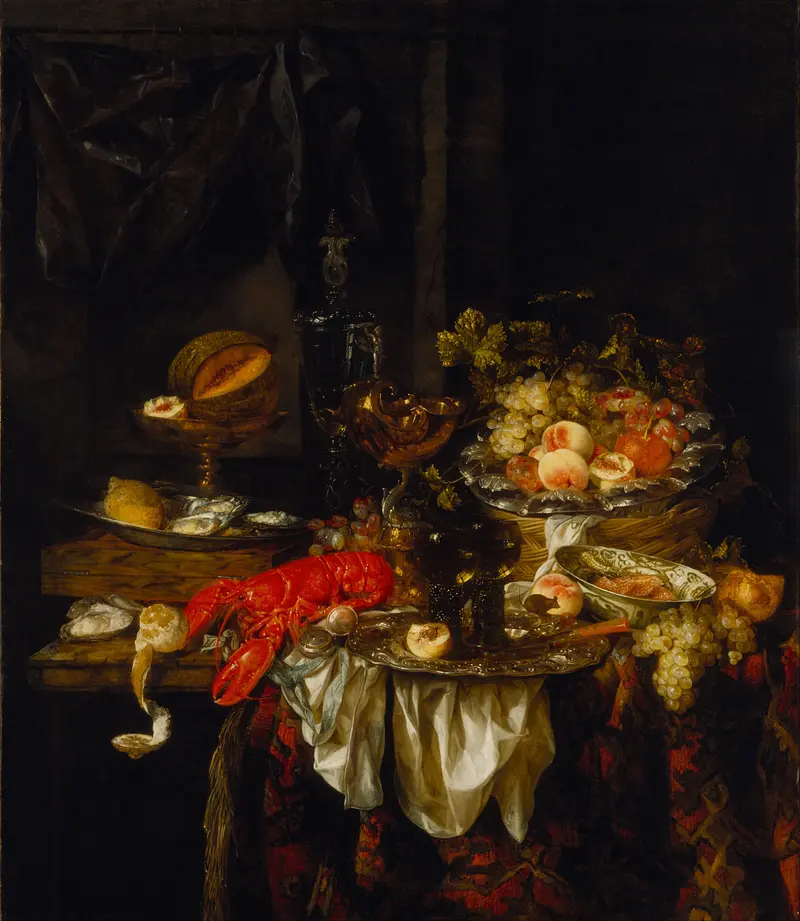
A lavish banquet seems to have paused mid-celebration, the table left in a state of delicious disarray. The eye is drawn first to the glint of a silver goblet, its reflection catching the dim light, before wandering across the scattered riches: peeled lemon, ripe peaches, a golden goblet, and a flute resting atop a velvet cloth. Each object is more than a display of wealth—they are signals, clues to a vanished world of taste and status.
The crumpled white napkin, hanging off the edge, suggests recent use, while the half-filled glass vessel and the open oyster shell hint at pleasures both tasted and anticipated. Even the shadows play a role, deepening the sense of abundance by hiding as much as they reveal. Painted in 1655, Sumptuous Still Life by Abraham van Beyeren belongs to the golden age of Dutch still life, when artists transformed tables into stages for the senses and the soul. Such paintings were prized by wealthy merchants and collectors, eager to show off both their prosperity and their refinement.
The genre, known as pronkstilleven, reveled in luxury—imported fruit, Venetian glass, precious metals—while quietly reminding viewers of the fleetingness of earthly delights. Now in the collection of the Mauritshuis, this work survives as a testament to an era when the world’s riches could be gathered on a single tabletop, inviting us to look closer, and perhaps to wonder what stories unfolded just out of frame.
More Artworks by Abraham van Beyeren

Still Life
Abraham van Beyeren
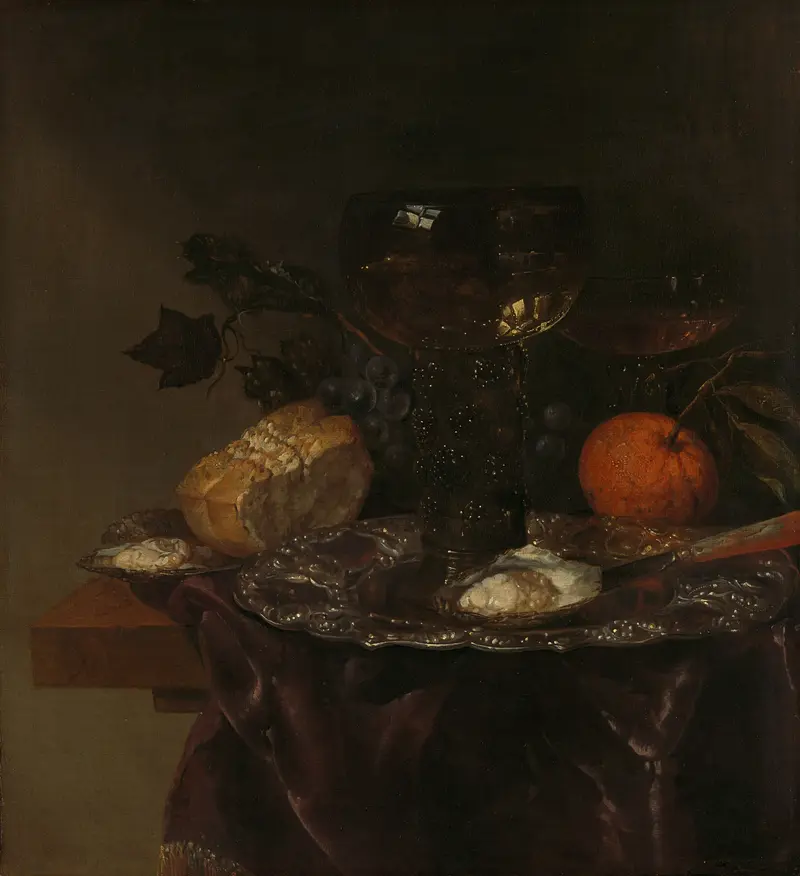
Still Life
Abraham van Beyeren
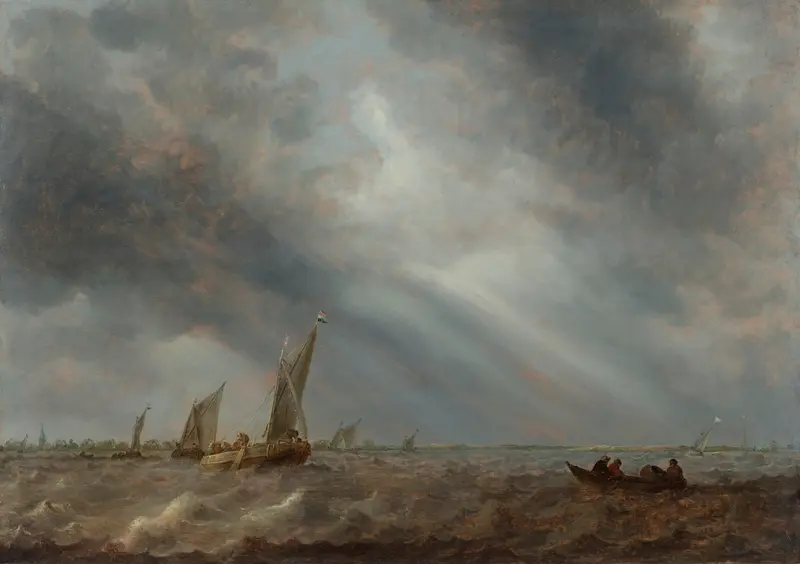
Various sailing vessels and a rowing boat with fishermen on choppy waters under a stormy sky
Abraham van Beyeren
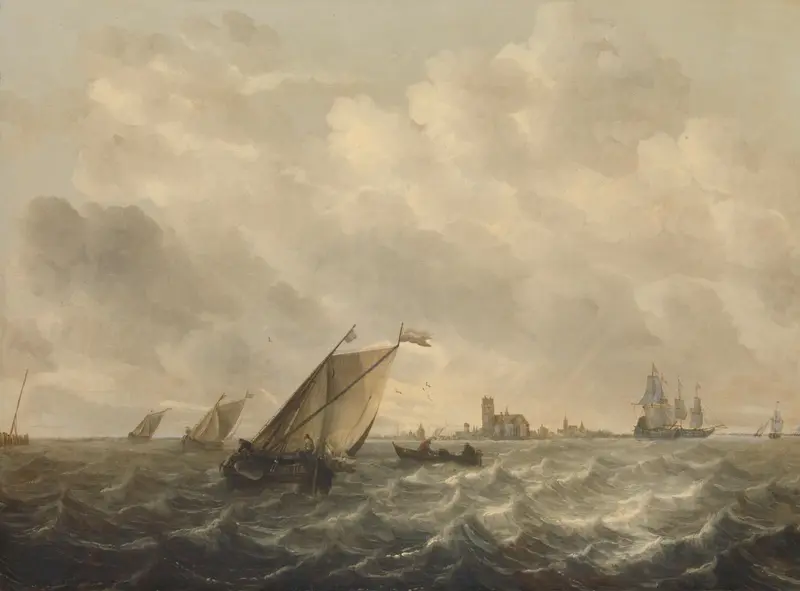
River View
Abraham van Beyeren
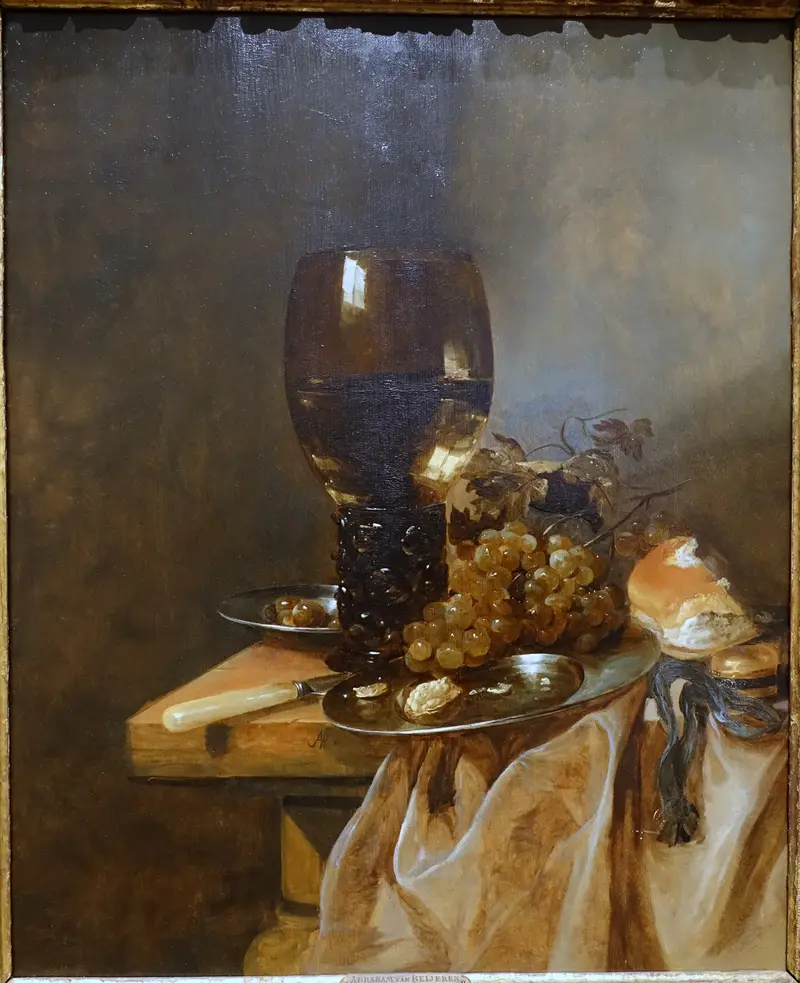
A Roemer with Grapes, a Pewter Plate and a Roll
Abraham van Beyeren
Banquet Still Life
Abraham van Beyeren
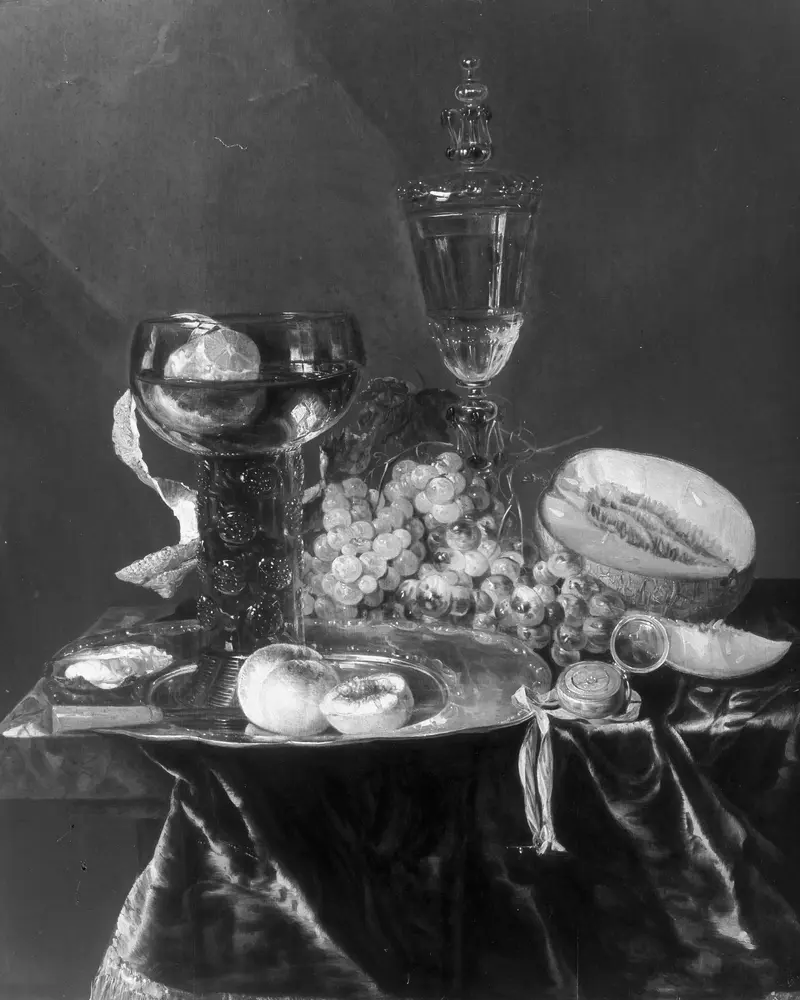
Still life with a glass lid goblet
Abraham van Beyeren
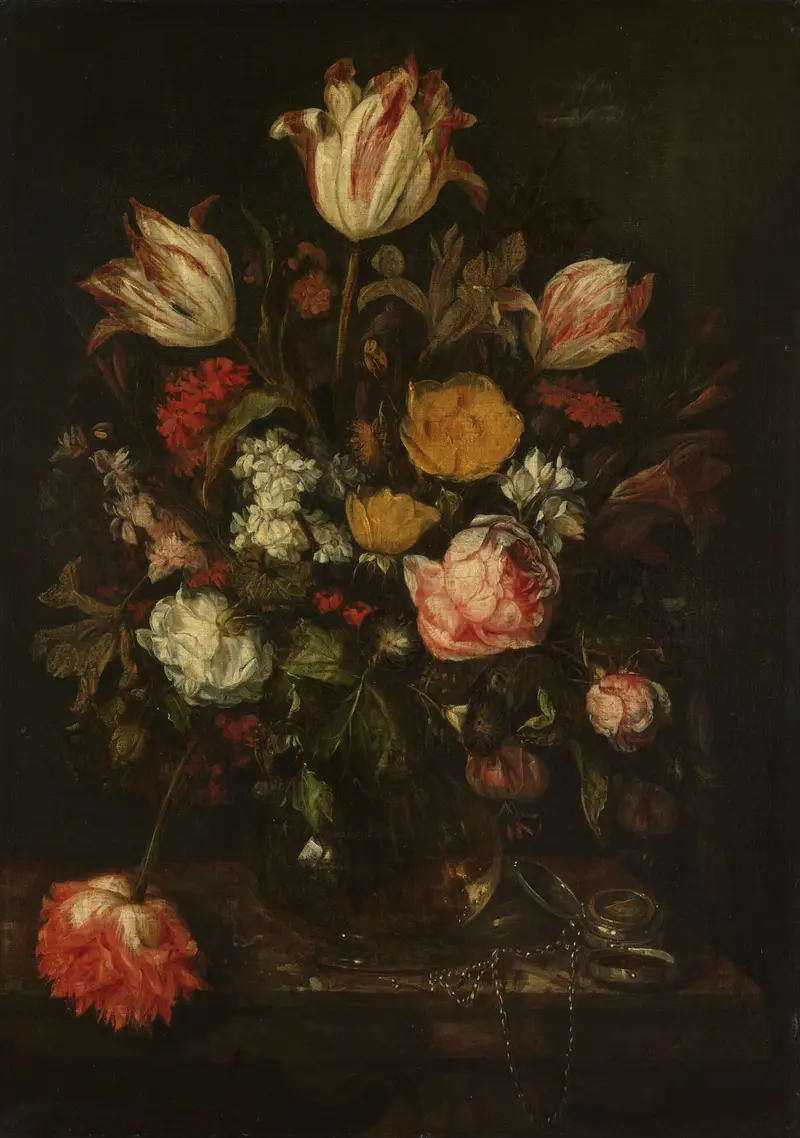
Still life with flowers
Abraham van Beyeren
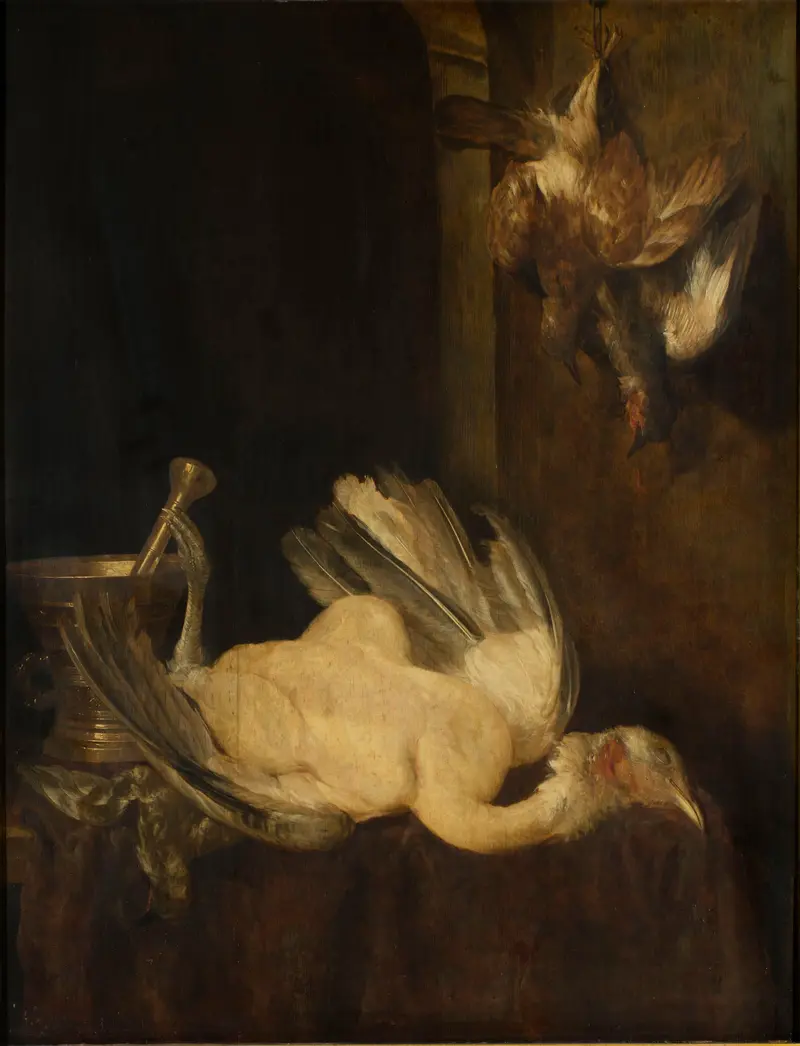
Still life with dead birds
Abraham van Beyeren
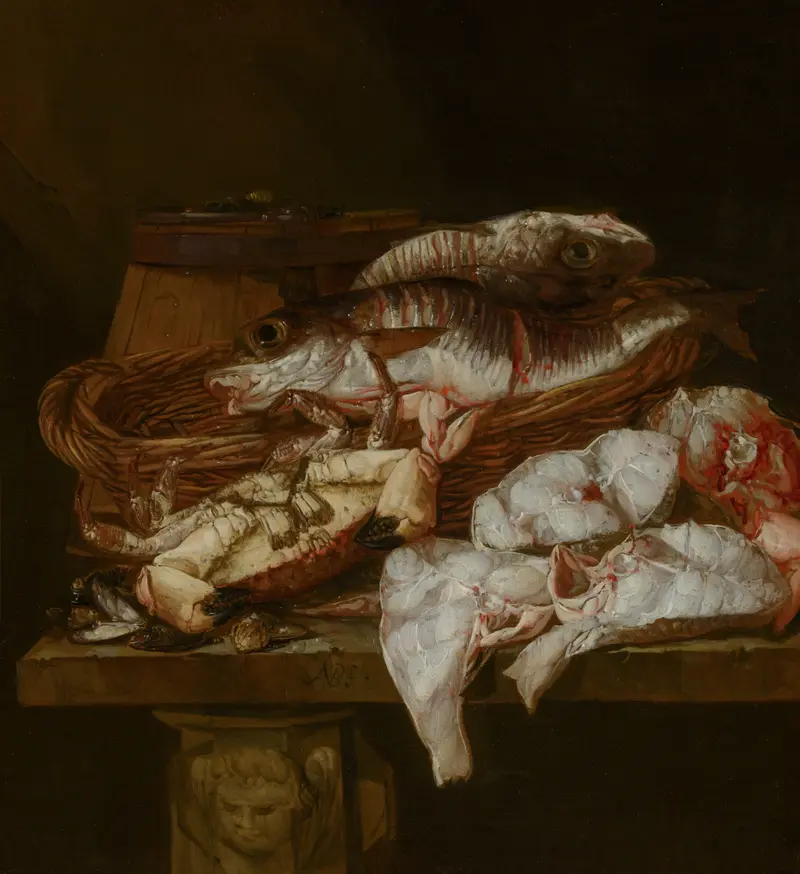
Still Life with Seafood
Abraham van Beyeren





