
Tannen an der Handeck von Alexandre Calame — History & Facts
What first seizes the eye in Tannen an der Handeck von Alexandre Calame is the audacious scale of the fir trees, their slender trunks soaring far above the viewer, dwarfing even the rugged mountains behind them. The painter draws you in by anchoring the foreground with a massive, sunlit boulder, its surface mottled with lichen and shadow, as if inviting you to step closer and feel the coolness of the stone. The firs themselves are rendered with a precision that borders on reverence, each needle and branch carefully observed, their deep greens standing in bold contrast to the pale, distant peaks and the crystalline blue of the sky.
Light pours in from the left, catching the uppermost needles and the snowy caps beyond, while the lower forest floor remains cloaked in cool shadow, suggesting both shelter and mystery. This careful orchestration of light and form guides the viewer’s gaze upward, echoing the vertical ambition of the trees themselves. Works like this, painted in the mid-nineteenth century, belong to a moment when artists across Europe turned their attention to the grandeur and specificity of landscape, often as a response to the rapid changes wrought by industrialization and urbanization. Painters such as Alexandre Calame became known for their devotion to the Swiss Alps, capturing not only their geological drama but also the quiet dignity of their forests and valleys.
Such paintings were often sought by collectors eager to bring a piece of the wild into their salons, or by travelers wishing to remember the awe of their journeys. Though little is recorded about this particular canvas beyond its recent documentation, its presence in a private collection today speaks to the enduring appeal of these scenes: a reminder, perhaps, to pause and look up, following the line of the firs into the sky.
More Artworks by Alexandre Calame

By the Lake of Thun
Alexandre Calame
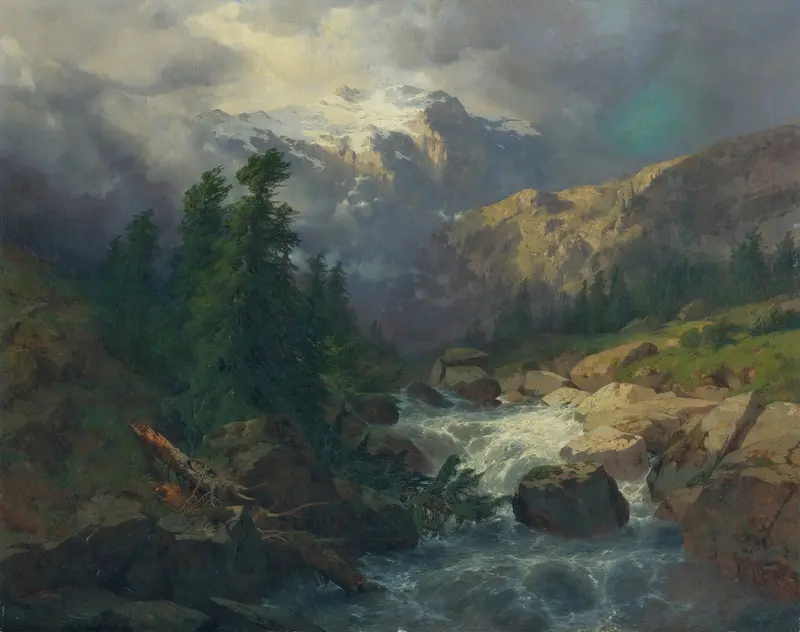
Souvenir Handeck, Stormy Weather
Alexandre Calame
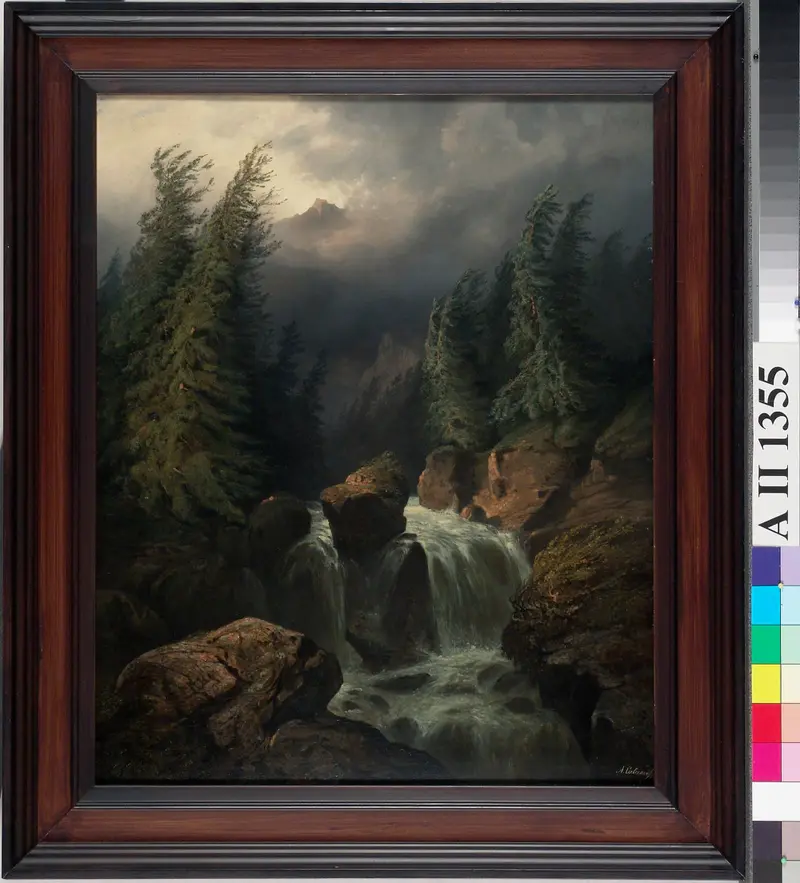
Alppikoski
Alexandre Calame
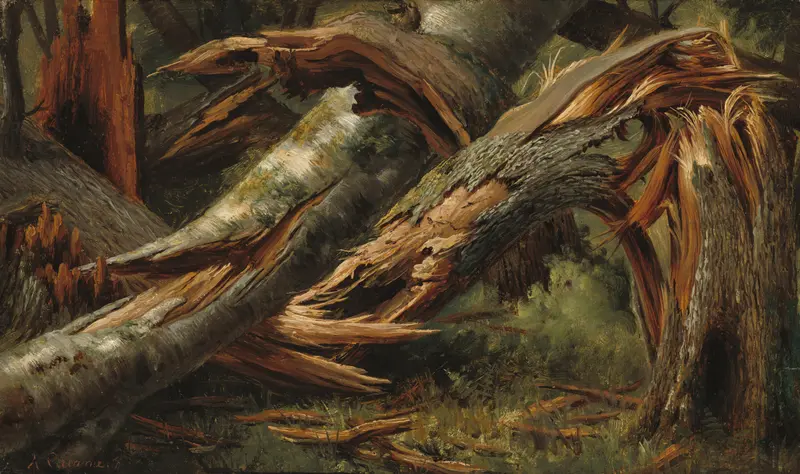
Fallen Tree
Alexandre Calame
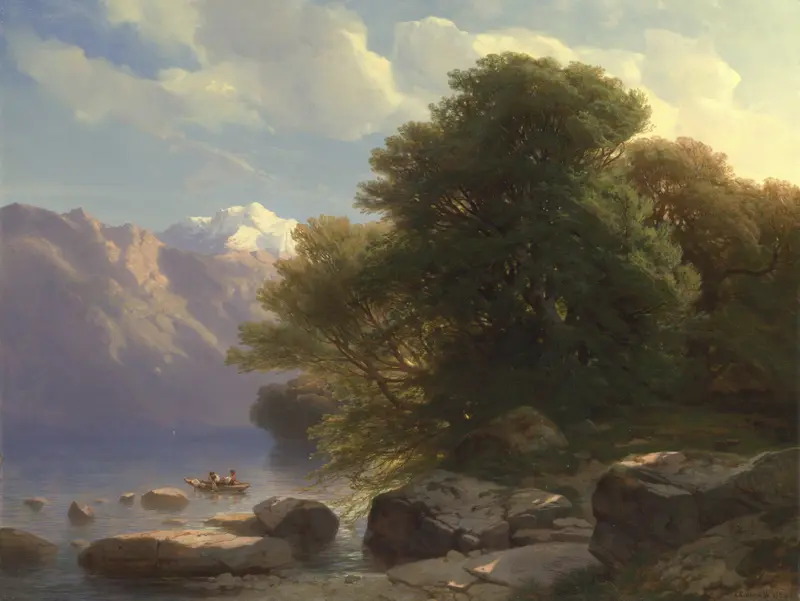
The Lake of Thun
Alexandre Calame
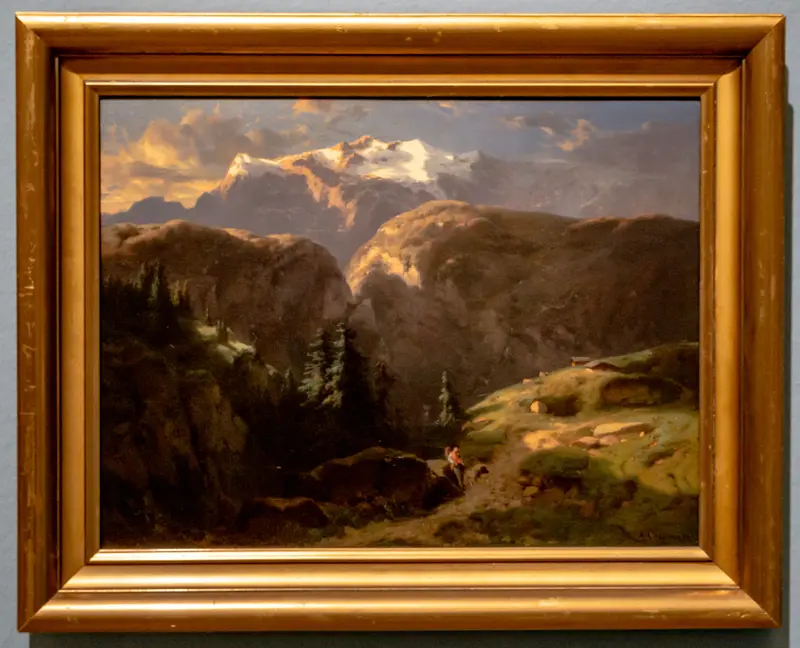
The Weatherhorn
Alexandre Calame
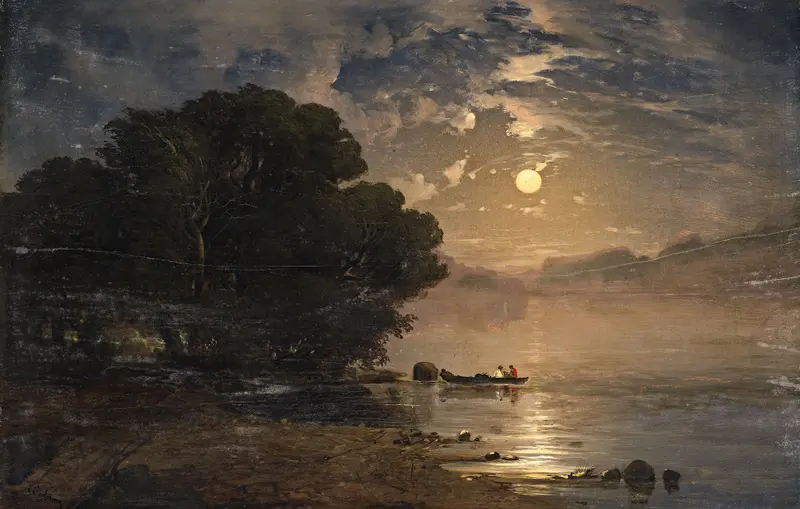
Evening Landscape with a Lake
Alexandre Calame
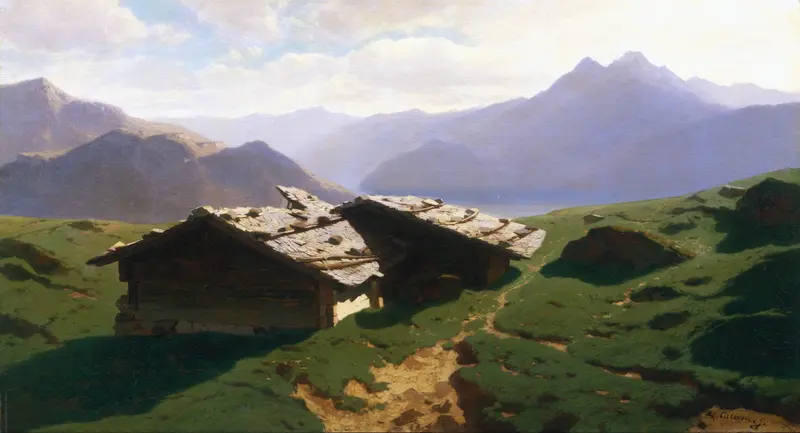
Chalets at Rigi
Alexandre Calame

View of the Wetterhorn and the Reichenbach from Meiringen
Alexandre Calame
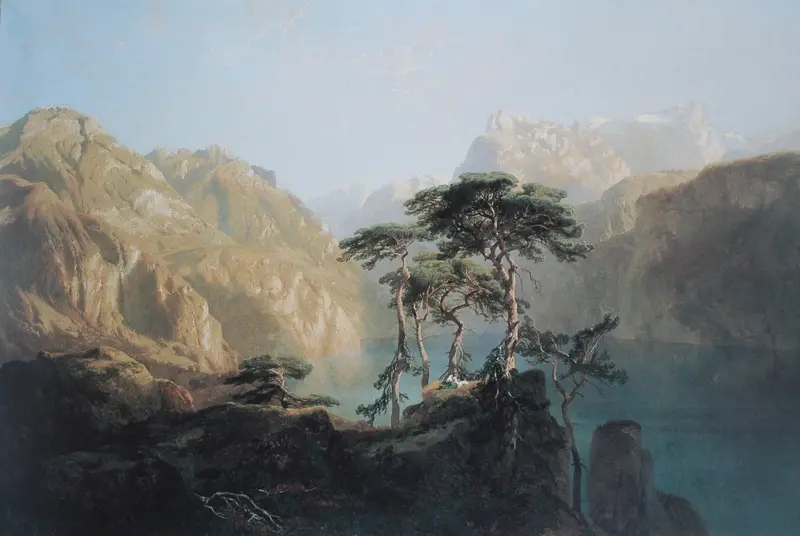
Calame Der Vierwaldstättersee
Alexandre Calame
More Landscape Art

The Starry Night
Vincent van Gogh

View of Delft
Johannes Vermeer

Water Lilies
Claude Monet

The Grand Canal, Venice, looking north-west from the Ca' Corner to the Ca' Contarini degli Scrigni, with the campanile of Santa Maria della Carità
Canaletto

Windsor Castle
Canaletto

The Grand Canal looking North-East from the Palazzo Dolfin-Manin to the Rialto Bridge
Canaletto