Te burao (The Hibiscus Tree) — History & Facts
What secret hides in the quiet of the canvas? Beneath the vibrant hues and rhythmic forms lies a whisper of hope, longing to break the silence of everyday life. Look to the left at the bold, swirling petals of the hibiscus, their fiery reds and pinks contrasting with deep greens that frame the scene. The brushstrokes pulse with a life of their own, capturing the essence of a tropical ambience that seems to breathe. Notice how light dances across the leaves, illuminating the fine details that weave a tapestry of nature, while the figure in the foreground, draped in the garment of the land, gazes outwards, lost in contemplation, inviting viewers to share in her moment of introspection. Beyond its lush colors, the painting reveals a deeper tension between the beauty of the natural world and the isolation experienced by the figure.
The hibiscus, often a symbol of delicate beauty, contrasts with the haunting solitude that pervades the composition. This duality speaks to the complexities of existence—where hope intertwines with yearning, revealing layers of emotion that resonate quietly but profoundly within the viewer's heart. Created during his time in Tahiti in 1892, Gauguin was at a crossroads in his life as he sought to escape Western civilization's constraints. The world of art was shifting, embracing Post-Impressionism, and his exploration of color and symbol was a radical departure from his earlier work.
In this idyllic setting, he dedicated himself to expressing the raw, unfiltered essence of life, both in nature and the human experience, forever capturing the bittersweet symphony of hope and solitude.
More Artworks by Paul Gauguin
Browse all →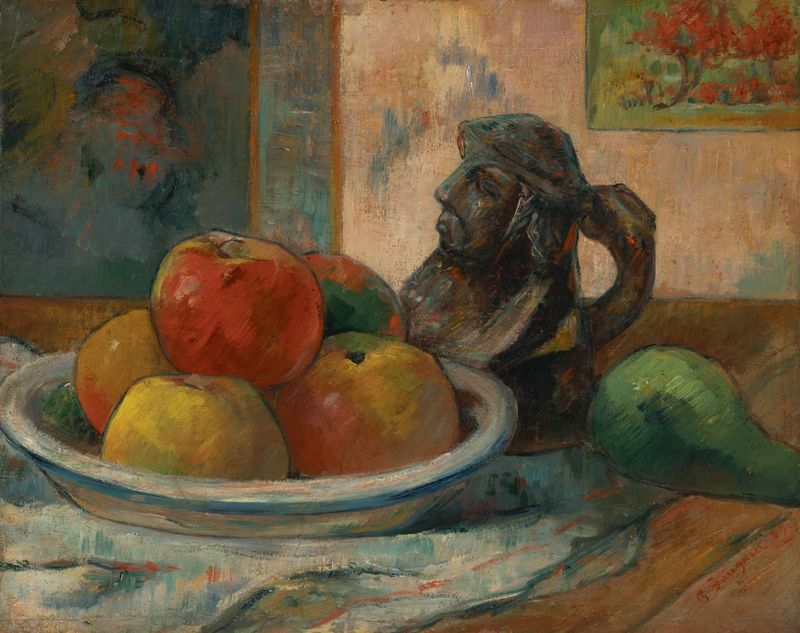
Still Life with Apples, a Pear, and a Ceramic Portrait Jug
Paul Gauguin
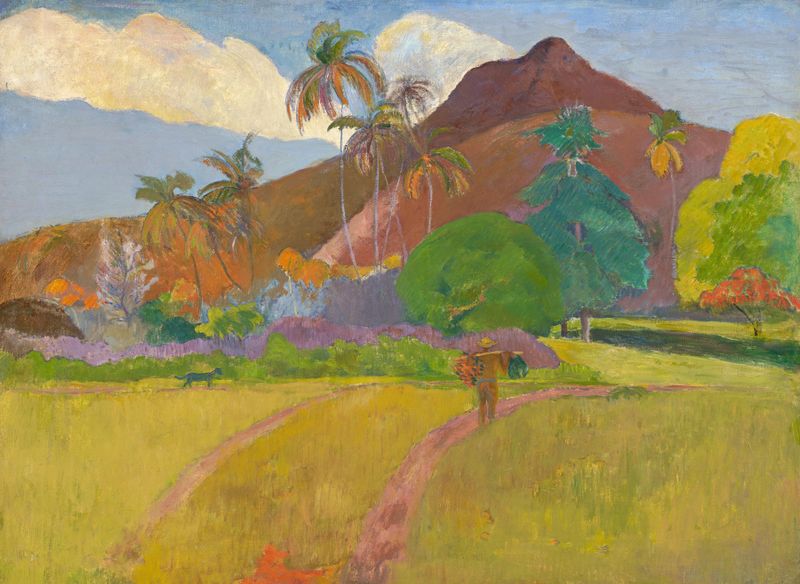
Tahitian Landscape
Paul Gauguin

Landscape near Pont-Aven
Paul Gauguin

No te aha oe riri (Why Are You Angry?)
Paul Gauguin
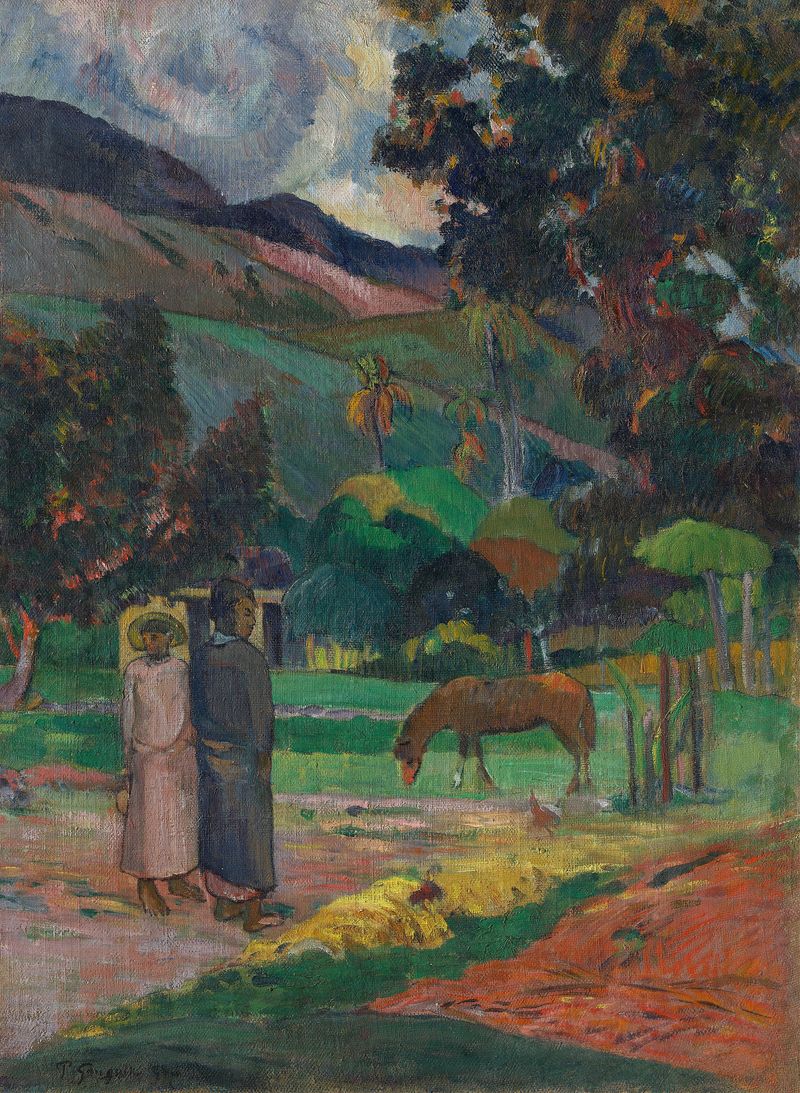
Tahitian Landscape
Paul Gauguin
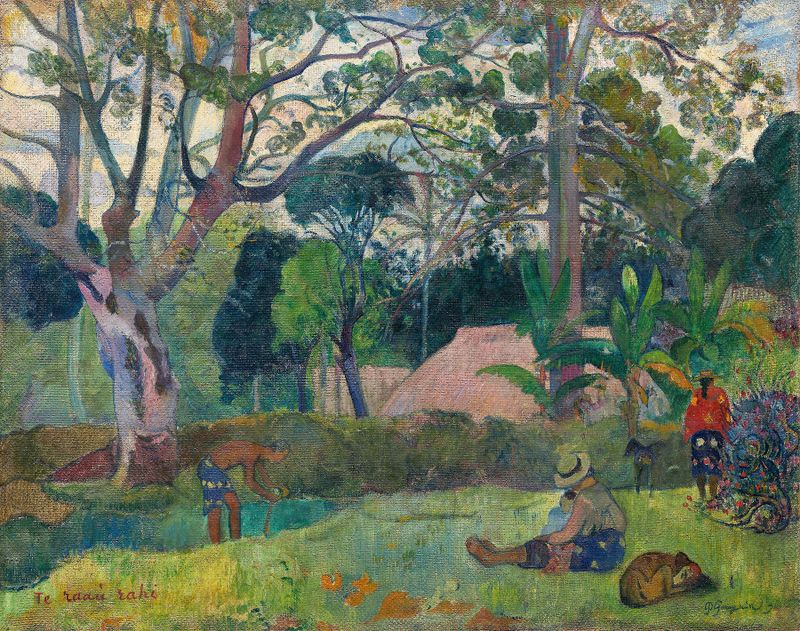
Te raau rahi (The Big Tree)
Paul Gauguin

Landscape at Le Pouldu
Paul Gauguin

Landscape of Brittany
Paul Gauguin

Poèmes Barbares
Paul Gauguin
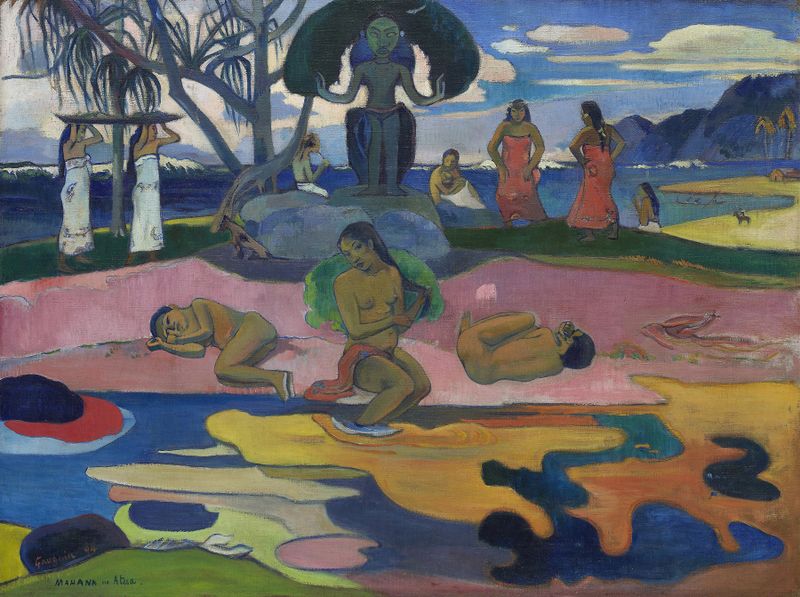
Mahana no atua (Day of the God)
Paul Gauguin