
The After Glow, Italy — History & Facts
Is this a mirror — or a memory? The ethereal glow of light dances across the canvas, beckoning us to step into a world where the boundary between reality and recollection blurs. Look to the center, where a soft, golden light spills over a tranquil landscape, illuminating the trees and casting gentle shadows. The hazy, atmospheric quality is created through Inness’s masterful use of color and texture; warm yellows and cool blues intertwine, evoking a sense of peace. Notice the horizon line, where the sky meets the earth, rendered with delicate strokes that suggest the fleeting nature of time.
The viewer’s gaze is naturally drawn along the path, leading to the heart of the scene, inviting contemplation. Amidst the serenity lies an undercurrent of tension. The juxtaposition of light and shadow hints at the transitory nature of life, while the soft outlines of the landscape evoke nostalgia, suggesting the passage of time. The trees, partially obscured by the mist, symbolize both uncertainty and a connection to the past.
Each brushstroke resonates with emotion, whispering stories of what once was and what could be. In 1873, George Inness painted The After Glow while residing in Italy, a period marked by his exploration of transcendental themes in art. At this time, he was influenced by the teachings of the Hudson River School and the burgeoning Impressionist movement, which sought to capture the elusive effects of light. Inness's work reflects a deepening philosophical engagement with nature, where he strived to express the spiritual through the beauty of the landscape.
More Artworks by George Inness
Browse all →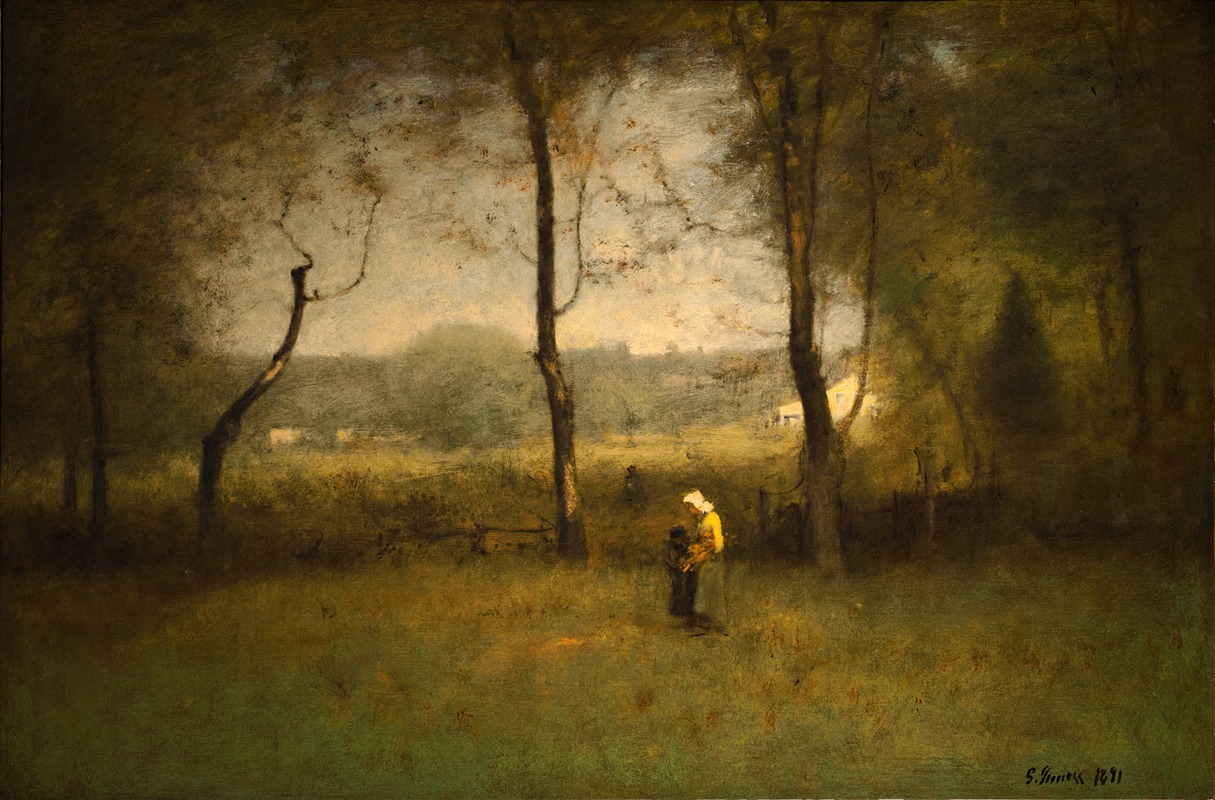
Autumn Woods
George Inness
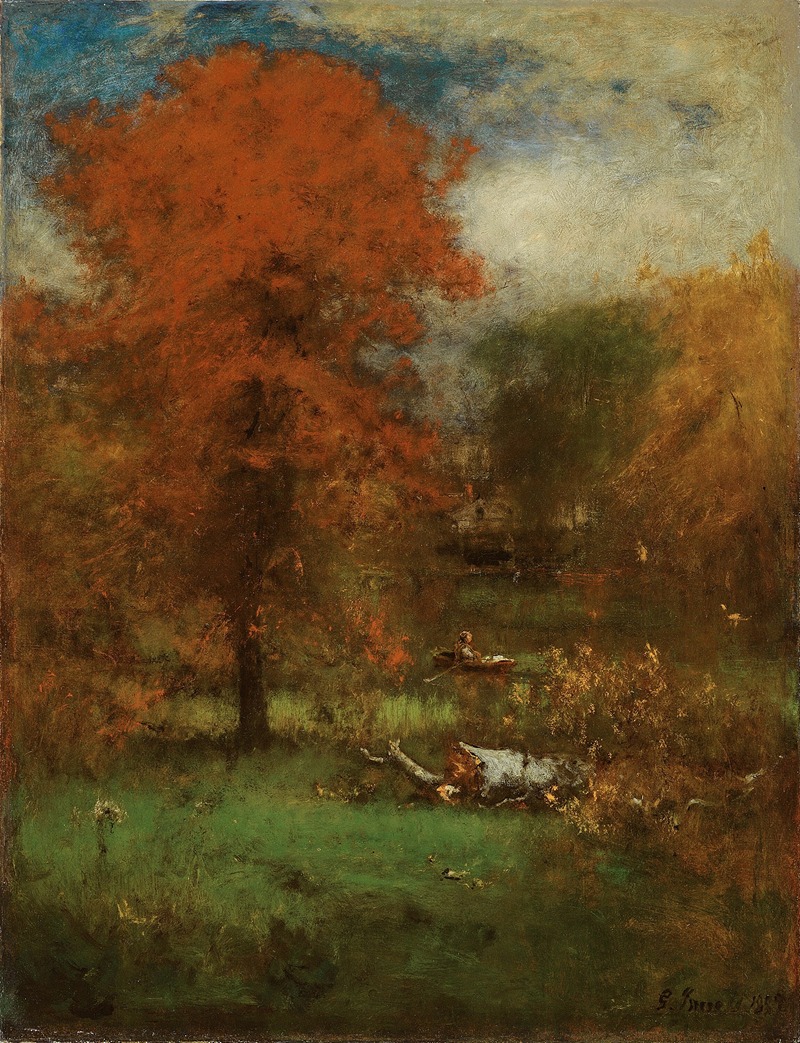
The Mill Pond
George Inness
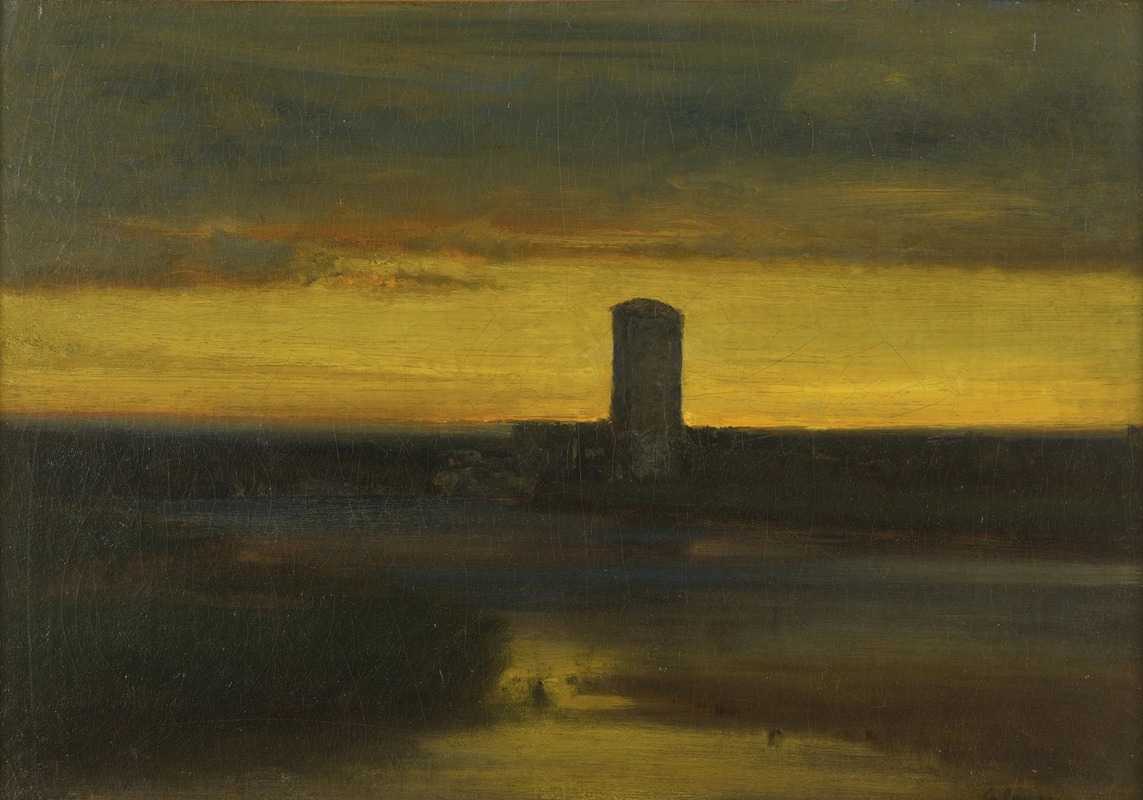
Afterglow
George Inness
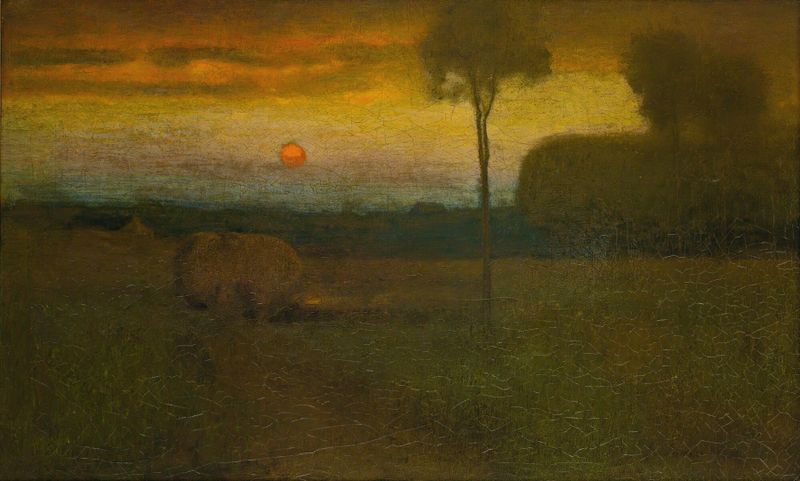
Landscape (Evening Landscape)
George Inness

Montclair
George Inness

View in Berkshire County, Massachusetts, Clearing Off after a September Storm
George Inness

October
George Inness
Landscape, Sunset
George Inness
Afterglow
George Inness
Catskill Mountains
George Inness





