
The ALASKA — History & Facts
What first catches the eye in The ALASKA is the proud silhouette of a steamship striding across a restless sea, its hull slicing through the waves with a confidence born of the industrial age. The ship’s rigging is taut, sails unfurled, but it is the twin smokestacks belching dark plumes that announce a new era: the uneasy partnership of wind and steam. Flags snap crisply at the masts—an American ensign at the fore, a company pennant amidships, and a red flag at the stern—each a coded signal of identity and ambition.
The low horizon gives the vessel the stage, while the vast, pale sky above seems to recede endlessly, dwarfing the ship yet also framing it as a marvel of human ingenuity. The careful rendering of the waves, each crest tipped with foam, invites the viewer to imagine the chill and motion of the open sea. Painted in 1881 by Antonio Jacobsen, this work belongs to a period when portraits of ships were as much declarations of progress as they were records of individual vessels. Shipowners, captains, and shipping lines often commissioned such paintings to commemorate launches, celebrate achievements, or simply advertise their pride.
Jacobsen, a Danish-American artist, became renowned for his meticulous attention to nautical detail and his prolific output, capturing the transition from sail to steam that defined late nineteenth-century maritime commerce. Though history has kept few traces of The ALASKA beyond its image and its date, it stands as a testament to an era when the world was shrinking, and the horizon was a promise waiting to be claimed. Look again at the ship’s flags and the interplay of smoke and sail—they speak of a world in motion, poised between tradition and transformation.
More Artworks by Antonio Jacobsen

Het stoomschip met hulpzeilvermogen ‘Kroonland’
Antonio Jacobsen

The Barque Vigilant
Antonio Jacobsen
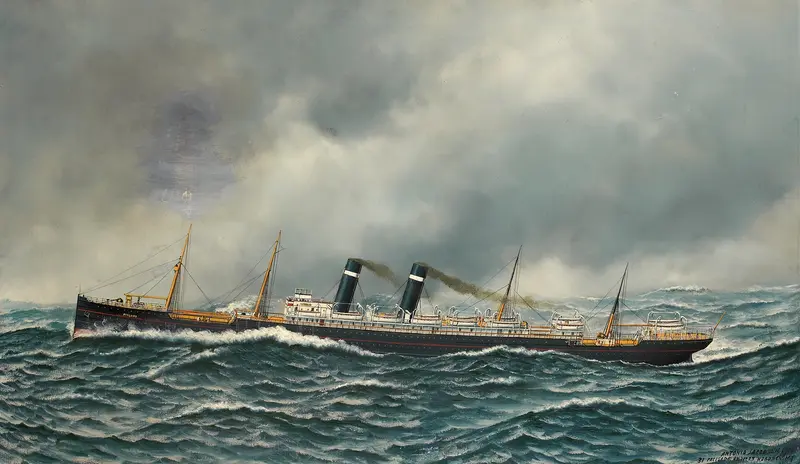
Het stoomschip ‘Finland’ te New York
Antonio Jacobsen
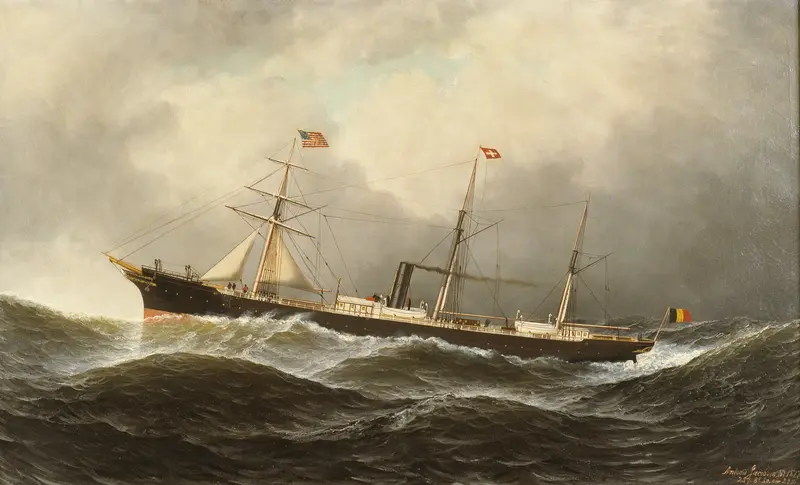
Het Belgische stoomschip met hulpzeilvermogen ‘Ludwig’ op zee
Antonio Jacobsen
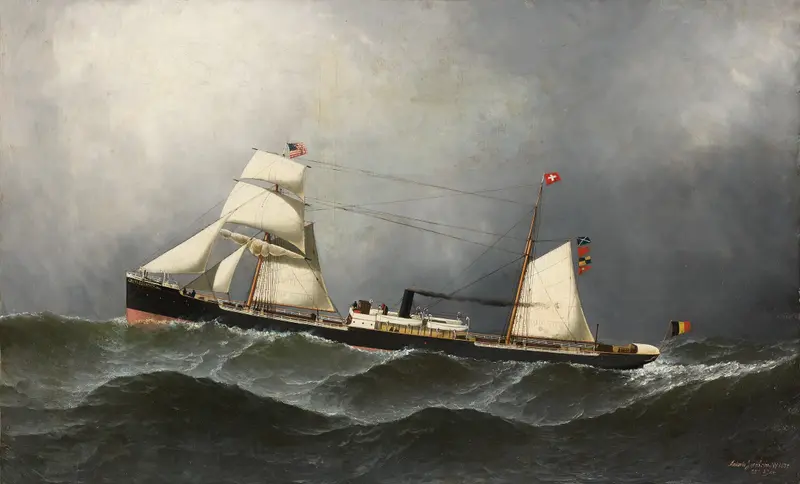
Het stoomschip met hulpzeilvermogen ‘Daniel Steinmann’ van de White Cross Line
Antonio Jacobsen
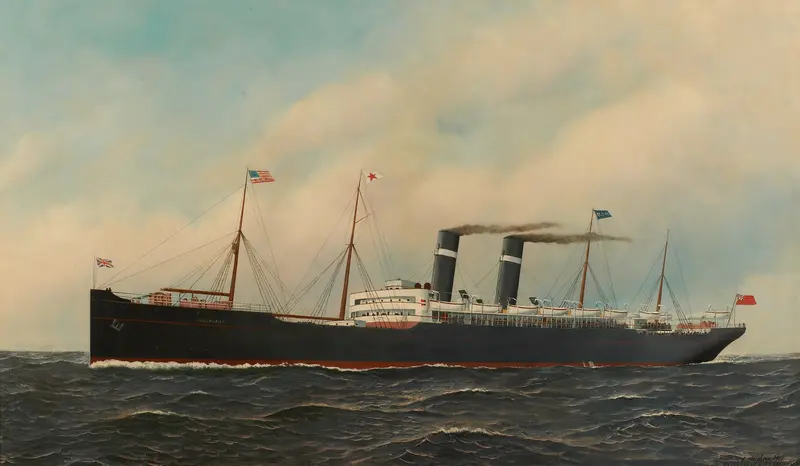
Het passagiersstoomschip Vaderland
Antonio Jacobsen
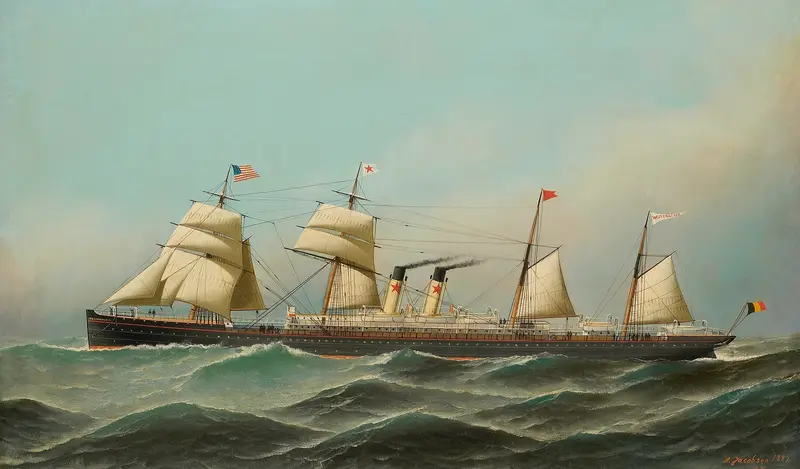
Het stoomschip met hulpzeilvermogen ‘Westernland’
Antonio Jacobsen
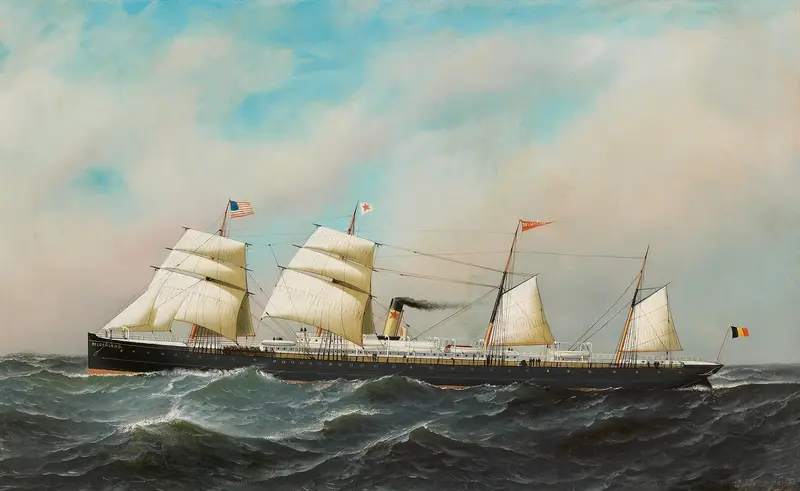
Het stoomschip met hulpzeilvermogen Belgenland
Antonio Jacobsen
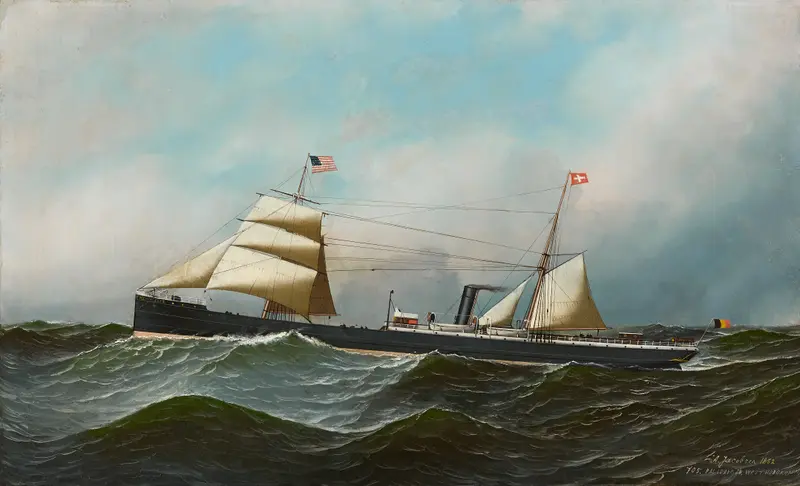
Het stoomschip met hulpzeilvermogen ‘Henry Edye’ van de White Cross Line
Antonio Jacobsen
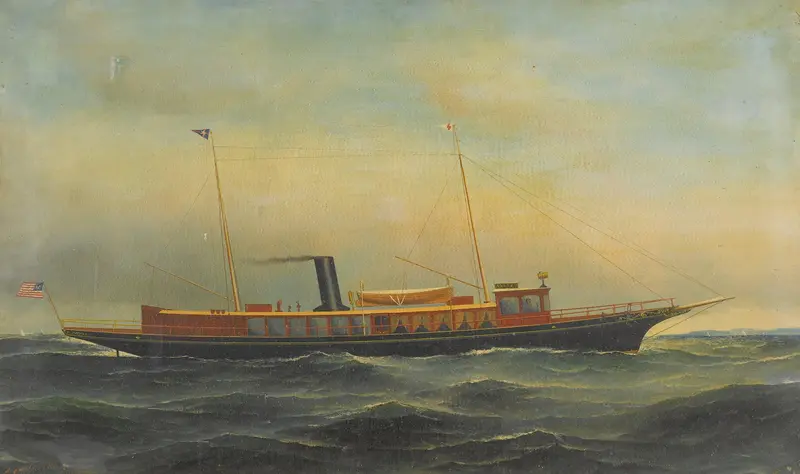
The Yacht ‘aztec’
Antonio Jacobsen





