
The Angel Appearing to Zacharias — History & Facts
When William Blake painted The Angel Appearing to Zacharias in 1799, he was working on a remarkable commission: a series of biblical watercolours for his patron Thomas Butts, a civil servant and devout Christian. These works were never intended for public exhibition, but for private devotion and contemplation in Butts’s home. Among the set, this scene stands out for its visionary intensity—Blake’s own spiritual experiences often mingled with his art, and he claimed to have seen angels himself.
In choosing this subject, Blake aligned his own prophetic calling with that of Zacharias, the priest who is struck mute for doubting the angel’s message. The canvas captures the charged moment from the Gospel of Luke: Zacharias, an elderly priest, is performing his ritual duties in the Temple when the angel Gabriel appears to foretell the birth of his son, John the Baptist. Blake’s composition is spare but electric—Zacharias recoils in awe, his hands raised in startled disbelief, while the angel’s form radiates with light, almost dissolving into the golden air. The temple’s architecture is rendered in delicate lines, suggesting both solidity and the thinness of the veil between worlds.
Unlike the stately, classical angels of Raphael or Rembrandt, Blake’s Gabriel is otherworldly, almost abstract, his wings and robes merging with the light, emphasizing the shock and strangeness of divine encounter. The original medium of The Angel Appearing to Zacharias is uncertain—some sources describe it as tempera, others as watercolour with pen and ink—typical of Blake’s experimental approach during this period. The painting remained in the Butts family for generations before entering public collections; today, it is held by the British Museum. This work belongs to a formative moment in Blake’s career, when he was developing his unique visual language for spiritual revelation, far removed from the academic conventions of his time.
The Butts biblical series, of which this is a part, is now recognized as a cornerstone of Blake’s legacy, bridging poetry, prophecy, and painting in a way no other artist of his age attempted.
More Artworks by William Blake
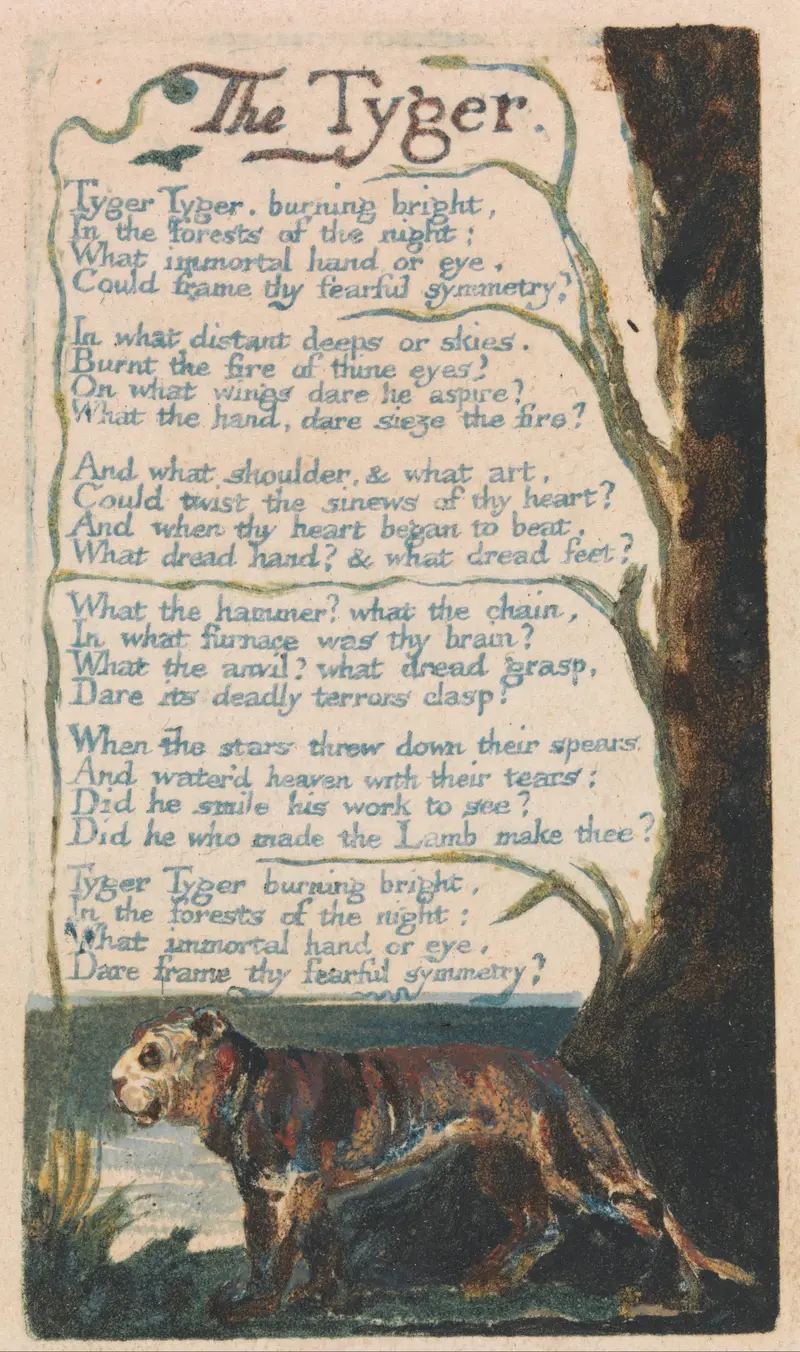
The Tyger
William Blake

Christ Blessing
William Blake
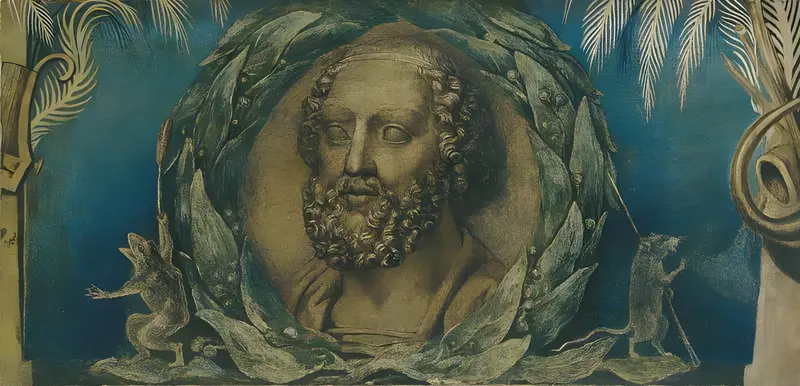
Homer
William Blake
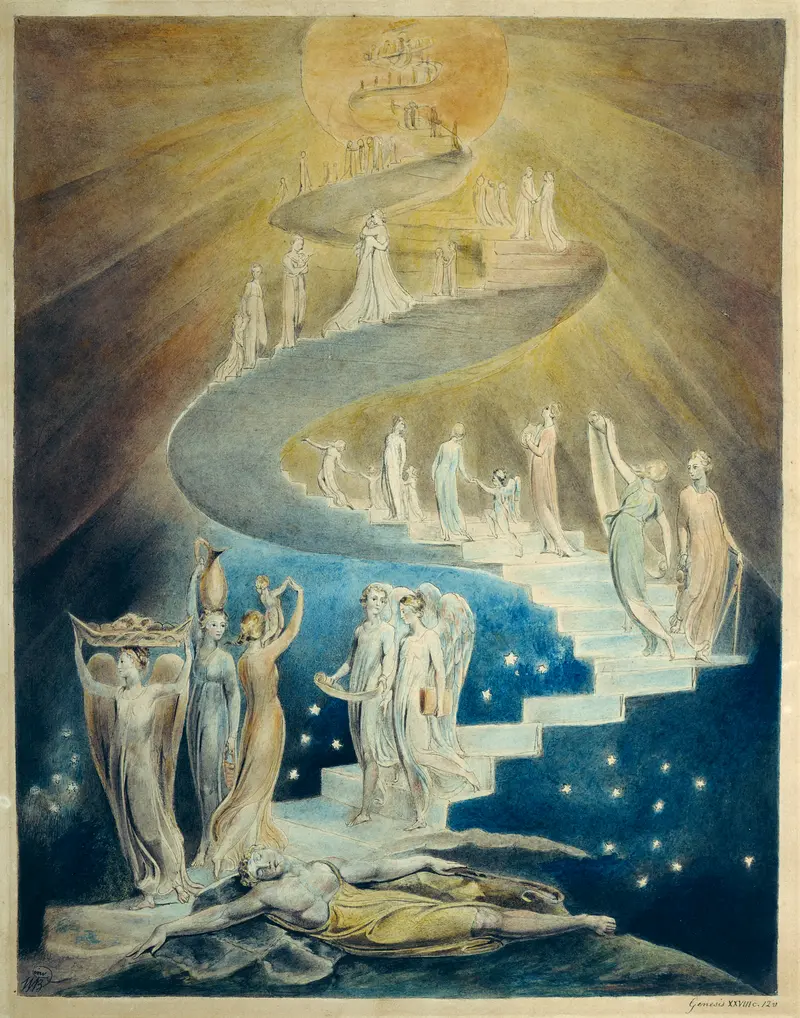
Jacob's Ladder
William Blake
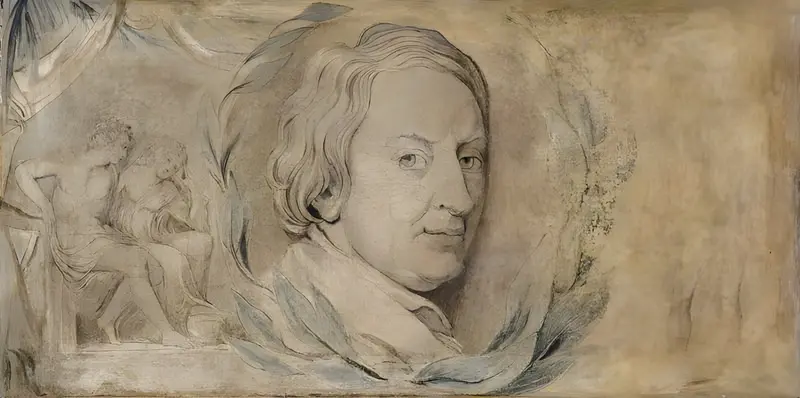
John Dryden (1631–1700)
William Blake
Landscape near Felpham
William Blake
Sacrifice of Job
William Blake
Christ's Entry into Jerusalem
William Blake
The Ancient of Days
William Blake
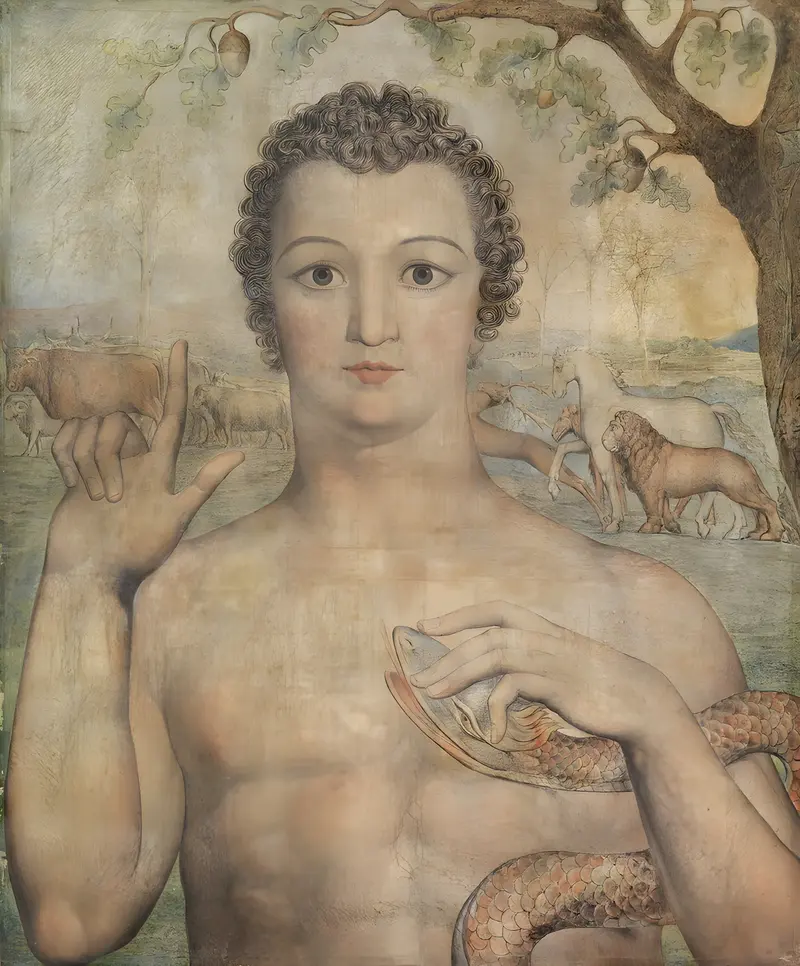
Adam Naming the Beasts
William Blake





