
The Betrothed — History & Facts
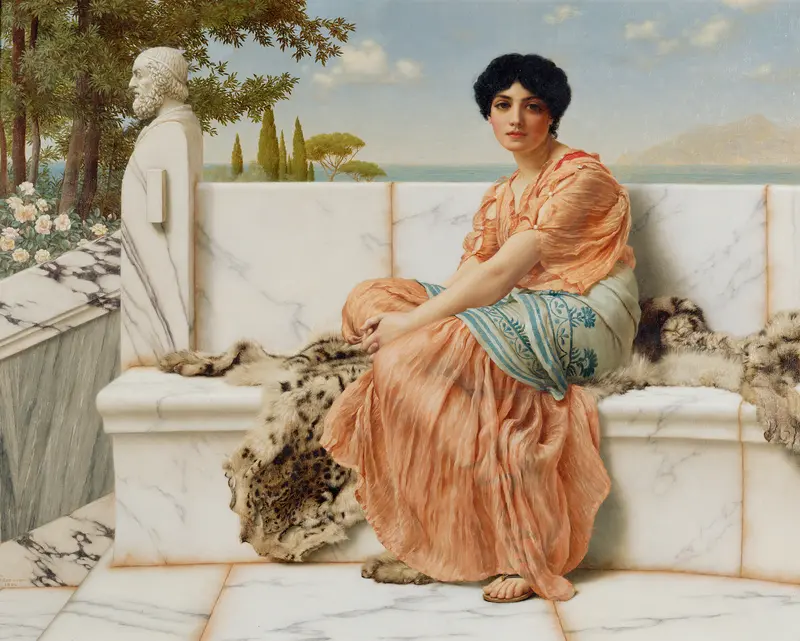
The first thing that draws the eye in The Betrothed is the languid figure stretched across a marble bench, her entire body surrendered to a private reverie. The marble’s cool, veined surface frames her in a world of stillness, while the soft folds of her pale blue gown and the plush leopard skin beneath her speak of both luxury and vulnerability. Her hands are gently clasped, and her head rests on a silken pillow, suggesting anticipation or longing—her gaze turned inward rather than outward.
The garden beyond, with its sculpted reliefs and distant trees, creates a hush around her, as if the world itself is pausing to listen to her thoughts. Godward’s meticulous attention to texture—the shimmer of fabric, the gloss of stone, the pattern of fur—invites the viewer to linger on every detail, searching for the meaning behind her serene, almost statuesque pose. Painted in 1892, this work belongs to the late Victorian fascination with the classical world, a style that found favor among collectors who sought escape from the industrial age in visions of ancient leisure. Artists like John William Godward specialized in these scenes, blending archaeological precision with a dreamy idealism that appealed to a society hungry for beauty and calm.
Such paintings were often commissioned for private homes, intended to transport their owners into an imagined antiquity where emotion could be contemplated at a safe remove. While little is recorded about the specific journey of this canvas, its place in a collection today is a testament to the enduring allure of this genre. The viewer is left to wonder what thoughts occupy the betrothed, and whether her quiet moment of waiting is one of hope, resignation, or something more mysterious—an ambiguity that keeps the painting alive long after its era has passed.
More Artworks by John William Godward

Eighty and eighteen
John William Godward
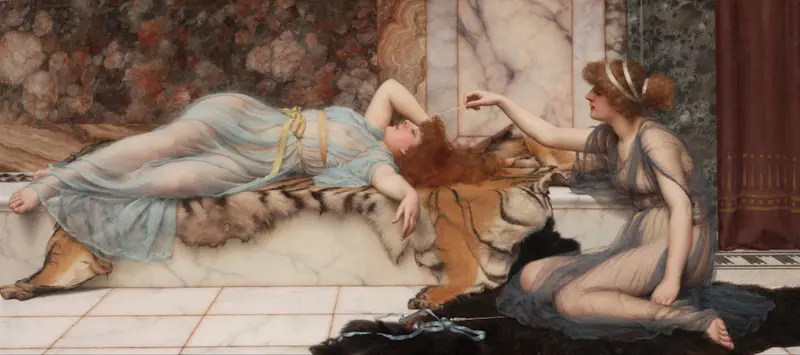
Mischief and Repose
John William Godward
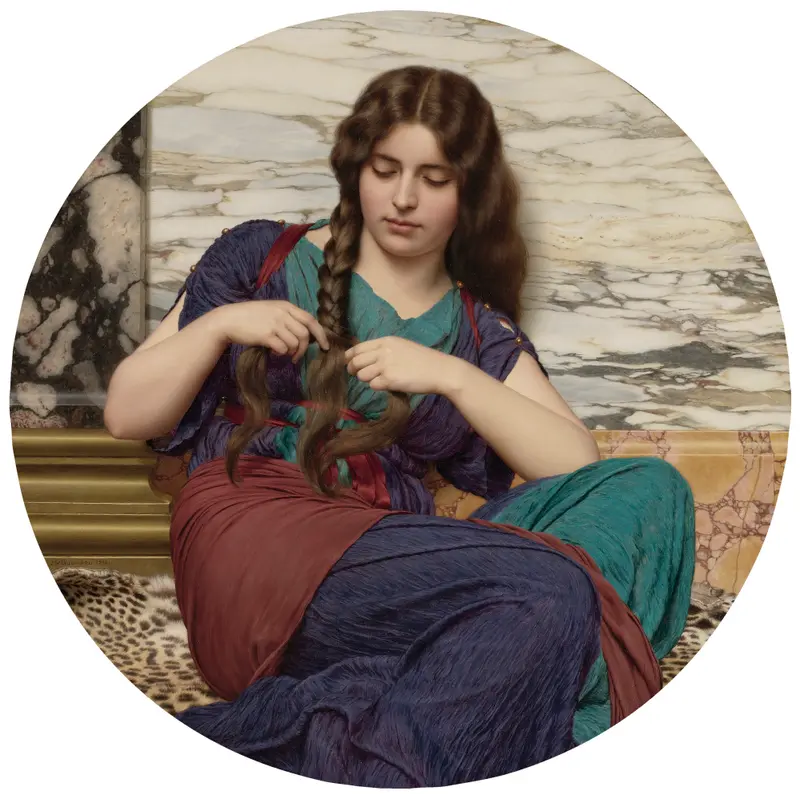
A Congenial Task
John William Godward
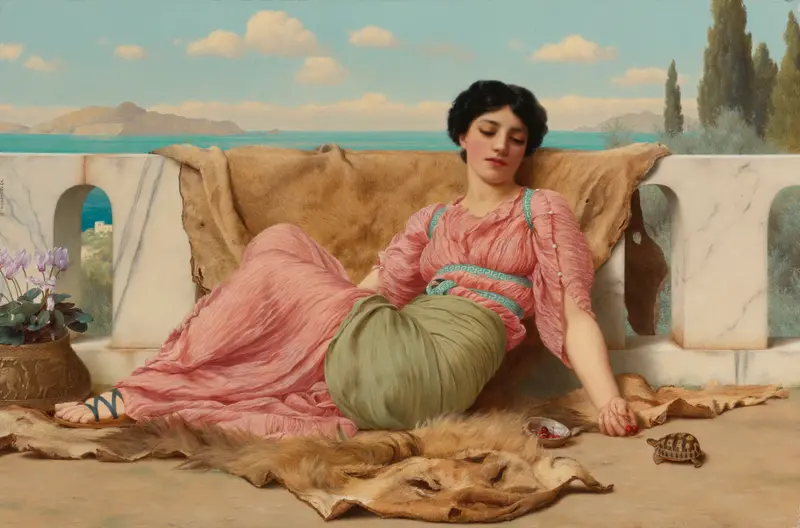
The Quiet Pet
John William Godward
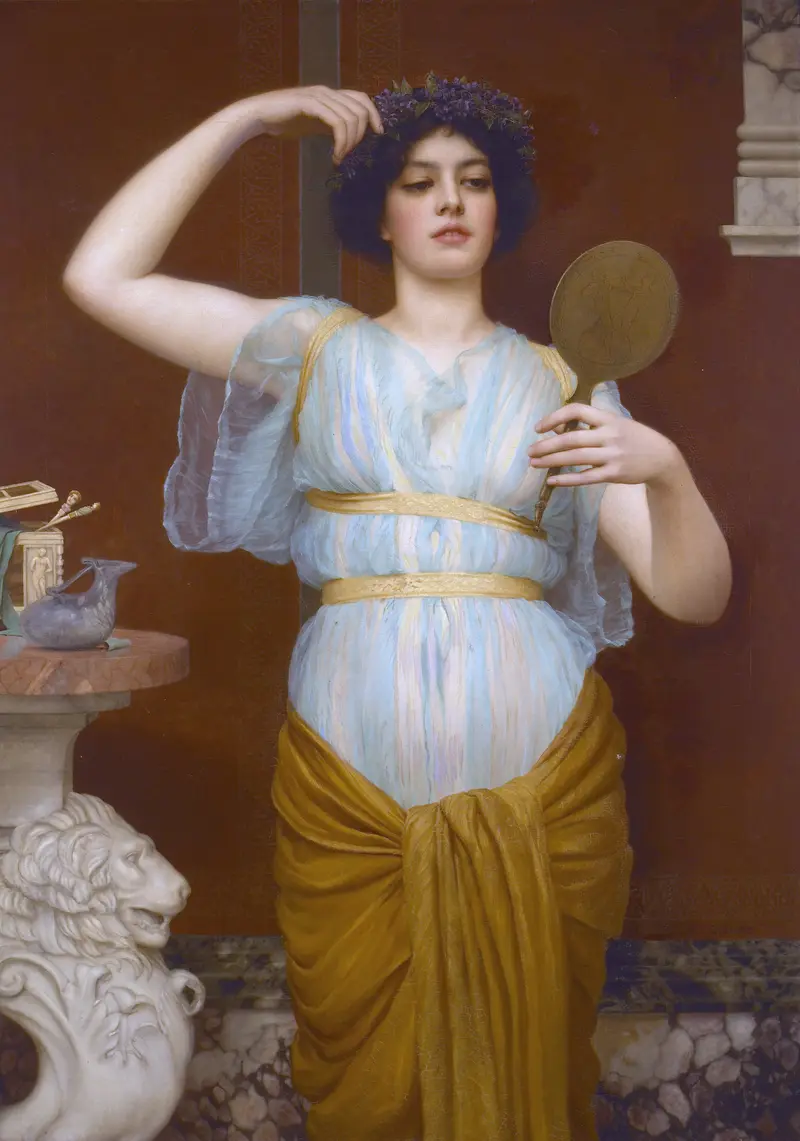
Ione
John William Godward
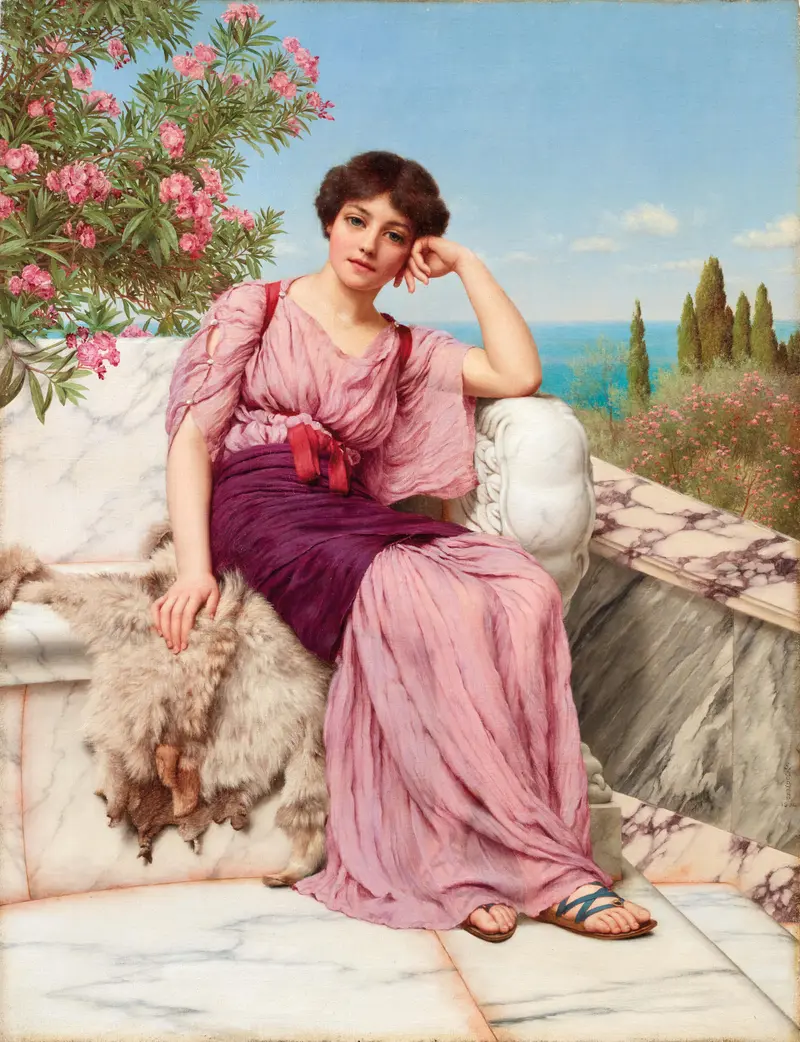
Sweet Dreams
John William Godward
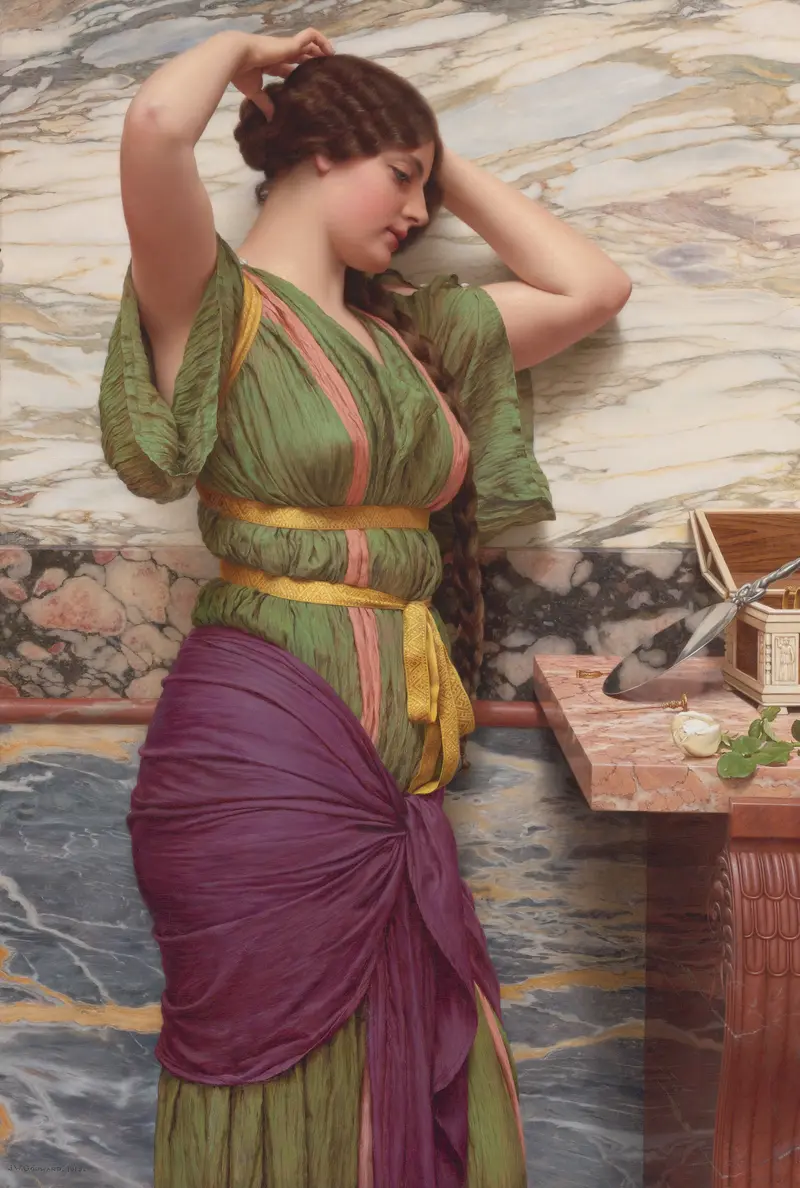
A Fair Reflection
John William Godward
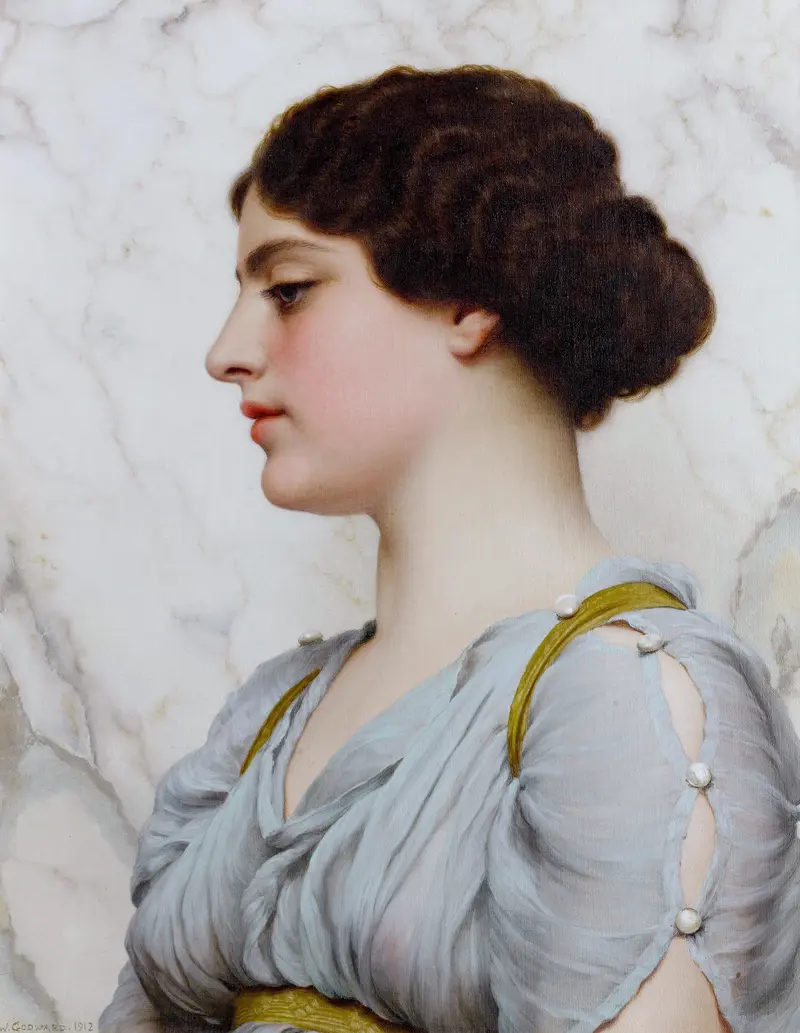
A Roman Beauty
John William Godward
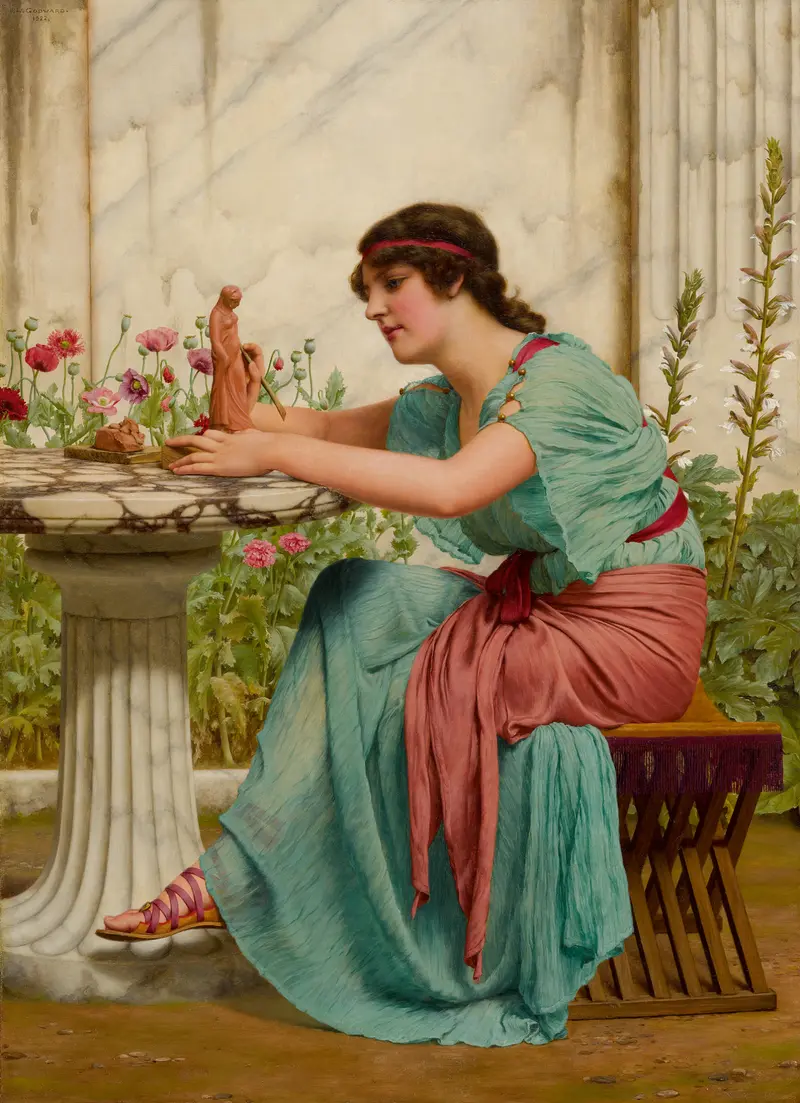
A Dilettante
John William Godward
Reverie
John William Godward



