
The Christ Child Asleep on the Cross (Our Lady Adoring the Infant Jesus Asleep on the Cross) — History & Facts
When William Blake exhibited The Christ Child Asleep on the Cross in 1808, its haunting subject and unconventional vision drew both admiration and confusion from his contemporaries. This work is one of only a handful of known religious miniatures by Blake, and its intimate scale and radical iconography—showing the infant Christ already entwined with the instrument of his future death—set it apart in the crowded world of early nineteenth-century religious art. The painting has sometimes been called Our Lady Adoring the Infant Jesus Asleep on the Cross, reflecting the dual focus on both Mary’s adoration and the foreshadowing of the Passion.
Scholars have long debated whether Blake intended this as a private devotional image or as a pointed commentary on the nature of sacrifice and innocence. At the heart of the scene, the Christ child lies peacefully sleeping, arms outstretched on a wooden cross that serves as both his cradle and a chilling prophecy. Mary kneels in adoration, her face illuminated by a soft, inward light, hands clasped in prayerful awe and sorrow. The cross, usually a symbol of suffering, is here rendered with the tender vulnerability of a child’s bed, blurring the boundary between birth and death.
Unlike the more sentimental depictions of the Madonna and Child by Raphael or Murillo, Blake fuses innocence with destiny, using the stark geometry of the cross and the gentle curve of Mary’s body to create a visual dialogue between hope and foreboding. The sparse background and delicate lines focus all attention on the silent drama unfolding between mother and son. The exact original patron of this work is unknown, and its early history remains somewhat mysterious, as is often the case with Blake’s lesser-known paintings. It was likely created for a private collector or as a deeply personal meditation, rather than for public display.
Over the years, the painting has passed through several hands, occasionally surfacing at auction and in exhibitions dedicated to Blake’s visionary art. Today, it is recognized as a key example of his unique approach to Christian iconography, bridging his poetic imagination and his painterly skill. The work stands as a testament to Blake’s lifelong fascination with the intersection of innocence, prophecy, and the mysteries of faith.
More Artworks by William Blake
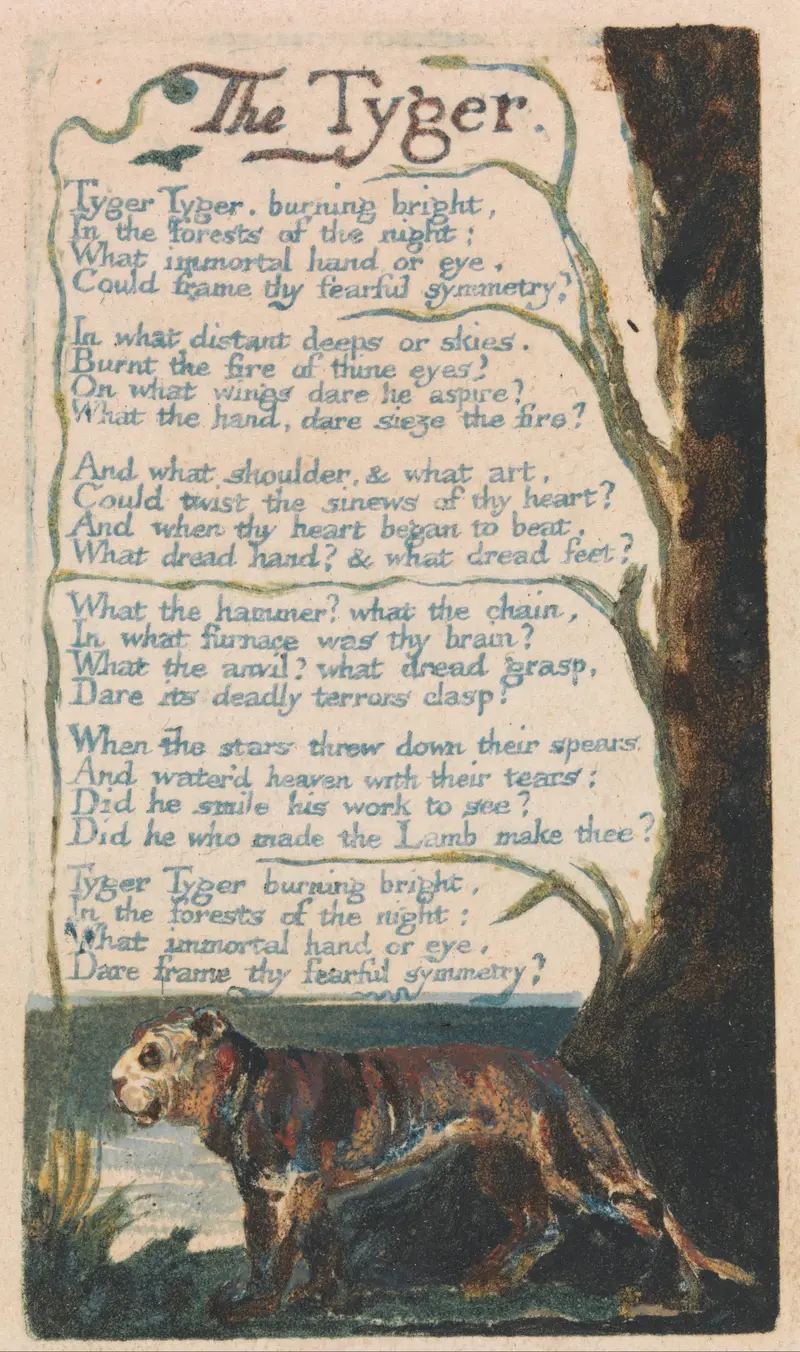
The Tyger
William Blake

Christ Blessing
William Blake
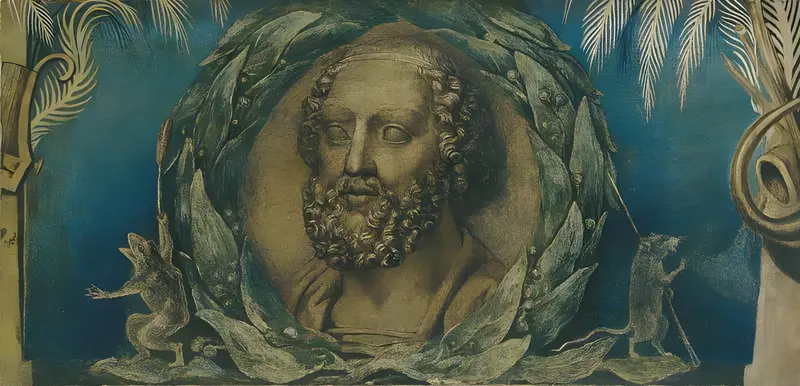
Homer
William Blake
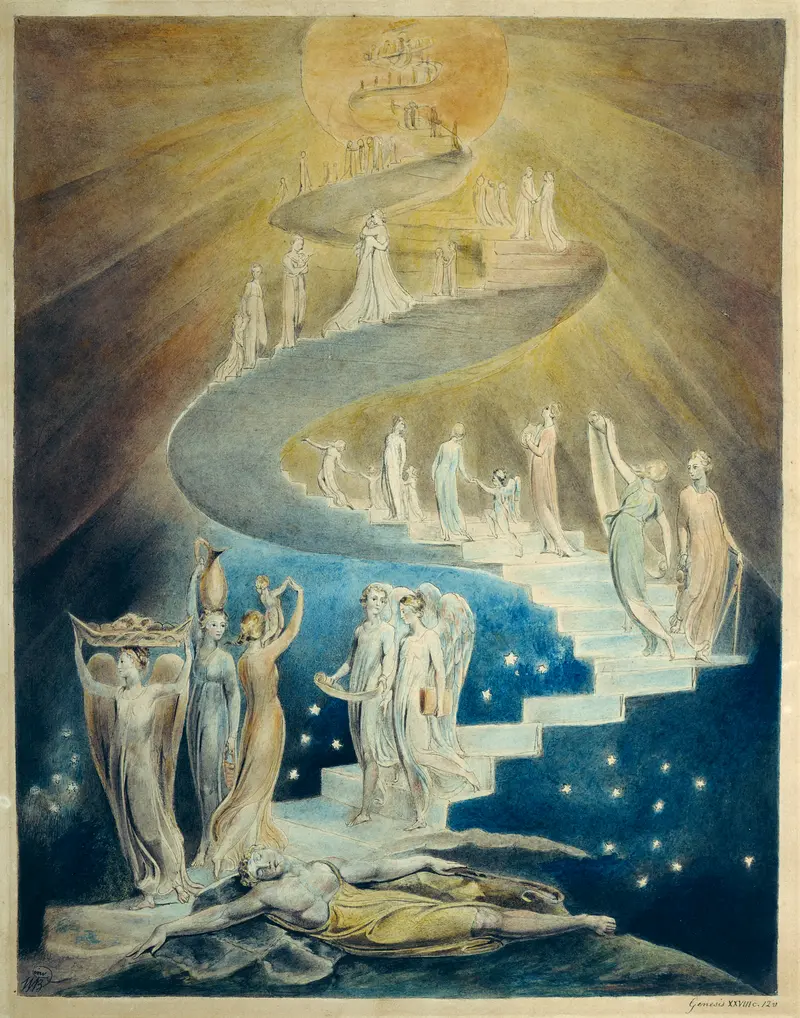
Jacob's Ladder
William Blake
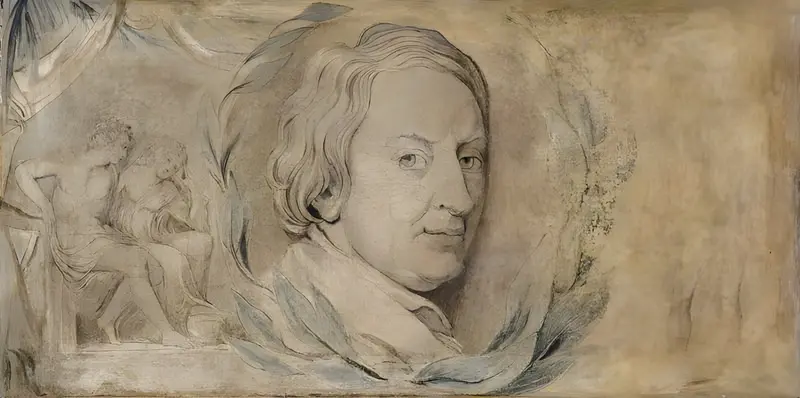
John Dryden (1631–1700)
William Blake

Landscape near Felpham
William Blake
Sacrifice of Job
William Blake
Christ's Entry into Jerusalem
William Blake
The Ancient of Days
William Blake
Adam Naming the Beasts
William Blake





