
The Cloud — History & Facts
Could beauty survive in a century of chaos? In The Cloud, John Linnell captures a moment suspended between the ethereal and the earthly, evoking a sense of poignant loss amid the vastness of nature. Look to the right at the soft, billowing cloud that dominates the sky, a radiant white against deepening blues and atmospheric grays. The way the light spills through its edges creates a luminous halo, drawing the viewer’s gaze upward. Below, the landscape unfurls in muted greens and browns, grounding the celestial spectacle.
Each brushstroke, both deliberate and delicate, embodies a harmony that invites contemplation while hinting at the fragility of the joyful moments we chase. The juxtaposition between the cloud’s transient beauty and the somber terrain serves as a metaphor for the fleeting nature of life itself. Notice how the horizon remains unresolved, echoing the uncertainty of the period in which Linnell painted. The cloud, while majestic, also signifies an impending storm, a reminder of loss that lingers just out of sight, casting a shadow over an otherwise serene scene. In 1863, Linnell was immersed in the Romantic movement, grappling with themes of nature and the sublime, while the world faced the turmoil of the Industrial Revolution.
Painted in his studio, this work reflects both personal and societal upheavals. The artist sought solace in nature's beauty, channeling his reflections of loss and transformation into a canvas that speaks to the human experience during times of chaos.
More Artworks by John Linnell
Browse all →
A View Near Hampstead
John Linnell
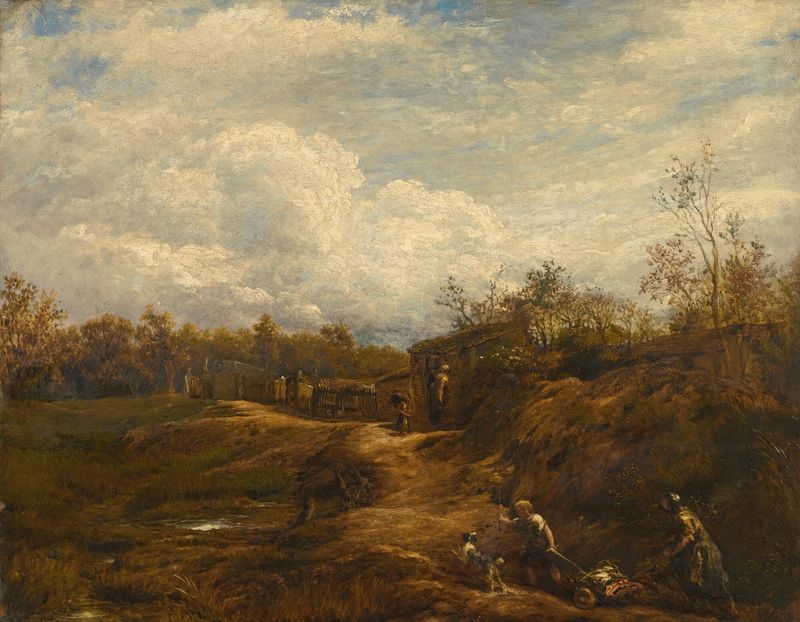
An English Landscape
John Linnell

Travelers Resting by a Fallen Tree
John Linnell
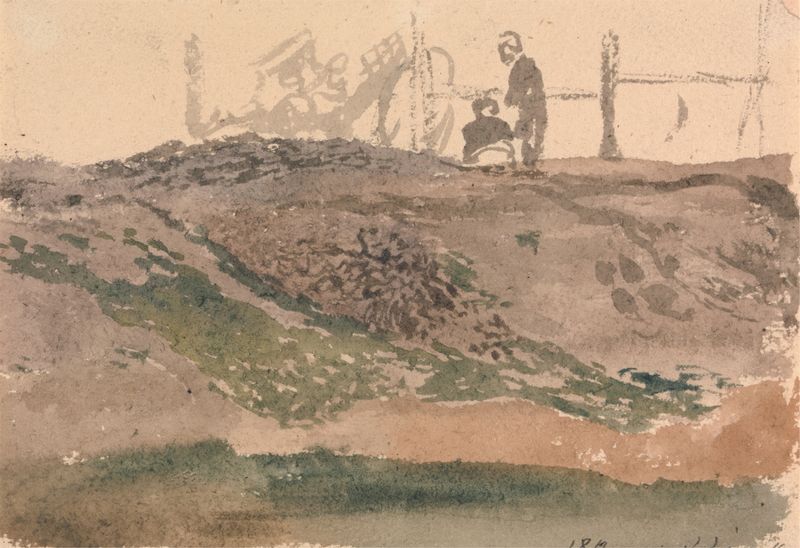
Figures on a Bank, Kensington Gravel Pits
John Linnell
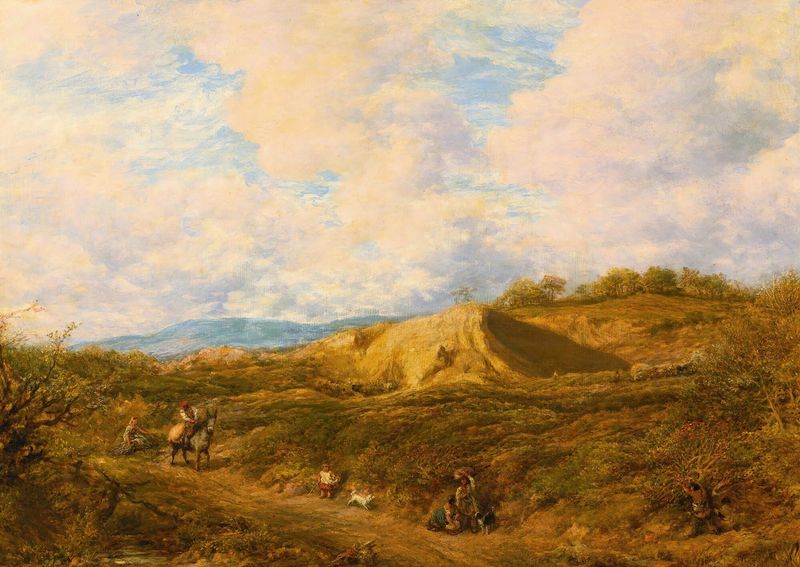
Redhill Common, Surrey
John Linnell

Netley Abbey
John Linnell

The Sand Pits, Hampstead Heath
John Linnell
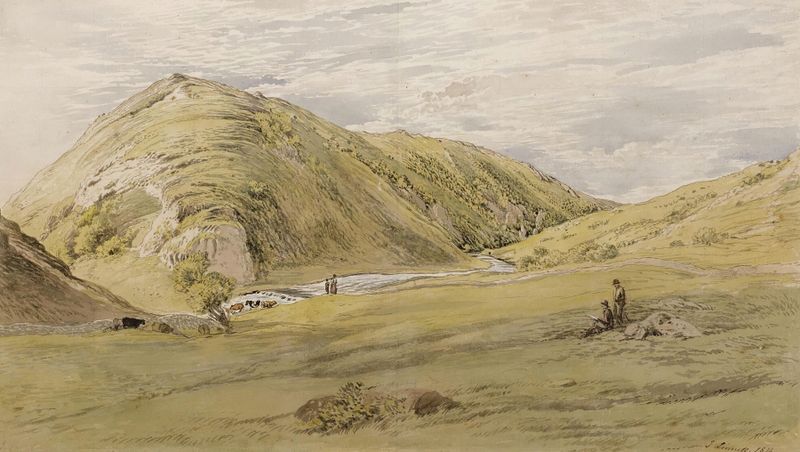
Entrance To Dovedale From Ashbourne, Derbyshire
John Linnell
Evening, Bayswater
John Linnell

In Dovedale
John Linnell





