
The Crucifixion of Christ — History & Facts
When Giotto di Bondone painted The Crucifixion of Christ in 1317, he was already celebrated for revolutionizing Western art by introducing a new realism to sacred scenes. What makes this particular work especially fascinating is its place in a series of commissions for the Florentine church of Santa Maria Novella, where Giotto’s innovations would set the tone for generations of painters. The painting stands at a crossroads between the stylized traditions of Byzantine iconography and the emerging humanism of the early Renaissance.
Even centuries later, art historians debate whether this panel was once part of a larger altarpiece or intended as a standalone devotional image. At the heart of the scene, Christ hangs on the cross, his body rendered with a gravity and weight that was rare before Giotto’s time. The moment is one of profound sorrow: Mary collapses in grief at the foot of the cross, supported by St. John, while angels twist in anguish above.
Giotto’s use of space and gesture—Mary’s outstretched arms, the mourners’ expressive faces—draws the viewer into the emotional core of the narrative. The gold background, a holdover from earlier tradition, contrasts with the solidity of the figures, grounding the divine event in a world of flesh and feeling. Compared to the more decorative and symbolic Crucifixion by Duccio, Giotto’s version feels startlingly immediate, inviting empathy rather than distant awe. The precise history of this painting’s travels is unclear, as documentation from the period is scarce and the original context may have been altered by later restorations or re-framings.
Like many works by Giotto, it has been subject to debates over attribution and provenance, with scholars relying on stylistic analysis to confirm his hand. Today, The Crucifixion of Christ is recognized as a cornerstone of early 14th-century Italian painting, its influence visible in the work of artists from Masaccio to Fra Angelico. Whether encountered in person or online, it stands as a testament to Giotto’s radical vision and the enduring power of his storytelling.
More Artworks by Giotto di Bondone
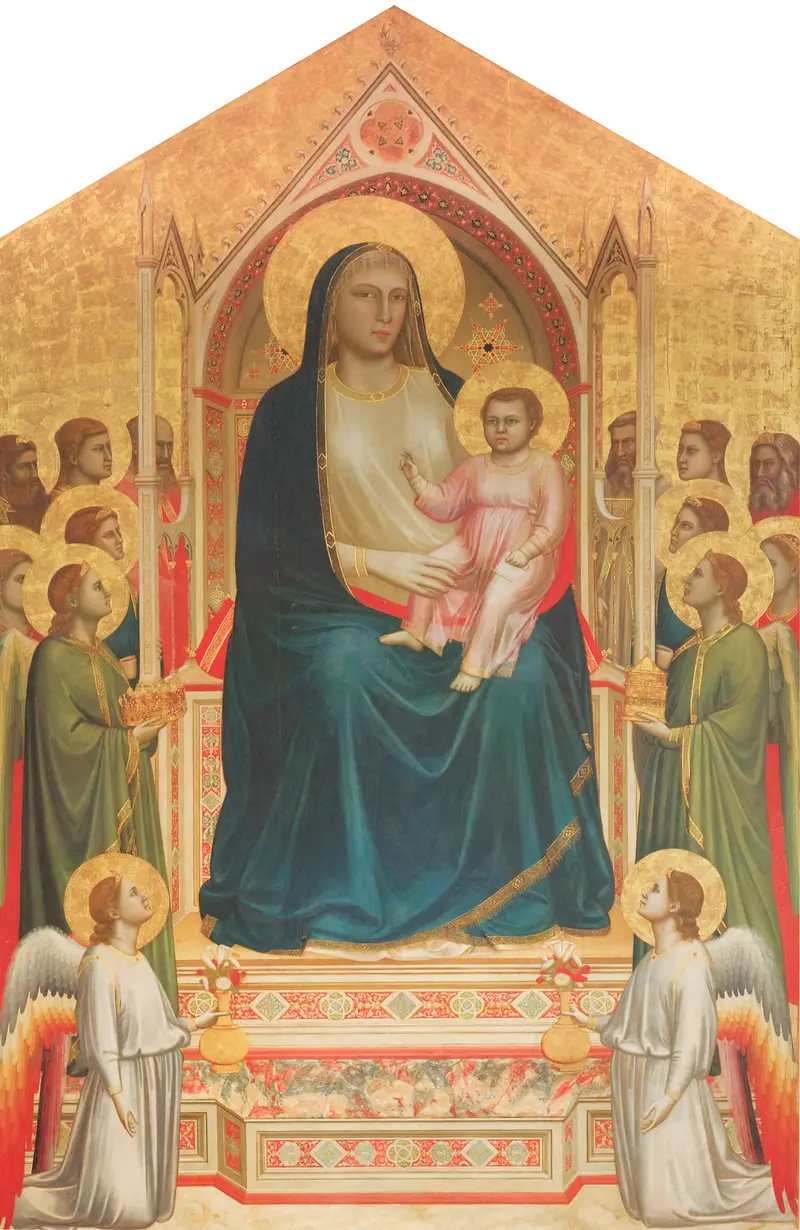
Ognissanti Madonna
Giotto di Bondone
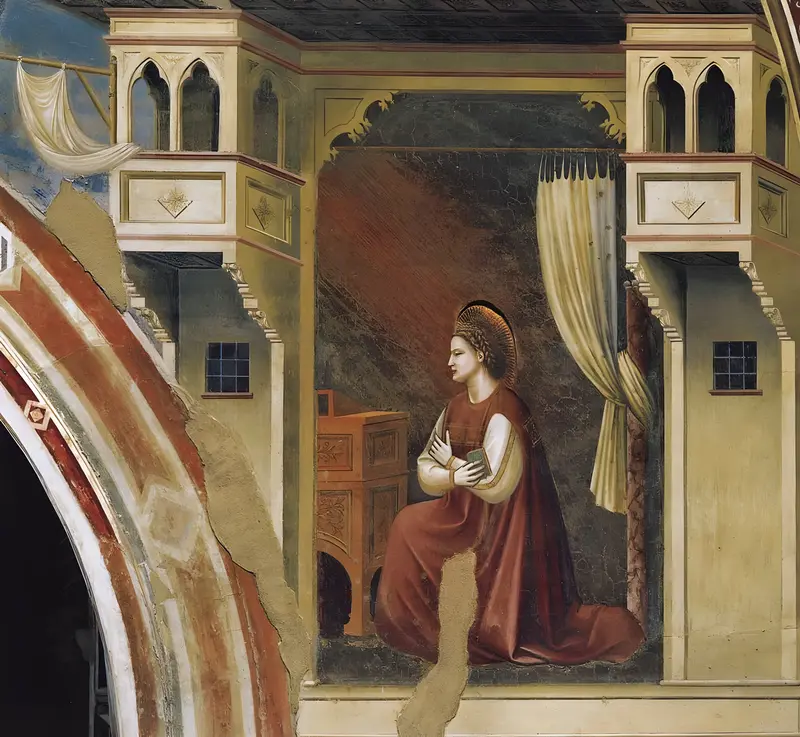
The Virgin of the Annunciation
Giotto di Bondone
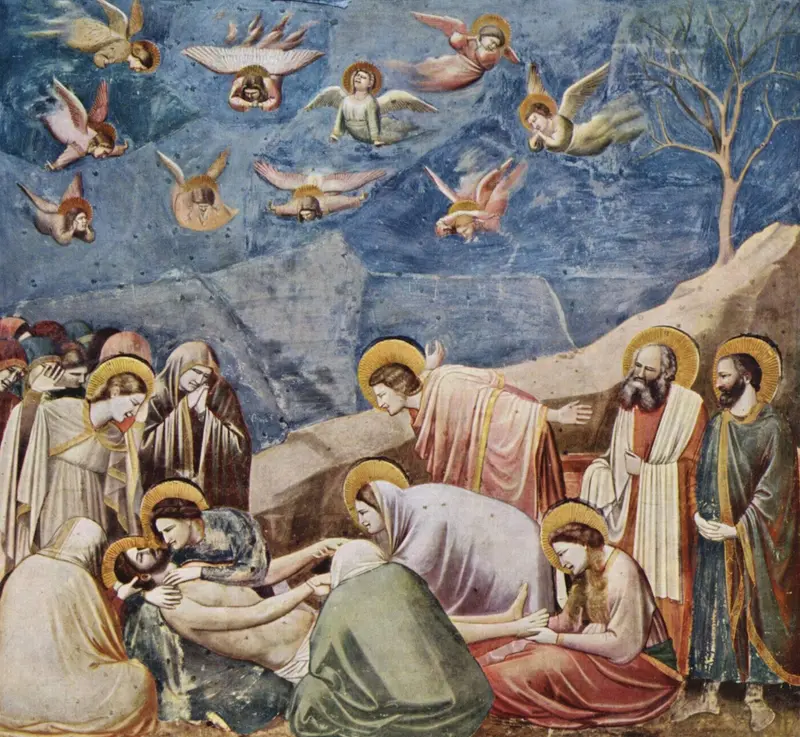
Lamentation (The Mourning of Christ)
Giotto di Bondone
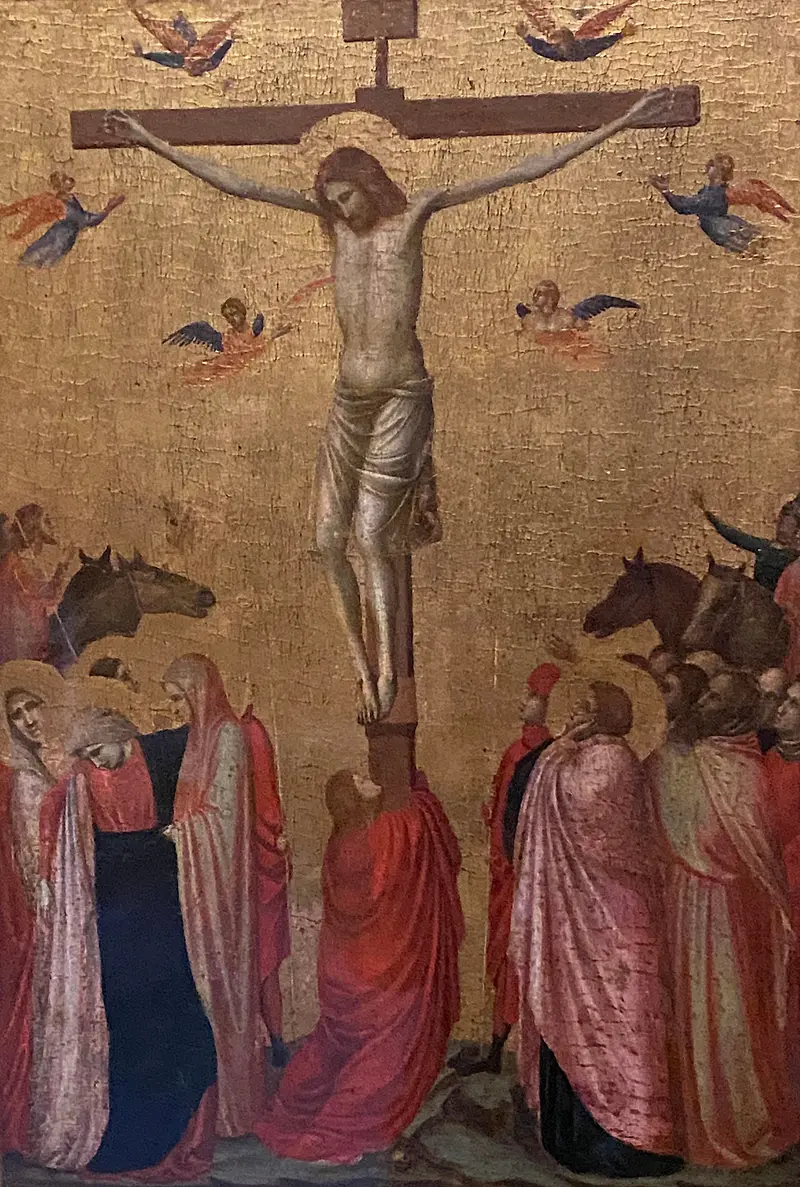
Crucifixion of Strasbourg
Giotto di Bondone
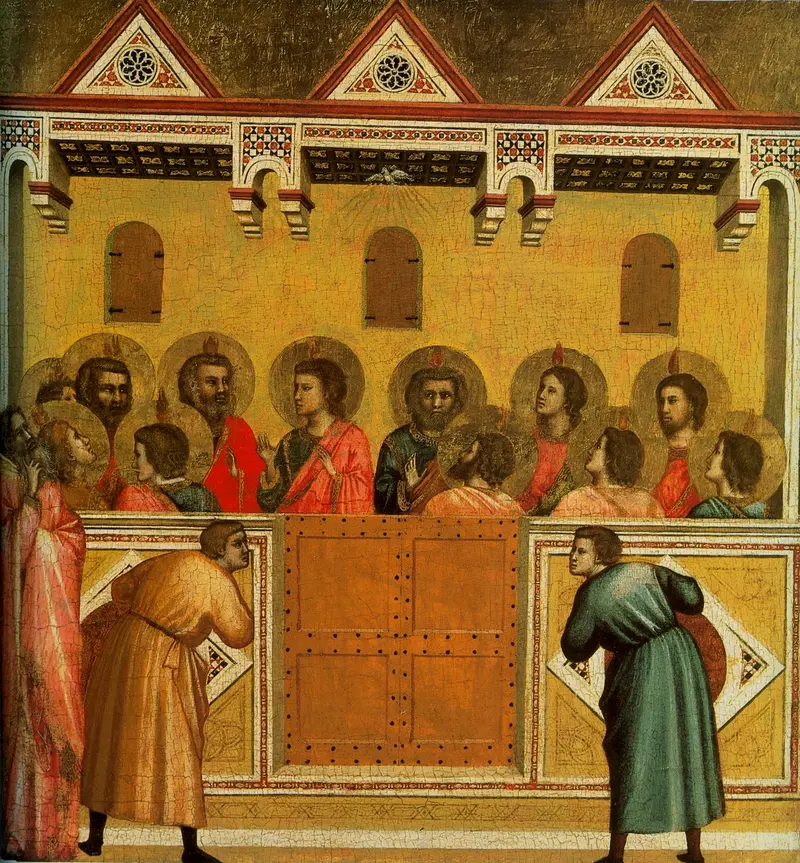
Pentecost
Giotto di Bondone
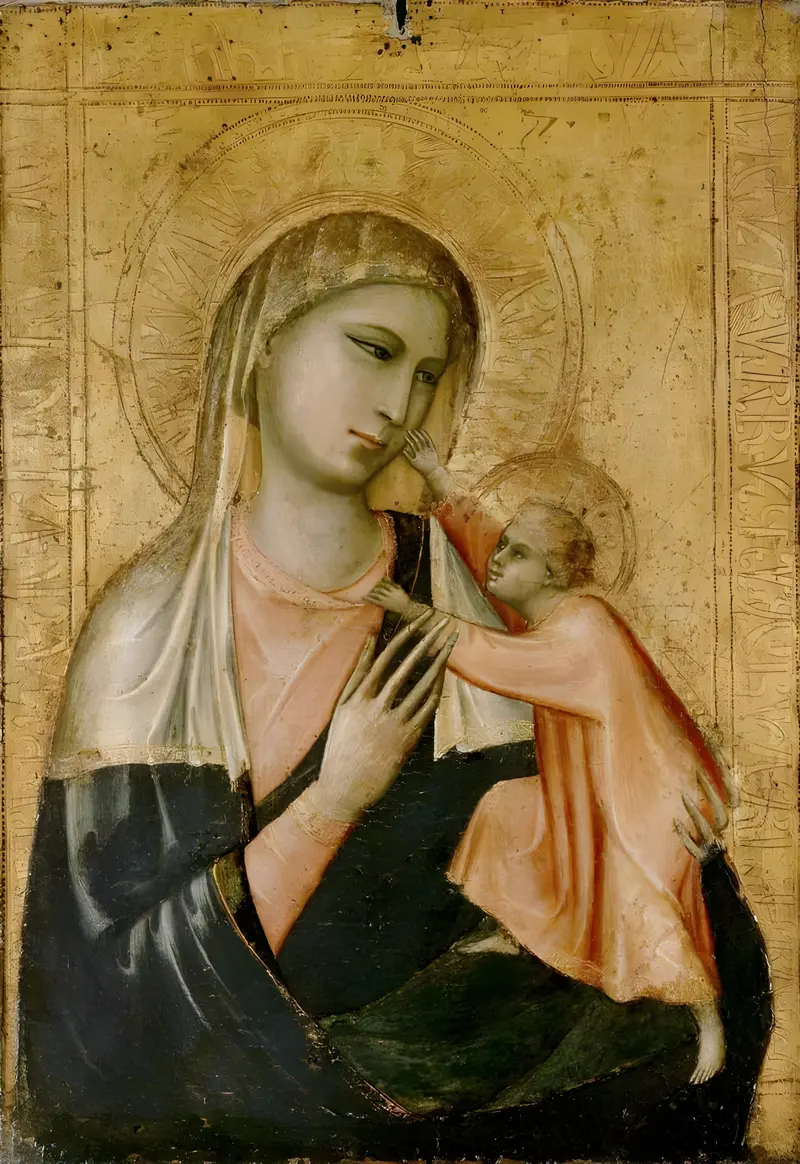
The Virgin and Child
Giotto di Bondone
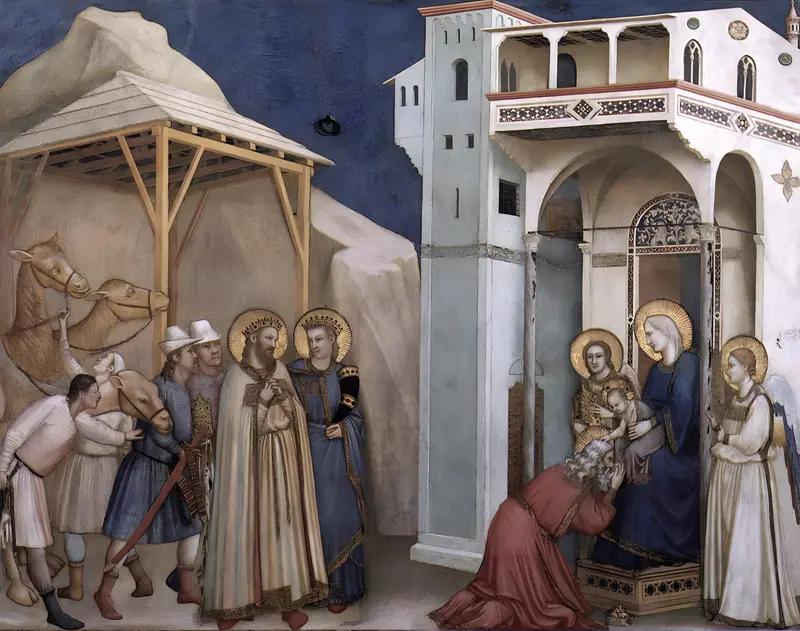
Anbetung der Könige
Giotto di Bondone
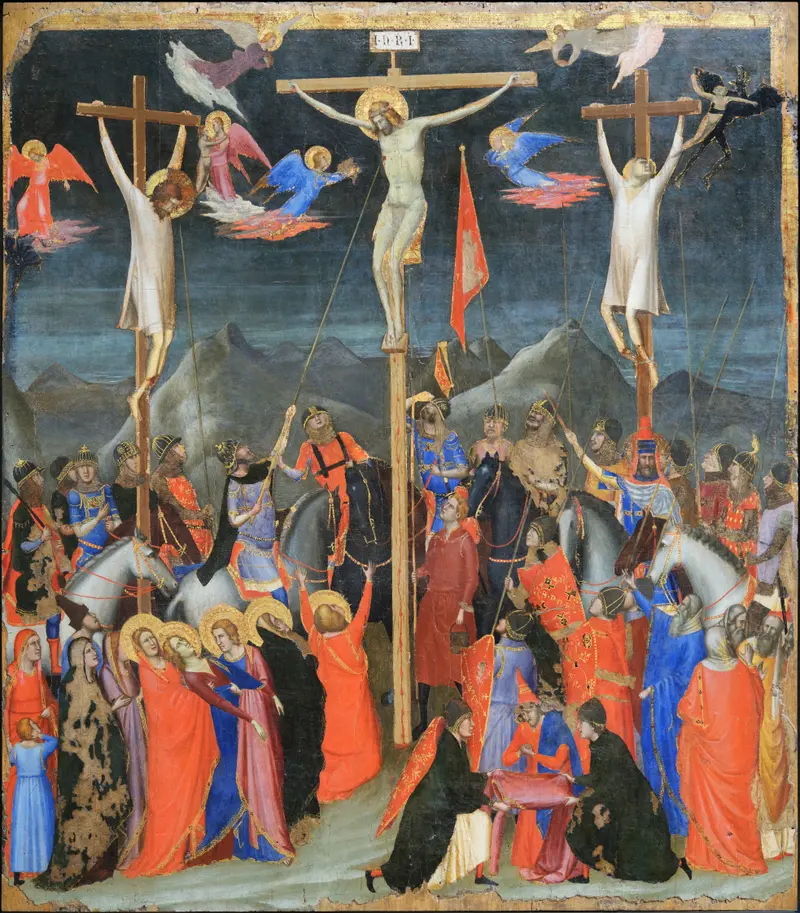
Crucifixion
Giotto di Bondone
The Visitation
Giotto di Bondone
Bologna Polyptych
Giotto di Bondone





