
Ognissanti Madonna — History & Facts
A monumental Virgin Mary sits enthroned at the center, her figure enveloped in a deep blue mantle and pale tunic, holding the Christ Child on her lap. The Christ Child, dressed in a rose-colored garment, raises his right hand in a gesture of blessing and rests his left hand on his mother's, his gaze directed outward. A shimmering gold ground covers the entire background, filling the space with light and emphasizing the sacredness of the scene.
The figures are modeled with subtle gradations of light and shadow, giving them a sense of volume and physical presence within the flat gold space. The composition is strictly symmetrical, with the Madonna and Child dominating the vertical axis and the surrounding figures arranged in orderly ranks. Fine brushwork is visible in the delicate gold decoration of the throne, the intricate halos, and the folds of drapery, while the paint surface appears smooth and luminous.
The edges of the painting are defined by the architectural structure of the throne, with slender columns and pointed finials rising along the sides and meeting at the gabled top. Madonna Enthroned is celebrated as a key work in the transition from Gothic painting to the Proto-Renaissance, combining the gold ground and hierarchical scale of earlier styles with a new sense of naturalism and three-dimensionality. The Madonna and Child are rendered much larger than the surrounding figures, emphasizing their central importance, while the angels and saints are depicted with individualized features and a sense of weight. The painting's structure, use of gold, and decorative throne reflect influences from Italo-Byzantine and Gothic art, while the modeling of the figures and the spatial arrangement anticipate later developments in Italian painting.
Sources: Uffizi Gallery, record 00284545 · Wikidata Q2016193 · Wikipedia: Ognissanti Madonna · Image source (Wikimedia Commons)
More Artworks by Giotto di Bondone
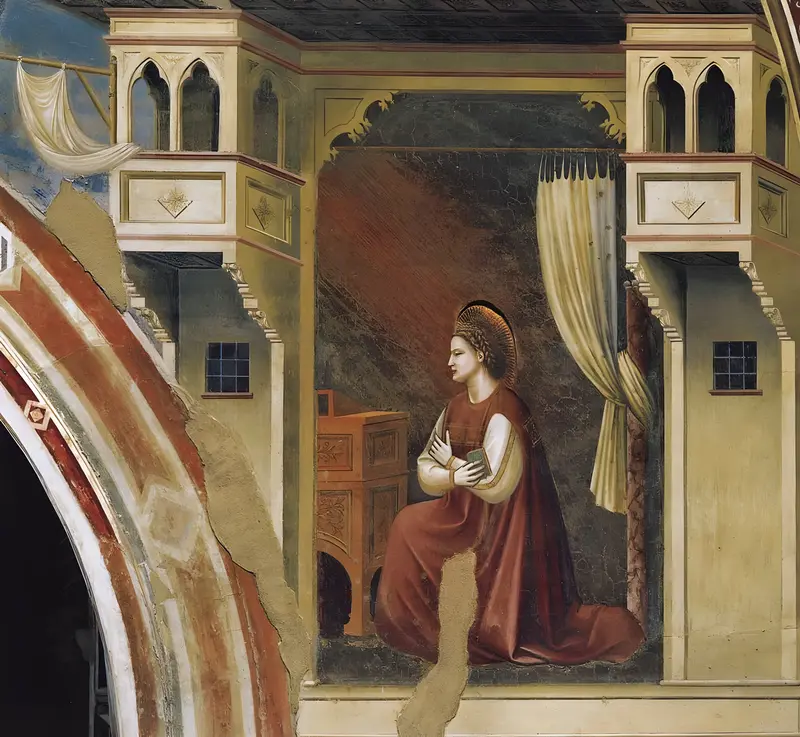
The Virgin of the Annunciation
Giotto di Bondone
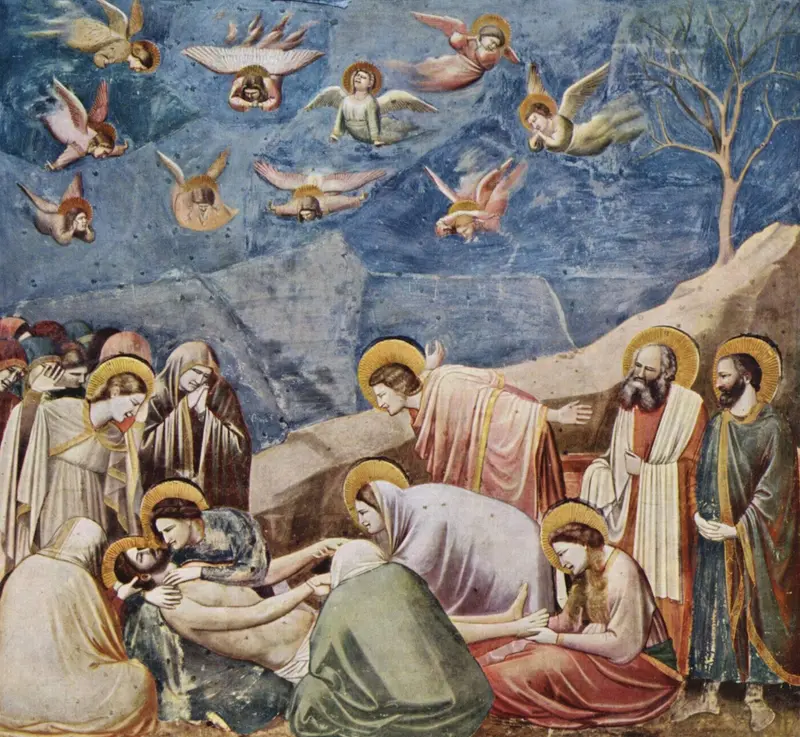
Lamentation (The Mourning of Christ)
Giotto di Bondone
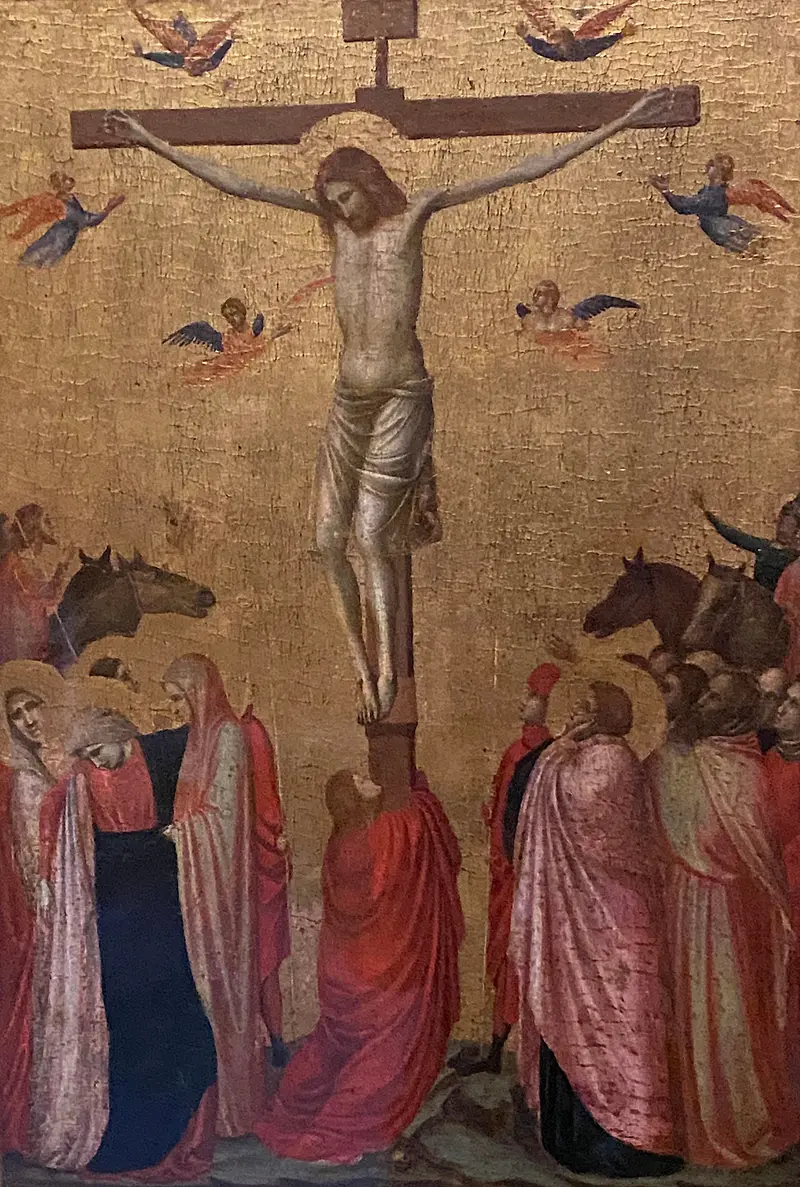
Crucifixion of Strasbourg
Giotto di Bondone
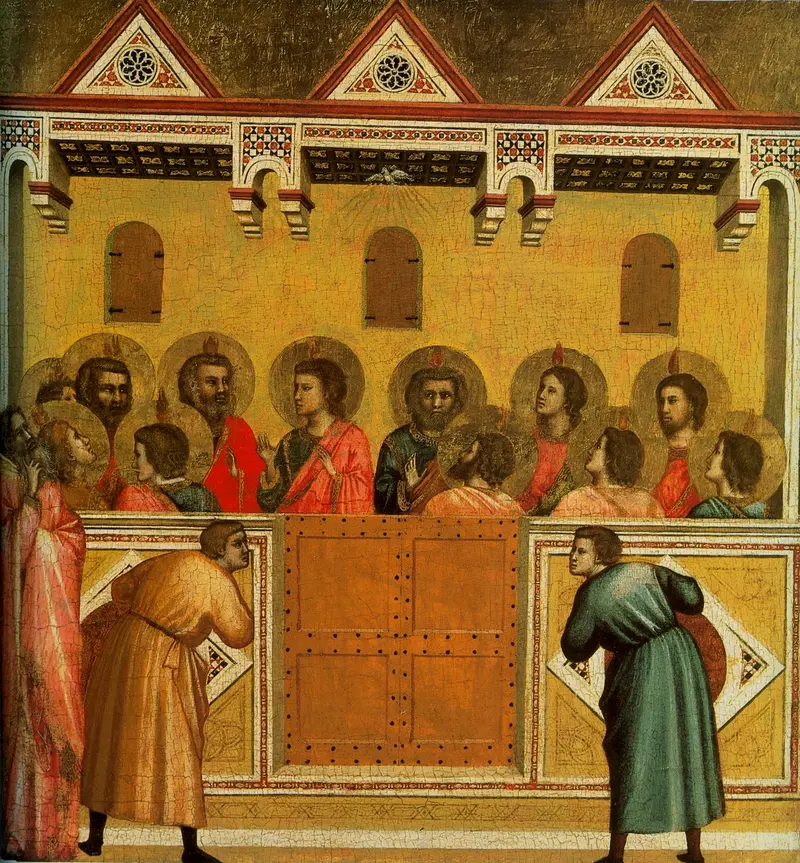
Pentecost
Giotto di Bondone
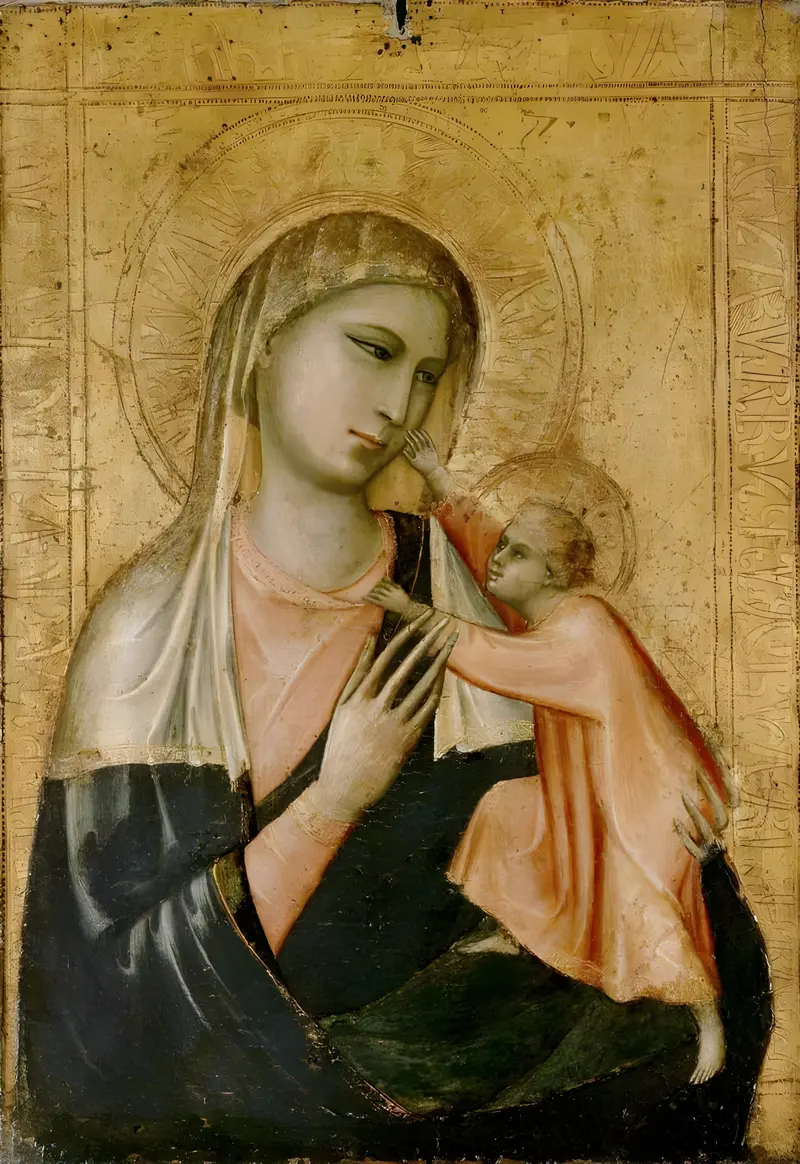
The Virgin and Child
Giotto di Bondone
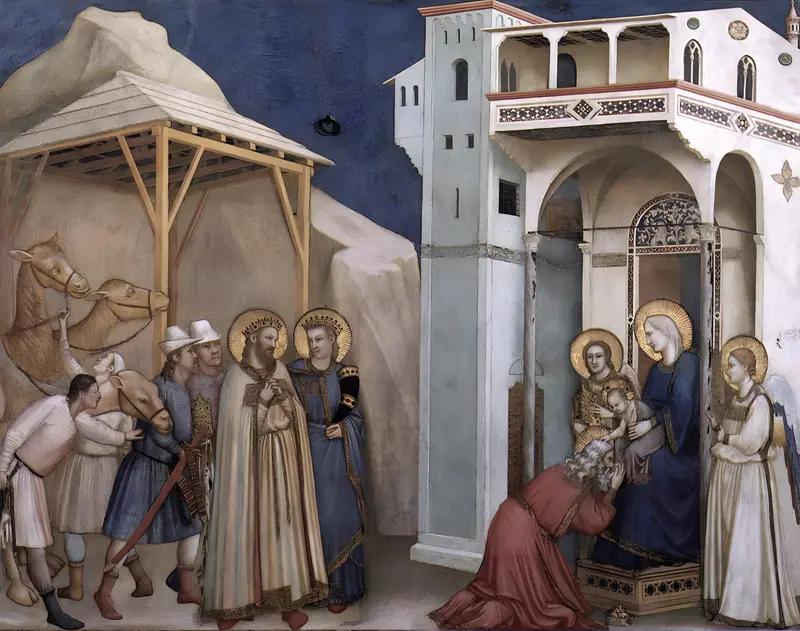
Anbetung der Könige
Giotto di Bondone
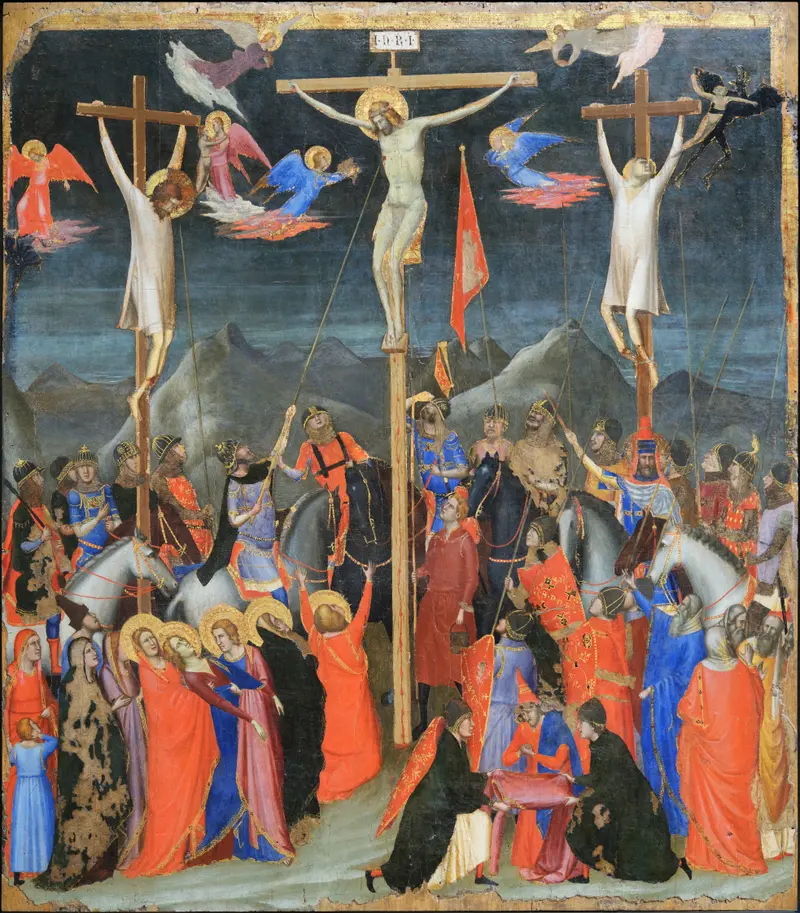
Crucifixion
Giotto di Bondone
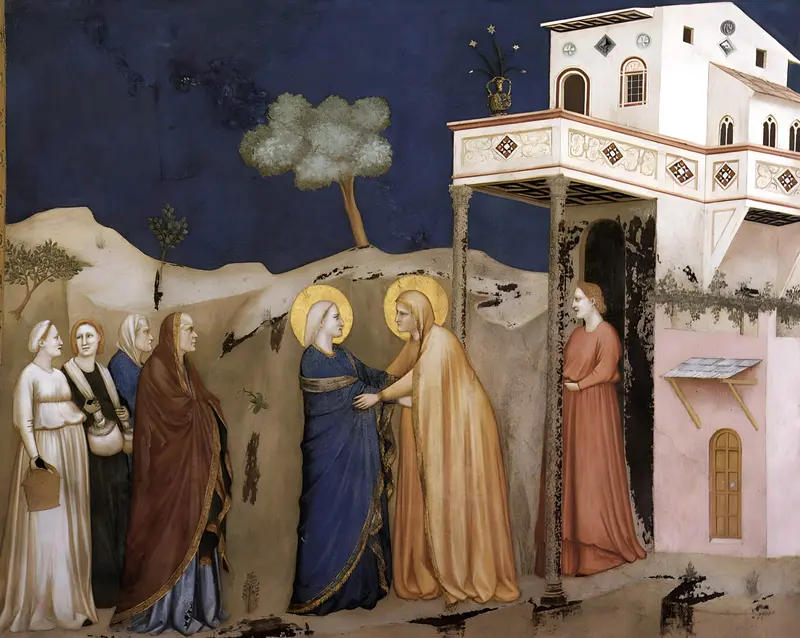
The Visitation
Giotto di Bondone
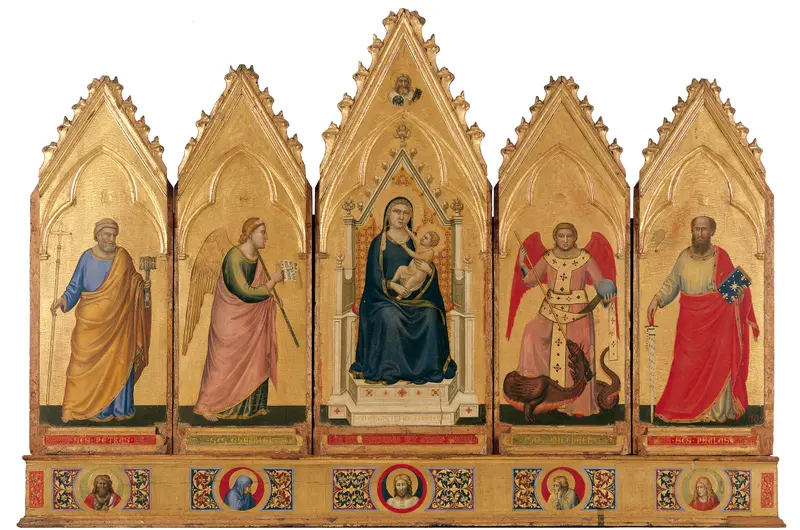
Bologna Polyptych
Giotto di Bondone
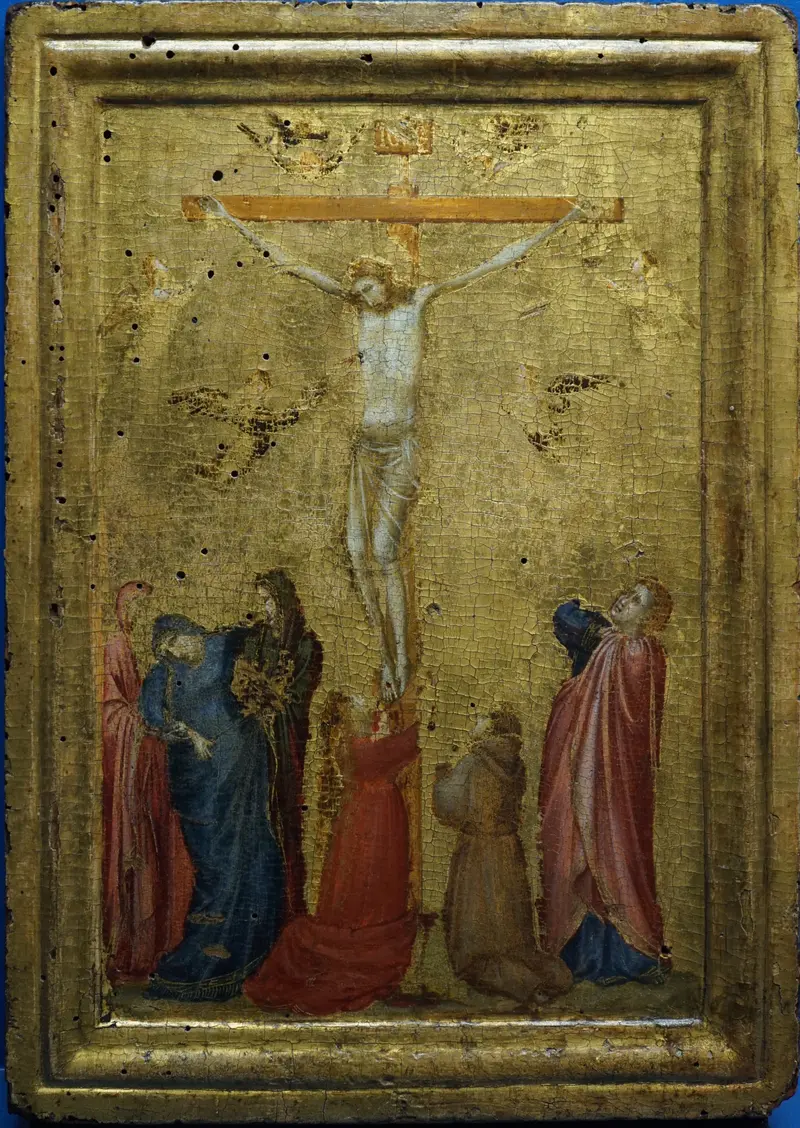
Calvary and Francis of Assisi
Giotto di Bondone





