
Crucifixion of Strasbourg — History & Facts
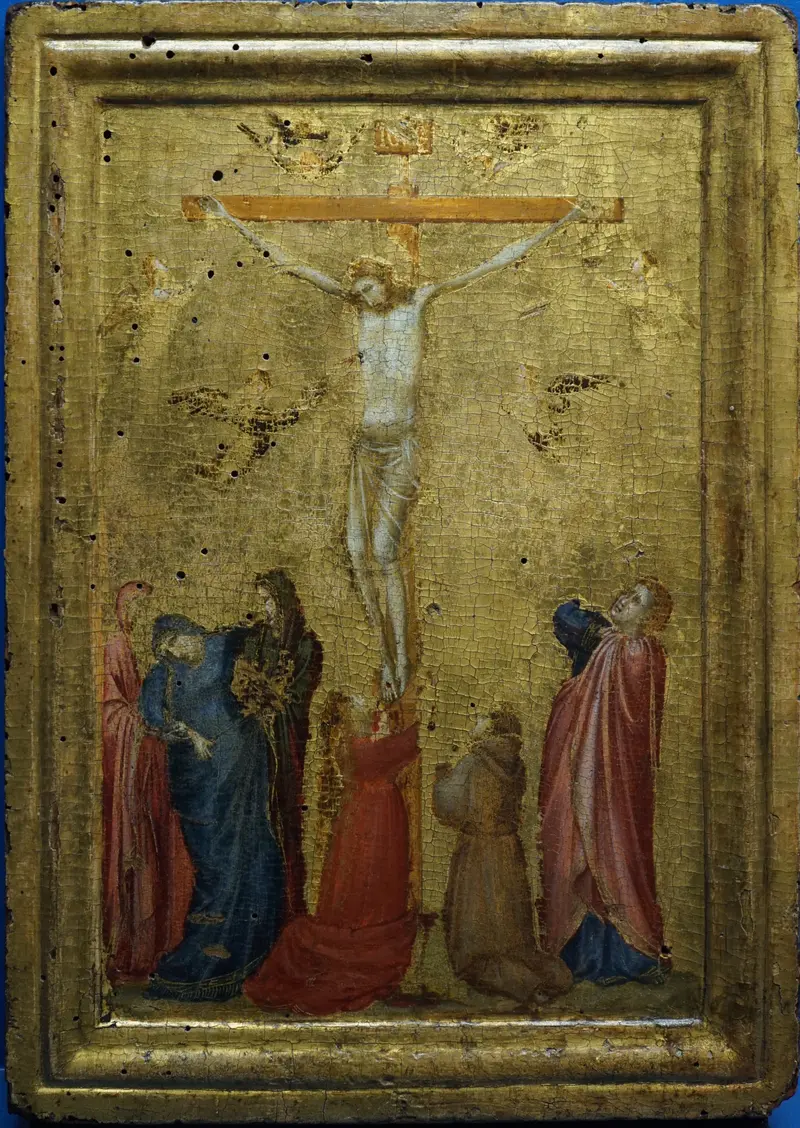
Crucifixion of Strasbourg by Giotto di Bondone, created around 1315, is a tempera, oil, and gold leaf painting on panel. The work dates from the mature period of Giotto’s career, a time when he was active in Florence and other Italian centers, developing innovations in narrative and figural representation that would shape the course of Western art. The panel depicts the Crucifixion of Christ, with the central figure of Jesus on the cross, flanked by groups of mourners and onlookers. The background is rendered in gold leaf, typical of early 14th-century Italian devotional painting, and is populated by small, colorful angels in flight.
The figures at the base of the cross include the Virgin Mary, Saint John, and other followers, their gestures and expressions conveying grief. Horses and soldiers are visible at the edges, while the composition is arranged to focus attention on the vertical axis of Christ’s body. This painting belongs to a tradition of Passion imagery that was widely produced for churches and private devotion in Italy during the early Trecento. The use of gold ground and the hierarchical arrangement of figures reflect the conventions of the period, while the individualized expressions and gestures are characteristic of Giotto’s approach.
The panel is in the collection of the Musée des Beaux-Arts in Strasbourg.
More Artworks by Giotto di Bondone
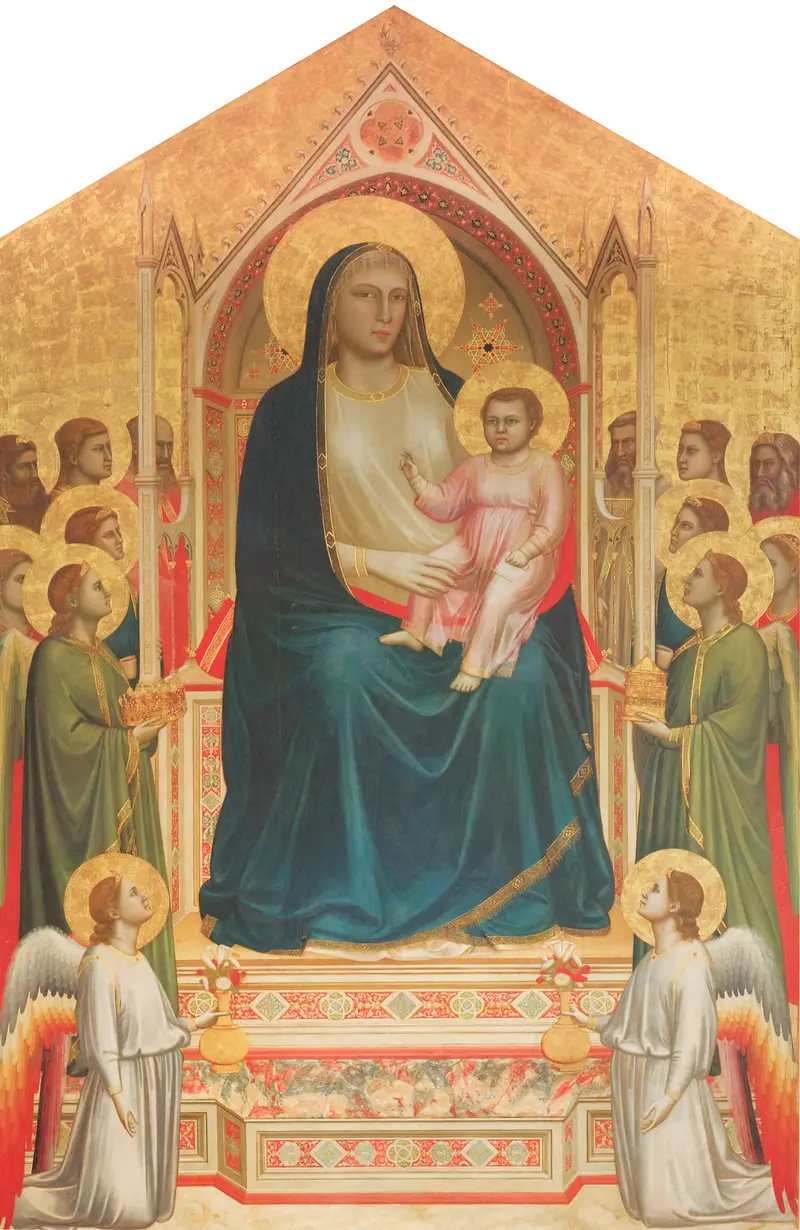
Ognissanti Madonna
Giotto di Bondone
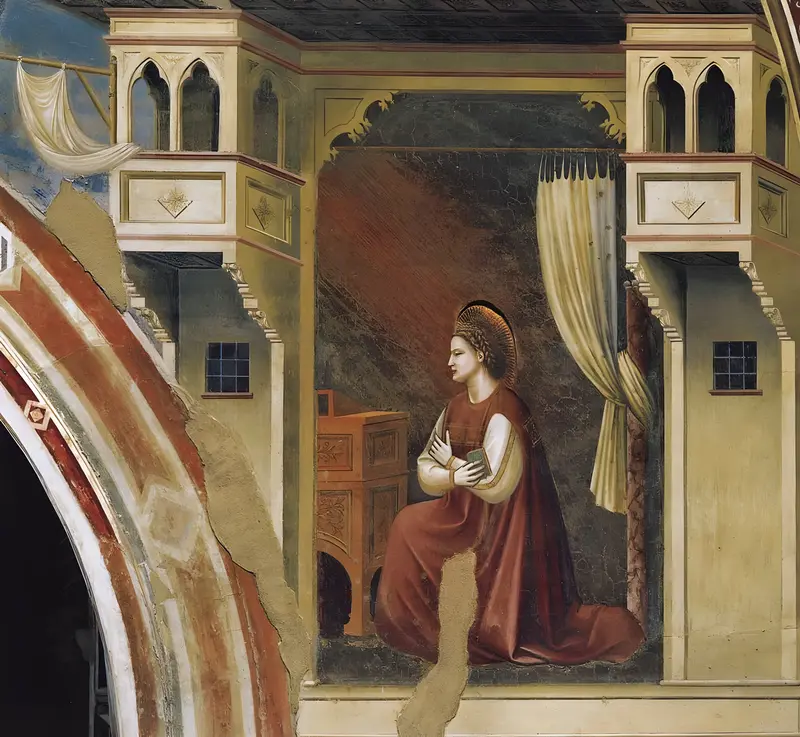
The Virgin of the Annunciation
Giotto di Bondone
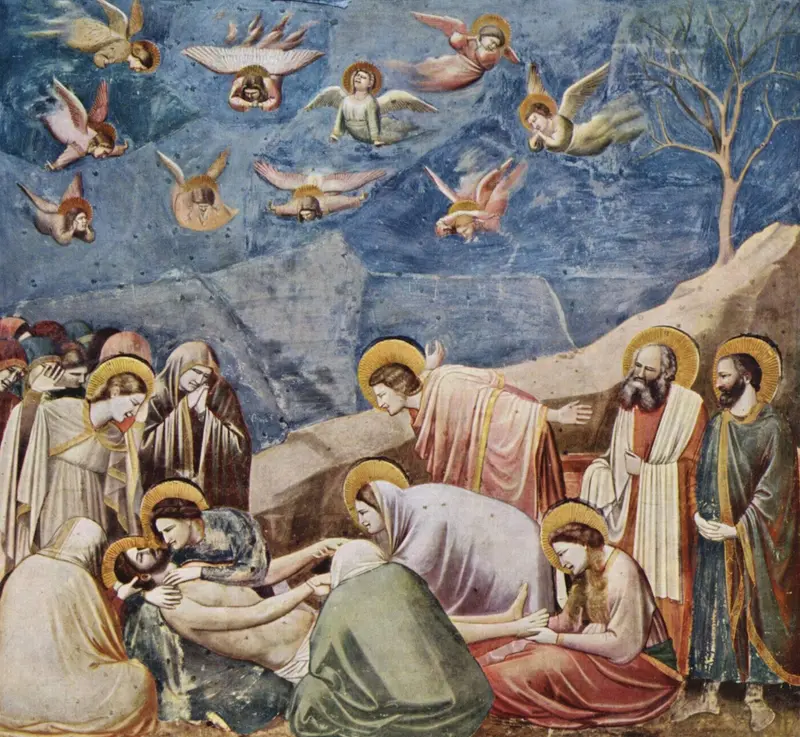
Lamentation (The Mourning of Christ)
Giotto di Bondone
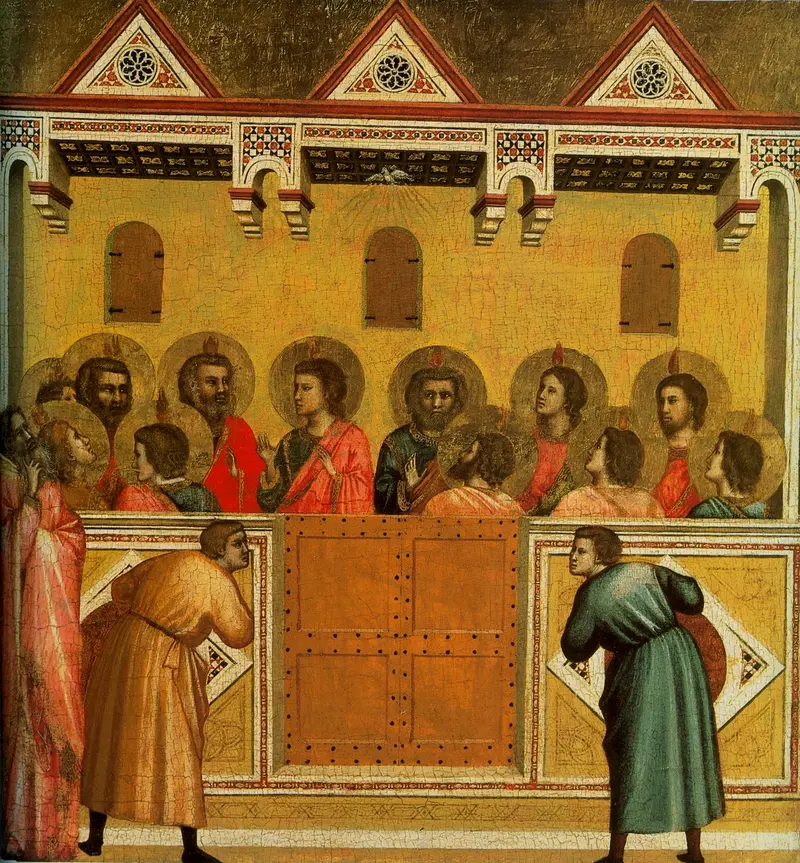
Pentecost
Giotto di Bondone
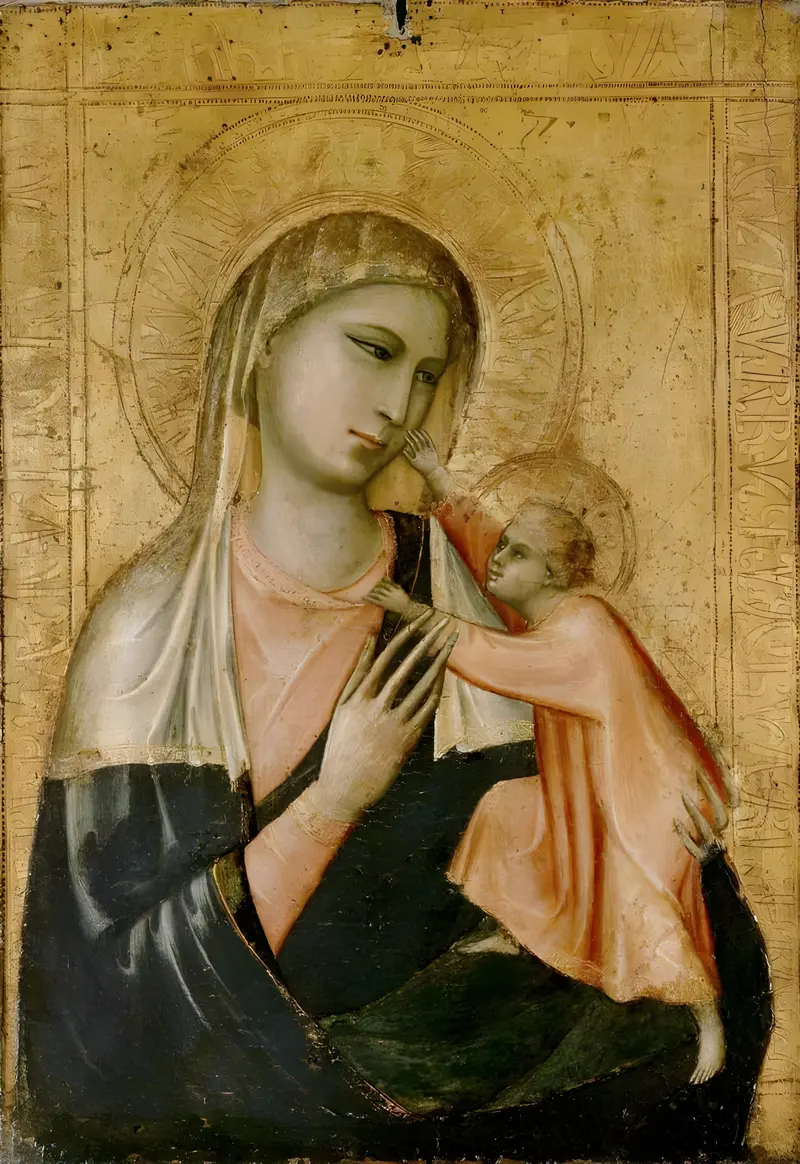
The Virgin and Child
Giotto di Bondone
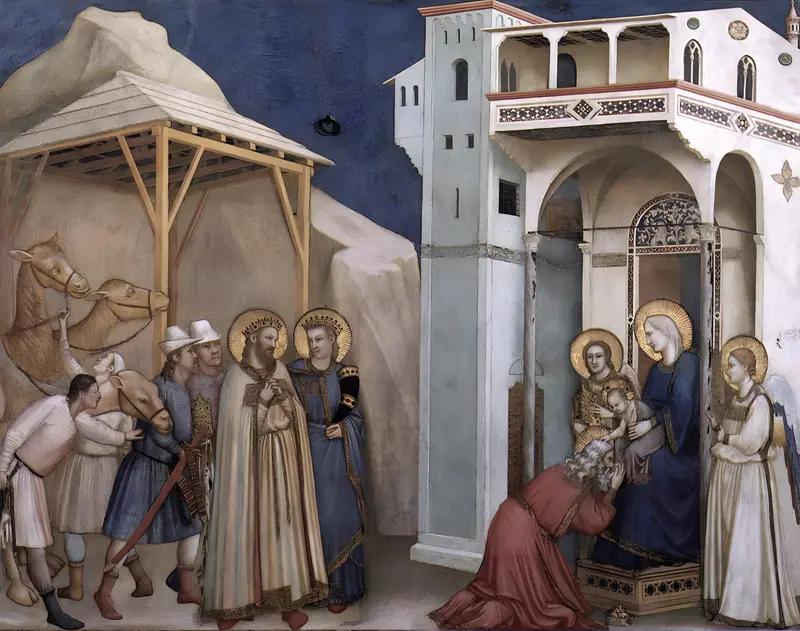
Anbetung der Könige
Giotto di Bondone
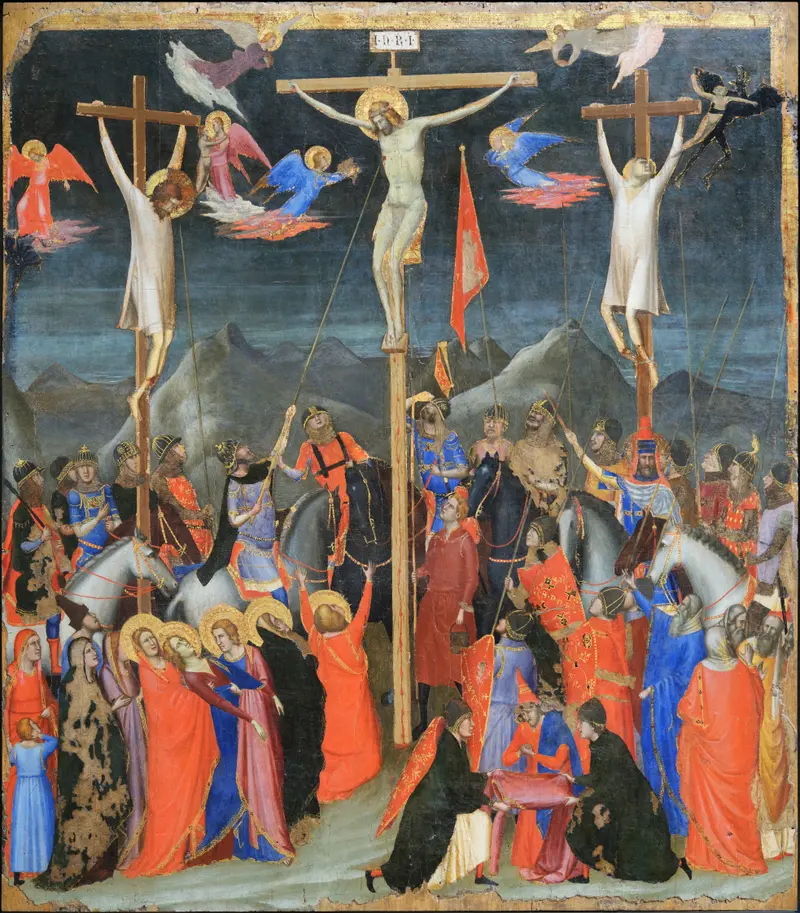
Crucifixion
Giotto di Bondone
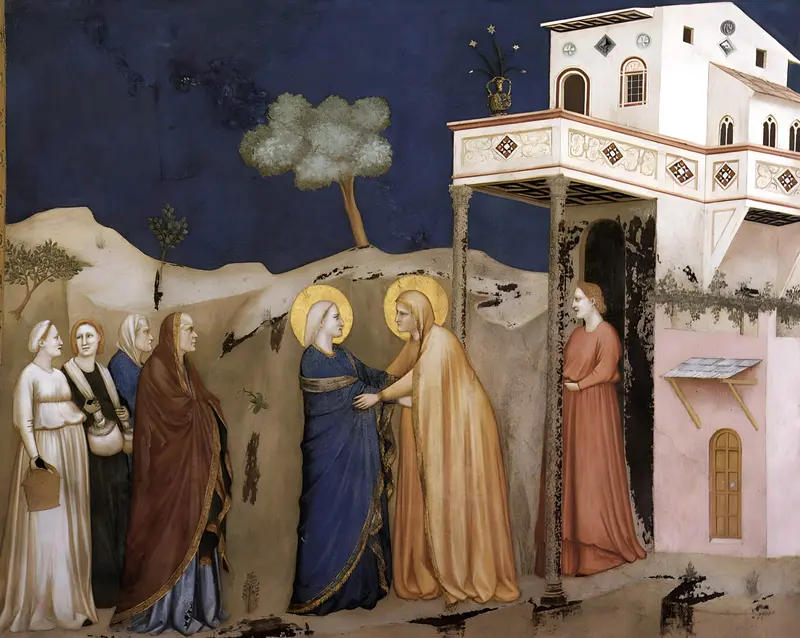
The Visitation
Giotto di Bondone
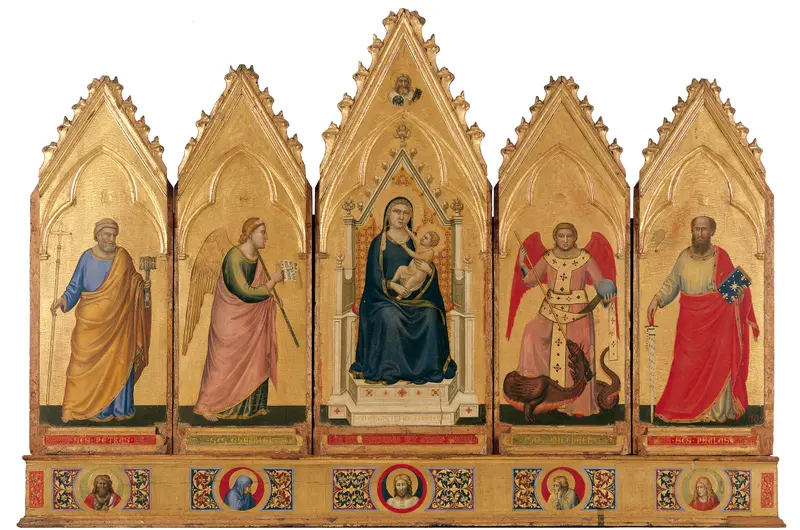
Bologna Polyptych
Giotto di Bondone
Calvary and Francis of Assisi
Giotto di Bondone





