
The Dam and Damrak — History & Facts
What first catches the eye in The Dam and Damrak is the way the late afternoon light pours across the square, casting long shadows that stretch and mingle on the cobblestones. The painter, Adriaen van de Velde, chooses this moment not for its drama, but for its quiet choreography: every figure, from the merchant with his wares to the dogs tussling in the foreground, seems caught in a gentle current of daily life. The sweep of the sky, painted with a delicate hand, gives the city a sense of openness, while the angled facades and bustling figures remind us that this is a place of constant movement and exchange.
The green building on the right, with its inviting shopfront, draws the viewer in, promising stories behind every window and doorway. In the mid-seventeenth century, scenes like this were the pride of Dutch urban painting—a genre that celebrated the prosperity and order of cities like Amsterdam. Works such as this, dated circa 1663 and now in the Harvard Art Museums, were often commissioned by wealthy burghers or civic leaders eager to display the vibrancy of their city. These paintings offered viewers a vision of communal harmony and economic vitality, at a time when the Dutch Republic was at the height of its power.
While history has kept few traces of this specific canvas’s early journey, the world it conjures—one of trade, sociability, and civic pride—remains as immediate as the sunlight on its painted stones.
More Artworks by Adriaen van de Velde

Staande stier
Adriaen van de Velde
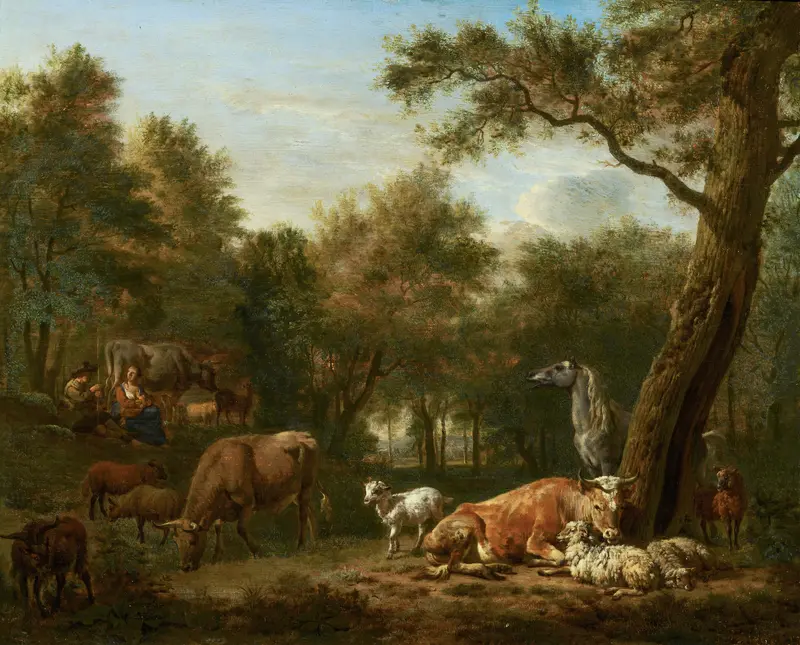
Wooded Landscape with Cattle
Adriaen van de Velde
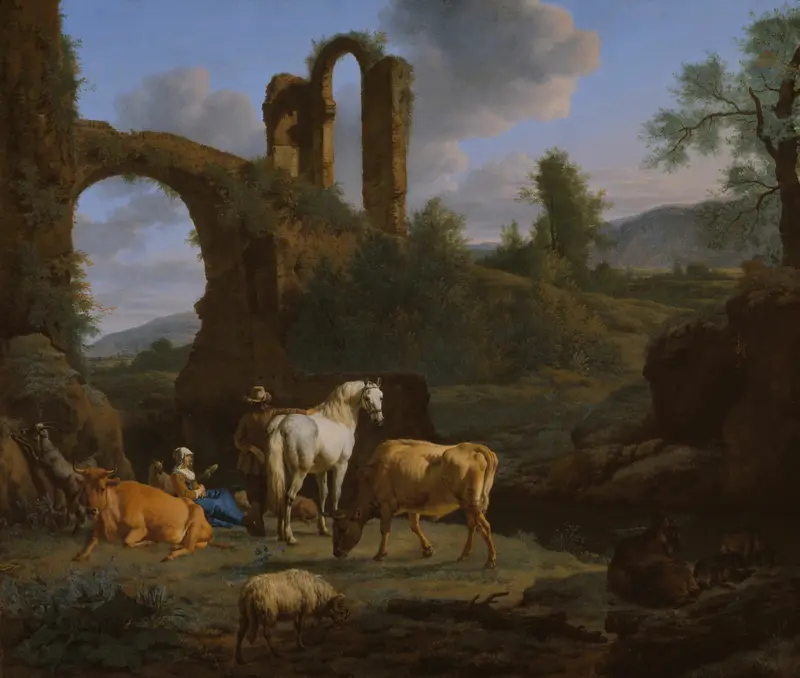
Pastoral Landscape with Ruins
Adriaen van de Velde
Pastoral Landscape with Ruins
Adriaen van de Velde
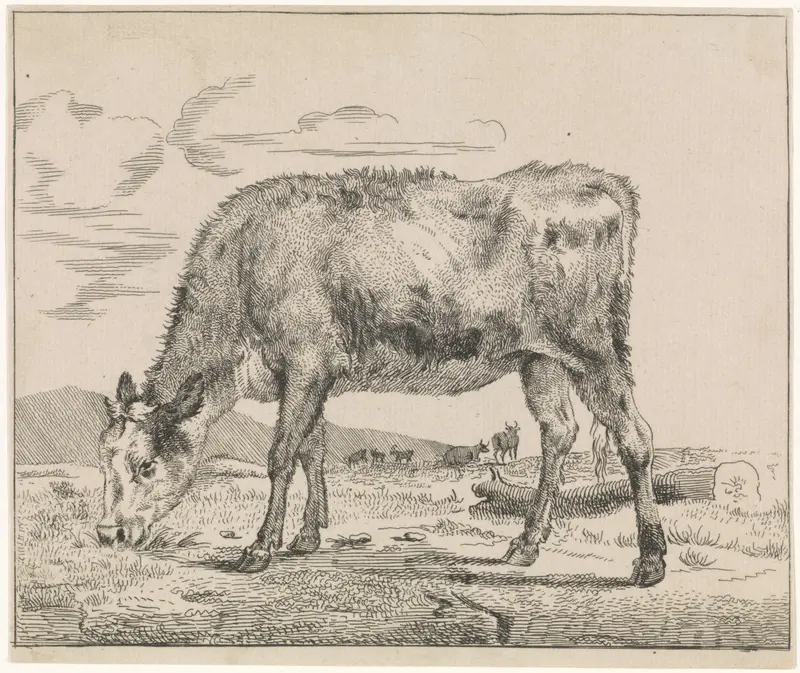
Grazend kalf
Adriaen van de Velde
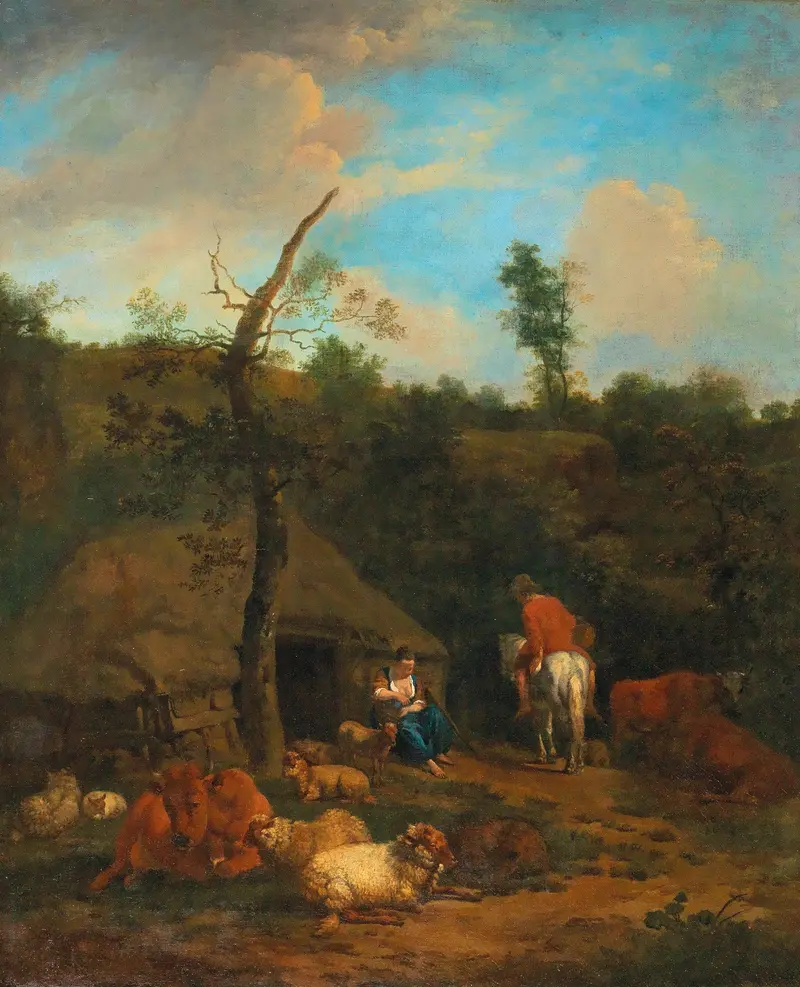
A herdsman and a shepherdess in front of a wooden farmhouse
Adriaen van de Velde
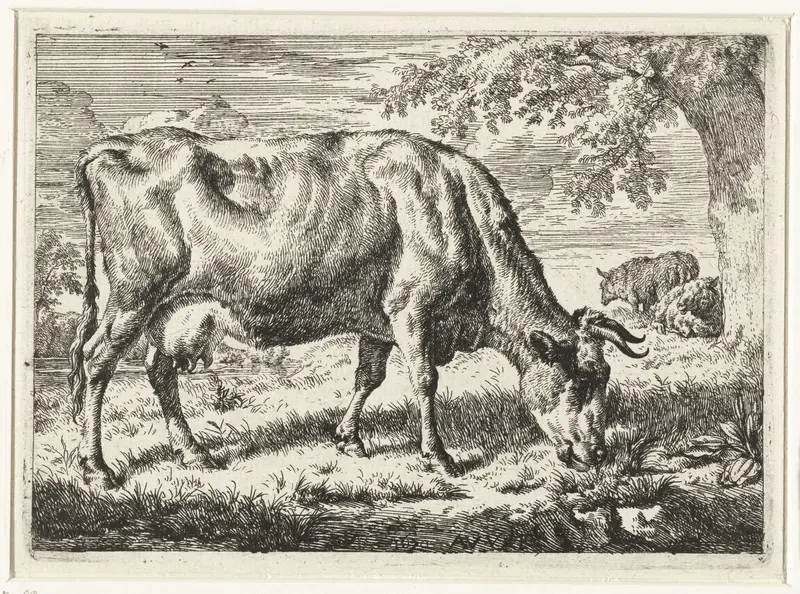
Grazende koe en twee schapen
Adriaen van de Velde
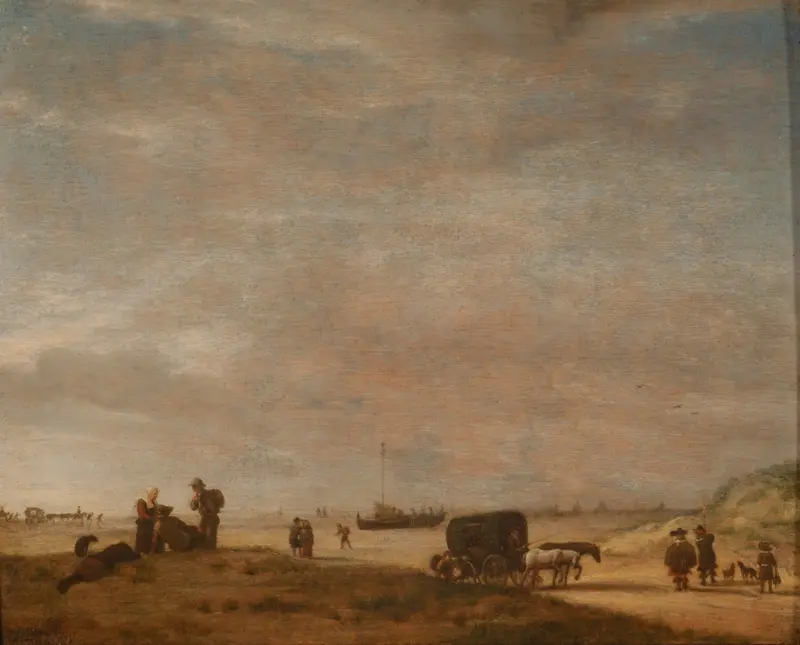
Scheveningen Beach
Adriaen van de Velde
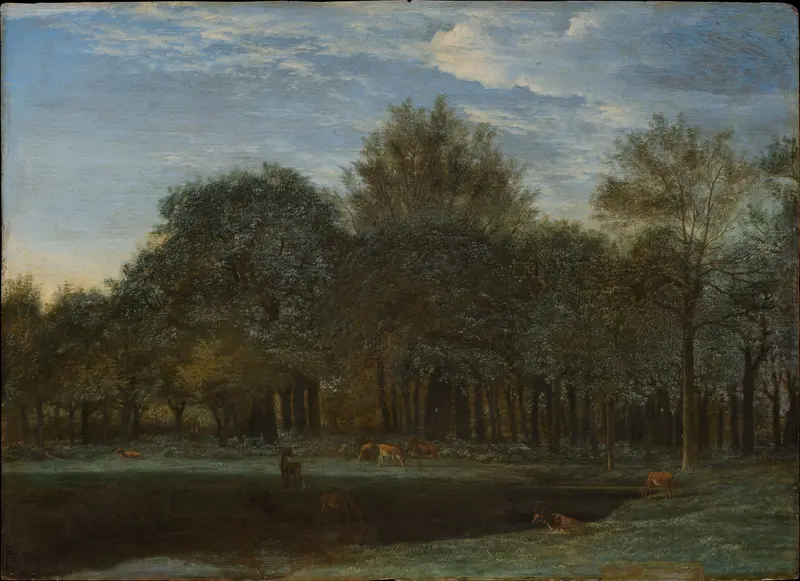
Forest Clearing with Grazing Deer
Adriaen van de Velde
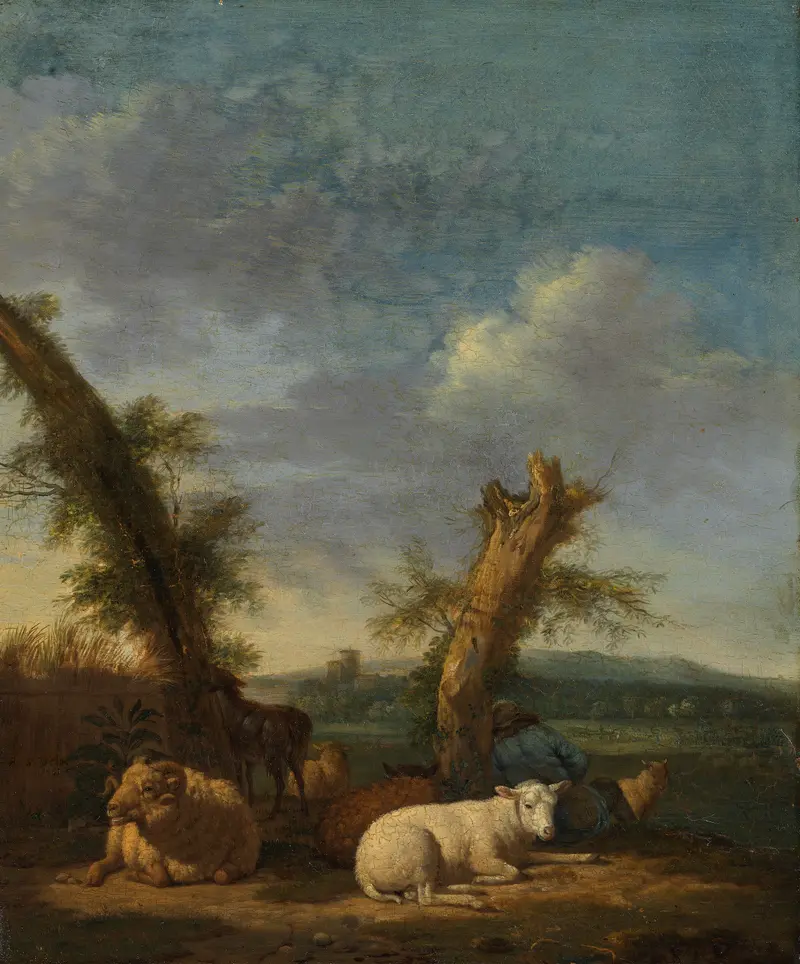
Landscape with Sheep and a Sleeping Shepherd
Adriaen van de Velde
More Genre Scene Art

Banquet of the Officers of the St George Civic Guard
Frans Hals

Rembrandt and Saskia in the Scene of the Prodigal Son
Rembrandt van Rijn

Bal du moulin de la Galette
Pierre-Auguste Renoir

Quadrille at the Moulin Rouge
Henri de Toulouse-Lautrec

A Burial at Ornans
Gustave Courbet

When Will You Marry?
Paul Gauguin