
The dancers with the keys — History & Facts
What first catches the eye in The dancers with the keys is the unlikely duet between the organic and the mechanical. Two stylized, almost sculptural figures float in a space that feels both weightless and charged, their bodies rendered in smooth, rounded forms that recall classical statuary—yet their faces are blank, their gestures frozen mid-motion. One figure holds a twisting stem with a flower, a delicate counterpoint to the bold, angular geometry that dominates the right half of the canvas.
The background is a swirl of shadow and light, but the real drama unfolds in the tension between the dancers’ soft, undulating forms and the hard-edged, schematic shapes beside them—keys, perhaps, or the suggestion of a city’s machinery. Painted in 1930, this work by Fernand Léger belongs unmistakably to the world of interwar Europe, when artists were captivated by the promises and perils of modernity. The palette is restrained but purposeful: ochres and flesh tones for the bodies, a vivid blue for the drapery, and a striking red triangle that anchors the composition. The dancers’ movements are stylized, almost robotic, their limbs echoing the curves and lines of the mechanical forms to their right.
Léger, a pioneer of Cubism and later the so-called “machine aesthetic,” often explored the uneasy relationship between humanity and technology—a theme that pulses through this painting. Housed today in Stockholm’s Moderna Museet, the canvas invites viewers to linger in the charged space where bodies and machines share the same dance floor, and to wonder what keys—literal or metaphorical—might unlock the future.
More Artworks by Fernand Léger

The Tugboat Bridge
Fernand Léger
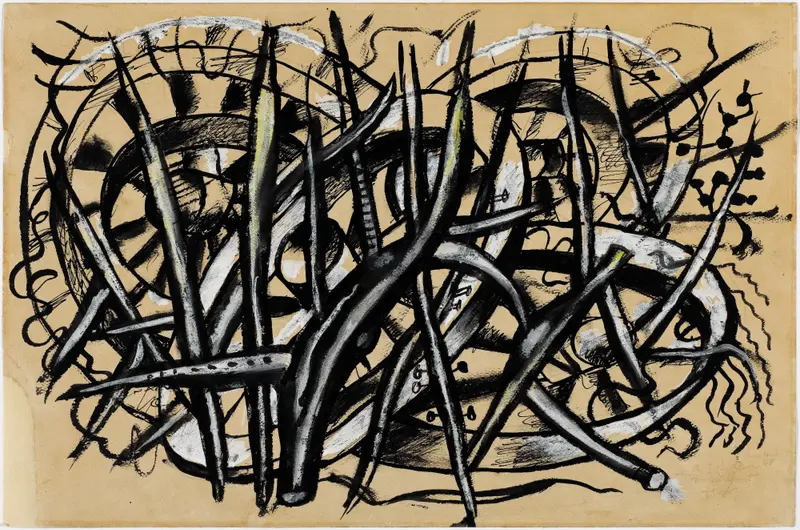
The Wheels
Fernand Léger

Le Cirque Médrano
Fernand Léger
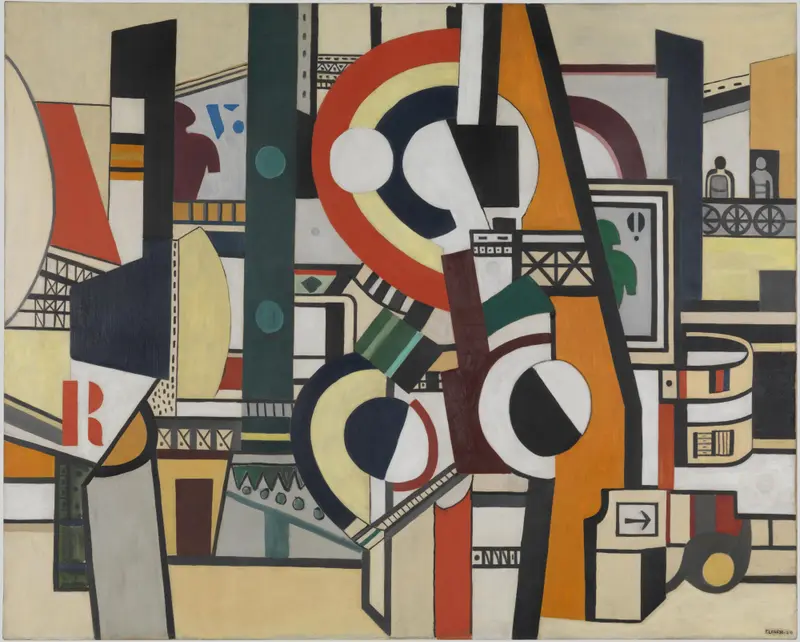
The Disks in the City
Fernand Léger
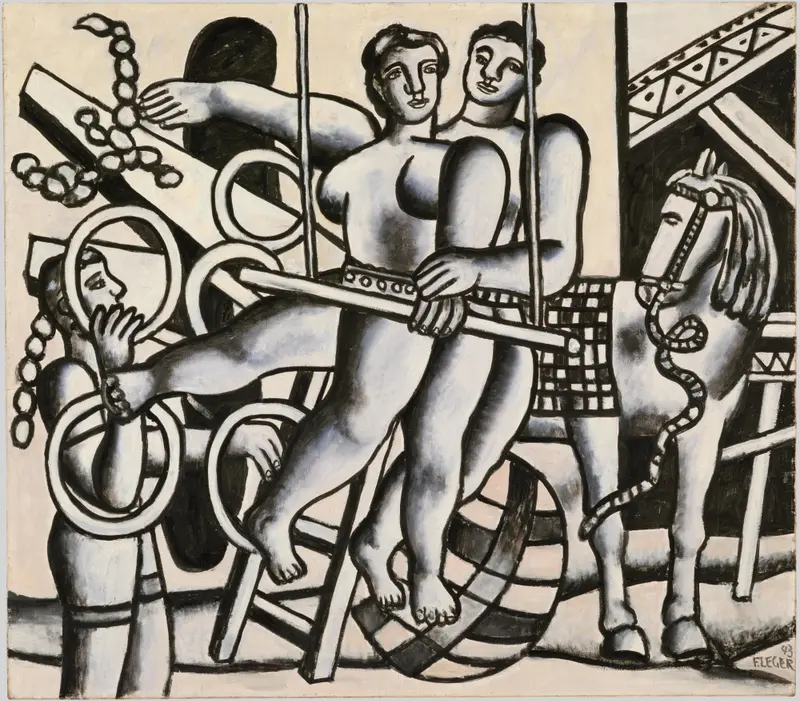
Le Jongleur et les acrobates
Fernand Léger
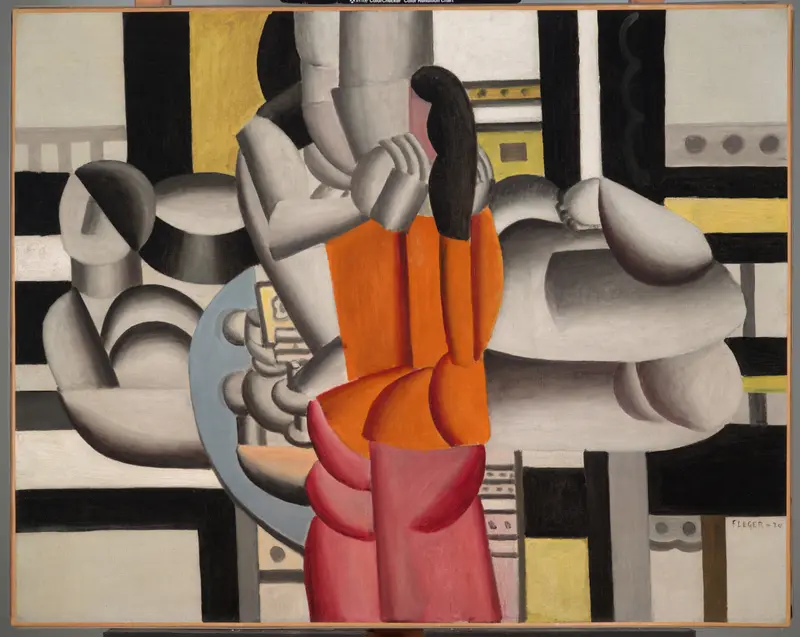
Three Women and Still Life (Déjeuner)
Fernand Léger
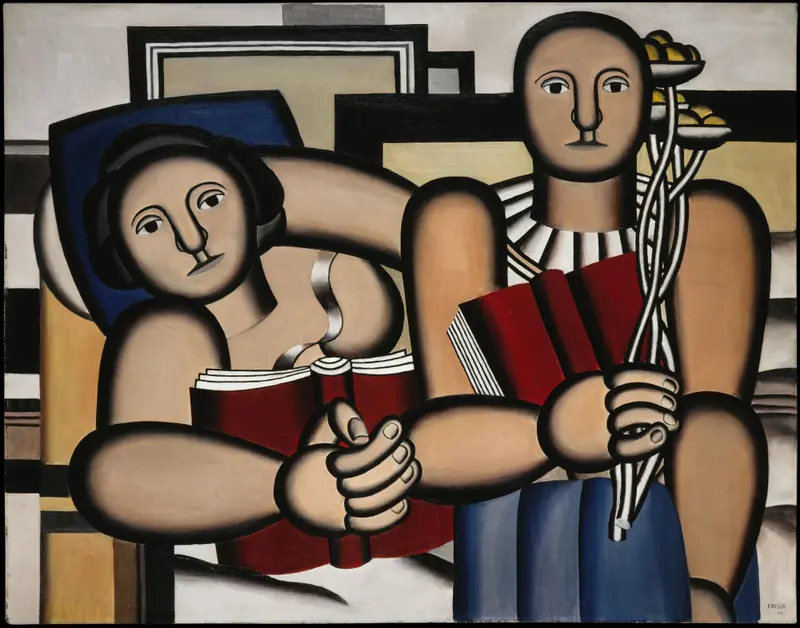
Reading
Fernand Léger
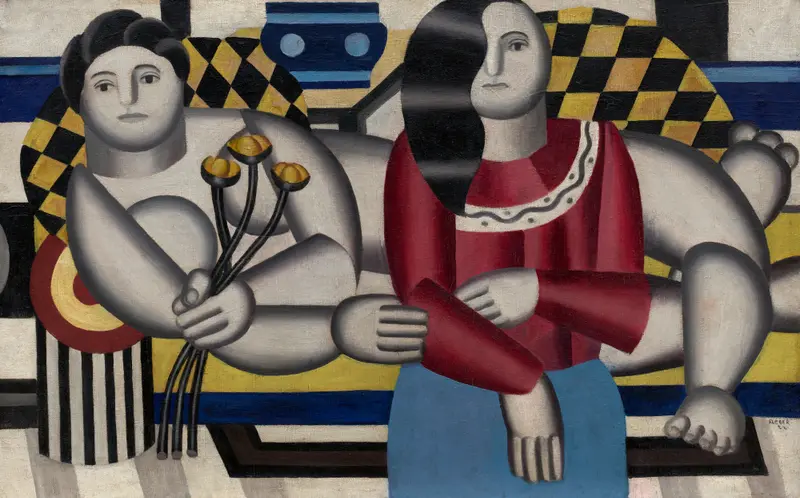
Femme couchée
Fernand Léger
Woman holding flowers
Fernand Léger
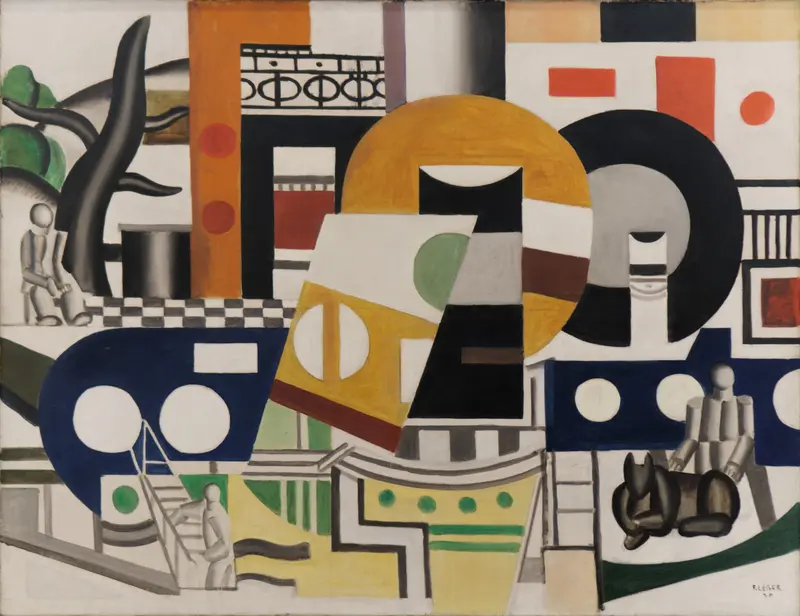
The Tug
Fernand Léger



