
The dancers with the keys, study — History & Facts
What first catches the eye in The dancers with the keys, study is the collision of bodies and geometry—a duet of human forms, all rounded limbs and rhythmic movement, set against a crisp, angular burst of red, white, and yellow. The figures, sculpted in broad, looping strokes, seem to float in a cloud of smoky light, their gestures echoing both dance and machinery. Léger’s palette is limited but bold: flesh, cobalt, and the sharp punctuation of primary colors.
The dancers’ limbs intertwine, their faces stylized and mask-like, while the right side of the canvas erupts into a mechanical abstraction—a puzzle of keys, levers, and blocks. The effect is one of suspended energy, as if the figures are caught mid-step between the organic and the industrial. Painted in 1928, this work belongs to a world on the brink of transformation. In the years after the First World War, Fernand Léger became a leading figure in the modernist movement, fascinated by the possibilities of a machine-driven age.
Artworks like this, with their blend of figuration and abstraction, reflect the era’s fascination with speed, technology, and the new rhythms of urban life. Such paintings were rarely private commissions; rather, they were statements for the public sphere, intended to capture the pulse of modernity and the optimism of progress. History has kept few traces of this particular study’s journey, but its bold forms and signature—F.
LEGER. 28—anchor it firmly in the late 1920s, inviting us to look again at the dance between human and machine.
More Artworks by Fernand Léger

The Tugboat Bridge
Fernand Léger
The Wheels
Fernand Léger

Le Cirque Médrano
Fernand Léger
The Disks in the City
Fernand Léger
Le Jongleur et les acrobates
Fernand Léger
Three Women and Still Life (Déjeuner)
Fernand Léger

Reading
Fernand Léger
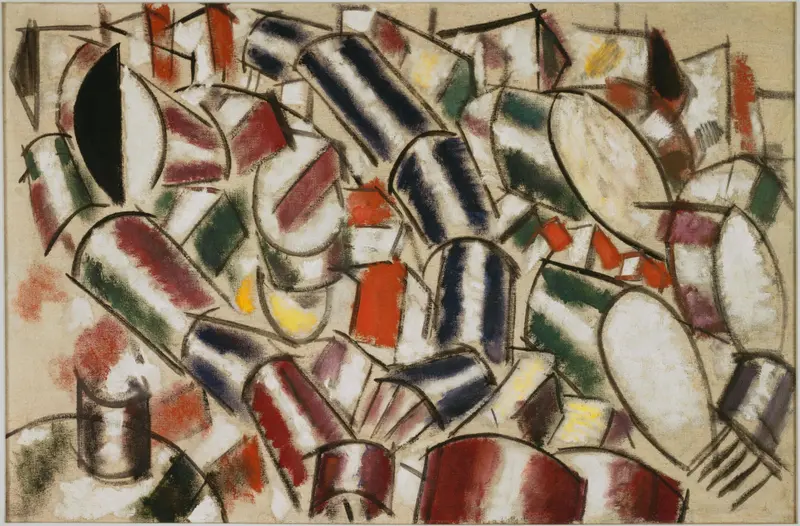
Femme couchée
Fernand Léger
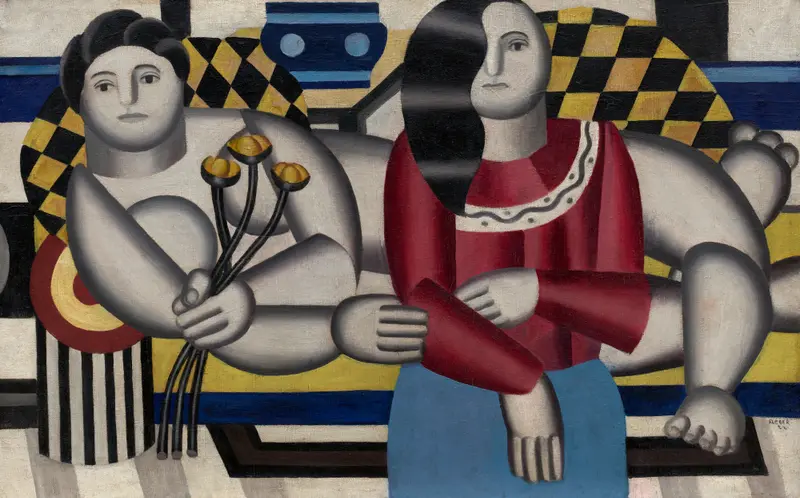
Woman holding flowers
Fernand Léger
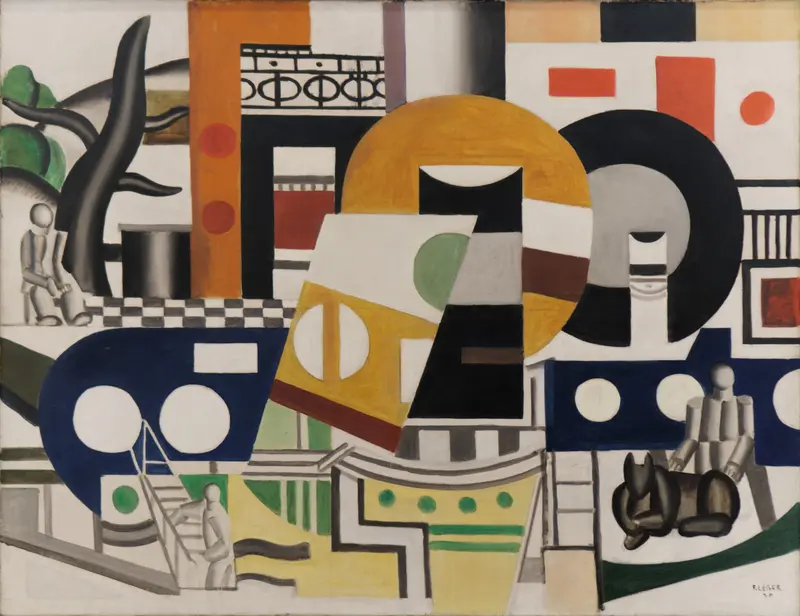
The Tug
Fernand Léger



