
The Dwarf Francisco Lezcano — History & Facts
When Diego Velázquez painted The Dwarf Francisco Lezcano, he was working within the strict and glittering world of the Spanish Habsburg court, where dwarfs were not only companions and entertainers but also fixtures in royal portraiture. Francisco Lezcano, known as "El Niño de Vallecas," became one of the most recognizable faces at court thanks to Velázquez’s brush. The painting stands out as one of the earliest and most sensitive portrayals of a court dwarf, a subject often relegated to the margins or depicted with ridicule.
Instead, Velázquez’s approach hints at a quiet dignity, and the painting has long sparked debate: was it a commission by the royal family, or did Velázquez choose his sitter independently, seeking to challenge conventions? Lezcano sits alone against a muted landscape, his gaze drifting away from the viewer, hands resting idly on a deck of playing cards. The cards, scattered and incomplete, may allude to fate or the unpredictability of fortune, a subtle nod to Lezcano’s own position in society. The boy’s clothing is rich but rumpled, and the light falls softly on his face, highlighting not just his features but his introspective mood.
Unlike the caricatured dwarfs in earlier European art, Velázquez’s Lezcano is individualized, his melancholy presence inviting empathy rather than laughter. This humanizing approach can be contrasted with the more theatrical depictions by artists like Jusepe de Ribera, whose dwarfs often appear as grotesques or comic figures. The exact date and circumstances of The Dwarf Francisco Lezcano remain uncertain, but it is generally placed among the royal portraits Velázquez painted during his mature period, likely in the 1640s. The painting has resided for centuries in the Spanish royal collections and today hangs in the Museo del Prado in Madrid, where it continues to draw visitors into the hidden world of the Habsburg court.
Over time, the work has been celebrated as a turning point in the depiction of marginalized figures, marking a shift toward realism and psychological depth in Spanish portraiture. For Velázquez, it was part of a broader project: to capture not just the faces but the inner lives of all who inhabited the palace, from kings to jesters.
More Artworks by Diego Velázquez

Las Meninas
Diego Velázquez
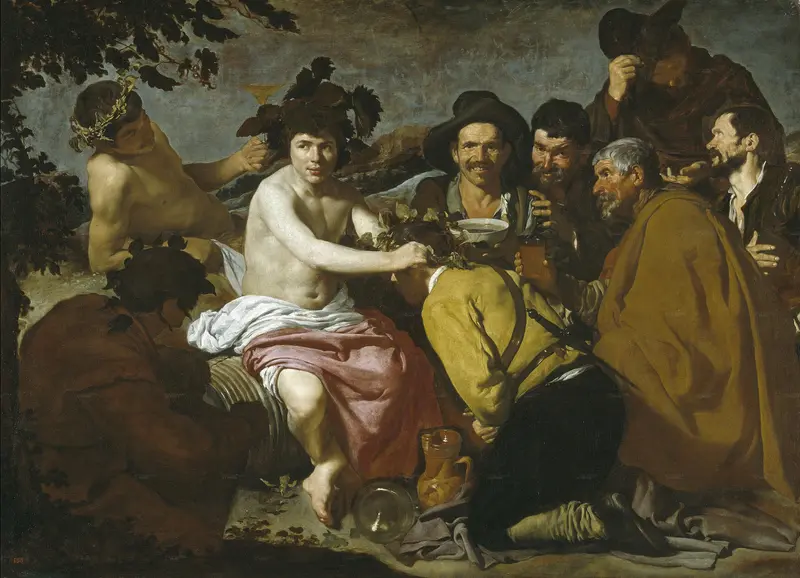
The Triumph of Bacchus
Diego Velázquez
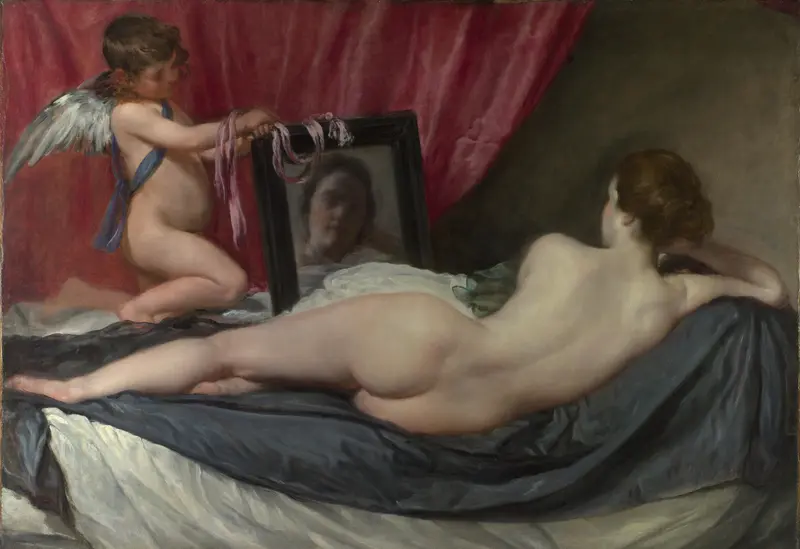
Rokeby Venus
Diego Velázquez
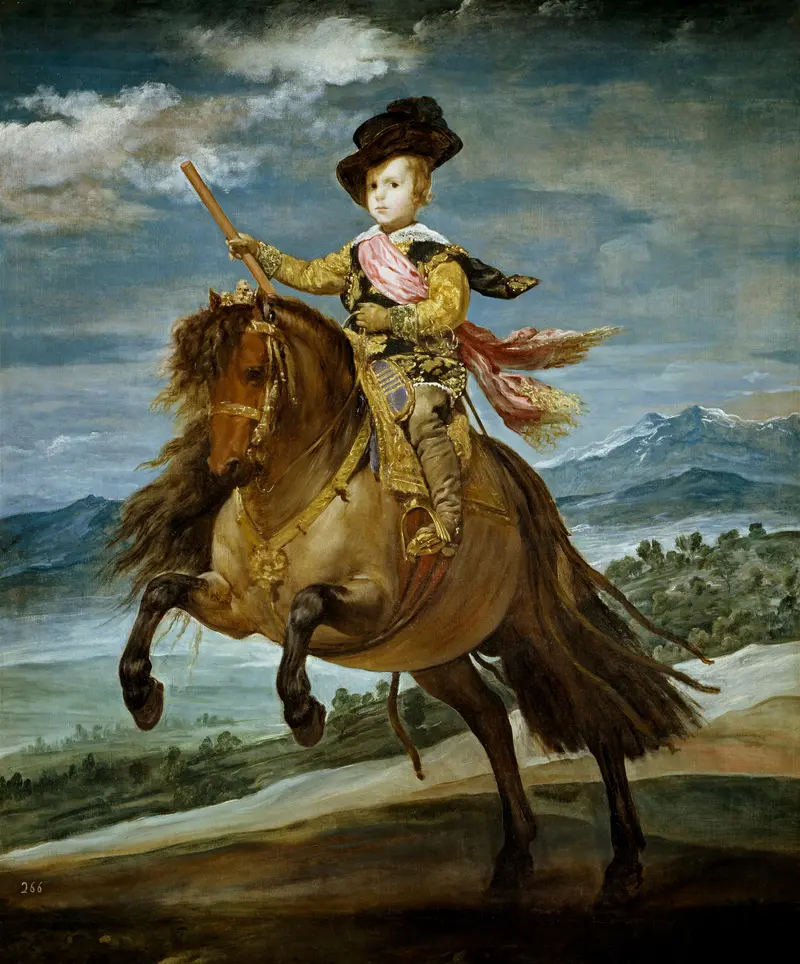
Equestrian Portrait of Prince Balthasar Charles
Diego Velázquez
Bacchus
Diego Velázquez
Don Gaspar de Guzmán (1587–1645), Count-Duke of Olivares
Diego Velázquez
El príncipe Baltasar Carlos de Austria
Diego Velázquez
Equestrian Portrait of Philip III
Diego Velázquez
Equestrian Portrait of Margarita of Austria
Diego Velázquez
Las Hilanderas
Diego Velázquez




